Gold Finger PCB Manufacturing: Hard Gold, Bevel and Thickness The Interface That Decides Product Life In any product where a board is inserted into a slot, the electrical connection is made across a set of plated contacts on the board edge. PCIe add-in cards, memory modules, GPU and FPGA boards,…
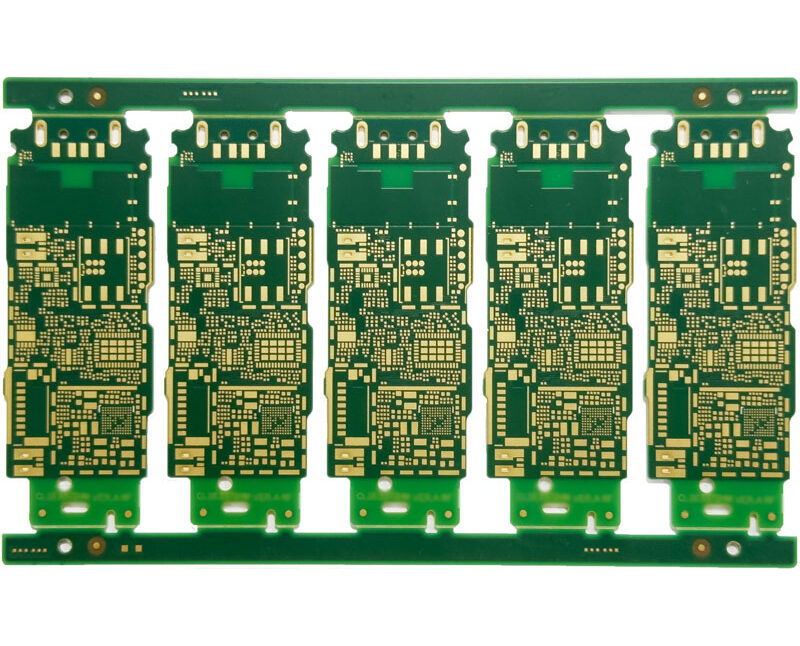
PCB Panel Warpage After Lamination: When the Panel Curls Modern electronics depend on boards that are assembled correctly the first time. Every product – a phone, a charger, a medical instrument or an industrial controller – relies on thousands of solder joints that must conduct current for years. This article…
High Voltage PCB Design: Creepage, Clearance and Materials Above 500 V, the Design Rules Change Most PCB guidance assumes that the limiting factors are trace geometry, impedance and layer count. Push the working voltage past roughly 500 volts and those concerns move to the background. The limiting factors become creepage…
Custom PCB Manufacturing for Space Exploration Programs Small Volumes, High Value, No Tolerance for Failure Space electronics operate in an environment that has no commercial equivalent: hard vacuum, ionising radiation, repeated thermal cycling across a very wide range, and mechanical loads during launch that the board must survive without degradation.…
PCB Ultra Thin Core Handling: A Practical Review for Manufacturing Teams Buyers and engineers often focus on the finished product and forget the production line behind it. In practice, most field failures can be traced back to process decisions made during assembly. Understanding PCB ultra thin core handling gives you…
PCB Design for Fire Alarm Sensors: Power, Noise and Reliability Why This Board Is Judged by Different Rules A smoke detector is a product that must work after years of sitting untouched, and must not raise a false alarm while it waits. Those two requirements, long unattended life and low…
PCB Copper Foil Carrier Removal: Peeling Off the Support Electronics manufacturing has become a discipline of small details. Solder paste volumes, placement accuracy, temperature profiles and inspection limits all add up to the final result. This guide looks at PCB copper foil carrier removal from the perspective of a PCBA…
PCB Via Hole Wall Separation: From Prototype to Volume Production Modern electronics depend on boards that are assembled correctly the first time. Every product – a phone, a charger, a medical instrument or an industrial controller – relies on thousands of solder joints that must conduct current for years. This…
Avionics PCB Design for Aircraft Landing Gear Actuation The Subsystem Where Electronics Meets Flight Safety The landing gear is one of the most heavily loaded and most safety critical subsystems on any aircraft. It supports the airframe during taxi, take-off and touchdown, and it has to do so reliably across…
PCB Filled Via Dishing: When the Fill Sags Buyers and engineers often focus on the finished product and forget the production line behind it. In practice, most field failures can be traced back to process decisions made during assembly. Understanding PCB filled via dishing gives you a practical advantage when…