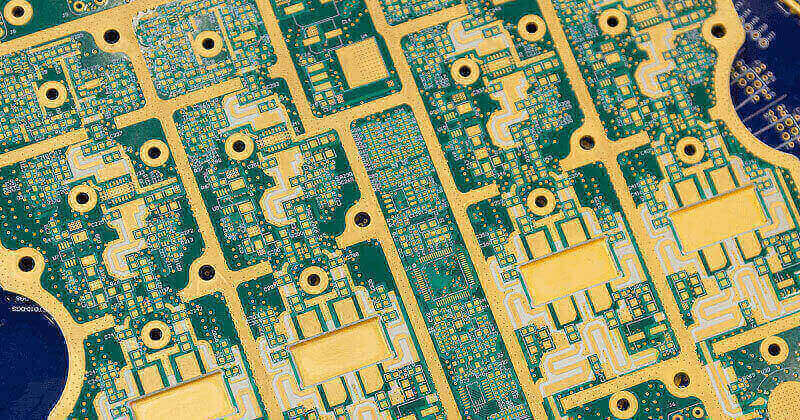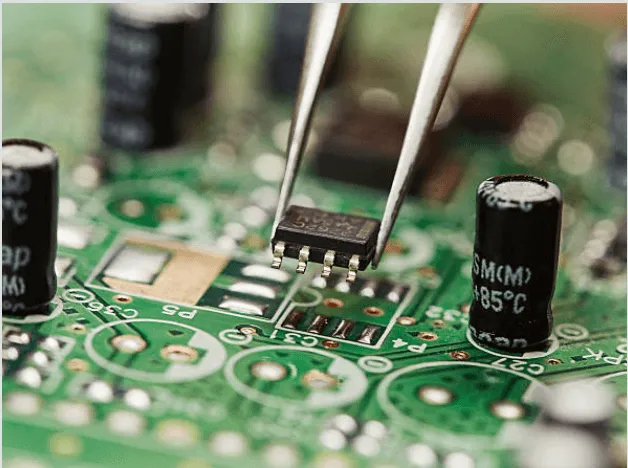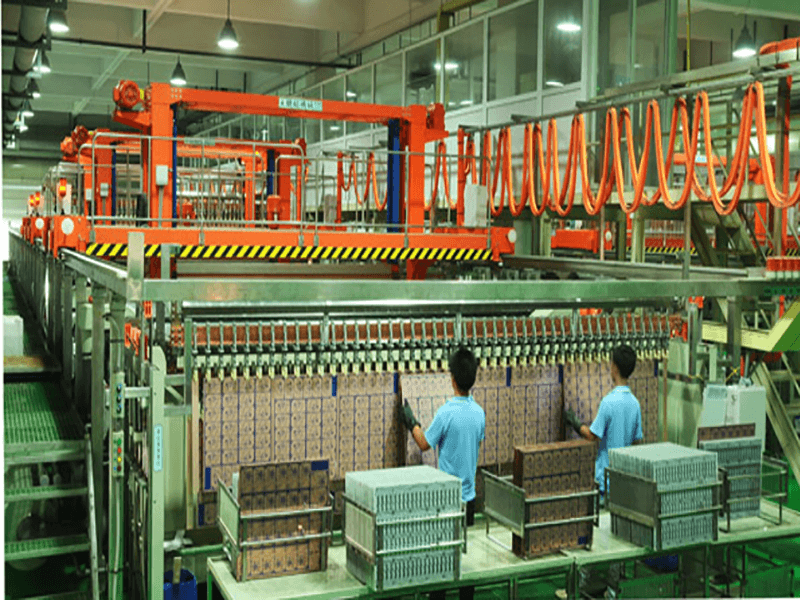
High Frequency RF PCB: Materials, Stack and Design What Makes a Board High Frequency A board is high frequency when the behaviour of its conductors stops being a wire problem and becomes a wave problem. The practical threshold is not a specific number but a relationship: when a trace is…
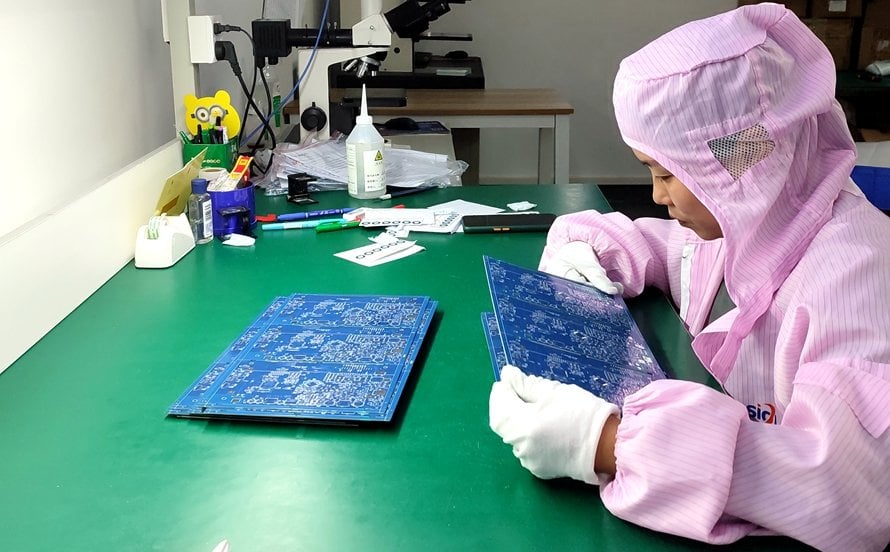
PCB Panel Border Width: The Frame Around the Boards Modern electronics depend on boards that are assembled correctly the first time. Every product – a phone, a charger, a medical instrument or an industrial controller – relies on thousands of solder joints that must conduct current for years. This article…
Rogers 5870 PCB: The Lowest-Dk PTFE Laminate Where 5870 Sits Rogers 5870 is a polytetrafluoroethylene laminate reinforced with glass microfibre, produced in the same family as 5880 and aimed at the applications where the lowest available dielectric constant and the lowest loss are the deciding factors. Its dielectric constant is…
6-Layer High Frequency PCB: Stack and Materials Why Six Layers Is the Common Answer A high frequency design that also has digital and power circuitry tends to end up at six layers. Two layers cannot give the radio frequency section a ground plane and the digital section a separate return;…
PCB Breakaway Tab Size: A Practical Manufacturing Guide Electronics manufacturing has become a discipline of small details. Solder paste volumes, placement accuracy, temperature profiles and inspection limits all add up to the final result. This guide looks at PCB breakaway tab size from the perspective of a PCBA factory floor,…
Nickel Flash Gold PCB: A Thin Gold Finish Explained What the Finish Actually Is Nickel flash gold is a plated finish of nickel with a very thin layer of gold on top, applied by the same electrochemical sequence used for electroless nickel immersion gold but with a much shorter gold…
PCB Mouse Bite Design: Small Tabs That Hold the Board Buyers and engineers often focus on the finished product and forget the production line behind it. In practice, most field failures can be traced back to process decisions made during assembly. Understanding PCB mouse bite design gives you a practical…
16-Layer PCB: Stack-Up and Manufacturing Limits What Changes at Sixteen Layers A sixteen layer board differs from a twelve layer board by more than four layers. The board is thicker, the through vias are longer, the accumulated registration error across the stack is larger, and the number of process passes…
PCB V-score Depth Tolerance: A Practical Review for Manufacturing Teams Buyers and engineers often focus on the finished product and forget the production line behind it. In practice, most field failures can be traced back to process decisions made during assembly. Understanding PCB V-score depth tolerance gives you a practical…
Standard MCPCB Thickness: How to Choose Two Thicknesses, One Confusion A metal core board has a metal base and a dielectric layer, and both have a thickness. When a specification says 1.6 millimetres it usually means the total, but the number that governs the thermal performance is the dielectric, and…