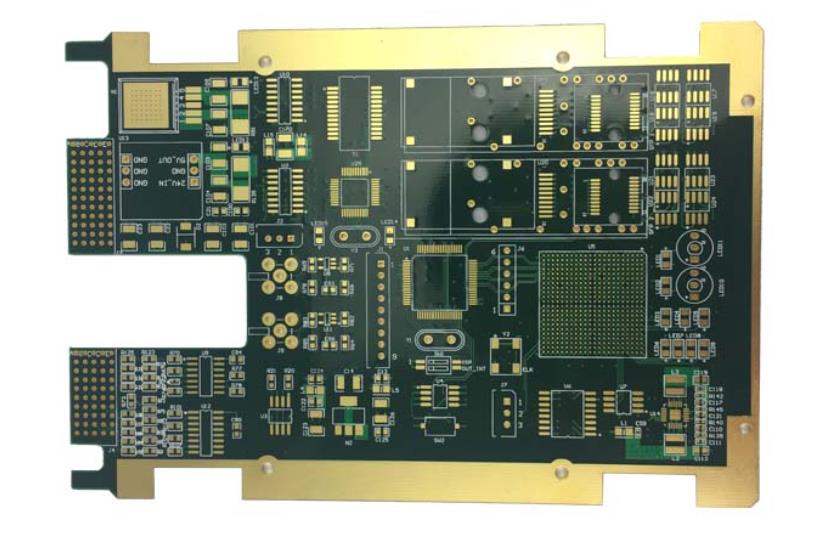
Double-Sided Rigid PCB: Structure, Design and Price What a Double-Sided Rigid PCB Is A double-sided rigid board carries copper on both faces of a stiff insulating core and connects the two faces with plated through holes. The laminate is usually FR-4, occasionally a high glass transition grade or a composite…
PCB Microvia Target Pad Concentricity: Landing in the Middle Buyers and engineers often focus on the finished product and forget the production line behind it. In practice, most field failures can be traced back to process decisions made during assembly. Understanding PCB microvia target pad concentricity gives you a practical…
Aluminium Nitride Substrate: Thermal Performance and Sourcing Why Aluminium Nitride Aluminium nitride is a ceramic that behaves like a metal in one respect and like an insulator in another. Its thermal conductivity is around 170 watts per metre kelvin, roughly seven times that of alumina and comparable to some aluminium…
PCB Drill Entry Burr Control: A Clean Hole on Both Sides Electronics manufacturing has become a discipline of small details. Solder paste volumes, placement accuracy, temperature profiles and inspection limits all add up to the final result. This guide looks at PCB drill entry burr control from the perspective of…
Military Grade vs Industrial Grade PCB: Which to Choose Two Grades, Two Sets of Assumptions The difference between a military grade board and an industrial grade board is not a single specification. It is a different set of assumptions about what the product must survive. An industrial controller is expected…
Switch PCB: The Board Behind Every Button What a Switch PCB Is A switch board is the least glamorous and one of the most heavily used circuits in electronics. Its job is to turn a physical action into an electrical event, and to do it several million times without wearing…
PCB Smear Removal After Drilling: Design and Assembly Considerations Modern electronics depend on boards that are assembled correctly the first time. Every product – a phone, a charger, a medical instrument or an industrial controller – relies on thousands of solder joints that must conduct current for years. This article…
PCB Resin Recession at Hole Wall: Process Details and Inspection Points Electronics manufacturing has become a discipline of small details. Solder paste volumes, placement accuracy, temperature profiles and inspection limits all add up to the final result. This guide looks at PCB resin recession at hole wall from the perspective…
PCB Manufacturing Glossary: Terms Engineers Must Know Why the Vocabulary Matters A printed circuit board passes through a dozen hands before it is finished, and each of those hands uses a slightly different word for the same object. A designer calls it a footprint; a fabricator calls it a land…
SMT SPI Measurement Accuracy: Checking the Print, Not the Joint Modern electronics depend on boards that are assembled correctly the first time. Every product – a phone, a charger, a medical instrument or an industrial controller – relies on thousands of solder joints that must conduct current for years. This…