PCB Miniaturisation: Principles, Limits and Cost What Miniaturisation Means in Practice Miniaturising a board means fitting the same circuit into less area, less thickness or less weight, without giving up performance. It is not one technique but a set of them applied together, and the useful ones depend on what…

PCB Stackup Symmetry: Building the Same on Both Sides Electronics manufacturing has become a discipline of small details. Solder paste volumes, placement accuracy, temperature profiles and inspection limits all add up to the final result. This guide looks at PCB stackup symmetry from the perspective of a PCBA factory floor,…
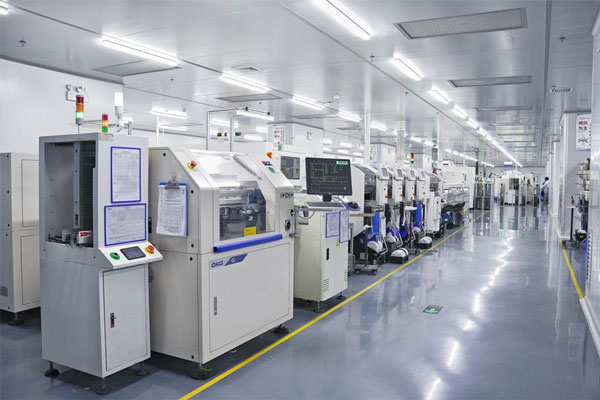
How Much Does It Cost to Build a PCB Factory? What the Question Really Asks Building a printed circuit board factory is a capital project with three distinct cost blocks: the initial investment to build and equip the plant, the monthly cost of running it, and the working capital needed…
PCB Warp During Reflow: When Heat Bends the Board Modern electronics depend on boards that are assembled correctly the first time. Every product – a phone, a charger, a medical instrument or an industrial controller – relies on thousands of solder joints that must conduct current for years. This article…
Connected Device PCB: Design for Wireless Products What Makes a Connected Board Different A connected device is one that talks to something else, whether over Wi-Fi, Bluetooth, Zigbee, Thread, LoRa or a cellular network. The circuit board inside it is not fundamentally different from any other board, but three requirements…
PCB Panel Bow and Twist Limits: Key Process and Quality Checks Buyers and engineers often focus on the finished product and forget the production line behind it. In practice, most field failures can be traced back to process decisions made during assembly. Understanding PCB panel bow and twist limits gives…
Medical Instrument PCB: Design and Manufacturing What Makes a Medical Board Different An instrument that is used on or inside a patient is regulated before it is manufactured. The board inside it has to be designed, built and documented in a way that can be audited, and every decision that…
PCB Copper Balance Across Panel: A Factory-Floor Review Modern electronics depend on boards that are assembled correctly the first time. Every product – a phone, a charger, a medical instrument or an industrial controller – relies on thousands of solder joints that must conduct current for years. This article explains…
Aluminium PCB Thickness: How to Choose The Three Thicknesses on an Aluminium Board Every metal core board has three layers, and each has its own thickness. The copper foil carries the circuit, typically one ounce, two ounces or heavier where current is high. The dielectric layer bonds the copper to…
PCB Laser Via Energy Density: The Right Dose of Light Electronics manufacturing has become a discipline of small details. Solder paste volumes, placement accuracy, temperature profiles and inspection limits all add up to the final result. This guide looks at PCB laser via energy density from the perspective of a…