Automation: Design Rules and Process Limits
Automation in a board shop is usually justified as labour saving, and that is rarely where most of the benefit comes from. The larger effects are consistency and yield. A machine that performs the same motion every time removes the variation between shifts, and the resulting improvement in process repeatability is often worth more than the operator hours that were removed. Understanding which benefit is driving a project is what makes the investment case honest and the result predictable.
What Automation Can Do
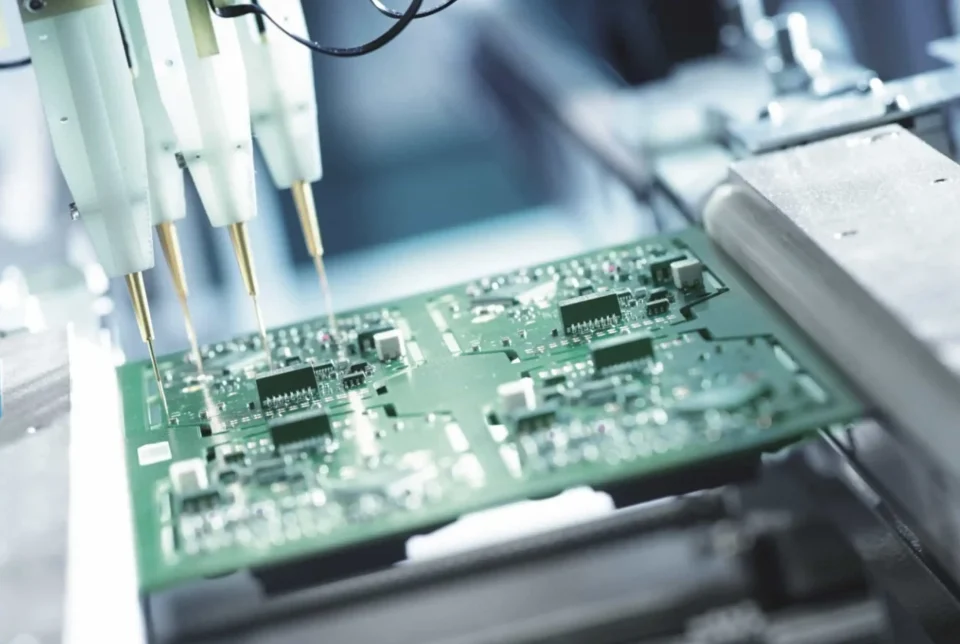
Automation covers a wide range of activities, from a simple conveyor that moves panels between two tanks to a robotic arm that loads and unloads a drilling machine. The common feature is that the motion is repeated without human intervention, which makes the result consistent and makes the labour available for something else. The scale of the project should match the scale of the problem being solved.
The most common starting points in a board shop are the movements that are heavy, repetitive or dusty. Loading and unloading panel racks, moving panels between process steps, and handling panels in and out of inspection stations all fall into this category, and all of them are places where an operator is exposed to risk and where the pace varies with fatigue. Automation of these movements tends to be well received, because it removes the least attractive part of the job.
Automated Inspection
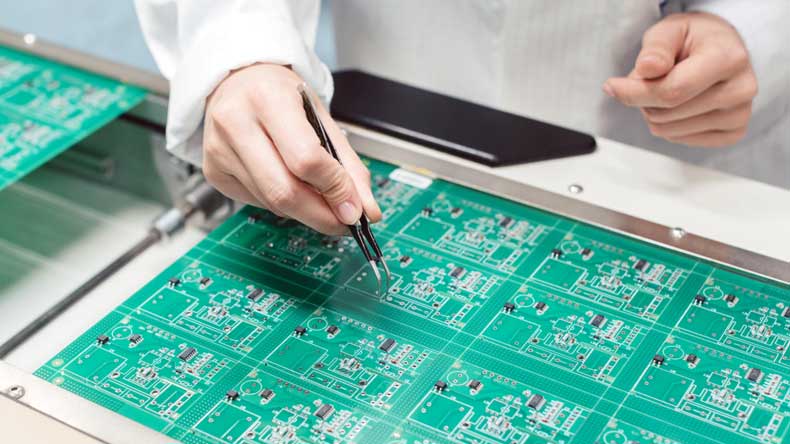
Automated inspection is the form of automation with the clearest return, because inspection is a task where consistency matters more than judgement. An automated optical inspection system applies the same criteria to every panel at the same speed, and it produces a record that can be compared over time. Its limitation is that it finds what it was programmed to find, so the programming and the sample review of its results matter as much as the equipment.
The economics depend on volume and on the value of the escape that is prevented. At high volume the cost per panel falls quickly, while at low volume a manual or semi automated process is usually more economical. The decision should also account for the false call rate, which determines how much verification work the system creates, and a system with a high false call rate can consume more labour than the inspection it replaced, which is a common reason that automated inspection projects fail to deliver.
Robotic Handling and Repeatability
Robotic handling contributes to process repeatability in ways that are easy to underestimate. A panel placed at the same angle and the same speed into a process tank receives a more consistent treatment than one placed by hand, and the difference shows in the uniformity of the plating and in the reduction of damage to the edges. The benefit appears in the yield rather than in the payroll.
Repeatability also improves traceability, because a machine can record what it did and when without anyone writing it down. That record is what makes it possible to correlate a defect with a process condition, and it is the reason that automation and data collection tend to be introduced together. Where the automation exists without the data, half the value is left unclaimed, and the shop has paid for a machine while continuing to make decisions from memory.
Judging the Labour Saving
A labour saving case should be based on the work that is actually removed, not on the number of operators in the area. Automation often shifts work rather than eliminating it: an operator who used to load panels now monitors a system, clears faults and performs the maintenance that the equipment requires. The net saving is usually smaller than the initial estimate and it should be calculated from the task list rather than from the headcount.
The case should also include the cost of the equipment over its life. Maintenance, spare parts, programming and the downtime during installation all belong in the calculation, and a project that ignores them will look better on paper than in the accounts. Where the justification is mainly repeatability and yield, the yield improvement should be estimated from the shop’s own data rather than from a supplier’s reference.
Where to Start
The best first project is usually a task that is repetitive, has a stable method and has a measurable output. Sorting, counting, labelling and moving panels between adjacent stations all meet those conditions, and all of them allow the result to be measured within a month. Starting with a complex task that requires judgement is the most reliable way to spend a large budget and gain nothing.
The second consideration is the bottleneck. Automation at the constraint increases output directly, while automation elsewhere may only reduce cost. A shop that has limited capital should normally automate at the constraint first, unless the labour saving or the safety case somewhere else is overwhelming, and the two cases should be compared in the same terms rather than in the units that favour them.
Effects on the Workforce
Automation changes the skills the shop needs rather than removing the need for skill. Machines need to be set up, programmed, maintained and recovered from faults, and the people who do that work need training that the shop may not currently provide. A project that installs equipment without planning for those skills will find that the machine is only used at the fraction of its capability that the existing staff can support, and the shortfall will be blamed on the equipment rather than on the planning.
The reaction on the floor also matters. Where automation is presented as a way of removing the most tiring and repetitive work, it is generally accepted; where it is presented as a way of reducing headcount, the cooperation needed to make it work is harder to obtain. The same project can be either, and the difference is mostly in how it is introduced.
Practical Rules
Define the problem before choosing the equipment, judge the labour saving from the task list, and estimate the yield benefit from your own data. Start with a repetitive task with a stable method, and prefer the constraint when the capital is limited.
Plan the training and the maintenance before the installation, and connect the equipment to the production records so that the increased repeatability can be demonstrated. Automation in a board shop pays back through quality and consistency first and through labour second, and a business case that says so is more likely to be delivered than one that promises only headcount, because the quality benefit is the one that actually arrives.
Process Control and Verification
On a design of this kind, process repeatability is the item that decides how the rest of the board is arranged. Running a first article through the same checks as the production panel confirms that the two agree, and that comparison is the cheapest form of process control available at prototype stage. Keeping a sample from the panel turns a dispute into a measurement, because the same coupon can be re-examined by both parties without rebuilding the batch.
FAQ
Where does automation pay back fastest? Usually in inspection and in repetitive handling, because consistency is the main benefit and both have a measurable output.
Does automation remove jobs? It changes them. Machines need setting, programming, maintenance and fault recovery, which requires training.
What should be measured after installation? The repeatability of the process and the yield, as well as the labour, since the quality benefit is often the larger one.