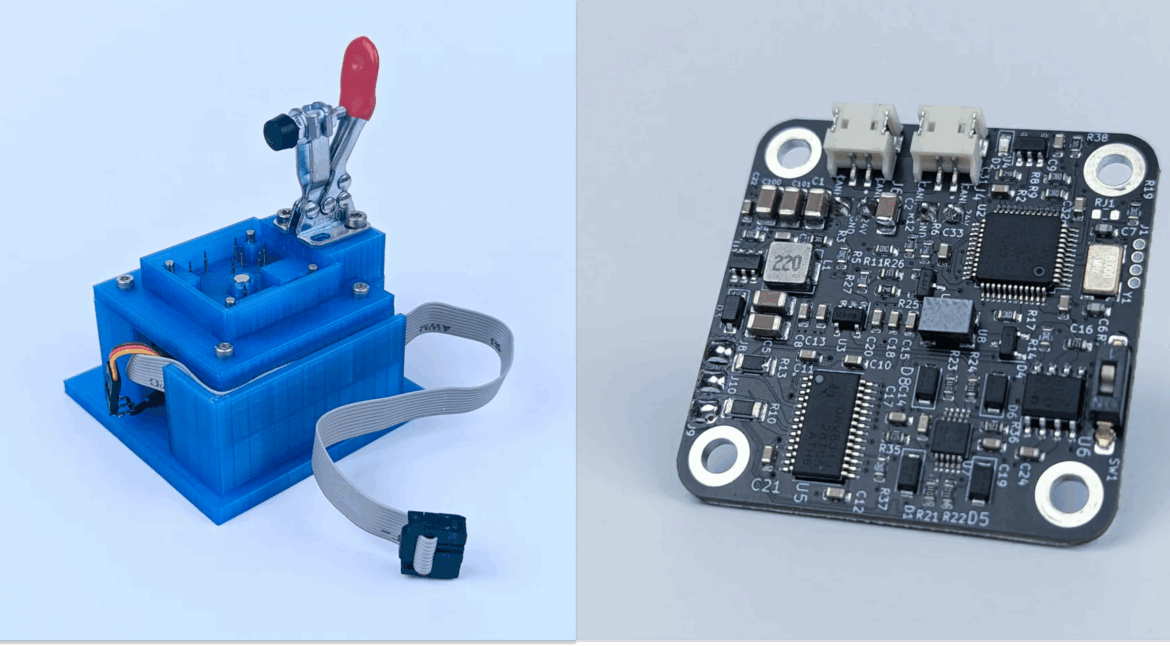
Counterfeit Components: Preparation, Placement and Process Control
Counterfeit components reach production through the same channels that supply legitimate parts, and they are most likely to appear when a device is scarce, when a part has gone obsolete, or when a price is offered that is well below the market. The consequences range from a batch of scrap to a field failure that cannot be diagnosed, which is why avoidance is a purchasing and inspection discipline rather than a single inspection step.
What Makes a Component Counterfeit
The common cases are a part that has been relabelled to a faster grade, a part that has been recovered from scrapped assemblies and cleaned, a part that was never manufactured by the brand on its marking, and a genuine part that has been rejected by the original maker and sold on instead of being destroyed.
Each case fails differently. A relabelled part may work on the bench and fail at temperature, a recycled part may have trimmed leads, residual solder and damaged moisture barrier packaging, and a mislabelled part may have the wrong die inside a genuine looking body.
The risk is highest for parts that are in short supply, for parts with a long lead time, for memory and analogue devices that are easy to re-mark, and for parts used in safety related functions where a single failure has a high cost. A part that is cheap enough to be worth re-marking is almost always one that is widely used, so high volume is not by itself a protection.
Purchasing Discipline
Buying from an authorised distribution channel is the single most effective control. The authorised channel provides a documented chain from the maker to the buyer, and it carries the maker warranty, which matters more than the price difference when a failure has to be investigated.
Where the broker market cannot be avoided, the parts should be treated as unverified until they have been inspected, and the inspection should be proportionate to the risk. The record of the source, the date code and the quantity is part of the control, because it makes a recall possible without guessing.
Purchase specifications should state that substitution is not permitted, that the moisture sensitivity level and the packaging must be as specified, and that the supplier must notify a change of fabrication site. A specification that does not say these things gives the supplier the freedom to make a compliant looking substitution. The clause should also cover packaging, because a part that arrives in an opened bag has lost its moisture sensitivity rating even when it is genuine.
<img src="https://www.gopcba.com/wp-content/uploads/2025/08/2-1.png" alt="Incoming inspection of reels of components at goods in” />
Incoming Inspection
Incoming inspection is a set of checks applied to a sample, and each check addresses a different failure mode. Marking, packaging and paperwork catch the crude cases; electrical and physical checks catch the rest; and a functional test at temperature catches those that only appear under stress.
The physical checks compare the part to a known good reference. The marking is compared letter by letter and line by line, the body dimensions and the lead finish are verified, and the part is examined for evidence of resurfacing such as erased or shadowed lettering and for blacktopping, in which the body has been recoated.
X ray fluorescence screens the plating and identifies a lead finish that does not match the specification, and a decapsulation of a sample reveals the die marking and the manufacturer. Decapsulation is destructive but it settles the question, and it is worth the cost when a suspicious batch is large.
The Obsolete Parts Problem
Obsolete parts are the largest single source of counterfeit risk, because the genuine supply has ended and the demand has not. A broker that offers an obsolete device at a normal price is either holding genuine stock with a documented history or supplying something else.
A last time buy is the standard answer. The quantity should be calculated from the remaining production life and the expected yield, and the parts should be stored under conditions that preserve the solderability and the moisture sensitivity level. Packaging that has been opened loses its rating unless it is dried and resealed.
Where a redesign is possible, the better answer is to replace the part while the last time buy still gives time to qualify the alternative. Leaving an obsolete part in a design transfers the risk to every future build and makes each purchase a new negotiation with the broker market.
Traceability and Records
Traceability links a board to the components that were used on it. The link is the lot number of the reel or the tray, recorded against the work order, and it is what makes a recall selective rather than total.
The record should include the maker, the maker part number, the date code, the lot, the supplier and the date of receipt. Where a part is traceable to an authorised channel, that fact should be recorded as well, because it changes what has to be inspected and what can be claimed.
The records have to be readable by someone who was not present. A lot number written on a bag that has been discarded is not traceability, and a system that stores the information only in the memory of the buyer is not a system. A useful test is whether an auditor who has never seen the product could follow the record from the board back to the reel.
Detection in Production
A counterfeit part that passes incoming inspection will often reveal itself on the line. A change in the solderability, a component that does not sit flat, a body dimension that interferes with the nozzle or the feeder, or a shift in a functional test reading are all signals. Those signals only help if operators know to report them, which makes training part of the control rather than a separate subject.
The line should have a route to report a suspect lot and quarantine it before it is consumed. Quarantine must include the parts already assembled, which means the traceability record has to be usable within the same shift, not after a search through paper.
Where a counterfeit is confirmed, the analysis should be documented and shared with the supplier and, where relevant, with the maker. The information is worth more than the credit note, because it protects the next build as well as the current one.
Practical Rules
Buy from the authorised channel, specify that substitution is not permitted, and inspect in proportion to the risk. Treat obsolete parts as a design problem rather than a purchasing problem, and keep the traceability record with the hardware.
Combine the purchasing controls with the incoming inspection routine, record the results alongside the build records, and review the supplier performance whenever a lot has to be quarantined.
FAQ
Why are obsolete parts the biggest risk? The genuine supply has ended while demand continues. Every purchase then depends on the broker market, where a documented history is often missing.
What is the most effective single control? Buying through the authorised distribution channel. It provides a documented chain from the maker and carries the maker warranty.
Can a counterfeit part be detected without destroying it? Partly. Marking, packaging, dimensions, X ray fluorescence and electrical checks all help, but decapsulation is what settles the question about the die inside.