PCB Manufacturer: Key Capabilities to Look for in a PCB Manufacturing Partner
What Does a PCB Manufacturer Do?
A PCB manufacturer converts electronic design data into physical printed circuit boards used in electronic products and systems. The manufacturing process can involve material preparation, inner-layer imaging, lamination, drilling, copper plating, circuit pattern formation, solder mask application, surface finishing, routing, inspection, and electrical testing.
However, choosing a PCB manufacturer is not simply about finding a factory capable of producing a circuit board.
Different electronic applications require very different PCB technologies. A consumer product may use a conventional multilayer FR-4 board, while an automotive power system may require heavy copper, a high-TG material, or specialized thermal management. High-speed computing and communication equipment may require controlled impedance and low-loss materials, while compact products may rely on HDI and microvia technology.
Therefore, the right manufacturing partner should combine technical capability, quality control, production flexibility, engineering support, and scalability.
1. Broad PCB Manufacturing Capability
One of the first factors to evaluate is the manufacturer’s overall technology range.
A capable PCB factory should be able to support common PCB structures as well as more demanding designs.
Depending on the application, manufacturing capabilities may include:
- Single-sided PCBs
- Double-sided PCBs
- Multilayer PCBs
- HDI PCBs
- High-speed PCBs
- High-frequency PCBs
- Rigid-flex PCBs
- Metal-core PCBs
- Heavy copper PCBs
- Controlled-impedance PCBs
- Blind and buried via PCBs
- Via-in-pad structures
- Specialized multilayer constructions
A broad technology portfolio gives engineers more freedom when selecting the appropriate PCB architecture.
For example, increasing layer count may help accommodate dense routing and power distribution, while HDI technology can provide greater interconnection density within a smaller footprint.
The important consideration is not simply whether a manufacturer lists these technologies on its website, but whether its engineering and production teams can consistently manufacture them according to the required specifications.
GOPCBA provides a wide range of PCB Manufacturing services, covering conventional and advanced PCB structures for different electronic applications.
2. Engineering Expertise Is as Important as Equipment
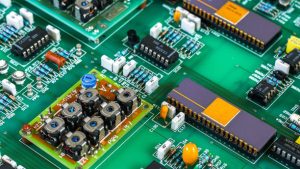
Modern PCB production is highly dependent on engineering knowledge.
Even when the customer’s design files are complete, manufacturing engineers may need to review the design for manufacturability, material compatibility, drilling requirements, impedance control, layer registration, and production tolerances.
A professional engineering review can identify potential issues before fabrication begins.
Important areas include:
Trace and Spacing
Very narrow traces and spaces require tighter manufacturing control and may increase fabrication difficulty.
Hole and Via Design
Hole diameter, aspect ratio, annular ring, and via structure all influence drilling and plating processes.
Stackup
For multilayer and high-speed PCBs, the stackup determines the relationship between signal layers, reference planes, dielectric thickness, and impedance.
Copper Distribution
Uneven copper distribution can affect plating uniformity, etching, lamination, and dimensional stability.
Material Selection
The laminate should be selected according to electrical, thermal, mechanical, and environmental requirements.
A strong PCB manufacturing partner should be able to explain these factors rather than simply process the files without technical review.
3. Material Selection Should Match the Application
The PCB substrate has a direct influence on electrical and mechanical performance.
Standard FR-4
FR-4 is widely used because it provides a practical combination of electrical performance, mechanical strength, manufacturability, and cost.
It is suitable for many general-purpose electronics, industrial control boards, consumer products, and embedded systems.
High-TG Materials
High-TG laminates can provide improved thermal stability for applications exposed to higher temperatures or demanding thermal processing conditions.
They may be considered for automotive, industrial, power, and other applications where thermal reliability is important.
High-Frequency Materials
RF and microwave applications require materials with controlled dielectric properties and low loss characteristics.
Material selection should consider dielectric constant, dissipation factor, frequency range, temperature stability, and stackup requirements.
High-Speed Materials
High-speed digital designs can be sensitive to dielectric loss, impedance variation, copper roughness, and signal path geometry.
The PCB material and stackup should therefore be selected as part of the overall signal-integrity strategy.
Metal-Core PCBs
Metal-core PCBs can provide improved thermal management for applications where significant heat must be transferred away from electronic components.
The correct material is therefore not necessarily the least expensive option. It should be selected based on the actual electrical and environmental requirements of the product.
4. Advanced PCB Technologies Support More Complex Designs
As electronic products become smaller and more powerful, conventional PCB structures may not always provide enough routing density or electrical performance.
Advanced manufacturing technologies can solve specific engineering challenges.
HDI PCB Manufacturing
HDI technology uses microvias and high-density interconnections to increase routing capability within a limited board area.
It is commonly considered for compact electronics, high-density computing hardware, automotive electronics, and other products where PCB space is limited.
Blind and Buried Vias
Blind and buried vias can help optimize routing in multilayer designs while reducing the amount of through-hole space required.
However, these structures require tighter process control than conventional through vias.
Controlled-Impedance PCB Manufacturing
High-speed signals require controlled transmission-line characteristics.
Manufacturing variables such as trace width, copper thickness, dielectric thickness, and material properties can influence impedance.
For this reason, impedance requirements should be incorporated into the PCB stackup and fabrication process rather than treated as a final inspection item only.
Heavy Copper PCBs
Heavy copper technology can support applications involving higher current loads and increased thermal demands.
The manufacturing process must account for copper thickness during etching, plating, lamination, and thermal processing.
These technologies demonstrate why a PCB manufacturer should be evaluated according to actual engineering capabilities rather than basic board-production capacity alone.
5. Quality Control Should Cover the Entire Manufacturing Process
PCB reliability is determined by much more than final visual appearance.
A professional PCB Manufacturing process should include quality controls from incoming materials through final inspection.
Incoming Material Inspection
Materials such as copper-clad laminate, copper foil, prepreg, solder mask, and other production materials should meet defined specifications.
Material control is particularly important for high-reliability and specialized PCB applications.
Drilling Inspection
Drilling accuracy affects hole position, via connectivity, annular ring, and subsequent plating quality.
Circuit Inspection
After circuit formation, inspection systems can identify pattern defects, opens, shorts, and other abnormalities.
AOI
Automated Optical Inspection provides high-speed inspection of PCB patterns and can identify many visual manufacturing defects.
Electrical Testing
Electrical testing can verify circuit connectivity and identify open or short circuits that may not be visible through optical inspection.
Final Inspection
Finished boards should be checked for dimensions, appearance, surface finish, solder mask, markings, and other customer-defined requirements.
For applications with additional reliability requirements, appropriate qualification and reliability testing should also be established according to the product and applicable standards.
6. Flexible Production Capacity Matters
PCB customers do not all have the same production requirements.
An engineering company may need a small number of prototype boards for testing, while an established electronics manufacturer may require stable production volumes over an extended period.
A capable manufacturer should be able to manage different order profiles without sacrificing quality.
This includes:
- Prototype orders
- Small-batch production
- Medium-volume production
- High-volume manufacturing
- Repeat production
- Engineering change orders
- Urgent production requirements
Production flexibility is particularly important for companies whose demand changes throughout the product lifecycle.
A reliable manufacturer can support the project during early development and then scale production as demand increases.
7. PCB Prototyping Helps Reduce Development Risk
Prototype manufacturing is an important part of the product development cycle.
Before committing to volume production, engineers can use prototype boards to verify:
- Circuit functionality
- Component placement
- Mechanical fit
- Signal performance
- Thermal behavior
- Assembly process
- System integration
A prototype can also expose manufacturing issues that were not obvious during the design stage.
For example, engineers may discover that a connector interferes with a mechanical enclosure, that a thermal area requires additional copper, or that a high-speed interface needs a stackup adjustment.
Early discovery allows these problems to be corrected before large quantities are produced.
GOPCBA supports PCB Prototype Assembly for customers that need assembled engineering samples for functional and design validation.
PCB Prototype Assembly
8. Flexible Manufacturing Should Not Mean Uncontrolled Manufacturing
Production flexibility must be supported by standardized processes.
A manufacturer handling many different PCB configurations needs robust process management to maintain consistency.
Important production controls can include:
- Controlled process parameters
- Standardized work instructions
- Material traceability
- Equipment maintenance
- Process inspection
- Statistical process monitoring
- Engineering change control
- Final quality verification
The objective is to combine flexibility with repeatability.
This becomes particularly important when a customer places recurring orders months or years after the original prototype.
The manufacturer should be able to reproduce the approved design consistently rather than treating every production order as an entirely new project.
9. Production Equipment Supports Process Stability
Manufacturing equipment is another important factor when evaluating a PCB supplier.
Depending on the PCB technology, a factory may require equipment for:
- Laser or mechanical drilling
- Imaging
- Etching
- Copper plating
- Lamination
- Solder mask coating
- Surface finishing
- CNC routing
- AOI inspection
- Electrical testing
- X-ray inspection
However, equipment quantity alone does not determine manufacturing quality.
More important factors include equipment capability, maintenance, process control, operator expertise, and how the equipment is integrated into the overall production system.
For complex PCBs, process compatibility between different manufacturing stages is particularly important.
10. Global Customers Need Reliable Communication
PCB manufacturing is increasingly international.
Customers may design products in North America or Europe, manufacture components in Asia, and sell finished products across multiple markets.
This makes communication an important part of supplier performance.
A professional manufacturer should provide clear communication regarding:
- Engineering questions
- Quotation details
- Material availability
- Production status
- Quality issues
- Delivery schedules
- Engineering changes
- Shipping arrangements
Technical communication should be precise enough that engineers on both sides have the same understanding of the product requirements.
For international customers, clear documentation and responsive communication can significantly reduce unnecessary delays.
11. Technology Development Must Follow Market Requirements
The PCB industry continues to evolve alongside electronics.
Artificial intelligence, data centers, 5G communications, electric vehicles, industrial automation, medical electronics, and advanced consumer products are creating increasingly demanding PCB requirements.
These trends influence:
- Layer counts
- Routing density
- Signal speeds
- Power density
- Thermal requirements
- Material selection
- Miniaturization
- Reliability requirements
A PCB manufacturer that continuously develops its engineering and manufacturing capabilities is better positioned to support these changing requirements.
For example, high-speed computing hardware may require sophisticated stackup and impedance control, while electric vehicle electronics may place greater emphasis on thermal management and high-current capability.
Manufacturing technology should therefore evolve together with customer applications.
12. Certifications and Quality Systems Provide a Structured Framework
Certifications can be useful when evaluating PCB suppliers, especially for regulated or high-reliability applications.
Common quality management certifications include:
- ISO 9001
- ISO 13485
- IATF 16949
The importance of a particular certification depends on the customer’s industry and product requirements.
However, certification alone should not be treated as proof that every PCB will be defect-free.
Customers should also evaluate:
- Process controls
- Inspection capabilities
- Traceability
- Corrective action procedures
- Engineering support
- Quality documentation
- Manufacturing consistency
A strong quality system should support continuous improvement rather than simply serve as a certification on a website.
13. PCB Manufacturing Cost Should Be Evaluated as Total Cost
The lowest PCB quotation is not always the lowest overall manufacturing cost.
A low initial price can become expensive if it results in:
- Prototype failures
- Delayed delivery
- High defect rates
- Repeated engineering changes
- Poor yield
- Additional inspection
- Production interruptions
- Unstable quality
A better evaluation considers the total cost of manufacturing and supply-chain risk.
Important cost factors include:
Material
Specialized laminates and heavy copper constructions generally cost more than standard materials.
Board Complexity
Higher layer counts, HDI structures, controlled impedance, and special processes can increase manufacturing costs.
Quantity
Production volume can influence setup costs and unit pricing.
Testing
Additional electrical or reliability testing may increase manufacturing cost but can provide important quality assurance.
Assembly
If components must also be assembled, procurement, SMT, through-hole processing, inspection, and testing become part of the total manufacturing cost.
The right manufacturer should therefore offer a reasonable balance between price, quality, engineering support, and delivery reliability.
14. One-Stop PCB Manufacturing Can Simplify the Supply Chain
For many electronics companies, PCB fabrication is only one part of the manufacturing process.
The complete workflow may involve:
PCB Design → PCB Fabrication → Component Procurement → PCB Assembly → Testing → Final Inspection → Delivery
Managing multiple suppliers can create additional coordination work.
A one-stop manufacturing partner can simplify communication and reduce the number of production handoffs.
For projects requiring both PCB fabrication and assembly, turnkey manufacturing can integrate multiple stages into a coordinated workflow.
GOPCBA provides Turnkey PCB Assembly, combining PCB fabrication, component procurement, SMT assembly, through-hole assembly, inspection, testing, and related manufacturing services.
How to Choose the Right PCB Manufacturer
Before selecting a supplier, consider the following checklist:
Technical Capability
Can the manufacturer produce the required layer count, materials, via structures, copper thickness, and special processes?
Engineering Support
Does the supplier provide DFM analysis and technical feedback before production?
Quality Management
Are materials, processes, and finished boards inspected systematically?
Prototype Capability
Can the manufacturer support rapid engineering samples and design revisions?
Production Scalability
Can the same supplier support the project when it moves from prototype to volume manufacturing?
Communication
Can technical questions and production issues be resolved quickly?
Total Cost
Does the quoted price reflect the complete manufacturing scope rather than only the basic PCB fabrication cost?
A supplier that performs well across these areas is more likely to become a dependable long-term manufacturing partner.
PCB Manufacturer FAQ
What is the difference between a PCB manufacturer and a PCB assembly company?
A PCB manufacturer primarily fabricates bare circuit boards. A PCB assembly company places electronic components onto the fabricated PCB.
Some suppliers provide both services, allowing customers to manage fabrication and assembly through a single manufacturing partner.
What information does a PCB manufacturer need?
Typical requirements include Gerber files, drill files, board specifications, stackup information, material requirements, copper thickness, surface finish, and any special manufacturing instructions.
For assembly, additional information such as the BOM and pick-and-place files may be required.
What type of PCB manufacturer should I choose for prototypes?
Look for a supplier with strong engineering support, fast prototype capability, DFM review, reliable quality control, and the ability to support future production.
Can the same PCB manufacturer handle prototypes and mass production?
Yes. Many manufacturers support projects throughout the product lifecycle. Using the same qualified supplier can simplify the transition from prototype validation to production.
Conclusion: What Makes a Good PCB Manufacturer?
A reliable PCB Manufacturer should provide much more than basic fabrication capacity.
The ideal partner combines:
Advanced Manufacturing Technology + Engineering Expertise + Quality Control + Flexible Production + Responsive Communication + Production Scalability
Technical capability determines whether the manufacturer can build your PCB. Quality systems determine whether it can build the board consistently. Engineering support helps identify problems before production. Flexible capacity allows the supplier to support changing demand, while scalable manufacturing provides continuity as the product moves from prototype to volume production.
For modern electronics companies, selecting the right PCB Manufacturing partner is therefore a strategic decision rather than simply a purchasing decision.
Whether you need a conventional multilayer board, HDI PCB, high-frequency circuit board, high-speed PCB, rigid-flex design, heavy copper board, or a complete PCB assembly solution, the best manufacturing partner should be able to understand the engineering requirements and provide a reliable path from design through production.