PCB Membrane Switch Panel Cost Guide 2026
A PCB membrane switch panel cost is not the same as the price of a bare circuit board, because the complete component combines a graphic overlay, thin switch layers, adhesive, tactile domes, LEDs, connectors, a PCB, and final assembly. These panels appear in industrial controls, medical equipment, instruments, consumer devices, automotive consoles, and smart appliances. Each design decision affects the total cost, from the overlay material and printing process to the PCB layer count and order quantity.
This 2026 guide explains realistic pricing ranges, the cost structure of a membrane switch PCB assembly, the factors that create large differences between quotations, and practical ways to control expense while maintaining reliability.
What Is a PCB Membrane Switch Panel?
A PCB membrane switch panel is a low-profile human-machine interface built from several functional layers. Users press printed keys or defined areas on a graphic overlay, causing a circuit to close and send a signal to the device. Compared with mechanical switches, the construction is thin, light, customizable, and easier to seal against dust and moisture.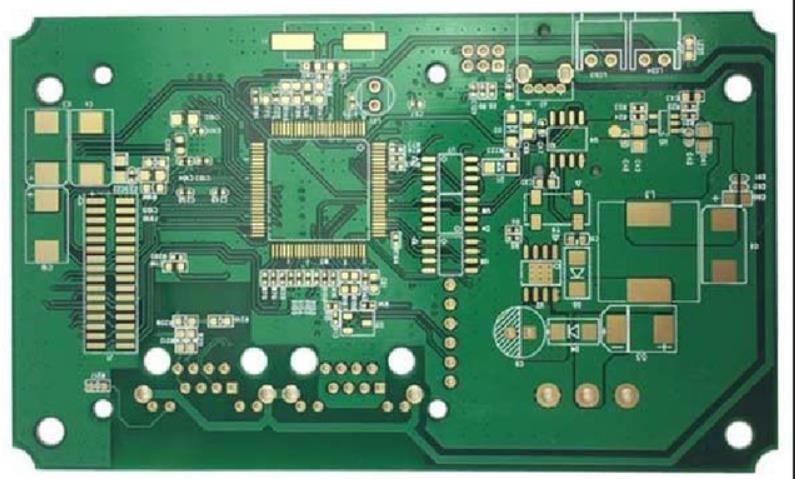
When the switch is combined with a PCB, the board can support more than simple contacts. It can carry LEDs, connectors, resistors, sensors, a microcontroller, backlight circuitry, display interfaces, and communication functions. A typical stack may include the graphic overlay, printed circuit layer, spacer, adhesive, metal domes, PCB, tail connector, and protective film.
The final structure should be matched to the product environment. A basic industrial panel may use PET film, a two-layer FR-4 PCB, and a simple LED arrangement. A medical or automotive panel may need chemical-resistant film, UV-stable printing, backlighting, tactile feedback, and stricter electrical and reliability testing.
2026 Price Ranges for PCB Membrane Switch Panels
Pricing is highly project-specific, but these ranges provide a useful starting point for budgeting. A custom prototype or very small order can cost roughly USD 10 to USD 50 or more per panel because fixed engineering, tooling, and setup costs are divided among only a few pieces.
Small production quantities of 100 to 500 panels commonly fall between USD 8 and USD 30 each. Medium production of 1,000 to 5,000 units often lands in the USD 4 to USD 15 range. Orders above 10,000 units can reach approximately USD 2 to USD 8 per panel for relatively simple structures, while complex industrial, medical, automotive, or highly populated panels remain above that range.
None of these numbers can replace a quotation based on Gerber files, BOM, PCB drawings, overlay artwork, materials, quantities, tolerances, and test requirements. The right approach is to ask for multiple price points across your expected order quantities so the cost curve is visible.
Main Cost Components of a Membrane Switch PCB
Bare PCB production is usually a large part of total cost. Board size, layer count, copper weight, material, minimum trace, via structure, finish, and quantity all influence the PCB quote. A simple two-layer board is relatively inexpensive; four-layer or six-layer boards with fine lines or impedance control increase the price significantly.
The overlay and film layers also matter. PET is common for cost-effective industrial products, while PC or acrylic films may be selected for impact resistance or different optical behavior. High-temperature, UV-resistant, or chemically resistant films add material cost when the application needs them.
Printing, tooling, tactile components, LEDs, adhesives, and assembly are additional line items. A quote that includes only bare boards will not predict the cost of the finished membrane switch interface.
Panel Size, Key Count, and Circuit Complexity
Larger panels consume more film, ink, adhesive, and processing time. A panel with 30 keys requires more artwork, traces, metal domes, and testing than one with five keys. Key spacing and printed detail also influence tolerances and yield.
Circuit complexity is another major driver. A simple design may only handle key scanning and LED signals. A complex panel can integrate a key matrix, LED array, display module, sensor, microcontroller, connectors, and power management. More components mean more design effort, SMT placement, and functional testing.
Using the correct PCB layer count is important. A two-layer board is often enough for a basic switch panel, while dense layouts, controlled impedance, EMI isolation, or many components may justify four or six layers. Early PCB design and layout review can identify an unnecessary layer count before it becomes a fixed cost.
Overlay Material, Printing, and Graphic Design
Overlay material affects appearance, durability, chemical resistance, UV stability, and cost. Simple single-color or two-color artwork is more economical than a design with many colors, transparent windows, metallic effects, textures, or strict print registration. Higher-end films are justified when the device operates outdoors, near solvents, or in medical environments.
Adhesive and spacer selection should consider operating temperature, humidity, chemical exposure, surface energy, bond strength, and service life. Saving a small amount on adhesive can lead to edge lifting, bubbles, or peeling in the field. For industrial and medical equipment, long-term reliability usually matters more than the lowest material price.
Tactile Feedback and Backlight Options
Metal domes provide a clear click and a more satisfying operator response, but they add components and assembly cost. Polyester domes or raised printed keys are alternatives for some designs. If the switch must survive millions of cycles, dome life testing becomes important.
Backlit panels require LEDs, light-guide structures, diffusers, mask layers, and additional PCB circuitry. More LEDs, larger backlit zones, and independent lighting channels increase cost. Designers should balance the optical requirement with the simplest illumination structure that still gives readable results.
When a panel contains substantial electronic content, SMT PCB assembly must be carefully controlled so LEDs, connectors, and other parts are positioned correctly for the overlay geometry.
Tooling, Prototype, and Volume Price Differences
Custom membrane switches often require die-cut tools, embossing tools, alignment fixtures, and test fixtures. Simple tooling may cost USD 50 to USD 300, while complex structures can be more expensive. For large orders, these fixed costs are spread across many parts and have little impact on unit price.
The difference is most visible at prototype stage. If the engineering and tooling cost is USD 500 and you make only 10 panels, that fixed cost adds USD 50 per unit. If the same project produces 10,000 panels, the same cost adds only USD 0.05 per unit. Requesting a prototype and a realistic production forecast helps the supplier choose the correct manufacturing route.
Complete Manufacturing Process
The process starts with engineering review of the Gerber files, PCB drawings, BOM, overlay artwork, mechanical drawings, electrical specifications, and test plan. This is the best point to catch mismatches between the switch geometry and the PCB component placement.
The bare PCB is fabricated with inner layers, lamination, drilling, copper plating, imaging, etching, solder mask, surface finish, and electrical test. The film overlay is cut, printed, baked, die-cut, embossed, and laminated as required. Electronic components are then assembled onto the PCB with SMT and through-hole processes.
Finally, the switch and board are aligned and bonded. Inspection should cover key operation, continuity, LED function, connector fit, dimensional accuracy, bond strength, appearance, and, where required, lifecycle and environmental testing.
How to Reduce Membrane Switch Panel Cost
Simplify the design before seeking quotes. Choose the lowest practical PCB layer count, avoid overly narrow traces, and standardize common components such as LEDs, connectors, resistors, and capacitors. Standard parts reduce procurement risk and can shorten lead time.
Review the panel size and key spacing to eliminate unnecessary material and process time without hurting ergonomics. Work with the manufacturer early on DFM items including trace and pad dimensions, overlay tolerances, key pitch, print registration, adhesive areas, connector location, and alignment features.
Production volume is the most direct lever after the design is verified. Increasing order size spreads tooling, engineering, and setup costs over more units, lowering the per-panel price more quickly than asking multiple suppliers to build different variations.
Choosing the Right Manufacturing Partner
The ideal partner can handle bare board production, membrane switch fabrication, PCBA, and testing under one quality system. Single-source coordination reduces dimensional mismatch risk and simplifies communication when the overlay and the electronic circuit must fit together precisely.
Evaluate the supplier’s engineering review, material supply chain, process documentation, and ability to support prototypes and volume production. Ask for examples of similar control panels and check how they manage dimensional tolerances and functional test records.
For integrated projects, box build assembly can take the membrane switch PCB from component-level assembly to a more complete product enclosure, while component procurement supports stable sourcing of LEDs, connectors, and electronic parts.
Buyers should also compare quotations on the same specification sheet. One supplier may appear cheaper because it excludes film artwork, tooling, component assembly, or functional test. Another may look more expensive because the quotation includes the complete qualified component. Asking each supplier to list the same deliverables makes the true cost comparison much more reliable.
Conclusion
PCB membrane switch panel cost depends on overlay design, tactile structure, backlighting, PCB complexity, tooling, volume, and quality expectations. A low bare-board price does not guarantee a low finished-panel price, so comparisons should be based on the complete BOM and manufacturing scope.
With disciplined design review and a partner who controls PCB, membrane switch, assembly, and testing together, OEMs can build a reliable human-machine interface at a realistic cost for both prototype and production.