
Peel Test: 5 Rules for Repeatable Plating Adhesion Results
A peel test is the oldest and simplest measure of plating adhesion, and it is also the one most often performed inconsistently. A strip of plated copper is pulled away from the laminate and the force is recorded, but the number depends on how the coupon was made as much as on the plating itself. Five rules make the result repeatable.
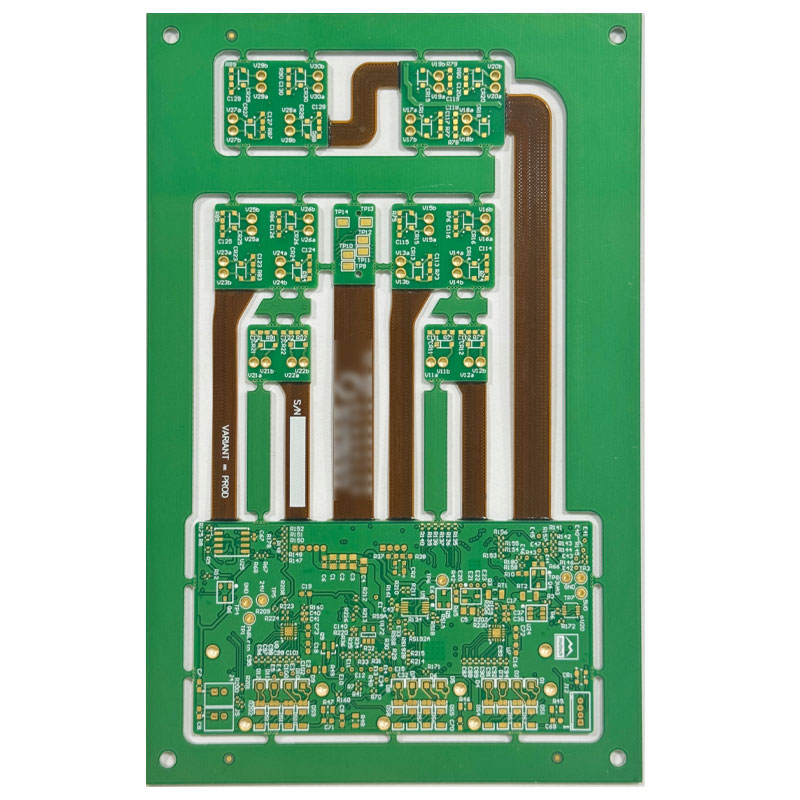
<img src="https://www.gopcba.com/wp-content/uploads/2025/09/32层高速通讯背板.jpg" alt="Peel test coupon used to check plating adhesion on a PCB” />
What a Peel Test Measures
The test measures the force needed to separate a defined strip of plated metal from the surface beneath it. That force reflects the bond, and it also reflects the width of the strip, the thickness of the metal and the angle at which it is pulled. Pull strength is recorded as force per unit width so results can be compared.
Because so much depends on the method, the result is only meaningful when the method is fixed. A peel test carried out differently by two operators produces two different numbers from the same panel, and neither is wrong. The written method is the only thing that makes the number meaningful. Two operators using different angles will not agree on the same coupon.
Coupon Design and Where It Is Plated
The test coupon should be designed for the test rather than cut from a production panel after the fact. A defined strip width, a clean edge and a known location on the panel all remove variation before the measurement begins. A coupon designed for the test is cheaper than arguing about a production panel.
Where the coupon sits matters as well. A coupon at the edge of the rack plates differently from one at the centre, so the position should be recorded and kept the same between runs to allow comparison. A coupon taken from the same position each time builds a trend that can be trusted.
Surface Preparation and Its Effect
Plating adhesion is created by surface preparation, so the peel test is really a check on the steps that came before the plating tank. Oxide left in place, a passive microetch or a wet panel all reduce the bond that the test then measures. A weak peel result points upstream, not at the plating tank. The preparation stages are where the bond is actually created.
That makes the coupon a useful window on the line. When peel strength falls, the answer is usually in the preparation stages rather than in the plating chemistry, and brushing and etching practice should be checked first. Mechanical cleaning before the etch removes debris that chemistry cannot lift, as described in abrasive brush cleaning.
Test Speed, Angle and Fixture
Peel strength depends on how fast the strip is pulled. A hand pull varies between operators and between attempts, while a powered fixture with a set speed gives a number that can be compared over months and between lines. A powered puller with a set speed removes the largest single source of variation.
The angle matters for the same reason. A strip pulled at ninety degrees behaves differently from one peeled back at a shallow angle, and the fixture should hold the geometry rather than relying on the operator hand. The fixture should be checked for alignment before a comparison run.
Sample Size and Repeatability
A single peel result says very little, because the bond varies across a panel. Three to five strips per coupon, taken from defined positions, give an average and a spread that can be compared with the specification. The spread between strips is often more useful than the average alone. Three strips are the practical minimum for a usable average.
Repeatability should be established before any limit is set. Running the same coupon twice under the same conditions shows how much of the variation belongs to the method, and that figure sets the smallest change worth investigating. A method that cannot repeat itself cannot set a limit for anyone else.
Interpreting Results and Setting Limits
Limits should be expressed as a range rather than a minimum only. A peel strength far above the typical band can indicate a brittle deposit or a preparation problem, and it deserves the same attention as a low result. An unusually high result deserves the same attention as a low one.
The specification used should match the product. A flex laminate, a thick copper inner layer and a thin outer layer all behave differently, so a single limit across the whole shop is rarely appropriate. The limit should be quoted with the coupon position and the strip width. The same limit should not be applied to flex and to rigid material.
Failure Modes and What They Mean
Where the strip separates cleanly from the laminate, the bond between copper and resin has failed. Where it tears within the copper, the deposit itself is weak, and where it leaves a residue the failure sits in the interface. Photographs of each failure mode make the classification consistent between operators.
The failure mode is often more informative than the number. Two coupons can give the same force while failing in completely different ways, and the corrective action is different in each case. The failure mode usually identifies which process stage is responsible. Recording it turns a single measurement into useful evidence.
Records and Customer Requirements
Records should carry the coupon position, the strip width, the measured force, the failure mode and the fixture used. That set allows an old result to be interpreted later without repeating the test. Stored coupons should be kept dry, because moisture changes the bond.
Customers often ask for adhesion data with a lot, and a record built this way answers the question directly. Coating and plating methods are published by IPC. A lot shipped without adhesion data is a question waiting to be asked. The measurement is compared against the thickness specification, as described in copper plating thickness targets.
Common Mistakes in Adhesion Testing
The common mistakes are consistent. Pulling by hand, testing a coupon that was stored for days, and comparing results from two different fixtures are the three that appear most often in audit findings. Comparing results from two fixtures is the most misleading of the three. A written method is what makes the audit finding disappear.
A written method removes all three. It should state the strip width, the pull speed, the sample count and the failure modes, and it should be used for every coupon without exception. Rinse quality before plating is part of the same bond, as described in drag out reduction.
FAQ
How many peel tests should be run per lot? Three to five strips from defined positions on the coupon. The spread matters as much as the average, so a single pull is not enough. The coupons should be taken from the same position on every panel.
Can a peel test be done by hand? It can, but the result will not be comparable between operators. A powered fixture with a set speed is the only way to build a trend. A hand pull can still be used for a quick check, but not for a record. Any fixture is acceptable if the speed and angle are recorded and kept constant.
What if the peel strength is too high? Check the deposit for brittleness and review the preparation stages. An unusually high number can indicate a hard or stressed coating. A brittle deposit often shows as a high force with a poor failure mode.