PCB Prototyping and Production: Key Issues to Resolve
Most of the cost and delay in a new board comes from decisions taken before the first order is placed. A prototype that is released with an unresolved question about the stackup, the connector or the test method will come back with a change, and a change resets tooling, fixtures and approvals. This guide covers the issues that should be settled at prototype stage so that production is a repeat rather than a repair.
Freeze the Interface Before the Layout
The connector, the mounting holes and the board outline are the three items that are most expensive to change later, because a change to any of them affects the enclosure, the cable and often the assembly fixture. Freezing them before routing begins costs a week of mechanical work and saves a redesign.
Interface freezing also means confirming the pinout and the orientation of every mating part against the actual component that will be used. A footprint drawn from a datasheet revision that has since changed is a common source of first-article failure, and the failure appears at assembly rather than at design review.
Resolve the Stackup and the Finish
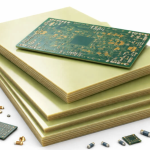
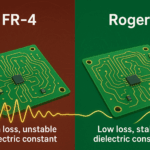
The stackup determines impedance, thickness and cost, so it should be agreed with the fabricator rather than assumed. If a controlled impedance line is required, the dielectric thickness and the trace width have to be calculated together, and the fabricator should confirm that the combination is buildable on a standard process.
Surface finish belongs in the same conversation. The finish has to survive the number of reflow cycles the assembly sequence requires, and it has to be flat enough for the finest pitch on the board. Choosing a finish before the assembly flow is defined is a frequent cause of a late change.
<img src="https://www.gopcba.com/wp-content/uploads/2021/02/h1_whycu.jpg" alt="PCB prototyping checklist covering stackup panelisation and fabrication rules” />
Confirm the Fabrication Rules
Minimum line width, minimum annular ring, solder mask dam width and copper-to-edge clearance should come from the chosen supplier rather than from a general capability table. Capability sheets describe what a line can do on a good day, while the design should be built on what it does routinely, because routine capability is what the quoted yield assumes.
A design rule check against those numbers is the single most effective prototype review. It catches the majority of manufacturability problems before a panel is made, and it costs an hour rather than a week. Any violation should be either corrected or explicitly accepted with the supplier’s agreement in writing.
Plan the Panel, Not Just the Board
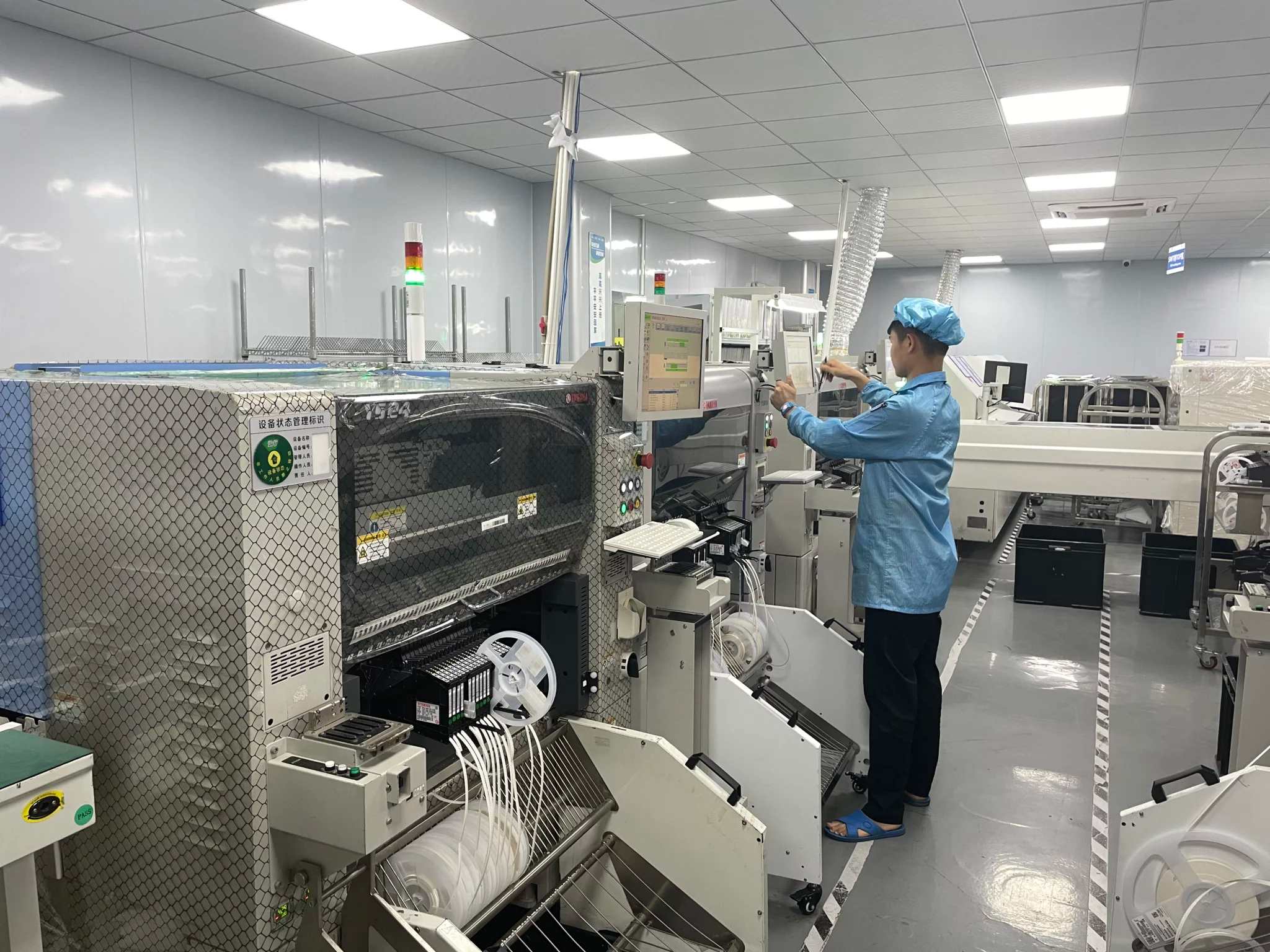
Panelisation affects both cost and assembly. The breakaway method, the tab positions and the rail width have to be compatible with the stencil printer, the placement machine and the reflow oven that will run the board. A panel designed only for fabrication may not fit any of the assembly equipment.
Adding fiducials, tooling holes and a clear panel identification mark at layout stage costs almost nothing. Adding them later means a new panel drawing and a new stencil, which is exactly the kind of change that a prototype is supposed to eliminate.
Define the Test Method Early
A functional test needs access to signals, and access needs test points. Placing test points after the layout is finished is awkward, because a probe needs clearance around the pad, and the clearance competes with components on a dense board. Deciding what will be measured, and where, belongs in the schematic review.
Electrical test of the bare board is separate and is normally automatic. Its cost depends on the net count rather than on the board area, so a design with many test points and many nets should expect a higher test charge. That is a legitimate cost, not an inefficiency.
Agree the Acceptance Criteria
Acceptance criteria define what counts as a good board, and they should be written down before the order rather than negotiated after a rejection. They cover plating thickness, hole tolerance, impedance tolerance, cleanliness and the inspection method for each characteristic. Without them, a dispute becomes a matter of opinion.
The criteria also determine the price, because a tighter tolerance narrows the process window. Specifying a tolerance the product does not need raises the unit price on every order, while specifying one that is required protects the function of the product and prevents a false rejection later.
Manage the Change Process
Every design change after the first order has a cost: new tooling, a new test programme and often a new qualification sample. Tracking the number of changes is therefore a useful measure of prototype quality, and a project that runs several revisions has typically not resolved its requirements rather than encountered bad luck.
Batch the changes where the schedule allows. Two changes made together cost one revision, while two changes made a week apart cost two. On an assembly with a fixture, that difference is significant in both money and time.
Hand Over to Production Deliberately
Moving from prototype to production is a handover, not an event. The stackup, the panel drawing, the acceptance criteria, the test method and the approved supplier list should all move into a controlled document, and the first production order should be compared against the prototype to confirm that nothing drifted.
A first-article inspection at that point is inexpensive and conclusive. It verifies the fabrication, the plating and often the assembly in one step, and it establishes a reference that can be used for every subsequent order. Compared with the cost of a field failure, it is nearly free.
Additional Considerations for This Build
Practical attention to stackup selection pays for itself here, because it is one of the items that decides whether the finished board behaves as the drawing intended. Where the requirement is not stated on the fabrication drawing or in the assembly notes, the shop has to assume a default, and that default is rarely the value the design was simulated with. Stating stackup selection explicitly, together with the tolerance that applies, removes the assumption and keeps the result predictable from batch to batch.
Process Control and Verification
Reviewing the design before the data is released is far cheaper than correcting it after the panel is in the tank, because every step downstream inherits the decision made at the front end. Where a value sits close to a process limit, the drawing should say so, since the shop can then open the process window rather than working to a nominal figure that carries no tolerance.
The measurements that matter are the repeatable ones: conductor width and spacing, annular ring, finished hole size, plating thickness and surface finish are all verifiable on a coupon that travels with the panel. Documenting the assumption is part of the design work, and a short note on the drawing prevents a question that would otherwise arrive a day later and cost a day of schedule.
Where a value sits close to a process limit, the drawing should say so, since the shop can then open the process window rather than working to a nominal figure that carries no tolerance. Running a first article through the same checks as the production panel confirms that the two agree, and that comparison is the cheapest form of process control available at prototype stage.
Related reading: our fabrication notes, board quality and design release notes cover the same ground.
FAQ
How many prototype revisions should a design need? One, in most well-managed projects. A second revision usually signals an unresolved requirement rather than an unexpected technical problem, and each additional revision repeats tooling and test charges.
Should the prototype use the production stackup? Yes, wherever possible. A prototype built on a different stackup does not verify the impedance, the thickness or the assembly behaviour of the production board, which is most of what the prototype exists to confirm.
What is the most common cause of a first-order delay? An incomplete fabrication specification. When the finish, the copper weight or the tolerance is left to the supplier to infer, the resulting board may satisfy the purchase order and still not match the design intent.