
PCBA Manufacturer Selection: What Predicts Delivery
PCBA manufacturer selection is usually driven by a quotation, and the criteria that decide whether the project succeeds are rarely in the quotation at all. China’s contract assembly market passed eighty billion yuan in 2025 and is growing at more than twelve percent a year, which means there are many capable factories and also many that look capable until a product reaches volume.
The industry has also changed shape. Fine pitch packaging such as BGA, CSP and QFN is now routine rather than advanced, flexible and rigid flexible circuits arrive at the assembly line more often, and high frequency boards bring impedance requirements into the assembly process. At the same time factories have invested in automated lines, manufacturing execution systems and automated inspection. Selecting a partner means working out which of those investments will actually matter to your product.
Start With Technical Match, Not Capacity
Capacity is the easiest thing to verify and the least useful predictor of success. What matters first is whether the factory has built your class of product before. A line that runs large through hole assemblies all day will struggle with a dense board containing a five hundred ball package, not because the equipment is incapable but because the process knowledge is not there.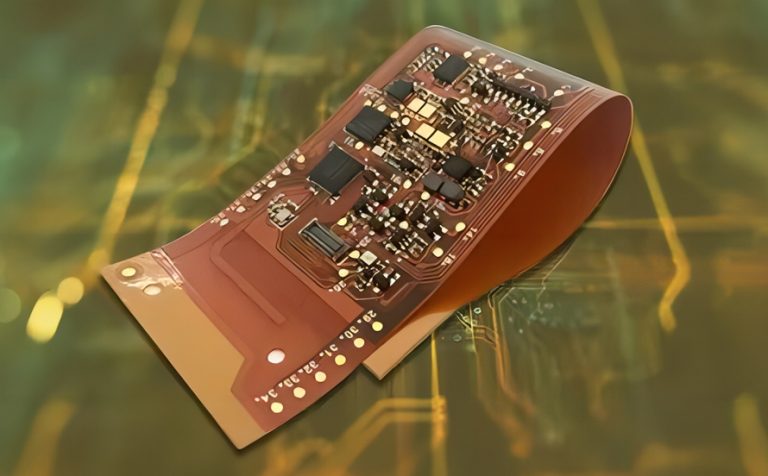
Ask for evidence specific to the product: the smallest package pitch assembled in volume, the component sizes used, whether the board is a flexible or rigid flex assembly, and whether the facility routinely handles boards with controlled impedance requirements. The answers should be concrete and recent, and they should match the assembly you intend to build rather than describing the best work the factory has ever done.
Process Control Is the Real Differentiator
Assembly quality depends on controlling the printing, placement and reflow processes rather than on inspecting defects afterwards. Solder paste inspection measures volume and alignment before reflow, which is where most defects originate. Placement accuracy with verifiable feeder setup, and a reflow profile developed for the specific board rather than a generic one, follow from the same discipline.
The practical test is whether the factory can explain how it develops a profile for a new board, how it controls paste life and stencil cleaning, and what happens when inspection finds an excursion. A supplier with a defined quality management system will answer with records. One that answers with assurances will produce variable results when the product changes.
Inspection and Test Coverage
Inspection capability should be matched to the failure modes of the product. Automated optical inspection finds placement errors and visible soldering defects but cannot see beneath a package. X-ray inspection reveals voids, bridging and insufficient solder under ball grid arrays, which is exactly where optical methods stop being useful. In circuit testing verifies connectivity, and functional testing confirms the assembly operates as designed.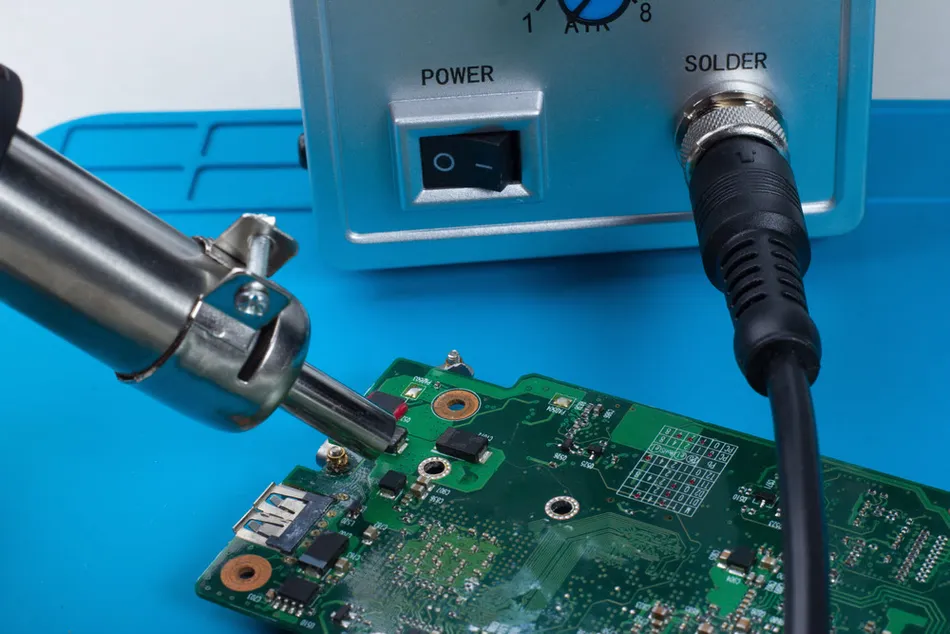
Ask which of those stages are applied by default, which are optional, and how the test program is generated and maintained. A factory that develops a test program and iterates on it as yield data accumulates is helping to solve the customer’s problem, while one that treats testing as a service to be quoted separately is transferring the risk back. The difference becomes visible when a new product enters ramp and the defect rate has to be driven down quickly, which is where assembly testing strategy earns its place.
Component Supply and Traceability
Assemblies are increasingly constrained by component availability rather than by capacity. How a supplier sources parts, manages authorised distribution, handles second sources and controls counterfeits is therefore a technical question rather than a purchasing detail. Counterfeit or out of specification parts pass functional test and fail in the field.
Traceability deserves the same attention. Records should connect a finished assembly to the component lots and board lot used to build it, so that a problem discovered later can be bounded to a specific population. That capability comes from lot control and data retention, which is a process investment rather than a certificate, and it is closely related to component procurement discipline.
Engineering Responsiveness
Most assembly problems are engineering problems in disguise. A footprint that prints poorly, a component that shifts during reflow, a stencil that cannot deliver the right paste volume for a mixed board, or a thermal issue that appears only after assembly all require someone who understands the process to propose a change.
That responsiveness is difficult to assess from a brochure, but it can be tested. Send a design for a manufacturability review before quoting and observe the quality of the response and how quickly it arrives. A supplier who identifies an issue you had not considered is demonstrating engineering capability, while a generic reply indicates that the engineering review is a formality.
One Chain Versus Several Suppliers
When board fabrication, assembly and testing are handled by different companies, every design change becomes a coordination exercise and every failure requires a discussion about which party is responsible. That overhead is tolerable for a stable, high volume product and expensive for anything still being developed.
Keeping fabrication and assembly with one supplier shortens the loop, because a stack up change and its effect on assembly can be evaluated together rather than sequentially. It also means the process data behind a board and the data behind its assembly come from a single system, which makes diagnosis faster. Suppliers that offer combined board and assembly services are not necessarily cheaper per unit, but they are usually faster to a stable product.
Lead Time and Delivery Behaviour
Quoted lead time is a plan; delivery history is a fact. Ask for on time delivery performance over the last four quarters, and for the reasons behind the deliveries that were late. Component shortages, capacity conflicts and process problems produce different patterns, and a supplier that can describe them is tracking its own performance.
It is also worth understanding how the factory schedules small and large orders against each other. A prototype that queues behind a volume order can undermine a development schedule even when the unit price was attractive, and a supplier that treats prototypes as a separate flow usually provides a better service to customers who are still iterating.
Certifications, Audits and What They Prove
Certifications such as IATF 16949 for automotive work, ISO 13485 for medical devices and ISO 9001 as a baseline confirm that a management system exists. They do not confirm that the system is effective, and two factories holding identical certificates can perform very differently.
The useful use of a certificate is as a starting point for specific questions: how are changes controlled, how are non conforming assemblies handled, how is calibration maintained, and what records are kept for each lot. An on site audit that follows a single order through the factory from incoming inspection to final test will answer those questions more convincingly than any document.
Cost Structure and Where It Hides
Unit price is a function of board complexity, component count, test coverage, order quantity and yield. Comparing quotations from suppliers with different capabilities usually compares different processes, and the cheapest quotation often excludes inspection stages that would have prevented a defect.
The more useful comparison is total cost at a given quality level. Ask what yield the supplier expects on the product, what happens to assemblies that fail functional test, and how rework is handled. A factory with a slightly higher unit price and a demonstrably better first pass yield usually costs less by the time the product ships, especially when the board carries expensive components. For products that will scale, that arithmetic is what connects an assembly partner to volume production capability.
How to Run the Evaluation
Structure the assessment as a sequence of gates rather than a comparison table. The manufacturability review answers whether the design can be built at all and at what complexity. The prototype order answers whether the factory can build it as designed. The pilot order answers whether the process is stable before volume quantities are committed.
Record what each stage revealed, including the questions the supplier raised and the changes they proposed. That record is more predictive than any scorecard, because it shows how the two organisations will work together when a problem appears at ramp, which is the moment the relationship is actually tested.
Common Selection Mistakes
The most frequent mistake is choosing on unit price before understanding what the price excludes. The second is assuming that a certificate implies capability for a specific product family, when it only confirms that a management system exists. The third is spreading fabrication, assembly and test across several suppliers for a product that is still changing, which multiplies coordination without improving quality.
A fourth mistake is failing to define acceptance criteria. If the drawing does not state the inspection standard, the impedance tolerance or the functional test coverage, then the supplier will apply their own default, and any disagreement at delivery becomes an argument about expectations rather than a technical discussion. Writing those requirements down before the order is placed costs an afternoon and prevents most disputes.
A Practical Selection Sequence
Begin with a manufacturability review, then a small prototype order, then a pilot quantity that exercises the processes the volume product will use. Evaluate the whole sequence on communication quality, defect handling and documentation rather than on the price of the first order, and treat any reluctance to share process data as a warning sign.
Only after those stages does it make sense to discuss volume pricing. The factory that performed well on the pilot and answered engineering questions precisely is the one whose quotation will be comparable in substance, and the relationship is then built on the shared understanding that the earlier stages created rather than on the assumption that one supplier is interchangeable with another.