What Is Prototype PCB Assembly?
Prototype PCB assembly is the process of manufacturing and assembling a limited quantity of printed circuit boards (PCBs) to verify a new electronic product design before moving into full-scale production. It allows engineers and product developers to evaluate the electrical performance, mechanical fit, manufacturability, reliability, and overall functionality of a PCB design under real-world conditions.
During the prototyping stage, potential design issues may be identified, including incorrect component selection, insufficient component spacing, thermal problems, signal integrity concerns, soldering difficulties, or manufacturing constraints. These issues can then be corrected before mass production begins.
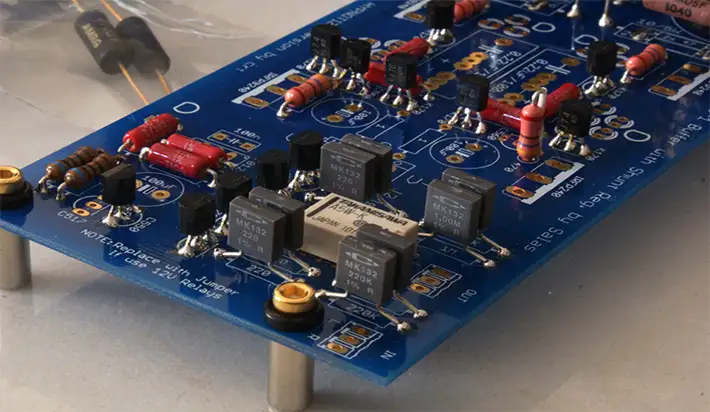
For this reason, PCB prototype assembly is an important bridge between design validation and production. A well-managed prototype process can help reduce engineering risks, minimize costly redesigns, and improve the efficiency of subsequent manufacturing.
As an experienced PCB manufacturer and PCB assembly service provider, Kingda provides PCB prototype manufacturing, quick-turn PCB prototyping, and PCB assembly solutions to support customers from initial design verification through small-batch and full-scale production.
Benefits of Prototype PCB Assembly
1. Reduce Development Costs and Production Risks
One of the primary advantages of prototype PCB assembly is the ability to identify problems before committing to large production volumes.
Manufacturing thousands of boards before discovering a design problem can result in substantial costs related to PCB redesign, component replacement, production downtime, and inventory. Producing a smaller prototype batch allows engineers to identify and correct these problems at an earlier stage.
Prototype assembly can help validate:
- Component selection and availability
- PCB layout and manufacturability
- Component placement
- Solder joint quality
- Thermal performance
- Electrical functionality
- Mechanical compatibility
- Assembly process requirements
By addressing these issues early, companies can reduce the risk of expensive modifications during mass production.
2. Improve Product Understanding
A prototype provides engineers with a physical representation of the electronic design rather than relying only on simulations or CAD models.
Through PCB prototype assembly, engineering teams can evaluate the actual behavior of the assembled board and determine whether the product performs according to the original design objectives.
Prototype testing can reveal practical issues such as:
- Unexpected thermal hotspots
- Signal interference
- Power integrity problems
- Component accessibility issues
- Connector alignment problems
- Mechanical interference
- Insufficient clearance
- Difficult-to-assemble component locations
This information provides valuable feedback for optimizing the final product.
3. Improve Product Quality and Reliability
Prototype manufacturing also provides an opportunity to verify the quality of both the PCB design and the assembly process.
During PCB assembly prototype production, manufacturers can inspect solder joints, component placement, PCB fabrication quality, and electrical performance. Depending on the application, prototypes may also undergo functional testing, programming, environmental testing, or other reliability evaluations.
The results can be used to optimize the design and manufacturing process before production volumes increase.
Prototype PCB Assembly Process
A professional PCB prototype assembly process typically includes several stages, from engineering review and component preparation to assembly, inspection, and testing.
1. Component Selection and BOM Review
Component selection is an important first step in prototype PCB manufacturing.
Engineers need to verify that components meet the electrical and mechanical requirements of the design while also considering availability, lifecycle status, package type, and cost.
A professional manufacturer can review the Bill of Materials (BOM) to identify potential risks such as:
- Obsolete or discontinued components
- Long-lead-time components
- Incorrect part numbers
- Alternative component requirements
- Package compatibility issues
- Supply constraints
- Unclear component specifications
For prototype projects, early BOM review can prevent unnecessary delays later in the assembly process.
2. Schematic and PCB Layout Review
The schematic and PCB layout determine how the circuit will function and how easily it can be manufactured.
Before fabrication and assembly, an engineering review can evaluate the design for DFM (Design for Manufacturability) and assembly compatibility.
Typical checks include:
- Component spacing
- Pad and land patterns
- Via placement
- Copper trace widths
- Clearance requirements
- Thermal management
- PCB stack-up
- High-speed signal routing
- Power distribution
- Component orientation
- Assembly accessibility
A professional PCB assembly manufacturer can provide feedback before fabrication, helping engineers correct potential manufacturing problems at an early stage.
3. PCB Fabrication
After the design is reviewed, the PCB is manufactured according to the required specifications.
Depending on the application, prototype boards may use different materials, layer counts, copper weights, surface finishes, and PCB technologies.
Common prototype PCB requirements include:
- FR-4 and other engineering materials
- Multilayer PCB structures
- HDI PCB technology
- Fine-pitch features
- Controlled impedance
- ENIG and other surface finishes
- Flexible and rigid-flex PCB structures
- Different copper thicknesses
The PCB fabrication stage must maintain dimensional accuracy and consistency because PCB quality directly affects the subsequent assembly process.
4. Solder Paste Application
For SMT assembly, solder paste is applied to the PCB using a stencil.
The stencil must accurately align with the PCB pads to ensure the correct amount of solder paste is deposited. Poor solder paste printing can lead to defects such as insufficient solder, excessive solder, bridging, and component movement.
For demanding prototype designs, SPI (Solder Paste Inspection) can be used to evaluate solder paste volume, height, and position before component placement.
5. Component Placement
After solder paste application, components are placed onto the PCB using automated pick-and-place equipment.
Modern SMT assembly processes can support a wide range of package types, from small passive components to complex ICs and fine-pitch packages.
Proper component placement is critical for:
- Electrical performance
- Soldering quality
- Thermal management
- Mechanical reliability
- Production consistency
For prototype production, accurate placement is especially important because the prototype is often used to validate the manufacturability of the final product.
6. Reflow Soldering
After component placement, the PCB enters the reflow soldering process.
The board passes through controlled temperature zones that gradually heat the solder paste until it reaches the required reflow temperature. The solder then melts and forms reliable solder joints before the assembly is cooled.
A typical reflow profile includes:
- Preheating
- Thermal soaking
- Reflow
- Cooling
The exact thermal profile depends on the solder alloy, PCB construction, component types, and assembly requirements.
7. THT and Additional Assembly Processes
Not every PCB uses SMT components exclusively. Some designs require THT assembly (Through-Hole Technology) for connectors, transformers, large components, or components requiring additional mechanical strength.
Depending on the product, the assembly process may include:
- Through-hole insertion
- Wave soldering
- Selective soldering
- Manual soldering
- Wire or cable assembly
- Conformal coating
- Mechanical assembly
- Labeling and programming
A flexible PCB assembly service should be able to accommodate the specific requirements of each prototype design.
8. AOI and X-Ray Inspection
After soldering, inspection is performed to identify manufacturing defects.
AOI (Automated Optical Inspection) can detect issues such as:
- Missing components
- Incorrect components
- Component misalignment
- Polarity errors
- Solder bridging
- Visible solder defects
For packages with hidden solder joints, such as BGA and certain QFN devices, X-ray inspection can provide additional visibility into solder connections that cannot be inspected optically.
Not every prototype requires X-ray inspection, but it can be valuable for complex or high-density PCB assemblies.
9. Electrical Testing and Functional Verification
The final stage of prototype PCB assembly is testing.
Depending on the product requirements, testing may include:
- Visual inspection
- Continuity testing
- Flying probe testing
- ICT
- Functional testing
- Firmware programming
- Power-on testing
- Communication interface testing
- Thermal testing
- Application-specific reliability testing
Prototype testing provides engineers with valuable data that can be used to improve the PCB design before moving into higher-volume manufacturing.
Key Factors to Consider When Choosing Prototype PCB Assembly Services
1. Cost
The cost of prototype PCB assembly depends on multiple factors rather than simply the number of boards.
Important cost drivers include:
- PCB size and layer count
- PCB material
- Surface finish
- Component quantity
- Component package types
- BOM complexity
- Component sourcing requirements
- SMT and THT processes
- Testing requirements
- Special assembly processes
- Prototype quantity
- Production turnaround requirements
A reliable supplier should provide transparent pricing and help customers identify opportunities to reduce unnecessary manufacturing costs without compromising product quality.
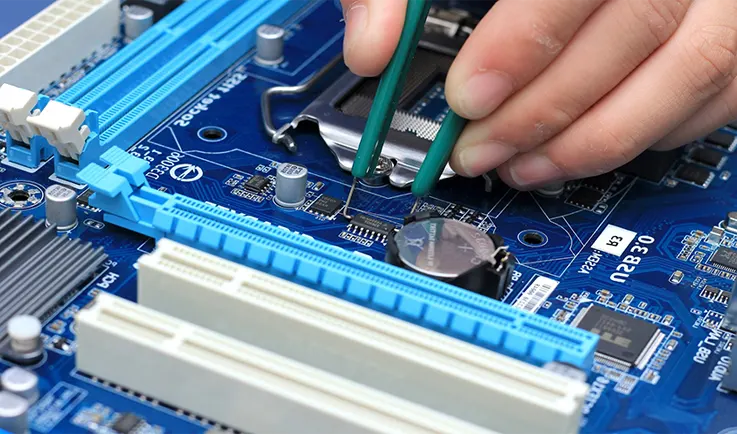
2. Turnaround Time
Prototype projects often operate under tight development schedules. Delays in PCB fabrication, component sourcing, or assembly can affect the entire product development timeline.
When selecting a quick-turn PCB assembly supplier, consider whether the supplier can coordinate:
PCB Fabrication → Component Sourcing → SMT Assembly → THT Assembly → Inspection → Testing
An integrated workflow can reduce communication gaps and make prototype development more efficient.
3. Technical Expertise
Prototype assembly is not simply about mounting components onto a PCB. A capable manufacturing partner should understand PCB design, fabrication, assembly, inspection, and testing.
Technical support can be particularly valuable for:
- Fine-pitch components
- High-density PCB designs
- BGA packages
- HDI boards
- Mixed SMT/THT assemblies
- High-speed circuits
- Power electronics
- Complex component sourcing
- Design-for-manufacturing optimization
Engineering feedback at the prototype stage can help prevent problems from carrying over into mass production.
4. Quality Control
Quality should remain a priority even when producing a small number of prototype boards.
A professional PCB prototype assembly process should include appropriate inspection and quality-control procedures throughout the manufacturing process.
Depending on the project, these may include:
- Incoming material inspection
- SPI
- AOI
- X-ray inspection
- Electrical testing
- Functional testing
- Final visual inspection
- Production traceability
The inspection strategy should be matched to the complexity and reliability requirements of the product.
Prototype PCB Assembly vs. Mass Production
Prototype production and mass production have different objectives.
Prototype PCB assembly focuses primarily on design validation, engineering feedback, manufacturability verification, and risk reduction.
Mass production focuses on manufacturing efficiency, process stability, yield optimization, cost control, and production scalability.
A strong prototype manufacturing partner should therefore be capable of supporting the transition from prototype to production.
A typical development path is:
PCB Design → DFM Engineering Review → PCB Prototype Manufacturing → PCB Assembly → Inspection & Testing → Design Optimization → Small-Batch Production → Volume Manufacturing
This approach allows engineers to use prototype results to improve the product before increasing production volume.
How to Prepare Files for Prototype PCB Assembly
To make the prototype process more efficient, customers should prepare complete and accurate manufacturing documentation.
Common files include:
- Gerber files
- PCB design files
- BOM
- Pick-and-place/Centroid files
- Assembly drawings
- Schematic diagrams
- PCB stack-up information
- Fabrication specifications
- Assembly specifications
- Testing requirements
- Programming files, when required
Providing complete documentation allows the manufacturer to conduct a more effective DFM review, identify potential issues, and prepare the correct manufacturing process.
Why Choose Kingda for Prototype PCB Assembly?
As an experienced PCB manufacturer and PCB assembly service provider, Kingda provides integrated solutions for customers developing and manufacturing electronic products.
Kingda supports customers with PCB prototype manufacturing, quick-turn PCB prototyping, and PCB assembly services, helping bridge the gap between initial design validation and production.
Integrated PCB Manufacturing and Assembly
By combining PCB fabrication and assembly, Kingda can help customers coordinate the manufacturing process more efficiently.
Instead of treating PCB fabrication and assembly as completely separate processes, an integrated workflow makes it easier to identify manufacturing requirements and coordinate production activities.
Engineering and DFM Support
Prototype projects frequently require engineering adjustments. Kingda can support customers with manufacturing-oriented design review and DFM engineering considerations to help identify potential assembly and fabrication issues before production.
This can help reduce unnecessary design iterations and improve prototype manufacturability.
SMT and THT Assembly Support
Different products require different assembly technologies. Kingda provides SMT assembly and THT assembly solutions to accommodate different component packages and PCB designs.
This makes the prototype process more flexible for products that combine surface-mount and through-hole components.
Component Sourcing Support
Component availability can have a significant impact on prototype schedules. Kingda can support customers with component sourcing and BOM-related coordination, helping identify suitable components and sourcing requirements during the preparation stage.
Inspection and Testing
Quality verification is an important part of prototype production. Kingda integrates appropriate inspection and testing processes into the PCB assembly process, helping customers evaluate the quality and functionality of prototype boards before moving forward.
Depending on project requirements, inspection and testing may include SPI, AOI, X-ray inspection, electrical testing, and functional verification.
From Prototype to Production
One of the key advantages of working with an integrated manufacturing partner is the ability to continue from prototype development into small-batch and volume manufacturing.
Kingda’s manufacturing solutions are designed to support customers through different stages of the product lifecycle, from initial PCB prototype assembly and design validation to production implementation.
Conclusion
Prototype PCB assembly is an essential stage in modern electronics development. It allows engineers to validate PCB designs, identify manufacturing problems, evaluate product performance, and reduce risks before committing to larger production volumes.
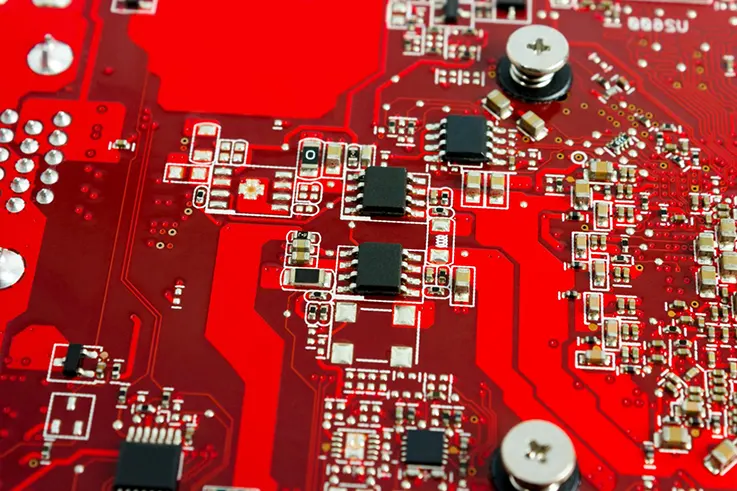
A complete prototype process should cover PCB prototype manufacturing, component sourcing, DFM review, SMT assembly, THT assembly, reflow soldering, AOI, X-ray inspection when required, electrical testing, and functional verification.
Choosing an experienced manufacturing partner can make the transition from prototype to production more efficient and predictable.
With professional PCB manufacturing, PCB assembly, prototype production, quick-turn prototyping, engineering support, component sourcing, inspection, and testing capabilities, Kingda provides integrated PCB and PCBA solutions to help customers move from initial design validation toward reliable production.