Small Batch SMT Assembly With Fast Changeover
During development and the pilot stage a customer usually needs a small quantity assembled for functional verification, for testing, or for a limited release into the market. The requirements are not the same as those of a volume order: what matters is how quickly the line can be changed over, how flexible the scheduling is, and how good the first article is. Many factories are reluctant to take small orders because the quantity is low and the engineering cost is difficult to spread, or they quote a long lead time to discourage them.
The Core of the Service
A small batch SMT order is characterised by a low quantity, a high variety and a short deadline, and meeting all three at once requires an efficient changeover process and a strict first article discipline. Our lines dedicated to this work can handle a prototype of a few boards, a pilot of several hundred, and a mixed order containing several different products for one customer.
The service covers four situations. A development prototype of a few boards to tens of boards, where the first article is the mechanism that keeps the quality of a tiny order from depending on luck. A pilot of hundreds to thousands of boards, for a product that has passed its verification and is being prepared for volume. A mixed order, where several products for one customer are run one after another so that the changeover cost is shared between them. And an expedited order, where the material is complete and the date cannot move.
Capability
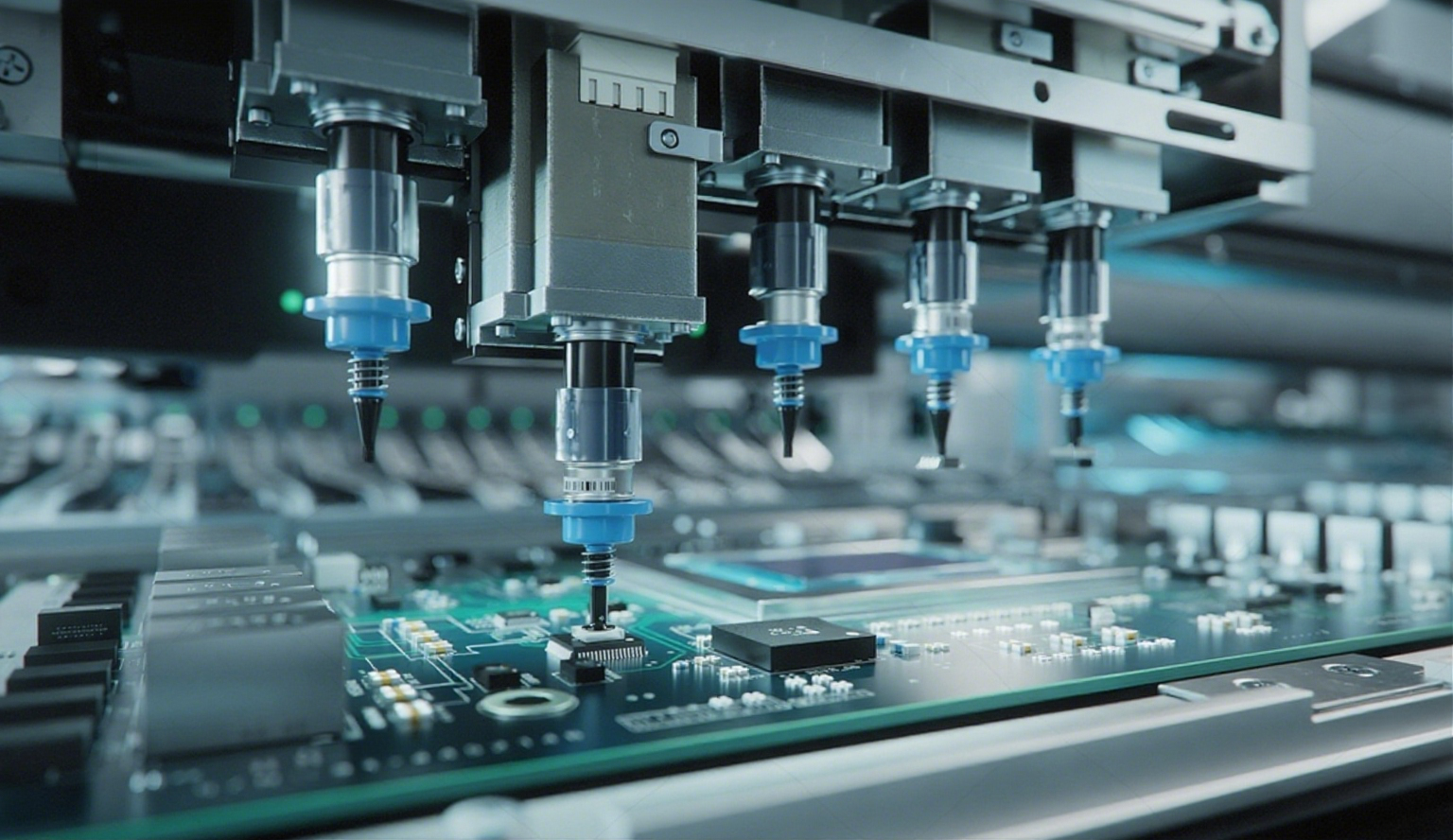
The factory covers fifteen thousand square metres and runs thirty six lines. The smallest component placed is 01005 and ball grid arrays are placed down to a pitch of nought point three millimetres, with multi function placement machines and automatic printers. Inspection includes paste measurement, optical inspection, X-ray and a dedicated instrument for the first article, and the standard lead time is three to five days after the material is complete with an expedited route that reaches twenty four hours. A single board can be ordered.
Quality on a Small Order
The first article carries more weight on a small order than on a large one, because there is no second batch to correct an error and no time to discover it. Every small batch order is checked with an instrument that verifies the parameters, the polarity, the orientation and the reference designation before production continues, which stops a batch level error at the first stage rather than at the last.
The three inspection gates are unchanged. Paste inspection checks the print, optical inspection checks the appearance after reflow, and X-ray checks the joints under a ball grid array or a bottom terminated device. On a very small sample order the inspection is arranged to suit the order rather than reduced, which is a different thing entirely.
Material control matters more here than on a volume order, because a small order carries many part types in small quantities and the opportunity for a mix-up is greater. Incoming material is checked against the bill of materials, the passives are sampled for value, and the key devices are verified for part number and batch. Whether the material is complete is confirmed before production starts, because a small order that stops halfway for want of a part is a small order that has lost its schedule.
Engineering support is part of the same package. A small order is often a board that has only just been designed, and the DFM check carried out before production frequently identifies something that would have prevented the board from working as intended. Raising it before the line starts is the point of the exercise.
How the Material Is Arranged
Three arrangements are available. On a customer supplied order the customer provides all the material and the boards, and the factory provides the stencil, the programming, the assembly and the inspection. On a turnkey order the factory purchases everything against the bill of materials, which suits a customer who would rather deal with one supplier than with several. A mixed arrangement is also possible, where the critical parts come from the customer and the general parts are purchased, with the bill of materials marking which is which.
A material kit that arrives complete is the single largest factor in a small order meeting its date. Where only a few parts are missing, it is sometimes possible to place what is available and leave the position unpopulated for a later operation, but that adds hand work and a second thermal cycle, so completing the material first is normally the better answer.
Two Typical Orders
A hardware company needed five prototypes of a new product for functional verification: an eight layer high speed board with a ball grid array and a population of small passives. The customer supplied the board and all the material, the quick changeover and the first article were completed on the day the material arrived, and the assembly and inspection were finished the following day.
An industrial customer had six different control boards, each in tens of pieces, for a total of a little over three hundred. Placing them with separate suppliers would have meant six sets of coordination and six different dates. Run together, the changeovers were consecutive, the inspection and packing were handled once, and the whole order was delivered within a week.
Working With the Customer
What the order needs is the bill of materials, the placement coordinates, the board data, and the stencil data where it exists. If the material is supplied by the customer, the arrival date of the last part is the date the build starts, so everything else waits behind it. Our low volume assembly route is arranged for these orders, component procurement handles the purchasing where the factory supplies the material, and PCBA testing covers the functional checks.
What Makes a Changeover Fast
`r`n
A changeover is quick when the work is done before the line stops. The feeders for the next product are prepared off the line wherever the reel positions allow it, the programme and the stencil for the next board are checked while the current order is still running, and the order of the run is planned so that a change does not fall in the middle of a group of boards that has to stay together. Nothing about that is technically difficult; it is a matter of treating the changeover as a process with a sequence rather than as an interruption.
`r`n
Standardising the sequence also makes it measurable, and a changeover that is measured can be shortened. A family of products that shares a panel outline and differs only in the populated positions is the best case, because the fixture, the programme structure and the panel can be reused, and the changeover reduces to confirming which positions are populated on this revision.
FAQ
How is a small order charged? An engineering charge covers the stencil, the programming and the first article, and the assembly is charged per placement with a higher rate for complex packages. The engineering charge is spread over fewer boards, so the unit cost is above that of a volume order.
Can a single board be assembled? Yes, and it is quoted on an engineering fee basis so that the cost is proportionate to the work.
What happens if the material is incomplete? Producing a partial board is possible where only a few parts are missing, but it adds hand work and a second reflow, so completing the material first is usually preferable.