Smart Hardware PCBA: Programming, Test and Packaging
Smart hardware is a category in which the board is never the product on its own. The assembly carries a controller, a radio module, sensors, a power section, memory, a USB interface, keys and indicators, and it becomes useful only after the programme is in it, the functions have been verified and the units have been packed in a state the customer can build with.
That makes the last stages of the order — programming, testing and packing — as important as the placement work, and it makes them worth planning before the boards exist rather than after they have been built.
Programming Files, Interfaces and Unique Data
The customer supplies the programming files, the method and the version description, and the interface has to be identified: whether the device is programmed through a debug interface, a serial port, a USB connection or a set of pads that a fixture will contact. Each of those choices affects the tooling, the time per board and whether the boards need to be handled individually.
Where the function is a serial number, a MAC address or a customer configuration, the rule for generating the value, writing it and preventing duplicates belongs in the same package. So does the question of which versions are delivered to which customer, because two boards with identical hardware and different configuration are indistinguishable once they are in a tray.
A file whose name does not identify its version is a file that will eventually be used twice in the wrong place. Versions are named, frozen and recorded, and the reference board is programmed and started before the batch proceeds.

Functional Test, Standardised
Engineers can test a handful of boards by hand during development. At pilot quantity that approach begins to fail: temporary cable connections, individual judgement about whether a key responded, and an incomplete checklist produce a delivery whose status is genuinely uncertain.
The remedy is a test list derived from the functions of the product: power in and out, the radio connection, the keys, the indicators, the sensors, the relay or output actions, the battery interface and the USB recognition, together with the programme version. The fixture itself does not have to be sophisticated at first. What it has to do is contact the critical points reliably, produce a clear result and reduce the time an operator spends connecting and reconnecting.
What matters is that the functional test is repeatable. A test that produces a different answer from a different operator on the same board is not a test, it is an opinion, and it cannot support a delivery decision or a comparison between batches.
Material and Version Discipline
Products in this category iterate quickly. The radio module, the power device, the connectors and the peripheral interfaces may all change between revisions, and if the bill of materials, the board revision and the programme revision are not held together, a shipment will eventually contain a mixture.
The same discipline applies to substitutable parts. A module revision, a capacitor voltage rating, a crystal accuracy or a connector height each change something about the finished product, and the parts that may be exchanged without a decision should be identified in the bill of materials so that purchasing can act quickly on those and ask about the rest.
Packing That Suits the Next Stage
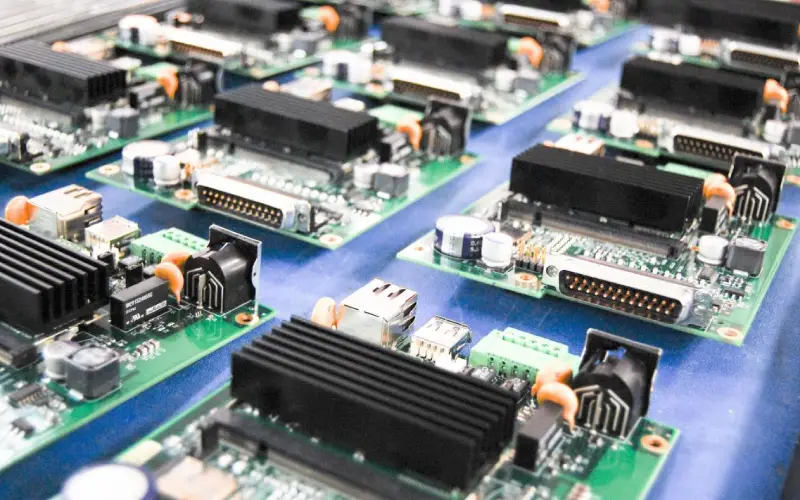
These assemblies are small and densely populated, and many of them carry connectors, keys, antenna connections and battery holders that take the load if the packing is careless. The packing has to protect against static, pressure and abrasion, which usually means a tray that holds each board separately, an antistatic bag and a carton that does not transmit force through the tallest component.
Where the customer will carry out a unit assembly, the requirements of that stage are worth stating in advance: which connectors must not be pressed, whether left and right variants exist, whether the boards should be packed as sets, whether labels are needed and whether test records should travel with the delivery. The assembly house can then arrange the packing around the way the boards will actually be used, which is what antistatic packing is for in this context.
Why the Delivery State Matters
The cost of a poorly defined delivery is paid by the customer. Boards arrive without a clear test status, so they are re-tested; versions are mixed, so units are assembled with the wrong firmware; packing is generic, so parts are damaged in transit and the fault appears at the assembly line. None of these are manufacturing defects and all of them consume the customer’s engineering time.
Delivery in a defined state — version identified, test status known, configuration distinguished, packing matched to the use — is a service rather than a formality, and it is the difference between an order that the customer can build with immediately and one that has to be sorted first.
The work itself is carried out as SMT assembly, with the verification through PCBA testing, the unit assembly that follows through box build assembly, the material through component procurement and the criteria under quality management.
Working With a Design That Is Still Changing
Smart hardware is usually released before it is finished. The first boards go to a pilot customer, the feedback arrives, and the module, the enclosure or the firmware changes while production is being planned. Managing that is not a matter of resisting the changes; it is a matter of making sure each one reaches every document and every unit.
The workable practice is to treat a release as a set. A change to the bill of materials or the coordinates is accompanied by the programme revision it belongs with, and the batch record states which set was used. Boards assembled under the previous set stay identified rather than being mixed in with the new ones, because the customer will need to know which units carry which behaviour when the feedback arrives.
Where the difference exists only in the firmware — a radio configuration, a sensor behaviour, a changed threshold — the hardware can continue unchanged. Distinguishing a configuration change from a hardware change at the outset avoids re-issuing a data package, re-buying material and re-qualifying a board for something a programming file could have solved.
It is also worth agreeing how a change is handled once material has been purchased. A revision arriving after the components have been ordered may leave stock that cannot be used, and one arriving after the boards have been fabricated may leave a panel that has to be scrapped. Knowing the cut-off point — after the data freeze, after material, after fabrication — allows a change to be priced in advance rather than argued about afterwards, and it turns the answer to a change request into a schedule rather than a surprise.
FAQ
What should the programming package contain? The files, the method, the interface definition, the version description and the rules for any unique data such as a serial number or MAC address.
Does a small batch need a fixture? Not necessarily a complex one, but it needs a repeatable way of making the critical connections, because manual testing produces inconsistent results as the quantity rises.
Why does packing affect assembly? Because connectors, keys and antenna parts take the load in a careless carton, and a component damaged in transit fails at the customer’s line rather than here.