SMT Assembly vs Manual Assembly: Key Differences Guide
Two Ways to Assemble a PCB
Choosing between smt assembly and manual assembly shapes production cost, lead time, solder quality, reliability and scale for every electronics product. SMT assembly uses solder paste printers, SPI, placement machines, reflow ovens and AOI to mount and solder components automatically, while manual assembly relies on technicians to place, solder, inspect and rework boards by hand. Neither method is universally better: SMT suits standardized, high-efficiency and medium-to-large volume production, while hand assembly fits prototypes, small batches, rework and special components. Understanding the real differences helps OEMs, engineers and buyers pick the process that matches their quantity, component mix and quality requirements.
What SMT Assembly Involves
Surface mount technology places components directly on pads instead of inserting leads through holes. A typical automated flow runs PCB, solder paste printing, SPI solder paste inspection, SMT placement, reflow soldering, AOI inspection, X-ray inspection when required, electrical test and final inspection. Modern SMT lines place components at high speed with repeatable accuracy, which makes them ideal for medium and high volume production of dense boards. SMT handles 0201 and 01005 chip parts, QFN, QFP, BGA, LGA, CSP and fine-pitch ICs plus standard SMD resistors, capacitors and inductors, so compact, high-density designs are almost always built with SMT.
What Manual Assembly Involves
Manual PCB assembly has technicians install and solder components by hand. The typical flow prepares the board and parts, verifies components against the BOM, places parts manually, hand-solders them, trims leads, performs visual inspection, runs electrical test and repairs where needed. Hand assembly naturally fits PCB prototypes, engineering validation samples, very small batches, repairs and rework, large through-hole parts and unusual or custom components. Practical manual work is rarely 100 percent by hand: operators combine hot-air stations, selective soldering machines, soldering irons and test instruments to finish the job well.
Key Differences at a Glance
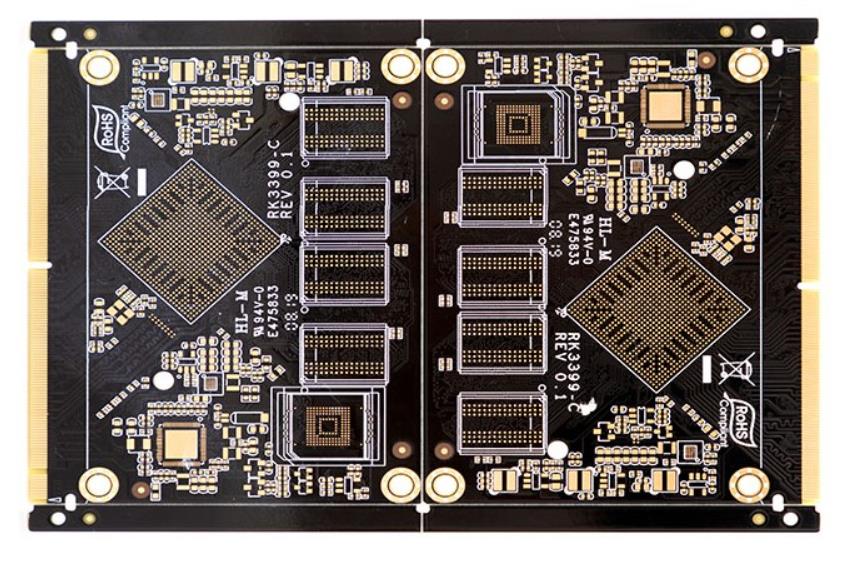
Component placement is automated in SMT and manual in hand assembly. Production speed is high versus low, placement accuracy is machine-controlled versus operator-dependent, labor demand is low versus high, and large volume suits SMT while manual assembly struggles there. Prototypes suit both but manual is very flexible, tiny components suit SMT while hand methods are limited, through-hole parts often need extra steps in SMT but fit manual work naturally, consistency is high in SMT and human-influenced in hand work, setup cost is higher for SMT and lower for manual, and per-board cost at volume is lower with SMT and higher with manual. Rework is easier to do flexibly by hand, while SMT brings strong repeatability. The practical answer is usually a hybrid that uses the best of each.
Cost Reality: Setup vs Labor
At first glance manual assembly looks cheaper because it needs no placement machines. The cost structure flips with volume: manual work has low initial setup but labor cost climbs quickly with quantity and component count, while SMT carries setup cost for stencils, placement programs, feeder configuration, BOM and centroid processing, SPI and AOI programs and line tuning, then produces thousands of boards with very low labor per unit. For a simple board with twenty to forty components, a few hand-built samples can be economical. At one thousand or ten thousand units, automated SMT wins decisively. Evaluate total cost, setup plus labor plus machine plus inspection plus test plus rework plus scrap, rather than comparing setup fees alone.
Quality and Inspection Differences
Automated SMT offers consistent joints because placement, paste volume and reflow profile stay under statistical control, and the line normally includes SPI, AOI and optional X-ray to catch defects early. Manual soldering quality depends on operator skill and fatigue, so quality varies more across a shift and across operators. That difference matters for automotive, medical, industrial and communication electronics where consistency and traceability are mandatory. Hand assembly remains excellent for prototypes and rework because an experienced technician can adapt to odd components immediately, but for production consistency automated inspection and controlled processes are hard to beat.
Choosing by Quantity and Components
Quantity is the first decision factor: a handful of prototypes favors manual flexibility, while hundreds or thousands favor automated SMT. Component count matters too: a ten-component board and a five-hundred-component board demand completely different processes, and the more parts, the greater the SMT advantage. Check the BOM for BGA, QFN, QFP, CSP, 01005, 0201 and fine-pitch parts; if micro and fine-pitch devices dominate, SMT is the practical choice. High routing density, high component density, mixed SMD packages and BGA all point to automated assembly, while connectors, large through-hole parts and specialty items may need manual insertion or selective soldering as an add-on step.
Quality Requirements and Lead Time
Products for automotive, medical, industrial and communication markets demand high assembly quality and consistency, so the supplier should demonstrate real inspection capability and a quality system rather than low price alone. Lead time is another axis: when a large quantity is needed quickly, automated SMT is far faster than hand soldering the same volume. For frequently changing designs, however, manual or semi-automated prototype assembly keeps iterations cheap. The most practical route for many products is mixed assembly: automated SMT for the bulk of components, then manual insertion, selective soldering or hand finishing for connectors and special parts.
Selecting an Assembly Partner
A partner that combines PCB manufacturing with SMT assembly and THT and mixed assembly reduces data transfer, logistics and quality coordination between separate vendors. Confirm the factory runs SPI, AOI and X-ray inspection, offers component procurement, supports prototype, low-volume and mass production, and keeps an electrical test program. For an accurate quote, provide Gerber files, BOM, pick-and-place or centroid files, PCB specifications, assembly drawings, component datasheets, estimated quantity, test requirements and special process needs, and the supplier can evaluate process, materials, lead time and cost correctly.
Planning the Transition to Volume
Most hardware programs start with hand-built or semi-automated prototypes and scale into SMT as the design stabilizes. Plan that transition early: keep the BOM and centroid files clean from the first prototype, choose components that are SMT-friendly where possible, and confirm the assembly supplier supports both prototype and mass production so tooling such as stencils and programs carries forward instead of being recreated. A design that already accounts for panelization, fiducials and test points moves through manual sample builds into automated production with fewer surprises, which is how realistic prototypes become reliable volume products.
SMT vs Manual Assembly FAQ
Q1: Is SMT better than manual assembly? For medium and large volume, SMT offers higher efficiency, accuracy and consistency; for prototypes, very small batches, repairs and special components, manual assembly can be the better fit.
Q2: Is SMT cheaper than manual assembly? Not always; hand assembly can have lower upfront cost at tiny quantities, but SMT lowers per-board cost as volume grows through automation and reduced labor.
Q3: Can SMT be used for prototypes? Yes, SMT suits prototype assembly, especially boards with tiny SMD parts, fine-pitch ICs, BGA or dense circuitry.
Q4: What is the biggest advantage of SMT? High-speed production, accurate placement, high consistency and high component density for compact modern electronics.
Q5: Can SMT and manual assembly be combined? Yes; many boards run automated SMT first and then receive manual insertion, selective soldering or hand finishing, which is called mixed PCB assembly.
Conclusion
SMT assembly and manual assembly serve different jobs rather than competing on equal terms. Automated SMT wins for medium and large volume, dense and fine-pitch designs and consistent quality, while manual assembly stays valuable for prototypes, small batches, rework and unusual parts. Compare total cost at your real quantity, review the BOM for fine-pitch devices, and choose a PCBA testing capable partner that can move smoothly from prototype to mass production.