SMT Pilot Run: Why the Small-Batch Flow Comes First
A pilot run is usually described as a small order that comes before a large one, which makes it sound like a formality. In practice it is the stage at which the design, the material, the process and the acceptance criteria are tested together for the first time, and it is far cheaper to find a problem on thirty boards than on three thousand. Treating the SMT pilot run as a rehearsal for volume, rather than as a favour to a customer who needs samples quickly, is what separates projects that scale smoothly from projects that stall at every revision.
There is a second reason to prove the small-batch flow first. A short run exercises every step that a long one does: data preparation, material picking, stencil and paste printing, placement, reflow, inspection, programme loading, test and packing. It simply exercises them at a fraction of the cost of getting each of those steps wrong, and it does so while the people who designed the board are still interested in the answers.
Why the Pilot Run Decides the Volume Order
Development does not move in one step. A first board usually validates the core function, a second adjusts the interfaces and the mechanical arrangement, and a third is close enough to be handed to production. Each of those versions needs the same support from the assembly house: data confirmation, material verification, a first article check and an outbound test.
That repetition is the point. Where the process has been exercised once, the second version is a variation on a known result; where it has not, each version is an experiment and the schedule absorbs the cost. A supplier who notices a footprint that does not match the package, a polarity marking that is ambiguous or a missing test point during the pilot is worth more to the project than one who runs the files exactly as received and reports the consequences afterwards.
The economics are easy to state. A single reflow cycle on a handful of panels costs a small amount of material and an hour of machine time. The same defect discovered after a volume build costs the material that has to be reworked or scrapped, the schedule of the products already promised, and the credibility of the delivery date. The pilot is where that asymmetry can still be exploited, and it stops being available the moment the volume order is placed.
Assembly Data Confirmed Before Anything Is Printed
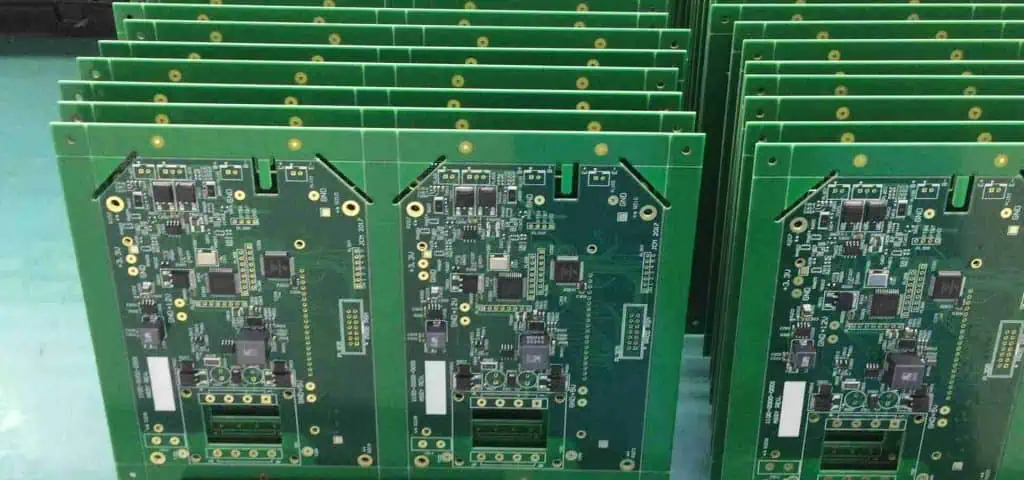
The assembly data package for a pilot is the same as for a production order, and it is worth assembling it completely even when the quantity is small. Fabrication output, the bill of materials, the component coordinates, the panel drawing, the process notes and, where the product needs it, the programming files with the test steps and the acceptance values.
The problems that appear at this stage are predictable. A bill of materials that lists a package the footprint cannot accept. A coordinate file referenced to a panel origin rather than to a single board. A polarity device whose orientation exists only in the designer’s memory. A connector that is specified by height but not by the mating side. None of these are solved by a longer production run; they are solved by asking the question while the design is still open.
Speed matters here in a specific way. Project teams move quickly, which means the files can change while a quotation is being prepared. Recording the revision that was actually built is therefore part of the data work, not a formality after it. When the second version arrives, the first can be reconstructed without guesswork.
A Small Quantity Still Means a Long Material List
Thirty boards do not reduce the number of different parts. A single controller board may carry a microcontroller, a radio module, a power management device, connectors, sensors, a crystal and a hundred or more passives, and each of them has a package, a tolerance and a rule about what may be fitted instead. Reducing the order quantity changes the purchasing economics of those parts rather than their variety.
That is where small-volume projects most often lose time. A part with a minimum order quantity, a part on a long lead time, a part that has been discontinued since the design was drawn: each is a decision that belongs to the customer and each is easier to take before the material is ordered than after the line is waiting. Where the customer supplies part of the material and the factory buys the rest, the two lists have to agree on part numbers, quantities and the allowance for attrition, or the shortfall surfaces at the machine.
<img src="https://www.gopcba.com/wp-content/uploads/2026/08/High-Speed-Printed-Circuit-Board.jpg" alt="first article check during an SMT pilot run” />
The First Article Check and the Reflow Profile
The first article is the moment when the drawing becomes a physical board, and it is the correct place to confirm what cannot be confirmed on paper: that the right device is in the right position, in the right orientation, with the correct package, and that the joint formation looks the way it should.
Pilots are also where fine-pitch devices are most likely to appear for the first time. A QFN or a fine-pitch package on a small panel behaves differently from a device with a generous lead pitch, and paste volume, placement force and the reflow profile all have to be adjusted to the actual board rather than to a generic recipe. Measuring the profile on the real assembly, with the real thermal mass and the real copper distribution, is the only way to know that the process window is wide enough to be repeated.
Inspection tells the rest of the story. Small quantities are not a reason to reduce inspection; they are a reason to inspect carefully, because the boards are going to be used for debugging and customer demonstrations. A joint that is marginally connected can be read as a design fault by an engineer who has no reason to suspect the assembly, and that misreading can send a project in the wrong direction for weeks.
What the Pilot Should Leave Behind
The most valuable output of a pilot is not the boards. It is the set of records that makes the next build a confirmation rather than an investigation: the board revision that was built, the bill of materials revision, the substitutions that were agreed, the programme version, the test procedure and the packing method.
Those records accumulate into something a project can rely on. As a product moves from thirty boards to several hundred and then to several thousand, the transition becomes a matter of scaling the same process rather than of rediscovering it. The alternative, which is common enough, is a project that rebuilds its understanding of its own product at every order size.
The work behind that is the ordinary work of assembly: SMT assembly for the placed devices, verification through PCBA testing, and the controls that keep a batch repeatable under quality management. Where the panel and the mix of technologies make it relevant, mixed technology assembly covers the combination of placed and inserted parts.
FAQ
Is a pilot run just a small production order? No. It is the run that proves the data, the process and the acceptance criteria, which is why it should be reviewed more carefully than a routine repeat order, not less.
Why not move straight to volume? Because the cost of a defect scales with the quantity built, while the cost of discovering it does not. The pilot keeps that discovery cheap.
What should a customer prepare for a pilot? Complete assembly data, a material list that states which parts may be substituted, and the programming and test requirements with their acceptance values.