SMT Placement Processing: Placing and Assembling
SMT placement processing sits at the center of every surface mount build. The printer lays down solder paste, the placer drops each part onto its pads, and the oven forms the joints. Each step depends on the ones before it, so a small drift in one area shows up as a defect in another. This review follows the placement stage from paste to inspection and shows what buyers should verify.
Placement looks simple on a factory tour. A head moves, a nozzle picks a part, and the part lands on the board. The real work happens before that motion and after it, in the setup data, the vision checks and the records. Engineers who understand those layers can ask better questions during a supplier audit. They can also spot a weak process before a pilot batch turns into a costly surprise.
What Placement Processing Covers
The term covers every action between a printed board and a reflowed one. It includes stencil setup, paste inspection, feeder loading, nozzle selection, vision alignment, placement force and the handoff to the oven. It also includes the data behind those actions, such as the placement program and the component library. A line that runs these steps as one controlled system produces repeatable boards.
Placement accuracy is often quoted as a single number, but that number hides context. Accuracy depends on part size, pitch, board finish and the vision system in use. Fine pitch parts and small chip components need tighter control than large connectors. A capable line matches its settings to the actual mix on the board, rather than running one profile for every product. Buyers should ask how those settings are chosen.
Paste Printing Comes First
Most placement defects start at the printer, not at the placer. A paste deposit that is too tall, too low or misaligned will pull a part off center during reflow. Stencil thickness, aperture design and squeegee pressure all shape the deposit. Solder paste inspection after printing catches these problems early, before expensive components are committed to a bad board. That check is cheaper than rework later.
Paste also changes with time and environment. An open jar sits on the stencil for hours, and its viscosity shifts as solvents evaporate. Humidity in the assembly area affects how the paste behaves during printing. Good factories control room conditions, stir paste to a written routine and track how long a jar stays open. These habits rarely appear in a quote, yet they decide whether prints stay consistent across a shift.
Feeder and Nozzle Setup
Feeders carry their own risk. A reel that is loaded slightly off pitch will present parts at the wrong position, and the placer will pick them badly or miss them entirely. Tape thickness, pocket depth and cover tape peel force all matter. Factories that verify feeder setup before a run avoid a common source of missing parts. They also keep spare feeders calibrated and ready for the next changeover.
Nozzle choice follows the component mix. Small chips need a nozzle that seals well without crushing the part. Connectors and larger parts need more vacuum and a gentler placement force. A worn nozzle leaks vacuum and drops parts without an obvious alarm. Checking nozzle condition on a schedule prevents that slow failure. So does tracking which nozzle ran on which product.
Vision and Alignment
Modern placers use vision to align both the board and the part. Fiducials on the board tell the machine where the coordinate system sits. Part recognition checks orientation, lead position and damage before placement. When vision is skipped or poorly tuned, offset errors build up across the panel. A board that looks fine at the first placement can drift by the last one.
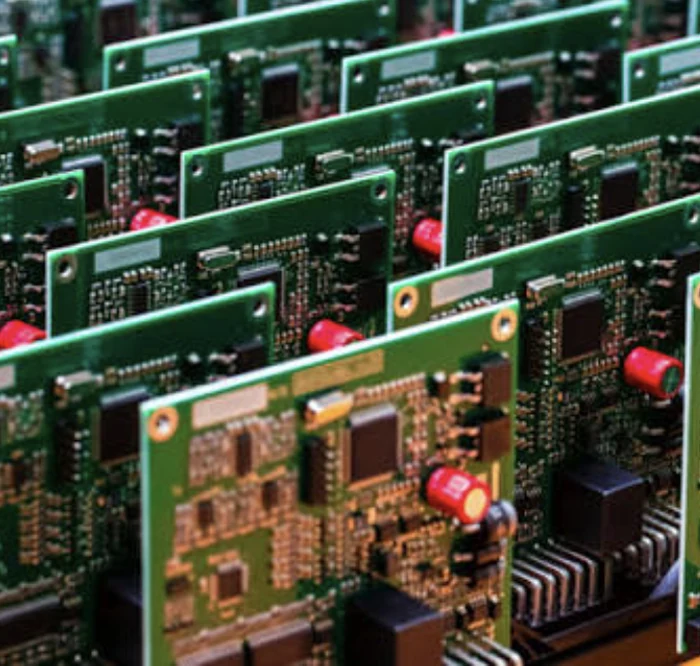
Fiducial quality matters here. A faint or partially covered fiducial gives the camera a weak reference, and the machine compensates in the wrong direction. Panel design should keep fiducials clear of copper, solder mask and silkscreen. Engineers who review this during PCB design and layout save the assembly team a difficult problem. Small layout choices like this decide how well placement runs.
Reflow and Joint Formation
Placement only positions parts. The oven forms the joints, and the profile must match the paste, the board thickness and the component mass. Too little heat leaves incomplete joints, while too much heat damages parts and lifts pads. A profile that suits a thin consumer board will not suit a thick industrial one. Factories should build a profile per product family and verify it with a profiled board.
Placement errors and reflow errors can look the same after the fact. A tombstoned part may come from uneven paste, a placement offset or a thermal imbalance across the board. Finding the true cause needs data from every step. That is why paste inspection, placement statistics and oven profiles should be recorded together. Without that link, engineers guess, and guesses cost time.
Inspection and Test Coverage
Automated optical inspection checks placement position, part presence, polarity and solder shape. It catches the defects that vision on the placer cannot see, such as a part that shifted during reflow. X-ray adds value for hidden joints under area array packages. Electrical test then proves the circuit works. Each method covers a different gap, and none of them replaces the others.
First article inspection deserves its own routine at the start of a run. The first board is checked against the design in detail, including values, orientation and polarity. Catching a setup error there prevents a whole batch from inheriting it. Buyers should ask whether first article results are recorded and signed. A written record shows the check actually happened, not just that it was planned.
Working With an Assembly Partner
A placement line only pays for itself when it runs constantly. Keeping programs, calibration records and quality documents current takes engineering time that is easy to underestimate. Most product companies therefore use a partner that spreads equipment investment across many customers. Services such as turnkey PCB assembly and high-volume PCB assembly under one roof keep the handoffs short.
When comparing options, the price of each board should not be the only figure considered. Process control, inspection equipment, sourcing and communication decide the real cost. A partner that reviews files before production and reports risks early is usually cheaper over a year than one that quotes low and surprises later. Buyers should compare the process, not just the figure on the quotation.
Component supply feeds directly into placement quality. A part that quietly changes its plating or a reel stored in humidity can shift the process with no machine warning. Factories that qualify materials, check certificates and approve alternates in advance avoid that trap. Reliable component procurement keeps the line supplied with parts that match the approved data. That protects placement settings from silent changes.
Prototypes are the cheapest place to find placement problems. The first small batch reveals pad geometry issues, component tolerances and process behavior before thousands of boards are committed. A DFM review and a pilot run should be part of the project budget, not an extra. Buyers who invest in this stage reach volume production faster and with fewer surprises. Rushing straight to a large order rarely saves money.
Environment and handling complete the picture. Temperature and humidity change paste behavior, and electrostatic discharge can damage sensitive parts without a visible mark. Grounded workstations and correct storage for moisture sensitive devices keep results stable across seasons. These details rarely appear in a quotation, yet they decide whether a line holds yield all year. Ask how the factory controls them.
Documentation turns good practice into proof. The factory should record which program ran, which paste and component reels were used and what inspection found. When a field return arrives months later, that record offers the fastest route to the root cause. As a standard step for every order, buyers ought to ask for these records. Documents that are easy to produce on request tend to be kept honestly.
Nothing about placement is decided once and forgotten. Parameters drift, materials change and operators rotate, so the factory should review its data continuously and rank the top defects. Over time, defect rates go down and lead times get shorter in factories that keep to this discipline. Those without data repeat the same mistakes at the same cost. Progress stays visible when the same metrics are reviewed every month.
Training supports every control above. Before adjusting any parameter window, operators must first grasp the reason that window is in place. Inspectors need to recognize a real defect rather than a cosmetic mark. Engineers need to explain a change in the data. Written procedures only become daily practice when the people on the floor have the knowledge to apply them. Without it, the best equipment still produces variable output.
Treat placement as a system rather than a checklist. Every decision, from stencil cleaning frequency to test coverage, connects to the others. A faster placement speed may save time today and cause tombstoning tomorrow. A thicker stencil may fix opens while creating bridges. Reviewing changes against their effect on the whole line is what makes results predictable. That view, backed by inspection data, is the real asset.
For a new build, send the design files and the component data for review. A partner that can explain its PCB assembly controls in plain terms is easier to audit and easier to trust. Ask for the placement program summary, the paste inspection records and the first article report. Those three documents show whether the process is controlled or merely described. They are the practical test of any supplier claim.
The takeaway for buyers is simple. Placement quality is built before the machine moves, in the stencil, the feeder setup, the fiducials and the approved component data. Verify those inputs, ask for the records, and confirm how changes are controlled. A supplier that answers with data rather than assurances is the safer choice for any volume, from pilot to production.