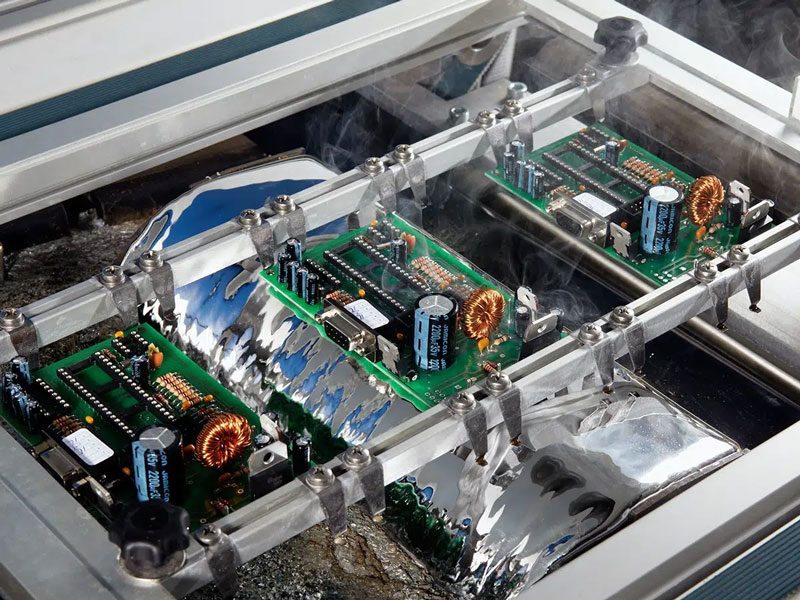
SMT Prototype Service for Design Verification Boards
During development an engineer needs a small number of boards quickly, to find out whether the design works. Hand soldering is slow, and for a 01005 component or a ball grid array it cannot produce a joint that is worth trusting. A proper SMT prototype service gets the boards assembled in a short time so that design verification can begin, which matters because the verification is on the critical path of the whole project.
The Situations It Covers
The first case is proof of principle. A new design is built for the first time, in three to five boards, to confirm that the circuit behaves as the schematic said it would. The second is an iteration: a change is made, and a small set of boards is built to confirm that the change produced the intended effect and did not disturb anything else.
The third is the pilot that precedes a product being frozen, in tens to hundreds of pieces, which is where manufacturability and stability are checked. The fourth is a board built for a particular purpose: a customer demonstration, a trade show unit, or a sample sent for testing.
What these have in common is that the quantity is small, the variety is high, and the time available is short. That combination is what the line has to be arranged for, rather than the long uninterrupted run that suits volume.
Capability
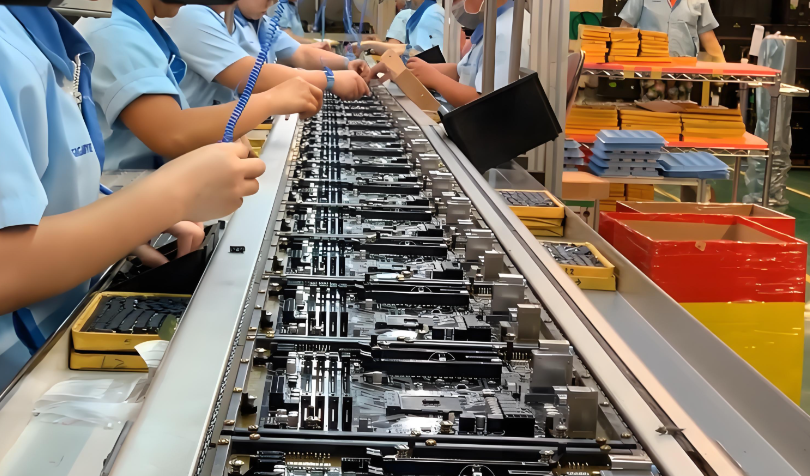
The factory covers fifteen thousand square metres and runs thirty six SMT lines, with several of them organised for prototypes and small batches so that a product with many variants can be changed over without disrupting a volume order. The smallest component placed is 01005, ball grid arrays are placed down to a pitch of nought point three millimetres, the printers are fully automatic and the placement machines are multi function, with paste inspection, optical inspection and X-ray available for the same orders.
A single board can be built, so there is no minimum quantity. Ordinary lead time is three to five days after the material is complete, and an expedited route reaches twenty four hours.
How the Order Runs
The customer supplies the bill of materials, the placement coordinates and the Gerber data or the board source file, and the manufacturability assessment is completed within about two hours of the data arriving. Material completeness is confirmed next, and where the factory is buying the parts the purchasing starts at the same time.
The stencil is made from the board size and the component specification, normally within a day, and it is the item that most often decides whether an expedited date can be met, since a stencil that already exists removes that step entirely.
Placement then runs in the normal sequence of printing, placing and reflow. The first article is inspected and confirmed before the remaining quantity is built, and the boards finish with optical inspection and, where required, a functional test before packing and despatch.
Quality on a Prototype Order
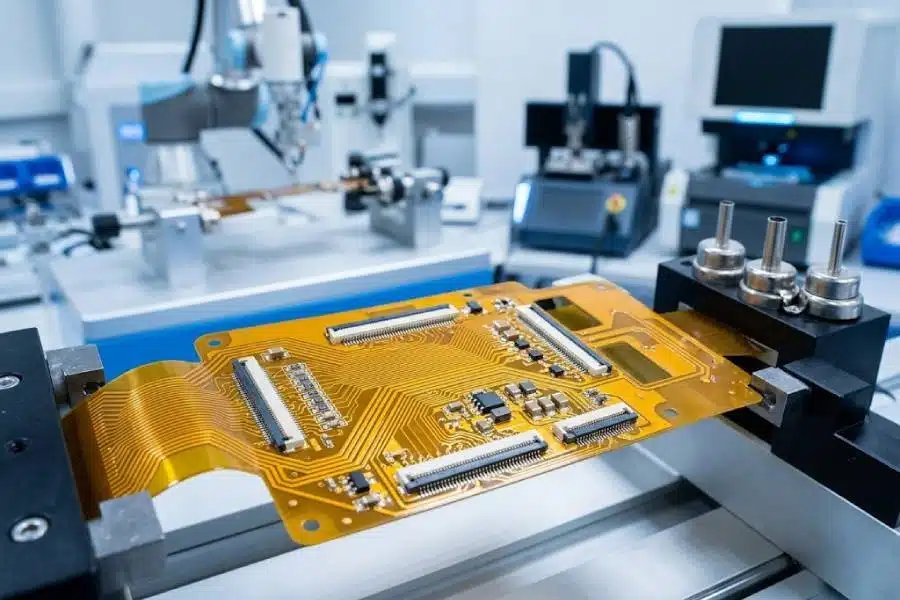
A prototype is not exempt from the process that a production order follows. The paste deposit is measured after printing, so that a print that is out of specification is corrected before it becomes a soldering defect. Optical inspection covers the missing parts, the wrong parts, the offset, the tombstone and the bridge. Everything with joints beneath the body, whether a ball grid array or a bottom terminated device, is examined with X-ray, and the images are provided with the shipment where the customer asks for them.
The first article is checked for the part numbers, the orientations and the joint quality, and the remaining boards are only built once it has been confirmed. That rule is what stops a coordinate error or a wrong part number from being repeated across the whole batch, and on a small order the cost of the check is a few minutes.
Material is tracked by batch. Where the factory purchases the parts, the original manufacturer documentation and the batch information are kept, so that a problem found during the customer’s own verification can be traced back to a source rather than discussed in the abstract.
Buying the Material or Supplying It
Both arrangements are supported. On a customer supplied order the material arrives from the customer and the factory provides the stencil, the assembly and the inspection. On a turnkey order the customer provides the bill of materials and the board data, and the purchasing, the stencil making, the placement, the through hole work and the assembly are all handled, which removes the need to coordinate several suppliers for a small order.
The turnkey route is usually the faster one for a prototype, because the parts can be obtained from stock and from an established supply channel while the stencil is being made, rather than waiting for a separate delivery. Where the customer supplies the material, the arrival date of the last part sets the start of the build, and everything else waits behind it.
The Wider Capability
Because the same group also fabricates boards and does design work, a prototype can be handled from the layout through to the assembled board, and a question about a footprint, a panel or a fiducial is answered by the people who will build it. Our prototype PCB assembly route is arranged for exactly this kind of order, PCB manufacturing supplies the bare boards, and the results are held under quality management.
What Makes a Prototype Order Slow, and How to Avoid It
`r`n
Three things account for most of the delay, and all three can be removed before the order is placed. The first is a bill of materials that is incomplete or that carries descriptions rather than part numbers, because the factory then has to ask, and each question costs a day. Sending the part numbers with the package and the quantity means the material can be checked and bought without a conversation.
`r`n
The second is a coordinate file whose origin, rotation or layer definitions do not match the drawing. On a prototype there is no time to reconcile the data after the line is ready, and a programme written from the wrong origin places every part in the wrong place. Stating the format and the convention when the file is sent removes the risk.
`r`n
The third is a stencil that has to be made from scratch for an expedited order. On a repeat build the stencil already exists and the date moves forward by several hours. Keeping the stencil with the factory, or ordering it once for a product that will be built several times, is a small decision with a visible effect on the schedule.
`r`n
A fourth, less obvious cause is a panel that has no process edge and no tooling holes. A single board outline can be assembled, but the support is less certain, and a board that moves under the squeegee produces a print that varies across the panel. Adding a process edge to the panel data costs nothing and removes a variable.
FAQ
Is there a minimum quantity? No. A single board can be assembled, and a very small order is quoted on an engineering fee basis so that the cost stays proportionate.
What has to be supplied? The bill of materials in a spreadsheet, the placement coordinates exported from the board software, and the Gerber data or the board source file. Where the customer supplies the material, the expected arrival date is needed as well.
Can a prototype include a ball grid array? Yes, down to a pitch of nought point three millimetres, and the X-ray images can be provided with the shipment so that the joints can be reviewed.