Telematics PCB Cost Guide: 2025 Price Breakdown
The Board Behind Connected Vehicles
Telematics is changing how cars, trucks and fleets are managed, enabling real-time vehicle tracking, remote diagnostics, usage-based insurance and intelligent fleet operations. At the core of every connected-vehicle system sits a telematics pcb, the circuit board that carries the GPS receiver, cellular modem, microcontroller and power management hardware. For OEMs, fleet operators and electronics buyers, understanding what a telematics pcb costs is essential to balancing capability against budget. This guide breaks down the 2025 price structure and explains exactly what you are paying for at each stage of a board’s life, from prototype to volume production.
What a Telematics PCB Does
A telematics control board is a small communications computer designed for vehicle environments. It hosts a GNSS or GPS module that tracks position, a cellular or wireless module that moves data to the cloud, a microcontroller that runs the logic, and interface circuits for sensors such as accelerometers, temperature probes and ignition monitoring. Because vehicles generate electrical noise, vibration and extreme temperatures, the telematics pcb must also manage power cleanly, filter interference from the vehicle network, and survive years of continuous operation. Every one of those functions influences the bill of materials and the fabrication choices that drive price.
Key Cost Drivers in 2025
Material selection is the first and largest lever. Standard FR-4 covers most telematics pcb designs with 2-4 layers at roughly USD 8-25 per board in moderate volumes, which suits cost-sensitive fleet trackers and aftermarket devices. When the radio needs stable high-frequency performance, designers step up to higher-grade FR-4, Rogers laminates, or flexible constructions, and prices rise to USD 40-120 per board. Layer count moves the number the same way: adding ground and routing planes for clean RF and analog separation pushes a design from two layers to four, six or eight, and every extra layer adds material and lamination cost.
Surface finish is the next item buyers notice. HASL remains the economical default, while ENIG adds roughly USD 5-15 per board but delivers flatter pads and better corrosion resistance for fine-pitch modules. Component sourcing is often the largest single cost of all, because the GPS module, cellular modem and automotive-grade processor dominate the BOM. Choosing qualified modules instead of bare chips increases component price but reduces certification risk, which is usually the smarter trade for production programs.
Manufacturing Complexity and HDI
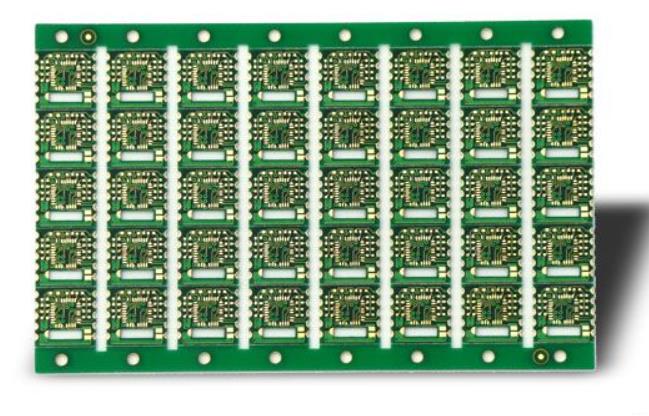
How the telematics pcb is manufactured changes the quote as much as the materials do. Standard multilayer fabrication is straightforward, but compact vehicle systems increasingly use HDI technology with microvias and buried vias to shrink the board. HDI boards typically cost two to three times as much as equivalent standard constructions, yet they allow smaller housings and shorter RF trace lengths that improve reliability. Assembly method also matters: SMT assembly dominates volume production because it is fast and repeatable, while through-hole connectors and press-fit terminals add manual or semi-automated steps. Test and quality assurance complete the picture, with automotive programs requiring thermal cycling, vibration testing, EMC pre-screening and functional checks that add USD 10-50 per board depending on the test plan.
Prototype, Low Volume and Mass Production
Quantity is the strongest single influence on unit price because tooling, programming and test setup are amortized across the run. Prototype and small-batch builds of 10-100 boards commonly land at USD 50-150 per board, reflecting NRE charges, expedited handling and low component buying power. As volume climbs past 1,000 boards, unit pricing typically falls to USD 8-25 for standard FR-4 designs, and high-volume programs can negotiate further with consolidated ordering and annual forecasts. Buyers who compare quotes across these regimes should verify what is included: some low prices exclude test fixtures, programming, or documentation that a vehicle program cannot skip.
Regional Differences and Supplier Comparison
Where the board is built affects both price and risk. Asian suppliers, particularly in China, offer the most competitive pricing on standard telematics pcb work thanks to mature supply chains and automated lines, which is why most volume programs source there. North American and European suppliers charge more per board but provide closer engineering support, stronger IP protection in some cases, and shorter logistics for domestic programs. The practical approach for most teams is a qualified Asian manufacturing partner for production with local engineering support for design, a model that keeps unit cost low without giving up technical guidance.
Reliability and Certification for Vehicles
A telematics board that fails in the field is expensive to reach: it sits inside a vehicle, often behind a dashboard or under a seat. Automotive-grade programs therefore specify components with AEC-Q qualification where available, assembly under IATF-16949 or ISO 9001 quality systems, and rigorous PCBA testing that covers power-on, communication, GNSS fix, cellular registration and environmental behavior. These requirements add cost, but they convert unpredictable field failures into controlled factory checks. For aftermarket and commercial telematics devices, the same disciplines apply at a lighter level, balancing reliability against the price sensitivity of consumer fleets.
How to Control Telematics PCB Cost
Cost control starts with specification discipline. Match layer count and material grade to the radio design instead of over-specifying, use ENIG selectively on fine-pitch areas, and standardize the BOM around modules your supplier already procures. Reduce unnecessary HDI features if a slightly larger board is acceptable, and consolidate test coverage into the checks that actually predict failure. Early PCB design and layout review with the manufacturer catches cost drivers before they are frozen into Gerbers, and disciplined ordering through a single partner with components procurement avoids the premium pricing of fragmented sourcing.
Choosing a Telematics PCB Manufacturing Partner
Look for a supplier that builds connected products for real vehicle programs, not just generic boards. Ask about their experience with GPS and cellular integration, their test coverage for RF and communication functions, and whether their quality system matches your target market. Confirm they can move from prototype to mass production without changing process, and that they document material grades and test results for traceability. A full-service partner combining PCB manufacturing, PCB assembly and testing under one roof keeps schedules short and accountability clear, which matters when a fleet launch date is on the line.
Telematics PCB FAQ
Q1: How much does a telematics PCB cost? Standard FR-4 boards run USD 8-25 in volume and USD 50-150 at prototype, while high-frequency or flexible designs range from USD 40-120 per board.
Q2: Why is HDI used in telematics boards? HDI shrinks the assembly and shortens RF traces for reliable GPS and cellular performance, at roughly two to three times standard fabrication cost.
Q3: What testing do automotive telematics boards need? Thermal cycling, vibration, EMC pre-screening and functional communication tests are typical, adding roughly USD 10-50 per board.
Q4: Can one manufacturer handle prototype and volume? Yes, suppliers with automated lines and documented process control can qualify a prototype design and scale it to thousands of boards per month.
Q5: How long does a telematics PCB project take? Bare-board prototypes typically ship in one to two weeks, and production qualification with testing usually adds another few weeks for most programs.
Conclusion
The telematics pcb sits at the intersection of RF design, automotive reliability and cost engineering. Material, layers, HDI features, test coverage and order volume each move the final price, and knowing which levers matter lets buyers fund real capability instead of unnecessary specification. With the right manufacturing partner, connected-vehicle programs ship boards that track, communicate and diagnose reliably for the life of the fleet.