Turnkey PCBA: From BOM Kitting to Shipment
Turnkey PCBA is usually described as a purchasing service, and that description misses most of its value. Buying the parts is the visible part of the work; the part that decides whether the order succeeds is the reconciliation of the bill of materials against what can actually be obtained, and the arrangement of the material so that the line can start on a known date.
A project that has to manage board fabrication, component purchasing, assembly and test across four suppliers has four schedules to align and four opportunities for a delay. Consolidating them removes the coordination without removing the questions — and the questions are what BOM kitting is for.
What the Customer Provides
The fabrication data, the bill of materials, the placement coordinates and the assembly drawing form the working set, together with the programme files, the programming instructions, the test procedure and the acceptance values where programming or testing is part of the order.
The bill of materials is the document the whole project depends on, and it has to be specific. Reference designators, complete part numbers, packages, quantities, manufacturers and the permitted alternatives are the minimum; an entry that says nothing more than a resistance value or a generic device family cannot be purchased accurately or checked afterwards. Where the customer intends to supply the main controller and leave the rest to the assembler, the bill of materials marks that division so that nothing is purchased twice and nothing is left out.
The intended prototype quantity, the follow-on volume, the required date and the packaging method are also part of the enquiry, because they change the way the kitting is done. A single prototype set is bought differently from a production requirement, and a part that is available in small quantity today may be on a long lead in the volume that follows.
Checking the Bill of Materials
Before anything is ordered, the bill of materials is checked for internal consistency: that every reference designator exists, that the quantities agree with the placement data, that the part numbers correspond to the packages stated, and that no two positions have been given the same description for different devices. This pass costs an hour and frequently finds an error that would otherwise have been discovered at the machine.
The sourcing review follows. Obsolete parts, end-of-life parts, devices with long lead times and entries with incomplete part numbers are identified at this stage, while there is still time to make a decision. The decision belongs to the customer’s engineering team, and the useful output of the review is a short list of questions rather than a list of problems.
Shortages and Substitution
A shortage is normal, and it does not justify improvising. A substitute is proposed only with the differences stated: tolerance, voltage and temperature characteristic for a passive device; function, pin-out and firmware compatibility for a semiconductor; pin count, direction, height and mating harness for a connector. A new device is never introduced on the strength of a matching footprint, because a footprint is evidence about geometry and nothing else.
The customer confirms each substitution in writing and the confirmation stays in the project file. The value of doing this properly is not administrative: it means that the accepted configuration is documented, that a repeat order follows the same rules, and that if a fault appears later, the question of which device was fitted has an answer.
Material Readiness Before the Line Starts
When the components arrive, the part numbers, quantities, packaging and appearance are checked against the bill of materials. Moisture sensitive devices are checked for the integrity of their packaging and humidity indication, and the need for a bake is assessed before the parts are used rather than after a defect appears.
The run is released when the boards, the stencil and all the critical devices are present. Building with the available material while waiting for the main controller is technically possible and practically undesirable: partly populated boards have to be unloaded, stored and reloaded, and each of those steps adds handling risk and a version management problem to an order that had to wait anyway.
Once the material is complete, the placement programme is verified against the coordinates, the packages and the polarities, and the first board is confirmed for part number, orientation and position before production continues.
From Assembly to Delivery
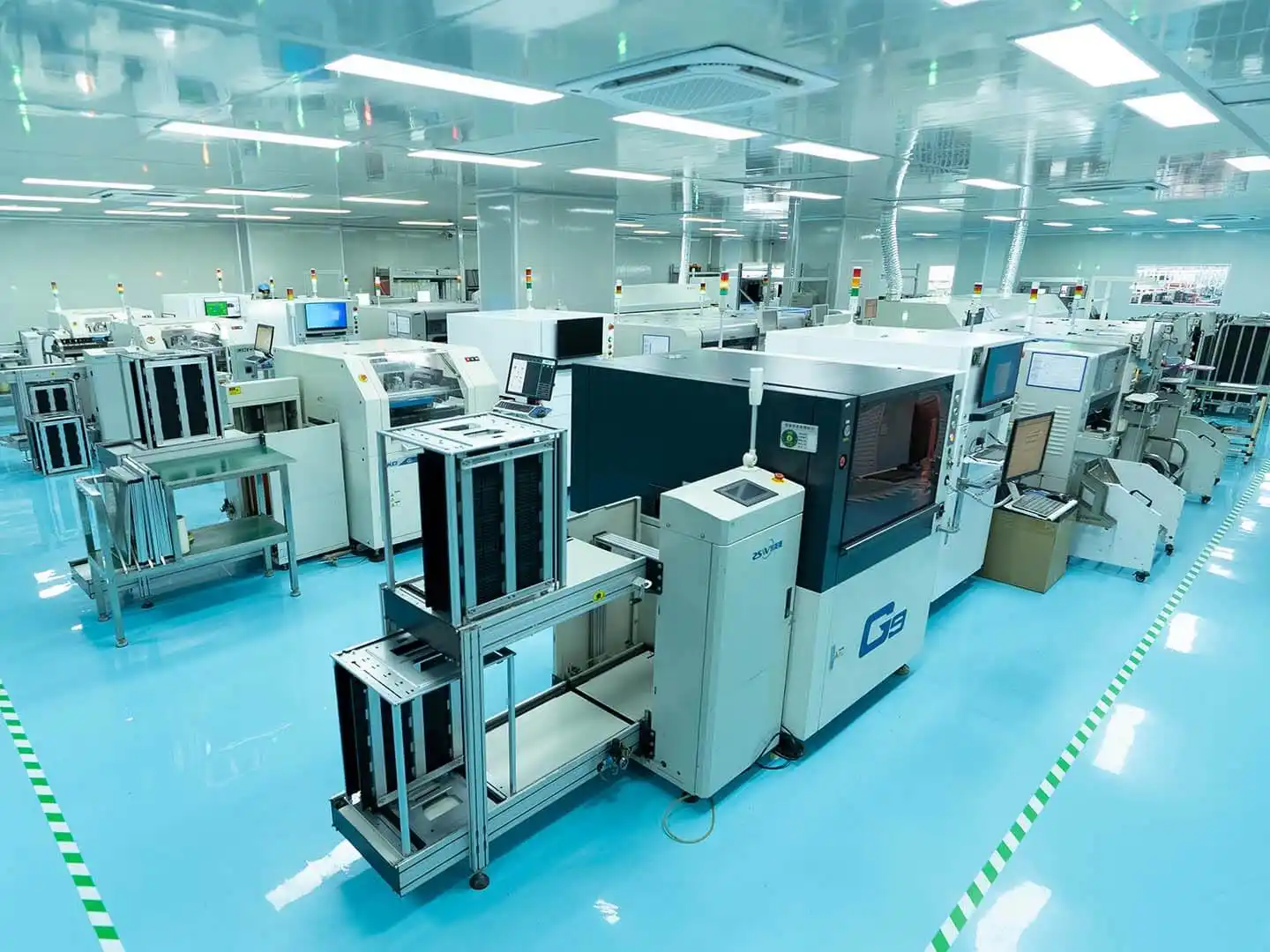
The production flow covers paste printing, inspection, placement, reflow and optical inspection, with insertion and soldering where the board carries through-hole parts. After soldering, programming and functional test follow the customer’s documents: the programme version is distinguished, and the test requirement states the supply method, the interface connections, the operating sequence and the acceptance range. A fixture supplied by the customer is delivered before the order is scheduled and proved before the batch starts.
Boards that pass are packed in antistatic material by version and quantity. Where several versions of a product exist, the label and the packing list distinguish them clearly, because a mixed carton is a problem that the customer inherits at their own assembly line.
Which Projects Suit This Model
It suits projects that need a prototype and a small batch quickly, projects whose bill of materials contains many different devices, and organisations that have limited purchasing resources or would rather not manage several suppliers. It also suits a product whose schedule is dominated by material rather than by assembly, because the ordering can begin while the design is still being finalised.
Where the customer already has dependable supply channels, a partial arrangement is available: some material supplied, some purchased, with the responsibility divided on the bill of materials and the delivery dates, loss allowance and arrival times agreed for the consigned items.
The purchasing and kitting work feeds the assembly through turnkey assembly and component procurement, the population stage through SMT assembly, the pin-in-hole stage through through-hole assembly, the verification through PCBA testing and the board fabrication through PCB manufacturing.
What the Quotation Covers
A turnkey quotation is made of three parts that are worth showing separately: the material, the assembly and the additional operations. The material line carries the component cost at the quantity ordered, including the loss allowance; the assembly line carries the stencil, the machine programming and the placement work; the additional lines carry insertion, programming, testing, coating and packing where they apply.
Keeping them apart matters because the three behave differently. Material cost scales with the quantity and moves with the market; the setup cost falls as the quantity rises; the testing cost scales with the number of boards and with the time each board occupies at the station. A single lump sum conceals all of that, and a customer who cannot see the structure cannot tell whether a change to the design will make the next order cheaper or more expensive.
The same structure makes a repeat order predictable, because only the material line moves with availability while the process lines remain the same for as long as the design does. Where the design does change, the change is quoted against the original breakdown rather than from a blank sheet, which is the difference between a five-minute answer and a new enquiry.
FAQ
What makes a bill of materials usable? Complete part numbers, packages, quantities and permitted alternatives, plus a clear statement of which items the customer will supply.
Can a substitute be used without asking? No. A substitution changes the accepted configuration, and the difference has to be assessed against the function rather than against the footprint.
Why not start assembly while material is outstanding? Because partly built boards must be unloaded, stored and reloaded, which adds handling and version risk to an order that was going to wait regardless.