Classification of Rolled Copper Foil
Rolled Copper Foil has become an essential material in advanced electronic manufacturing due to its excellent physical properties, mechanical flexibility, and electrical performance.
With the rapid development of electronic products toward miniaturization, high performance, and high reliability, the requirements for copper foil materials have continued to increase. Different types of rolled copper foil have been developed through various manufacturing processes, performance improvements, surface treatments, and application-oriented optimizations to meet the requirements of different industries.
Classification Based on Manufacturing Processes
The production of rolled copper foil usually starts with high-purity copper ingots. Through hot rolling, the copper material is initially formed into copper strips with suitable thickness. The following cold rolling process plays a critical role in determining the final microstructure and performance characteristics of the copper foil.
Based on different cold rolling processes and manufacturing technologies, rolled copper foil can generally be divided into conventional cold-rolled copper foil and advanced process rolled copper foil.
Conventional Cold-Rolled Rolled Copper Foil
Conventional cold-rolled copper foil is produced through continuous rolling processes using multiple rolling machines. The copper strip is gradually reduced to the required thickness while the copper atoms become directionally arranged, forming a dense fiber-like grain structure.
This structure provides excellent flexibility and high electrical conductivity.
In common Flexible PCB Materials applications, conventional rolled copper foil is widely used because it can withstand repeated bending while maintaining stable electrical performance. It is especially suitable for flexible circuit boards used in mobile electronics, wearable devices, and compact electronic products.
Advanced Process Rolled Copper Foil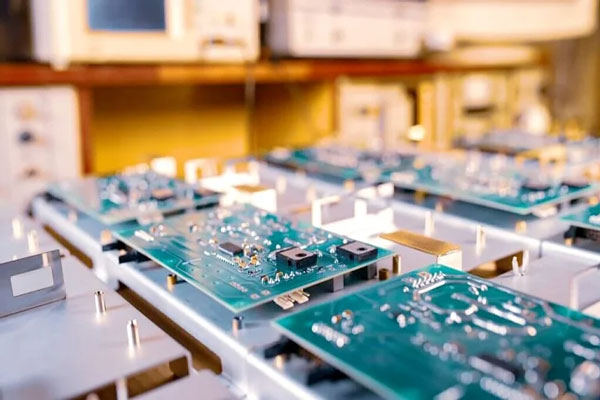
Advanced rolled copper foil is developed for high-performance applications requiring improved mechanical properties.
For example, asymmetric rolling technology uses different rolling speeds between upper and lower rollers to introduce stronger shear deformation. This process refines the internal grain structure of copper foil, improving:
- Mechanical strength
- Fatigue resistance
- Dimensional stability
- Long-term reliability
These advanced copper foil materials are widely used in aerospace electronics and other high-reliability PCB applications where materials must withstand vibration, temperature changes, and demanding operating environments.
Classification Based on Performance Characteristics
According to performance requirements, rolled copper foil can be divided into high-elongation copper foil, high-conductivity copper foil, and high-temperature resistant copper foil.
High-Elongation Rolled Copper Foil
High-elongation rolled copper foil is manufactured through optimized rolling processes and advanced annealing treatments.
Its elongation rate can typically reach 15%-40%, significantly higher than standard copper foil materials.
This type of copper foil is widely used in wearable electronic devices.
For example, flexible circuits inside smart wearable products require repeated bending during daily use. High-elongation rolled copper foil allows the circuit to maintain reliable electrical connections while reducing the risk of fatigue cracking and conductor failure.
For advanced flexible circuit applications, professional Flexible PCB Manufacturing technologies rely heavily on high-performance copper foil materials to achieve durability and long service life.
High-Conductivity Rolled Copper Foil
High-conductivity rolled copper foil focuses on improving electrical transmission efficiency.
By controlling raw material purity and optimizing manufacturing parameters, manufacturers can reduce impurities and crystal defects that affect electron transmission.
The electrical conductivity of premium high-conductivity rolled copper foil can approach or exceed international annealed copper standards.
In high-speed communication applications such as:
- 5G communication systems
- Data centers
- High-speed signal transmission equipment
high-conductivity copper foil helps reduce resistance losses and signal attenuation, ensuring stable and efficient data transmission.
High-Temperature Resistant Rolled Copper Foil
High-temperature resistant rolled copper foil is designed for applications operating under elevated temperatures.
By adding specific alloy elements and applying special heat treatment processes, this type of copper foil maintains stable mechanical and electrical properties even under temperatures exceeding 200°C.
It is commonly used in:
- Automotive electronic control systems
- Industrial high-temperature equipment
- Power electronic applications
This material helps prevent PCB deformation and electrical performance degradation caused by continuous thermal stress.
Classification Based on Surface Treatment Methods
To improve bonding performance, corrosion resistance, and environmental durability, rolled copper foil often receives different surface treatments.
These treatments create specialized copper foil products for various PCB manufacturing requirements.
Double-Sided Smooth Rolled Copper Foil
Double-sided smooth copper foil is produced through precision surface polishing, providing extremely low surface roughness.
The surface roughness can typically be controlled at very low levels, making it suitable for advanced PCB applications requiring excellent signal integrity.
This type of copper foil is especially valuable in high-density interconnect PCB manufacturing.
Its smooth surface helps:
- Reduce signal reflection
- Minimize transmission loss
- Improve bonding with dielectric materials
- Enhance overall PCB reliability
For advanced circuit structures requiring precise manufacturing capabilities, HDI PCB Manufacturing technologies often utilize high-quality copper foil materials.
Black Oxide and Red Oxide Treated Rolled Copper Foil
Black oxide and red oxide treatments create an oxide layer on the copper surface through chemical processing.
This surface layer improves:
- Corrosion resistance
- Bonding strength
- Electromagnetic shielding performance
These treated copper foils are widely used in electronic products such as laptops, smartphones, and industrial equipment.
They help improve electromagnetic compatibility and protect internal circuits from environmental influences.
Nickel-Plated and Tin-Plated Rolled Copper Foil
Nickel-plated rolled copper foil combines copper conductivity with nickel corrosion resistance.
It is commonly applied in:
- Electronic connectors
- Battery tabs
- High-reliability electrical components
Tin-plated rolled copper foil provides excellent solderability, making it suitable for electronic assembly processes.
It helps improve solder joint reliability and reduces defects such as poor soldering and connection failures.
Classification Based on Application Fields
Different industries require different copper foil characteristics. Therefore, rolled copper foil products are optimized according to specific application environments.
Rolled Copper Foil for Flexible PCB Applications
Flexible PCB applications require copper foil with excellent flexibility and bending resistance.
These copper foils are usually thinner and specially processed to withstand thousands or even hundreds of thousands of bending cycles without breaking.
Applications include:
- Foldable smartphones
- Wearable electronics
- Flexible display connections
- Compact electronic devices
The combination of flexible copper foil and advanced circuit manufacturing enables reliable signal transmission in highly dynamic applications.
Rolled Copper Foil for High-Frequency and High-Speed Communication
High-frequency applications such as 5G/6G communication systems and high-speed transmission equipment require copper foil with excellent signal integrity.
The material must provide:
- Low dielectric loss
- Low surface roughness
- Stable electrical characteristics
- High-frequency transmission capability
Through the use of ultra-pure copper materials and optimized rolling and annealing processes, advanced copper foil can significantly reduce signal loss at high frequencies.
For high-performance communication systems, High Frequency PCB technology depends on carefully selected materials to maintain signal quality and transmission stability.
High Frequency PCB
Rolled Copper Foil for New Energy Vehicle Applications
In the automotive industry, rolled copper foil is widely used in:
- Battery current collectors
- Motor controller PCBs
- Power electronic modules
Battery applications require copper foil with:
- High conductivity
- Corrosion resistance
- Mechanical strength
These characteristics ensure efficient current transmission during charging and discharging cycles.
For automotive electronic systems, copper foil must also withstand:
- Temperature fluctuations
- Mechanical vibration
- Long-term operational stress
Reliable Automotive PCB Manufacturing solutions require advanced copper foil materials to ensure stable vehicle operation under complex conditions.
Automotive PCB Manufacturing
Conclusion
Rolled copper foil features a comprehensive classification system based on manufacturing processes, performance characteristics, surface treatments, and application requirements.
Each category is optimized for specific industrial needs, including flexible electronics, high-frequency communication, automotive systems, aerospace equipment, and advanced PCB manufacturing.
As electronic devices continue developing toward higher integration, faster transmission speeds, and greater reliability, high-performance rolled copper foil will remain a critical material supporting innovation across the global electronics industry.