Why Are PCBs Green? PCB Design, PCB Manufacturing & Solder Mask Guide
If you have ever opened a laptop, smartphone, industrial controller, or other electronic device, you have probably noticed the familiar green circuit board inside. Although many people assume that green is simply an aesthetic choice, the color actually comes from an important part of the PCB Manufacturing process: the solder mask.
The copper traces and fiberglass substrate underneath a circuit board are not naturally green. Instead, a protective polymer coating called a PCB Solder Mask is applied over most of the copper surface, leaving only pads, test points, and other required areas exposed.
Green became the traditional color because it offers a practical combination of optical contrast, manufacturing consistency, inspection visibility, material availability, and cost efficiency. Today, manufacturers can produce PCBs with black, blue, red, white, yellow, purple, and other solder mask colors, but green remains one of the most widely used choices.
This article explains why PCBs are green, what the solder mask does, how different solder mask colors compare, and how color selection relates to PCB Design, PCB Manufacturing, inspection, and product applications.
Why Are PCBs Green?
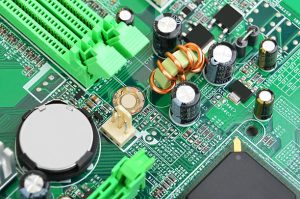
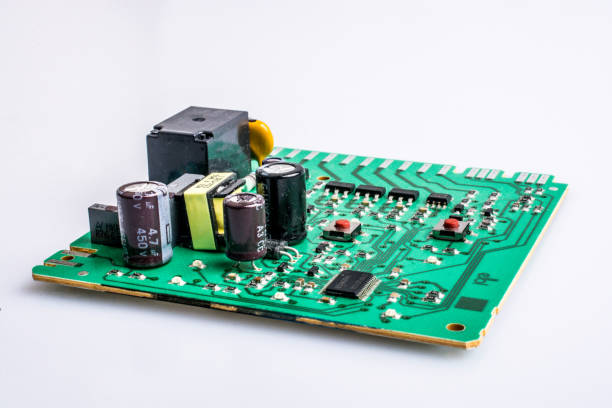
Although printed circuit boards can be manufactured in many colors, green remains the traditional industry choice. The color does not come from the copper circuitry or fiberglass substrate. It comes from the pigment incorporated into the solder mask applied during PCB manufacturing.
Green Comes From the PCB Solder Mask
A typical PCB consists of a substrate, copper layers, dielectric materials, solder mask, and silkscreen. Copper traces provide electrical connections, while the substrate provides mechanical support and electrical insulation.
Without protection, exposed copper can be affected by oxidation, moisture, contamination, and mechanical damage. The PCB Solder Mask provides a protective barrier over most of the board while leaving solderable areas exposed.
The final PCB color is therefore primarily determined by the solder mask.
Green solder mask has become widely established because its formulation and processing characteristics have been refined through decades of commercial PCB production. Its manufacturing behavior is well understood, making it suitable for both prototype production and high-volume manufacturing.
Why Green Became an Industry Standard
The widespread use of green solder mask is partly historical. As commercial PCB production expanded, manufacturers optimized equipment, exposure systems, inspection processes, and production parameters around commonly used green solder mask materials.
Once a particular material and process became widely adopted, suppliers could produce it at scale, while manufacturers gained extensive experience controlling coating thickness, exposure, development, and curing.
This created a practical manufacturing ecosystem in which green solder mask became readily available and economically competitive.
Green Provides Useful Optical Contrast
One of the most practical advantages of green solder mask is its visibility during inspection.
Modern PCB factories use automated optical inspection (AOI), microscopes, cameras, and manual visual inspection to identify manufacturing defects. The contrast between green solder mask, exposed copper pads, white silkscreen markings, solder joints, and components can make certain defects easier to identify.
Depending on the inspection system and board design, this contrast can help detect problems such as solder bridges, missing components, misalignment, contamination, and certain surface defects.
However, inspection performance depends on many factors, including camera configuration, lighting, surface finish, solder mask characteristics, component geometry, and AOI programming—not simply the color itself.
Green Offers Consistent Manufacturing Performance
Another reason for the popularity of green solder mask is its mature manufacturing process.
During PCB Manufacturing, solder mask must be coated, exposed, developed, and cured under controlled conditions. A properly processed solder mask must provide reliable adhesion, insulation, chemical resistance, and mechanical protection.
Because green solder mask has been extensively used, PCB manufacturers and material suppliers have accumulated substantial process experience with it. This familiarity can help manufacturers maintain consistent production parameters and quality.
What Is PCB Solder Mask?
A PCB solder mask is a protective polymer coating applied over selected areas of a printed circuit board.
Its most visible characteristic is its color, but its primary purpose is functional rather than cosmetic.
The solder mask helps protect copper conductors from environmental exposure and reduces the possibility of unintended solder connections during PCB assembly.
How Does PCB Solder Mask Work?
After the copper circuitry has been formed, solder mask is applied over most of the PCB surface. Openings are created where components need to be soldered.
These openings commonly expose:
- Component pads
- Through-hole pads
- Test points
- Selected plated areas
- Other designated solderable features
During SMT or through-hole assembly, solder is deposited or applied to these exposed areas. The surrounding solder mask helps prevent solder from spreading onto adjacent conductors.
This function is particularly important when component pitch becomes smaller and PCB routing becomes denser.
A properly designed PCB Solder Mask therefore contributes to assembly reliability by helping control where solder can flow.
Materials Used in PCB Solder Mask
Modern solder masks are commonly based on polymer systems, often using epoxy-based formulations combined with photosensitive materials and other additives.
Liquid Photoimageable (LPI) solder mask is widely used because it can form relatively fine and accurately defined openings.
A typical LPI process involves applying the material to the board, exposing selected areas to ultraviolet light, developing the image, and then performing final curing.
Dry-film solder mask is another technology that can be used for certain specialized applications where its process characteristics are appropriate.
PCB Solder Mask Application Process
The solder mask process generally involves several controlled manufacturing stages:
- PCB surface preparation – The board is cleaned to remove contaminants and prepare the copper surface.
- Solder mask coating – The solder mask material is applied using an appropriate coating method.
- Pre-curing – The material is partially cured to establish the required physical properties.
- UV exposure – A photolithographic process defines the required solder mask openings.
- Development – Unwanted material is removed from designated areas.
- Final curing – Thermal or other curing processes complete the formation of the protective coating.
- Inspection – The finished solder mask is checked for defects, registration, coverage, and openings.
Process parameters must be controlled carefully because solder mask thickness, registration, adhesion, curing, and opening dimensions can influence PCB assembly quality.
Why Is Solder Mask Important?
The solder mask serves several important purposes:
- Protects copper traces from oxidation and contamination
- Provides electrical insulation between adjacent conductors
- Helps prevent solder bridges
- Improves PCB assembly consistency
- Protects the board surface from mechanical and environmental exposure
- Helps maintain long-term PCB reliability
Although the solder mask is relatively thin, it is an important part of the overall PCB Manufacturing Process.
Why Is Green the Standard PCB Color?
Green remains a common PCB color because it provides a practical balance between manufacturing efficiency, inspection visibility, material availability, and cost.
1. Manufacturing Efficiency
Green solder mask has been extensively optimized for commercial production. Manufacturers are familiar with its coating, exposure, development, and curing characteristics.
This established process knowledge can help maintain consistent production quality across large manufacturing volumes.
2. Inspection Visibility
Green provides a useful visual background for identifying copper pads, silkscreen markings, solder joints, and components.
This can benefit both automated inspection and manual examination, although actual inspection performance depends on the complete inspection system rather than color alone.
3. Optical Characteristics
Very dark solder masks can make some surface features more difficult to distinguish under certain lighting conditions. Green provides a familiar visual background that has been widely accommodated by PCB inspection equipment and production workflows.
This is particularly useful when a manufacturing line combines automated inspection with manual quality-control operations.
4. Cost Efficiency
Green solder mask is widely available because of its extensive use in the electronics industry.
Large-scale material production, established supply chains, mature manufacturing processes, and extensive production experience can all contribute to competitive costs.
For high-volume electronics manufacturing, these factors make green a practical choice.
Different PCB Solder Mask Colors Explained
Green is not the only available option. Modern PCB manufacturers can provide many solder mask colors depending on product requirements.
The most common alternatives include black, blue, red, white, yellow, and purple.
Green Solder Mask
Green remains a widely used option for general-purpose PCB production.
Its advantages include mature manufacturing processes, good visual contrast, broad material availability, and compatibility with a wide range of electronic applications.
It is commonly found in consumer electronics, industrial equipment, automotive electronics, communication equipment, and development hardware.
Black Solder Mask
Black solder mask can provide a sleek and premium appearance and is sometimes selected for consumer electronics, gaming hardware, computer equipment, and other visually focused products.
However, dark surfaces can make some visual inspection tasks more challenging under certain lighting conditions.
When using black solder mask, manufacturers may need to pay particular attention to inspection lighting, imaging settings, surface contamination, and process control.
Blue Solder Mask
Blue solder mask offers a distinctive appearance while maintaining practical manufacturing characteristics.
It is commonly seen on development boards, evaluation boards, embedded systems, educational electronics, and various commercial products.
Blue can also be useful when different PCB assemblies need to be visually distinguished within a product-development environment.
Red Solder Mask
Red solder mask is frequently used for prototypes, evaluation boards, development hardware, and specialty electronics.
Its bright appearance makes it easy to distinguish a particular PCB from standard green boards and can also support product identification.
White Solder Mask
White solder mask is particularly relevant to certain LED lighting applications because a lighter surface can reflect light.
It is therefore sometimes used in LED modules, lighting assemblies, displays, and other applications where optical appearance is important.
However, white surfaces can make certain contaminants, scratches, and surface imperfections more visible.
Other Colors
PCB manufacturers may also offer yellow, purple, matte black, and other customized solder mask colors.
These choices are often driven by product identification, branding, visual design, education, or application-specific requirements rather than by a fundamental improvement in electrical performance.
PCB Solder Mask Color Comparison
| PCB Solder Mask Color | Visual Inspection | Typical Cost Consideration | Typical Applications |
|---|---|---|---|
| Green | Generally excellent visibility | Usually most economical | Consumer electronics, industrial equipment, automotive electronics |
| Black | Can require more careful inspection lighting | Often higher | Premium consumer electronics, gaming hardware |
| Blue | Good general visibility | Moderate | Development boards, embedded systems, educational electronics |
| Red | Good visibility | Moderate | Prototypes, evaluation boards, specialty electronics |
| White | Surface contamination can be more noticeable | Often higher | LED lighting, displays, selected medical/electronic products |
| Yellow/Purple | Application-dependent | Often higher | Branding, demonstrations, specialty products |
The table should be treated as a general manufacturing comparison rather than an absolute rule. Actual cost and inspection performance depend on the solder mask material, supplier, PCB specifications, production volume, and inspection system.
Green PCB vs. Black PCB vs. Blue PCB
Green, black, and blue are among the most recognizable solder mask colors. All three can provide the basic protective function required from a solder mask, but their visual characteristics and manufacturing considerations differ.
1. Green PCB
Green remains widely used because it combines established manufacturing processes, good inspection visibility, broad availability, and competitive cost.
For high-volume PCB Manufacturing, these practical factors can be particularly important.
2. Black PCB
Black PCB surfaces can create a sophisticated appearance and are often selected when industrial design and product aesthetics are important.
However, dark surfaces may reduce visual contrast for certain inspection tasks. Manufacturers therefore need to consider the interaction between solder mask color, lighting, imaging systems, and inspection criteria.
3. Blue PCB
Blue offers an alternative appearance while remaining practical for many applications.
It is often used when engineers or product developers want to distinguish a particular board visually without moving to a very dark solder mask.
How Should You Choose a PCB Solder Mask Color?
For most general-purpose commercial products, green solder mask is a practical option because of its established manufacturing ecosystem and inspection characteristics.
However, color should not be selected based on appearance alone.
When choosing a solder mask color, consider:
- PCB Design requirements
- Inspection and AOI requirements
- Product appearance
- Manufacturing volume
- Material availability
- Supplier capabilities
- Cost
- Environmental and operating conditions
- Brand or product identification requirements
The electrical performance of a PCB is primarily determined by its circuit design, materials, stackup, copper structure, impedance requirements, surface finish, and manufacturing quality—not simply by the solder mask color.
Advantages of Green PCB Solder Mask
The continued popularity of green solder mask is supported by several practical advantages.
Manufacturing Consistency
Green solder mask has been used extensively across the PCB industry, so manufacturers have considerable experience controlling coating, exposure, development, and curing parameters.
This established process can support consistent solder mask thickness, adhesion, registration, and surface quality.
Easier Quality Inspection
Green provides a familiar visual background for inspecting copper pads, silkscreen, components, and solder joints.
This can be particularly useful when a production line uses both automated optical inspection and manual inspection.
Copper Protection
The solder mask protects exposed copper from environmental factors such as moisture, contamination, and oxidation.
By providing a protective insulating layer, it also helps reduce the risk of unintended electrical connections between adjacent conductors.
Cost-Effective Production
Because green solder mask is widely used, it benefits from an established supply chain and mature manufacturing processes.
For large-volume PCB Manufacturing, these factors can contribute to competitive production costs.
Long-Term Reliability
A properly applied and cured solder mask can provide resistance to heat, moisture, chemicals, and mechanical handling.
This protective function is particularly important in applications where the PCB may experience demanding environmental conditions, such as automotive electronics, industrial control equipment, and communication systems.
Can PCBs Be Other Colors?
Yes. Modern PCB manufacturing technology allows manufacturers to produce circuit boards in many different solder mask colors.
The color is usually selected based on a combination of manufacturing, inspection, appearance, identification, and branding requirements rather than fundamental electrical performance.
Consumer Electronics
Black and other dark solder mask colors are sometimes used in premium-looking consumer electronics, gaming hardware, computer equipment, and audio products.
The visual appearance can complement the overall industrial design of the product.
LED Lighting Systems
White solder mask can be useful in certain LED lighting applications because its lighter surface can reflect more light than dark surfaces.
This makes white solder mask a practical option for selected lighting modules and optical applications.
Education and Development Boards
Blue, red, purple, and other colors can be used for evaluation boards, robotics platforms, educational electronics, and development systems.
Different colors can help engineers and students visually distinguish boards with different functions or revisions.
Does PCB Color Affect Performance?
For most standard applications, solder mask color has little direct influence on the fundamental electrical performance of a PCB.
Factors such as PCB material, dielectric properties, copper thickness, trace geometry, stackup, impedance control, thermal design, surface finish, and manufacturing tolerances are generally much more important.
However, color can indirectly influence manufacturing and inspection considerations.
For example, a particular solder mask color may affect visual contrast under a specific inspection system. Therefore, color selection should be considered as part of the broader PCB Design and manufacturing strategy rather than as a purely cosmetic decision.
Conclusion
Why are PCBs green?
The simple answer is that the green color comes from the protective PCB Solder Mask, not from the copper traces or fiberglass substrate.
Green became the traditional PCB color because it offers a practical combination of established manufacturing processes, inspection visibility, material availability, and cost efficiency. Decades of widespread use have also created a mature manufacturing ecosystem around green solder mask.
Modern PCBs can be produced in black, blue, red, white, yellow, purple, and other colors. These alternatives can be useful for product aesthetics, branding, identification, optical applications, and specialized manufacturing requirements.
However, PCB color itself is not the primary factor determining electrical performance. Good PCB Design, appropriate materials, correct stackup construction, reliable PCB Manufacturing, suitable surface treatment, and effective inspection and testing are much more important to the final performance and reliability of the board.
When developing a new electronic product, engineers should therefore select solder mask color according to the application’s appearance, inspection, manufacturing, and cost requirements. For many general-purpose and high-volume applications, green remains a practical and well-established choice.
Kingda can support PCB projects by helping engineers consider solder mask requirements alongside PCB design, manufacturing specifications, assembly requirements, and quality considerations to achieve a reliable and manufacturable final product.