Wind Power PCBA Guide: How Circuit Assemblies Boost Turbine Efficiency
Why Wind Turbines Run on Circuit Boards
Modern wind turbines look like mechanical machines, but their performance is decided by electronics. A wind power pcba controls the blade pitch, converts variable generator output into grid-quality power, monitors vibration and temperature, and shuts the turbine down before faults become failures. Every percentage point of efficiency these boards add translates directly into megawatt-hours over a twenty-year life, which is why the industry treats control electronics as core technology rather than an accessory. This guide explains how wind turbine PCBA is architected, what makes it reliable in extreme environments, and what it costs to build.
The Architecture of a Wind Turbine Control System
A single turbine typically carries several specialized boards. The central control board runs the control algorithms, manages communications, and coordinates the subsystems. Power driver boards switch the generator phases and drive the inverter stages that connect to the grid. Sensor interface boards condition signals from anemometers, blade-angle encoders, temperature probes, and vibration sensors. Communications modules move data between the nacelle, tower, and remote monitoring center over CAN, RS-485, Ethernet, or wireless links. Protection circuits watch current, voltage, and temperature and trigger safe shutdown before damage occurs. In larger machines, redundant safety systems duplicate the critical paths so a single board fault can never leave the turbine uncontrolled.
How PCBA Raises Energy Efficiency
The efficiency story starts with pitch control. By adjusting blade angle continuously, the control board keeps the rotor at its aerodynamic optimum across changing wind speeds, which is the single largest lever on annual energy capture. Power conversion boards then minimize losses in the AC/DC and DC/AC stages; a well-designed inverter PCB can recover several percentage points that older designs waste as heat. Signal-conditioning boards improve the accuracy of the measurements that feed the optimizer, and modern designs add real-time analytics that adapt control strategies to turbulence and wake effects. The result is a machine that produces more energy from the same wind.
Operating Conditions That Define the Design
Wind turbine electronics must tolerate a hostile life. Temperatures range from arctic cold to desert heat, vibration is constant, lightning and surges are a real risk on tall towers, and offshore machines face salt spray and humidity that corrode ordinary boards within months. High-reliability wind power pcba designs therefore specify 600-1500 V isolation margins, aggressive EMI/EMC filtering, surge and lightning protection on every external line, vibration-resistant component placement, and conformal coating or encapsulation as standard. Offshore variants add heavier protection and typically cost 20-30 percent more for the same function.
Key Components on a Wind Turbine PCB
Control boards rely on DSPs for fast, deterministic control loops. Power stages use IGBT or SiC modules that switch high currents, driven by purpose-built gate-driver circuits. Industrial-grade relays, large inductors and capacitors, EMI filters, and high-precision sensors fill out the bill of materials. Component grade is not negotiable: industrial and automotive-rated parts survive the thermal cycling and vibration that commercial parts do not, and the difference shows up in field failure rates within the first two years.
Design and Manufacturing Standards
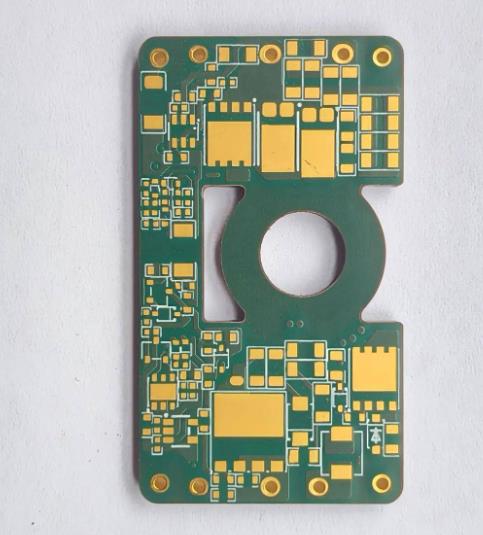
Wind turbine boards are built to IPC-A-610 Class 3 standards, the level reserved for high-reliability equipment where downtime is unacceptable. Manufacturing combines SMT and through-hole assembly because power components and large connectors need the mechanical strength of plated through-hole joints. Heavy-copper processing, thick thermal planes, and aluminum-based heat spreaders handle the currents and losses of power stages. Test coverage is extensive: in-circuit test, functional test, burn-in, and environmental stress screening validate the boards before they are ever installed in a nacelle.
What Wind Power PCBA Costs
Cost scales with power rating and complexity. Sensor interface boards typically range from USD 12-45, full control system boards from USD 40-120, power driver and inverter boards from USD 85-320, and high-voltage custom assemblies from USD 150-600 and up. The wide spread reflects layer count, which commonly runs 4-12 layers, plus special materials such as heavy copper and high-voltage laminates, plus the cost of the test program. BOM content, especially power semiconductors, dominates the total, so supplier relationships on IGBT and SiC devices matter as much as fabrication price.
Reliability and Service Life
A well-built turbine control board is designed for 15-20 years of service. The threats to that life are specific: salt-spray corrosion, thermal fatigue of solder joints, vibration-induced cracks, and lightning damage. Design counters include sealed enclosures or coating, lead-free alloys chosen for thermal cycling, conformal-coated high-voltage areas, and redundant protection. Field data shows that boards with proper environmental protection and Class 3 assembly fail at a fraction of the rate of commodity-grade equivalents, which is why operators qualify suppliers on failure history rather than price alone.
Technology Trends
Wide-bandgap silicon carbide and gallium nitride devices are moving into wind converters, cutting switching losses and shrinking the power stage. AI-assisted predictive maintenance is turning control boards into condition monitors that flag bearing wear and blade imbalance before failure. Power modules are integrating more functions per board, and communications are becoming smarter and more standardized. Each trend raises the performance bar for the wind power pcba and rewards manufacturers that keep their process capability ahead of the silicon.
Choosing a Wind Turbine PCB Supplier
Look for documented high-voltage and high-power project experience, IPC Class 3 process control, and a full test suite including ICT, FCT, burn-in, and environmental screening. Ask how the supplier handles heavy copper, thick boards, and mixed SMT/through-hole assembly, and request case studies from renewable-energy customers. A partner with industrial PCBA depth and ISO-certified quality management can support the qualification files that turbine OEMs require, while PCBA testing capability keeps the reliability evidence in one place.
Prototyping and Qualification
Wind turbine electronics move through prototypes quickly but qualify slowly. Early builds validate the control algorithms and power-stage behavior on a test bench, while the qualification phase adds vibration, thermal cycling, surge, and salt-spray testing that mirror field conditions. Because turbine OEMs require documented evidence, the manufacturer’s test records, material certificates, and inspection reports become part of the product file. Buyers should plan for this qualification in the schedule rather than treating it as an afterthought, and suppliers that keep ICT, FCT, burn-in, and environmental screening in-house make the process dramatically shorter than outsourcing each test to a different lab.
Wind Power PCBA FAQ
Q1: How much does a wind turbine control board cost? Control system boards typically run USD 40-120 and power driver boards USD 85-320 depending on rating and layer count.
Q2: What standards apply? IPC-A-610 Class 3 is the baseline for high-reliability turbine electronics, with IEC safety and grid codes driving isolation and protection requirements.
Q3: How long should the boards last? With proper design and environmental protection, 15-20 years of service is realistic.
Q4: Do offshore turbines need different boards? Yes, offshore versions need heavier corrosion protection and typically cost 20-30 percent more.
Conclusion
Wind power pcba is the intelligence layer that turns wind into electricity efficiently: precise pitch control, low-loss power conversion, and protection that keeps turbines running through storms and grid faults. It demands Class 3 reliability, heavy-power construction, and honest test coverage, and it rewards buyers who qualify suppliers on engineering depth. Partnering with a manufacturer that spans PCB manufacturing, SMT PCB assembly, and Energy PCBA gives wind projects the supply chain stability their twenty-year service lives deserve.