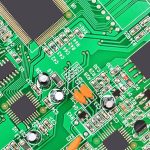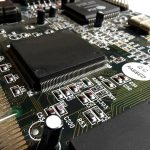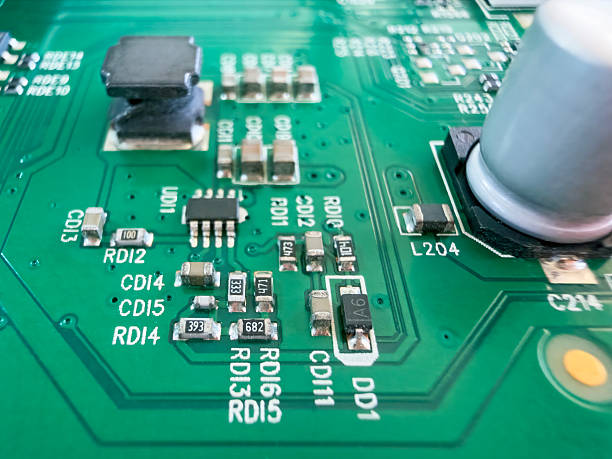
20 Layer Multilayer PCB Manufacturer: Advanced Solutions for Complex Electronic Applications
In industrial control systems, power electronics, medical devices, automotive electronics, and high-performance computing equipment, 20 Layer Multilayer PCB Manufacturer capabilities play an important role in achieving compact circuit integration, stable electrical performance, and long-term product reliability.
As electronic products continue to become smaller, faster, and more intelligent, traditional PCB structures are often unable to meet the requirements of high-density routing, signal integrity, thermal management, and complex circuit functions. A professionally designed High Layer Count PCB provides more internal routing space, better power distribution, and improved electromagnetic performance for demanding applications.
Choosing the right PCB manufacturing partner is critical for ensuring product quality, shortening development cycles, and reducing production risks. A qualified supplier should not only have advanced fabrication technology but also strong engineering support, strict quality control systems, and flexible production capabilities.
What Makes a Professional 20 Layer Multilayer PCB Manufacturer?
A reliable 20 Layer Multilayer PCB Manufacturer must have comprehensive manufacturing capabilities covering PCB design review, material selection, stack-up engineering, lamination processes, precision drilling, copper plating, inspection, and testing.
Unlike standard two-layer or four-layer circuit boards, high-layer-count PCBs require much higher process control. Each additional layer increases manufacturing complexity, especially in areas such as layer alignment, impedance control, signal transmission, and thermal reliability.
Professional manufacturers need advanced production equipment and experienced engineering teams to ensure every layer is accurately manufactured and interconnected.
For customers requiring complex circuit structures, working with a manufacturer experienced in Multilayer PCB Manufacturing can significantly improve product reliability and production efficiency.
Advanced Manufacturing Technology for High Layer Count PCB
Precision Layer Alignment and Lamination Control
The most important challenge in producing a 20-layer circuit board is maintaining accurate layer registration during lamination.
Multiple inner layers must be precisely aligned before pressing. Even small alignment errors can cause open circuits, impedance variation, or signal transmission problems.
Advanced manufacturers use optimized lamination processes, high-precision tooling systems, and strict process monitoring to maintain dimensional stability throughout production.
High Density Interconnection Technology
Modern electronic applications often require more circuits within limited PCB space. Therefore, advanced interconnection technologies are essential.
A professional PCB manufacturer may utilize technologies including:
- Blind vias
- Buried vias
- Microvias
- Via filling
- Fine-line routing
- Controlled impedance design
These technologies help improve routing flexibility and allow engineers to achieve higher circuit density without increasing PCB size.
For applications requiring compact and complex designs, HDI PCB Manufacturing provides advanced solutions for improving connection density and electrical performance.
Special Processes Required for 20 Layer PCB Production
Heavy Copper PCB Technology
Many industrial and power electronic products require high current capability and improved heat dissipation.
Heavy copper technology increases current carrying capacity and enhances thermal management, making it suitable for:
- Power controllers
- Industrial equipment
- Energy systems
- Automotive electronics
Resin Plugging and Via Filling
Reliable via structures are essential for high-layer-count PCBs.
Resin plugging technology helps prevent solder issues, improves board reliability, and supports advanced surface mounting requirements.
This process is especially valuable for applications requiring long-term operational stability.
Controlled Impedance Manufacturing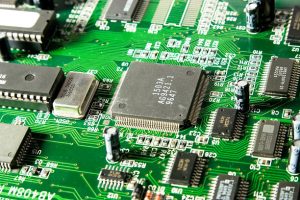
With increasing demand for high-speed communication and advanced electronic systems, signal integrity has become a major design concern.
A professional manufacturer must carefully control:
- Dielectric thickness
- Copper thickness
- Material characteristics
- Layer stack-up design
- Transmission line structures
Controlled impedance technology ensures stable high-frequency signal transmission and reduces signal loss.
Advanced Production and Delivery Capability for 20 Layer Multilayer PCB
Beyond advanced manufacturing technology, a professional 20 Layer Multilayer PCB Manufacturer must also have strong production management and delivery capabilities.
High-layer-count PCBs are usually used in projects with strict development schedules. Delays during prototype production or mass manufacturing can directly affect product launches and market competitiveness.
A reliable manufacturer should provide a complete production workflow, including engineering review, material preparation, PCB fabrication, inspection, testing, and shipment management.
For customers requiring customized circuit board solutions, selecting a supplier with complete PCB Manufacturing Services helps ensure better communication, faster response, and more stable production performance.
Quality Control System for High Reliability Multilayer PCB
Strict Material Selection and Process Control
The reliability of a 20-layer PCB starts with proper material selection.
High-performance materials such as FR-4, high-TG laminates, low-loss materials, and specialized dielectric materials may be selected according to application requirements.
Important material characteristics include:
- Thermal stability
- Dielectric performance
- Mechanical strength
- Moisture resistance
- Dimensional stability
During manufacturing, every process stage must be carefully controlled, including:
- Inner layer imaging
- Etching accuracy
- Lamination temperature and pressure
- Drilling quality
- Copper plating thickness
- Surface finishing
- Electrical testing
These controls help reduce manufacturing defects and ensure consistent PCB performance.
Comprehensive Inspection and Testing
A professional High Layer Count PCB supplier should implement complete inspection procedures throughout production.
Typical quality inspection processes include:
- Automated optical inspection (AOI)
- Automated electrical testing
- Impedance testing
- X-ray inspection
- Dimensional measurement
- Copper thickness verification
- Surface finish inspection
- Final visual inspection
For complex multilayer structures, process traceability is also essential. Production records should connect raw materials, manufacturing parameters, inspection results, and finished products to improve quality analysis and production consistency.
Applications of 20 Layer Multilayer PCB
Industrial Control Electronics
Industrial automation equipment often requires highly reliable circuit boards capable of continuous operation in demanding environments.
A 20-layer PCB provides sufficient routing space for:
- Industrial controllers
- Automation systems
- Motion control equipment
- Embedded industrial computers
- Data acquisition systems
The combination of multilayer structures, stable materials, and advanced signal control helps industrial equipment achieve reliable operation.
Medical Electronic Equipment
Medical devices require exceptional reliability, electrical stability, and long service life.
Advanced multilayer PCBs are widely used in:
- Diagnostic equipment
- Monitoring systems
- Medical imaging devices
- Portable healthcare equipment
For these applications, manufacturers must pay close attention to signal integrity, contamination control, manufacturing consistency, and inspection standards.
Professional Medical PCB Manufacturing solutions help engineers develop reliable electronic systems for healthcare applications.
Automotive Electronics
Modern vehicles increasingly rely on complex electronic systems, including:
- Battery management systems
- Vehicle control units
- ADAS systems
- Automotive communication modules
- Power electronics
Automotive applications require PCBs with excellent thermal performance, vibration resistance, signal integrity, and long-term reliability.
Advanced technologies such as multilayer structures, HDI, high-TG materials, heavy copper, and controlled impedance are commonly used for automotive PCB solutions.
How to Select the Right 20 Layer Multilayer PCB Manufacturer?
Choosing the right supplier requires evaluating several important factors.
Manufacturing Experience
A qualified supplier should have proven experience producing complex multilayer boards.
Manufacturing capability should include:
- High layer count PCB fabrication
- Advanced lamination technology
- Precision drilling
- HDI capability
- Controlled impedance manufacturing
- Prototype and volume production support
Experience with different industries also allows manufacturers to provide more suitable technical recommendations.
Engineering Support Capability
A strong PCB supplier should provide engineering support before production begins.
Professional engineering services may include:
- PCB design review
- Stack-up optimization
- DFM analysis
- Material recommendations
- Signal integrity evaluation
- Manufacturing feasibility assessment
Early engineering communication helps prevent production problems and reduces development costs.
Integrated PCB and Assembly Capability
For many electronic products, customers need not only PCB fabrication but also complete assembly services.
An integrated supplier can simplify the manufacturing process by combining:
- PCB fabrication
- Component sourcing
- SMT assembly
- Through-hole assembly
- Testing
- Final inspection
GOPCBA provides integrated PCB manufacturing and assembly solutions, supporting advanced technologies including multilayer PCB, HDI PCB, high-frequency PCB, rigid-flex PCB, and other customized PCB requirements.
Conclusion: Choosing a Reliable 20 Layer Multilayer PCB Partner
As electronic systems become increasingly complex, the demand for 20 Layer Multilayer PCB Manufacturer capabilities continues to grow across industrial, automotive, medical, communication, and power electronics industries.
A reliable supplier must combine advanced manufacturing technology, strict quality control, engineering expertise, and flexible production capability.
From high-density routing and precision lamination to electrical testing and production traceability, every manufacturing stage affects the final PCB performance.
By working with an experienced Multilayer PCB Manufacturing partner, companies can achieve higher reliability, shorter development cycles, and more efficient product commercialization.