As electronic products continue to expand into automotive, industrial, consumer electronics, telecommunications, medical, and other markets, manufacturers increasingly need high volume PCB assembly capabilities that can deliver consistent quality at scale.
Producing thousands, hundreds of thousands, or even millions of circuit boards is not simply a matter of making more prototypes. High volume PCB assembly requires a fundamentally different manufacturing strategy involving automated production, supply chain management, process control, automated inspection, electrical testing, traceability, and production scalability.
For companies preparing to move from prototype or low-volume production to mass manufacturing, choosing the right
As a professional PCB manufacturing and assembly partnhigh volume PCB assembly manufacturer can have a significant impact on product quality, production cost, delivery reliability, and long-term supply continuity.er, Kingda, through GOPCBA, provides PCB fabrication, PCB assembly, component sourcing, SMT manufacturing, testing, quality control, prototyping, and production support for customers ranging from product development to high-volume manufacturing.
This guide explains the major factors that should be considered when selecting a high volume PCB assembly supplier.
What Is High Volume PCB Assembly?
High volume PCB assembly refers to the large-scale manufacturing and assembly of printed circuit boards, typically involving thousands to hundreds of thousands of assemblies and, for some products, millions of units over the product life cycle.
Unlike prototype PCB assembly, high-volume production requires highly repeatable manufacturing processes.
A typical high-volume production workflow includes:
- PCB design and DFM review
- PCB fabrication
- Component sourcing
- Incoming material inspection
- PCB panelization
- Solder paste printing
- SMT component placement
- Reflow soldering
- Automated Optical Inspection (AOI)
- X-ray inspection when required
- Through-hole assembly
- Electrical testing
- Functional testing
- Depanelization
- Final inspection
- Packaging and shipment
The objective is not simply to manufacture a large number of boards. The objective is to manufacture large quantities of consistent, reliable, and traceable PCB assemblies with predictable production costs and delivery schedules.
High Volume PCB Assembly vs. Prototype PCB Assembly
A prototype is generally produced to answer engineering questions.
High-volume manufacturing is designed to answer a different question:
Can this product be manufactured repeatedly, economically, and consistently at commercial scale?
| Factor | Prototype PCB Assembly | High Volume PCB Assembly |
|---|---|---|
| Production quantity | 1–100+ | Thousands to millions |
| Primary objective | Design validation | Commercial production |
| Assembly method | Manual/semi-automated | Highly automated |
| Component sourcing | Flexible | Strategic and controlled |
| Inspection | Engineering-focused | Automated and process-driven |
| Testing | Bench or prototype testing | Automated testing |
| Traceability | Limited or project-specific | Structured and comprehensive |
| Process variation | More acceptable | Must be tightly controlled |
| Unit cost | Relatively high | Optimized through scale |
| Production planning | Short-term | Long-term |
| Quality management | Prototype controls | Formal production controls |
A PCB design that works perfectly during prototyping may still require significant engineering changes before entering mass PCB assembly.
1. Production Volume and Scalability
The first consideration when selecting a high volume PCB assembly manufacturer is whether the supplier can support your expected production volume.
High-volume production may involve:
- 10,000 assemblies
- 50,000 assemblies
- 100,000 assemblies
- 500,000 assemblies
- 1 million or more assemblies
The exact definition of high volume depends on the product and industry.
For example, consumer electronics may require very large production quantities, while industrial or automotive products may have lower annual quantities but require long-term production stability.
A suitable manufacturer should be able to support not only the initial production quantity but also future increases in demand.
Production scalability should include:
- SMT line capacity
- PCB fabrication capacity
- Component procurement capacity
- Labor availability
- Testing capacity
- Warehouse capacity
- Production scheduling
- Packaging capability
- Logistics support
A supplier that can produce 10,000 units but cannot efficiently scale to 100,000 units may create a significant bottleneck as the product becomes successful.
2. Design for Manufacturing Before Mass Production
Design for Manufacturing (DFM) is one of the most important steps before high-volume PCB production.
A design that is acceptable for a small prototype may not be optimized for automated mass production.
A professional DFM review should evaluate:
- PCB dimensions
- Layer stack-up
- Trace width and spacing
- Component spacing
- Pad design
- Via design
- Thermal pads
- BGA fanout
- Solder mask
- Panelization
- Fiducial placement
- PCB warpage risk
- Test point accessibility
- Manufacturing tolerances
The goal is to identify potential manufacturing problems before they affect thousands of boards.
Why DFM matters in high-volume production
Consider a small soldering defect that occurs once every 1,000 boards.
For a 100-board prototype, the problem may never appear.
For a production run of 500,000 boards, the same defect rate could affect hundreds of units.
This is why high volume PCB manufacturing requires much stronger process optimization before production begins.
3. PCB Panelization and Production Optimization
Panelization becomes particularly important in high-volume PCB assembly.
Instead of manufacturing and assembling one PCB at a time, multiple PCB units can be arranged on a production panel.
Proper panelization can improve:
- SMT machine utilization
- Production throughput
- Material utilization
- PCB handling
- Assembly efficiency
- Depanelization efficiency
- Overall unit cost
However, panelization must be designed carefully.
Engineers need to consider:
- PCB dimensions
- Component locations
- Board edge clearance
- Fiducial positions
- V-groove requirements
- Tab routing
- Depanelization stress
- Warpage
- SMT placement area
- Connector overhang
A good PCB assembly manufacturer should review panel design before mass production rather than treating panelization as a simple manufacturing afterthought.
4. Component Availability and Supply Chain Management
Component sourcing becomes much more important as production volume increases.
Finding 100 components for a prototype is very different from securing enough components for 100,000 or 1 million finished products.
A high-volume production program should evaluate:
- Component availability
- Manufacturer part numbers
- Approved alternatives
- Lead times
- Lifecycle status
- Obsolescence risks
- Authorized distribution
- Minimum order quantities
- Long-term supply agreements
- Second-source availability
A component that is readily available today may become difficult to source later.
This is why high volume PCB assembly should include long-term component planning.
5. Strategic Component Selection
Component selection should consider more than technical performance.
Engineers should evaluate:
Performance + Availability + Cost + Lifecycle + Reliability
For example, a component may provide excellent electrical performance but have:
- Long lead times
- Limited suppliers
- High production cost
- End-of-life risk
- Unstable availability
Such a component may create serious supply-chain problems during mass production.
Kingda can support customers with component sourcing and production planning to help identify potential supply risks before large-scale manufacturing begins.
6. Automated PCB Assembly Production
Manual assembly can be appropriate for prototypes and certain low-volume products.
It is generally not suitable for thousands or millions of identical PCB assemblies.
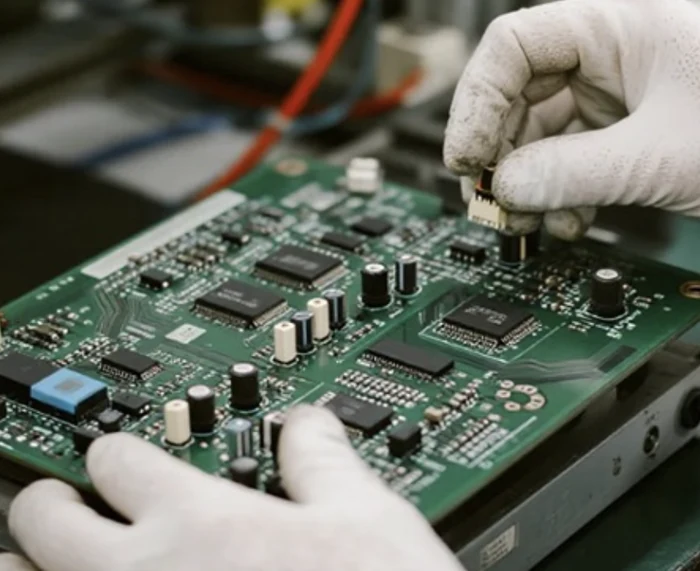
A modern high volume PCB assembly line typically includes automated equipment such as:
- Solder paste printers
- SPI systems
- Pick-and-place machines
- Reflow ovens
- AOI systems
- X-ray inspection systems
- Automated conveyors
- Programming systems
- Electrical testing equipment
- Automated handling systems
Automation provides several major benefits.
Consistent placement
Automated placement machines can repeatedly position components according to programmed coordinates.
Higher throughput
Thousands of components can be placed rapidly without relying entirely on manual labor.
Reduced human variation
Automation reduces variation associated with manual placement and soldering.
Better process monitoring
Modern production equipment can generate process data that can be analyzed for quality trends.
7. Surface Mount Technology for High Volume Production
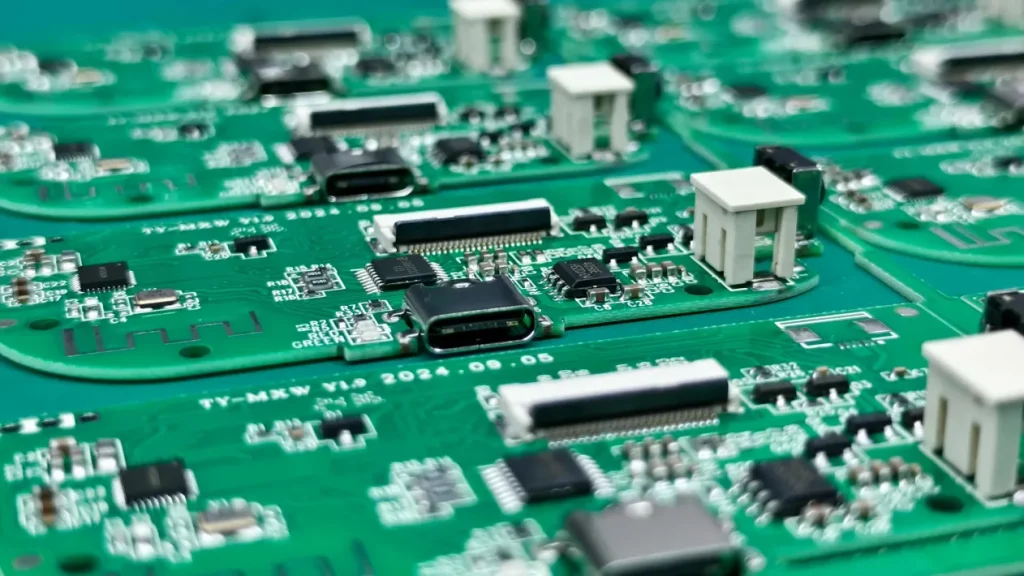
Surface Mount Technology (SMT) is the foundation of many modern high-volume PCB assembly operations.
A typical SMT production process includes:
Solder Paste Printing → SPI → Pick and Place → Reflow → AOI → Testing
Each stage contributes to overall production quality.
For high-volume manufacturing, process optimization may focus on:
- Printing speed
- Solder paste volume
- Stencil design
- Component placement accuracy
- Feeder reliability
- Reflow temperature
- Conveyor speed
- Thermal profile
- Inspection parameters
Even a small process variation can become significant when repeated across hundreds of thousands of boards.
8. Automated Optical Inspection
Automated Optical Inspection (AOI) is a critical quality-control technology for high-volume PCB assembly.
AOI systems can inspect for defects such as:
- Missing components
- Incorrect components
- Component misalignment
- Polarity errors
- Solder bridges
- Insufficient solder
- Excess solder
- Visible solder defects
- Incorrect component orientation
AOI provides rapid inspection without requiring manual inspection of every board.
For high-volume production, inspection data can also be analyzed to identify recurring process problems.
For example, if AOI repeatedly detects component shifts in the same location, engineers can investigate:
- Pad design
- Solder paste volume
- Placement parameters
- Component geometry
- PCB warpage
This turns inspection into a process-improvement tool rather than simply a final quality gate.
9. X-Ray Inspection for Hidden Solder Joints
AOI cannot inspect every solder joint.
Components such as:
- BGA
- QFN
- LGA
- Bottom-terminated components
may contain solder joints hidden beneath the package.
X-ray inspection can be used to evaluate these hidden connections.
Depending on the application, X-ray inspection can identify:
- Voids
- Solder bridges
- Opens
- Insufficient solder
- Misalignment
- Hidden solder defects
The required level of X-ray inspection depends on product reliability requirements and component technology.
For high-reliability applications, manufacturers may establish specific X-ray inspection criteria as part of the production control plan.
10. Automated Electrical and Functional Testing
High-volume production also requires a scalable testing strategy.
Testing may include:
Flying Probe Testing
Flying probe systems use movable probes to test electrical connections without requiring a dedicated fixture.
They are particularly useful during early production or lower-volume manufacturing.
In-Circuit Testing
ICT can test electrical characteristics and component-level conditions using a dedicated fixture.
ICT can provide fast and repeatable testing when production quantities justify fixture development.
Functional Testing
Functional testing evaluates whether the completed PCB or electronic product performs its intended function.
Depending on the product, this may include:
- Power-up testing
- Communication testing
- Sensor testing
- Signal testing
- Firmware verification
- Interface testing
- Current consumption testing
- System-level operation
The most effective strategy is usually to plan testing during the PCB design stage.
11. Design for Testability
Design for Testability (DFT) should be considered before high-volume PCB production begins.
A PCB intended for mass production should provide suitable access for automated testing.
DFT considerations may include:
- Test points
- Programming interfaces
- Ground test points
- Power test points
- Boundary-scan access
- Connector accessibility
- Fixture clearance
- Functional test interfaces
Adding test points after PCB production has already begun can require expensive redesigns.
Therefore, DFT should be integrated into the PCB design process rather than added at the end of manufacturing development.
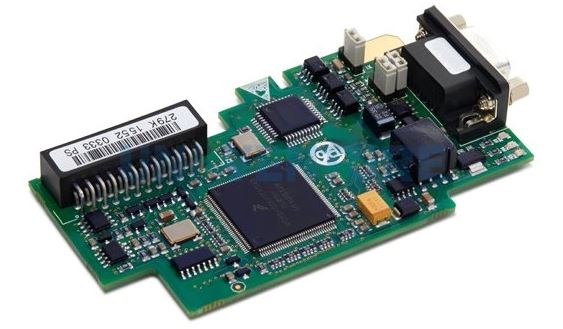
12. Automated Traceability
Traceability becomes increasingly important as production volume increases.
A high-volume PCB assembly system may track:
- PCB serial number
- Product model
- PCB revision
- Production date
- Production line
- Component lot
- Solder paste lot
- Assembly machine
- Inspection results
- Test results
- Rework history
A unique identifier such as a barcode or 2D code can be applied to each PCB.
This allows manufacturers to connect individual products with their manufacturing history.
Benefits of PCB traceability
Traceability helps with:
- Quality control
- Failure analysis
- Warranty management
- Product recalls
- Counterfeit prevention
- Process improvement
- Regulatory requirements
- Customer support
For products manufactured in very large quantities, traceability can significantly reduce the scope of a quality investigation.
13. Quality Control in High Volume PCB Assembly
Quality control should not depend only on final inspection.
A stronger manufacturing strategy uses process control throughout the entire production workflow.
A typical quality-control process may include:
Incoming Inspection → SPI → SMT Inspection → AOI → X-Ray → Electrical Testing → Functional Testing → Final Inspection
Quality systems may also include:
- First article inspection
- Process capability monitoring
- Statistical process control
- Defect trend analysis
- Corrective action
- Preventive action
- Supplier quality management
The objective is to prevent defects rather than simply discover them after production.
14. Production Data and Process Control
Modern mass PCB assembly increasingly relies on production data.
Manufacturers can monitor:
- Placement accuracy
- Solder paste volume
- AOI defect rates
- Reflow temperatures
- Component consumption
- Machine downtime
- Production yield
- Test failures
- Rework rates
This information can help engineers identify trends before they become major production problems.
For example, a gradual increase in solder paste inspection failures may indicate:
- Stencil contamination
- Solder paste condition
- Printing pressure
- Alignment problems
- Environmental changes
Early detection can prevent large-scale production losses.
15. High Volume PCB Assembly Yield
Production yield is one of the most important metrics in mass manufacturing.
A common metric is First Pass Yield (FPY).
FPY measures the percentage of products that pass the manufacturing process without requiring rework.
Higher yield generally means:
- Lower manufacturing cost
- Less material waste
- Less rework
- Higher throughput
- More predictable delivery
- Better product consistency
For this reason, a professional high volume PCB assembly supplier should focus on process optimization rather than simply increasing production speed.
Contract High Volume PCB Assembly vs. In-House Manufacturing
Companies considering large-scale PCB production often face an important decision:
Should PCB assembly be performed internally or outsourced to a contract manufacturer?
Both approaches have advantages, but outsourcing can significantly reduce the investment and operational burden for many businesses.
16. Capital Investment
Establishing an internal high-volume PCB assembly operation can require substantial capital investment.
Equipment may include:
- SMT printers
- Pick-and-place machines
- Reflow ovens
- AOI systems
- X-ray equipment
- Testing equipment
- Material handling systems
- ESD infrastructure
- Production software
- Warehousing systems
The investment does not end after purchasing the machines.
Companies must also budget for:
- Maintenance
- Spare parts
- Calibration
- Software updates
- Operator training
- Facility requirements
- Equipment upgrades
Working with an established PCB assembly manufacturer can eliminate much of this initial capital burden.
17. Engineering Resources
High-volume production requires more than manufacturing equipment.
Companies also need specialists in:
- PCB design
- Electrical engineering
- Mechanical engineering
- Manufacturing engineering
- Quality engineering
- Test engineering
- Supply chain management
- Production planning
Building these capabilities internally can take considerable time and resources.
A qualified contract manufacturer already has manufacturing engineers and production specialists who understand the transition from prototype to mass production.
18. Supply Chain Advantages
High-volume PCB manufacturers often have established supplier networks.
These relationships can provide advantages in:
- Component procurement
- PCB materials
- Solder paste
- Stencils
- Packaging
- Logistics
- Alternative components
Large production volumes can also improve purchasing efficiency.
However, component sourcing should always be controlled through approved suppliers and appropriate quality procedures.
19. Cost Optimization
The total cost of high-volume PCB production includes much more than the PCB assembly price.
Important cost factors include:
- PCB fabrication
- Components
- SMT placement
- Through-hole assembly
- Testing
- Inspection
- Packaging
- Shipping
- Rework
- Scrap
- Inventory
- Engineering
- Tooling
An experienced PCB manufacturing partner can help optimize these factors as part of the complete production process.
For example, changing the panelization strategy may reduce production time.
Changing component packaging may reduce placement cost.
Improving DFM may reduce defect rates.
Improving DFT may reduce testing time.
Therefore, the best manufacturing partner should evaluate total cost of ownership, not simply provide the lowest assembly quotation.
20. Long-Term Production Support
High-volume PCB products are often manufactured for several years.
This means the manufacturing partner should be capable of supporting:
- Product revisions
- Component substitutions
- Engineering changes
- Obsolescence management
- Quality improvements
- Production scaling
- Documentation updates
- Supply-chain changes
Long-term manufacturing stability is especially important for:
- Automotive electronics
- Industrial equipment
- Medical electronics
- Telecommunications
- Energy systems
A production partner should be able to support the product throughout its manufacturing lifecycle.
Kingda High Volume PCB Assembly Solutions
For companies looking for a reliable high volume PCB assembly supplier, Kingda provides integrated PCB manufacturing and assembly support through GOPCBA.
Kingda’s capabilities can support the transition from:
PCB Prototype → Design Validation → Pilot Production → Low Volume Production → High Volume Manufacturing
This integrated approach helps reduce the communication gaps that can occur when PCB fabrication, component sourcing, assembly, and testing are managed by different suppliers.
PCB Manufacturing
Kingda supports customized PCB manufacturing for different applications and production requirements.
Capabilities can include:
- Single-sided PCBs
- Double-sided PCBs
- Multilayer PCBs
- HDI PCBs
- Flexible PCBs
- Rigid-flex PCBs
- High-reliability PCBs
- Custom PCB fabrication
PCB manufacturing can be coordinated with downstream assembly requirements to improve overall production efficiency.
PCB Assembly
Kingda provides PCB assembly services covering different production stages.
These may include:
- SMT assembly
- Through-hole assembly
- Mixed-technology assembly
- Prototype assembly
- Small-batch production
- Mass production
- Component sourcing
- PCB inspection
- Electrical testing
- Functional testing
This allows customers to use one manufacturing partner as their product moves from development into commercial production.
Engineering Support
Successful high-volume manufacturing starts with good engineering preparation.
Kingda can support customers with:
- DFM review
- DFA analysis
- DFT planning
- PCB design review
- Component selection
- Manufacturing optimization
- Panelization recommendations
- Production process planning
The objective is to identify potential manufacturing problems before they become expensive production problems.
Quality and Process Control
High-volume manufacturing requires consistency.
Kingda’s production approach emphasizes process control, inspection, testing, and manufacturing documentation.
Depending on product requirements, quality processes may include:
- Incoming inspection
- SPI
- AOI
- X-ray inspection
- Electrical testing
- Functional testing
- Final inspection
- Production traceability
Quality requirements can be established according to the customer’s product specifications and applicable industry standards.
How to Choose a High Volume PCB Assembly Manufacturer
Before selecting a supplier, consider the following questions.
1. Can the manufacturer support your production volume?
Confirm current capacity and future scalability.
2. Does the manufacturer have automated SMT equipment?
Automation is essential for efficient high-volume production.
3. Does the supplier provide DFM, DFA, and DFT support?
Engineering support can prevent costly production problems.
4. How are components sourced?
Ask about approved suppliers, lifecycle management, alternatives, and traceability.
5. What inspection systems are available?
At minimum, evaluate whether the supplier can provide appropriate AOI and electrical testing. X-ray may be required for products using BGA, QFN, LGA, or other hidden solder joints.
6. How is production traceability managed?
The manufacturer should be able to connect production results with PCB revisions, material lots, inspection data, and test results.
7. Can the supplier support long-term production?
A high-volume project should be evaluated over its entire lifecycle rather than only the initial production order.
Frequently Asked Questions About High Volume PCB Assembly
What quantity is considered high volume PCB assembly?
There is no universal quantity threshold.
Depending on the industry, product complexity, and manufacturing model, high-volume PCB assembly can range from several thousand units to hundreds of thousands or millions of assemblies.
Why is high volume PCB assembly different from prototype assembly?
Prototype assembly focuses on design validation.
High-volume assembly focuses on repeatability, throughput, quality consistency, supply-chain stability, cost control, and long-term production scalability.
Is automated PCB assembly necessary for high-volume production?
For most large-scale production programs, yes.
Automated SMT placement, solder paste printing, reflow, inspection, and testing can significantly improve throughput and consistency.
What is DFM in PCB assembly?
Design for Manufacturing (DFM) is the process of reviewing a PCB design to ensure that it can be manufactured efficiently and reliably.
DFM can identify potential problems involving component spacing, PCB layout, panelization, soldering, tolerances, and assembly.
What is DFT?
Design for Testability (DFT) means designing the PCB so that electrical and functional testing can be performed efficiently during production.
DFT may include test points, programming interfaces, fixture access, and other test structures.
Why is PCB traceability important?
Traceability connects a finished PCB assembly with its production history.
This can help manufacturers identify affected products during quality investigations and support warranty, service, corrective-action, and recall activities.
Conclusion
High volume PCB assembly requires much more than simply increasing the number of boards produced.
Successful mass PCB manufacturing depends on a coordinated system covering:
- DFM
- DFA
- DFT
- Automated SMT assembly
- Automated inspection
- Electrical and functional testing
- Component supply-chain management
- Production traceability
- Process control
- Yield optimization
- Long-term production planning
For companies moving from prototypes to thousands, hundreds of thousands, or millions of PCB assemblies, choosing the right manufacturing partner can significantly reduce production risk and improve long-term efficiency.
Kingda, through GOPCBA, provides integrated PCB manufacturing and PCB assembly support, helping customers move from prototype development to pilot production and high-volume manufacturing.
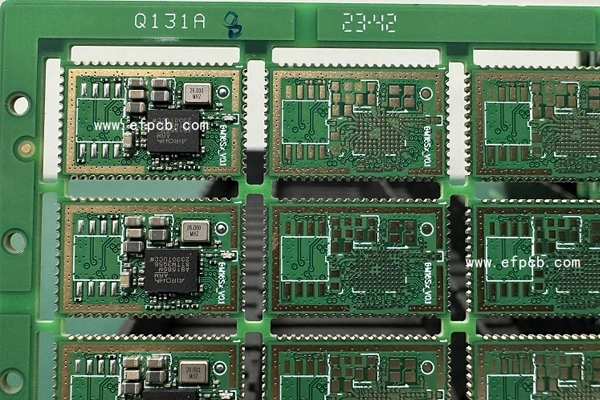
With engineering support, PCB fabrication, component sourcing, SMT assembly, inspection, testing, and production management, Kingda aims to provide a scalable manufacturing solution for OEMs, electronics companies, and product developers.
If you are planning a high-volume PCB assembly project, contact Kingda through GOPCBA to discuss your PCB specifications, production quantity, component requirements, testing needs, and manufacturing schedule.