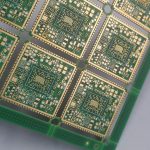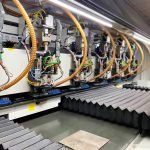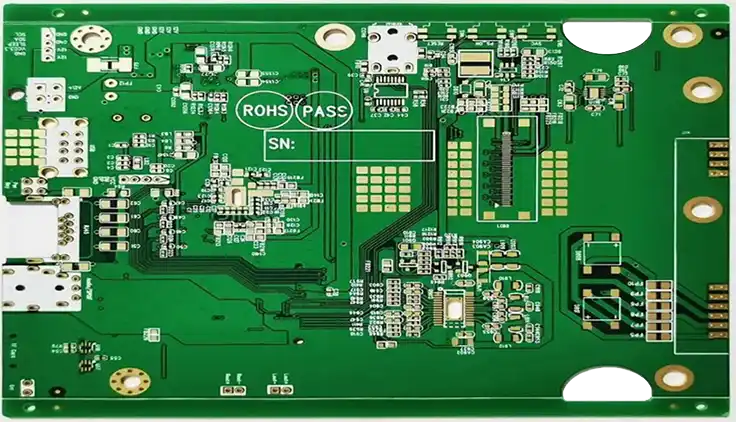
Prototype PCB Assembly
High-Mix Prototype PCB Assembly for Fast Product Development
GOPCBA provides professional Prototype PCB Assembly services for engineers, product developers, startups, and electronics manufacturers that need to validate new designs before moving into larger-scale production.
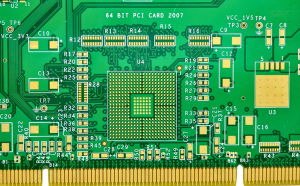
Our prototype assembly solutions support SMT, through-hole, and mixed-technology assembly, helping customers verify electrical performance, mechanical fit, component selection, soldering quality, and overall product reliability at an early stage.
We support projects from initial engineering review and component sourcing through PCB Manufacturing, assembly, inspection, testing, and delivery. This integrated approach helps reduce development risks, shorten design cycles, and create a smoother transition from prototype to production.
For customers requiring broader manufacturing support, our PCB Assembly capabilities can cover prototype, low-volume, and higher-volume production requirements.
What Is Prototype PCB Assembly?
Prototype PCB Assembly is the process of assembling a limited number of printed circuit boards to verify a new electronic design before committing to larger production quantities.
During the prototype stage, engineers can identify design or manufacturing issues that may not be visible during schematic or PCB layout development. These issues may include incorrect component selection, insufficient clearances, soldering problems, thermal issues, component placement conflicts, signal integrity concerns, or other manufacturing-related defects.
Building and testing prototype PCB assemblies provides valuable information before production begins. Design teams can then make necessary improvements to the schematic, PCB layout, component selection, or manufacturing process.
This makes prototype assembly an important step between PCB design and reliable production.
Benefits of Prototype PCB Assembly
1. Reduce Production Risk and Cost
Moving directly from a new design into mass production can create significant financial and engineering risks. A design issue discovered after thousands of boards have been manufactured can result in rework, product recalls, material waste, and additional engineering costs.
Prototype assembly allows potential problems to be identified when production quantities are still limited. Correcting these issues early can significantly reduce the cost and time associated with later design revisions.
2. Validate the Product Design
A prototype provides engineers with a physical version of the product rather than relying only on simulations and design files.
The assembled board can be evaluated for:
- Electrical performance
- Component compatibility
- Mechanical fit
- Thermal behavior
- Soldering quality
- Component placement
- Connector accessibility
- Assembly feasibility
- Overall product functionality
The results provide practical feedback that can be used to optimize the final design.
3. Improve Manufacturing Quality
Prototype production also provides an opportunity to evaluate the manufacturability of the PCB.
Engineering teams can review solder paste requirements, component placement, pad design, thermal profiles, assembly tolerances, and inspection requirements before the product enters larger-scale production.
Early manufacturing validation helps establish a more stable production process and reduces the possibility of recurring defects.
4. Accelerate Product Development
Fast prototype assembly enables engineers to identify design problems earlier and make corrections sooner.
A shorter prototype cycle means more time can be allocated to functional testing, certification, field evaluation, and final product optimization. This can ultimately help reduce time to market.
Prototype PCB Assembly Process
A reliable prototype assembly process requires careful control from engineering review through final testing.
1. Component Selection and BOM Review
The component selection process begins with the Bill of Materials (BOM). Engineers should verify part numbers, specifications, package types, availability, operating temperature ranges, electrical characteristics, and lifecycle status.
Component availability is particularly important for prototypes because obsolete or difficult-to-source components can delay the project.
Where appropriate, alternative components can also be evaluated to improve supply stability and production continuity.
2. Schematic and PCB Layout Review
Before manufacturing begins, the schematic and PCB layout should be reviewed to identify potential manufacturing and assembly issues.
The review may cover:
- Component footprints
- PCB dimensions
- Component spacing
- Pad geometry
- Trace routing
- Via placement
- Clearance requirements
- Polarity markings
- Thermal considerations
- Assembly orientation
For more complex designs, engineering review can also help identify potential DFM and DFA issues before fabrication.
3. PCB Manufacturing
Once the design files have been verified, the bare PCB can be manufactured according to the required specifications.
Depending on the application, PCB manufacturing may involve processes such as:
- Material preparation
- Layer lamination
- CNC drilling
- Copper plating
- Circuit imaging
- Etching
- Solder mask application
- Surface finishing
- Electrical testing
- Final inspection
GOPCBA supports PCB fabrication together with assembly, providing customers with an integrated manufacturing workflow. More information about our PCB Manufacturing capabilities is available on the dedicated service page.
4. PCB Assembly
After PCB fabrication and component preparation, the board moves into the assembly stage.
Prototype PCB assembly generally uses one or more of the following technologies:
- SMT assembly
- Through-hole assembly
- Mixed-technology assembly
SMT is widely used for compact and high-density electronic designs, while through-hole components are often selected when additional mechanical strength or specific component requirements are needed.
For boards containing both technologies, mixed assembly processes can be used to combine SMT and through-hole components within the same PCB assembly.
SMT Assembly Process for PCB Prototypes
Solder Paste Printing
For SMT production, solder paste is applied to the PCB using a stencil and precision printing equipment.
Stencil aperture design, paste volume, printing pressure, alignment, and paste characteristics all influence solder joint quality.
An insufficient amount of solder paste may lead to weak or incomplete solder joints, while excessive paste can increase the risk of solder bridging and other defects.
Prototype production provides an opportunity to optimize these parameters before larger production runs.
Component Placement
After solder paste printing, automated pick-and-place equipment positions components onto the PCB.
Modern placement equipment uses vision systems to recognize fiducials and component positions, allowing components to be placed accurately according to the manufacturing data.
During prototype production, engineers can pay particular attention to defects such as:
- Component misalignment
- Tombstoning
- Solder bridging
- Polarity errors
- Missing components
- Incorrect component placement
These issues may indicate problems with the PCB layout, component footprint, solder paste volume, or assembly parameters.
Reflow Soldering
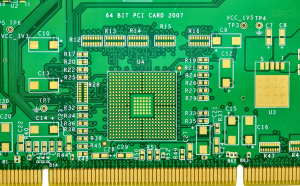
The assembled PCB then passes through a controlled reflow soldering process.
The board travels through multiple heating zones according to a defined thermal profile. The temperature gradually increases during preheating, allowing the solder paste and flux to reach the required conditions before the solder melts and forms the final solder joints.
After reaching the appropriate peak temperature, the board enters the cooling stage.
For prototype development, thermal profiling can be particularly useful because component density, PCB thickness, copper distribution, and component location can affect heat transfer across the board.
Through-Hole and Mixed-Technology Assembly
Through-hole technology places component leads through drilled holes in the PCB. It is commonly used for connectors, transformers, larger components, and applications requiring strong mechanical connections.
Depending on the design, through-hole components may be assembled using automated or manual insertion followed by wave soldering, selective soldering, or hand soldering.
When a board combines SMT and through-hole components, mixed-technology assembly provides greater flexibility.
GOPCBA supports Mixed Technology PCB Assembly for applications requiring both SMT and through-hole technologies within the same product.
AOI, X-Ray, and Electrical Testing
AOI Inspection
Automated Optical Inspection (AOI) uses camera-based inspection systems to identify visible assembly defects.
AOI can help detect:
- Missing components
- Incorrect component placement
- Polarity errors
- Solder bridging
- Soldering defects
- Component alignment problems
AOI is especially useful for maintaining consistent quality during prototype and production assembly.
X-Ray Inspection
Some solder joints and component connections cannot be inspected effectively from the outside.
X-ray inspection provides visibility into hidden solder joints and internal structures, making it useful for applications involving BGA, QFN, and other packages with concealed connections.
X-ray inspection can help identify solder voids, insufficient solder, bridging, and other hidden defects.
Electrical Testing
Prototype assemblies should also be electrically tested to verify that the board performs according to its intended design.
Depending on the product requirements, testing may include:
- Continuity testing
- Short-circuit testing
- In-circuit testing
- Functional testing
- First article inspection
- Customer-specific testing
Testing requirements should be defined during the engineering stage so that appropriate fixtures, test procedures, and documentation can be prepared.
Key Factors When Choosing a Prototype PCB Assembly Partner
Cost
Prototype production should balance cost, quality, and engineering requirements.
The final assembly cost may depend on PCB specifications, assembly quantity, component count, component package types, sourcing requirements, stencil requirements, testing, and special processing.
Providing complete and accurate manufacturing data helps suppliers prepare a more precise quotation.
Turnaround Time
Speed is one of the most important considerations for prototype projects.
A shorter prototype cycle gives engineers more time to evaluate the product, identify problems, revise the design, and prepare for the next development stage.
For customers requiring accelerated development, GOPCBA also provides Rapid PCB Prototyping services designed for fast prototype development and short production cycles.
Engineering Expertise
Prototype projects often involve more engineering interaction than standard production orders.
The manufacturing partner should be able to review BOM files, Gerber data, pick-and-place files, component availability, assembly requirements, and potential manufacturing risks.
Effective communication between the customer and manufacturing engineering team can prevent problems before production begins.
Quality Control
Quality should be evaluated throughout the complete manufacturing process rather than only during final inspection.
A comprehensive quality system can include incoming material inspection, solder paste control, automated inspection, X-ray inspection, electrical testing, process monitoring, and final verification.
This approach helps ensure that prototype assemblies provide reliable and meaningful results for subsequent product development.
Why Choose GOPCBA for Prototype PCB Assembly?
GOPCBA provides integrated PCB manufacturing and assembly solutions for customers developing new electronic products.
Our capabilities cover prototype development, low-volume production, component sourcing, SMT assembly, through-hole assembly, mixed-technology assembly, inspection, testing, and production support.
For customers moving from prototypes into small-batch production, our Low Volume PCB Assembly service provides a practical path toward production without requiring an immediate transition to large manufacturing quantities.
Flexible Prototype Manufacturing
Prototype projects often require different quantities, component combinations, and manufacturing specifications. Flexible production capabilities allow engineering teams to validate designs without committing to unnecessary production volumes.
Integrated Manufacturing Support
Combining PCB fabrication, component procurement, assembly, inspection, and testing under one manufacturing workflow can reduce communication gaps and simplify project management.
Engineering and DFM Support
Engineering review can help identify potential manufacturing issues before production. BOM verification, PCB data review, component analysis, and manufacturability assessment can help reduce unnecessary redesigns.
Quality-Focused Production
Inspection and testing are integrated into the manufacturing process to help identify defects and verify assembly quality before delivery.
From Prototype to Production
A successful prototype should provide a clear path toward production. Once the design has been validated, the same manufacturing partner can help optimize processes, improve production efficiency, and support the transition into low-volume or higher-volume manufacturing.
Start Your Prototype PCB Assembly Project
A well-executed prototype provides more than a physical circuit board. It creates an opportunity to validate the design, identify manufacturing risks, optimize the assembly process, and prepare the product for reliable production.
Whether you need a small number of prototype boards, a mixed-technology assembly, or a complete prototype-to-production solution, GOPCBA can support the project from engineering review through manufacturing and testing.
If you are ready to discuss your next Prototype PCB Assembly project, contact the GOPCBA engineering and sales team for a project evaluation and quotation through Contact GOPCBA.
Frequently Asked Questions
What is prototype PCB assembly?
Prototype PCB assembly is the process of manufacturing and assembling a limited quantity of PCBs to validate a new electronic product before larger-scale production.
What are the main benefits of prototype PCB assembly?
The main benefits include early design validation, reduced production risk, faster troubleshooting, improved manufacturability, and reduced costs associated with late-stage design changes.
What types of prototype PCB assembly are available?
Prototype projects can use SMT assembly, through-hole assembly, or mixed-technology assembly depending on the PCB design and component requirements.
What testing methods can be used for prototype PCB assemblies?
Depending on the application, testing can include visual inspection, AOI, X-ray inspection, ICT, functional testing, continuity testing, and first article inspection.
What information is required for a prototype assembly quotation?
Typical manufacturing information includes Gerber files, BOM, pick-and-place files, PCB specifications, assembly drawings, component requirements, quantities, and testing requirements.
How is prototype PCB assembly different from PCB prototyping?
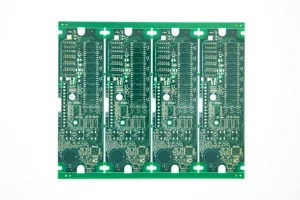
PCB prototyping generally refers to manufacturing the bare PCB, while prototype PCB assembly includes mounting and soldering electronic components onto the fabricated PCB to create a functional PCBA.
How quickly can a prototype PCB assembly be completed?
Turnaround time depends on PCB complexity, component availability, assembly quantity, testing requirements, and production scheduling. Fast-turn options may be available for projects with complete manufacturing data and readily available components.
How is prototype PCB assembly cost calculated?
Cost can depend on PCB fabrication, component quantity and pricing, assembly complexity, stencil requirements, labor, testing, component sourcing, and production quantity.
Why is prototype PCB assembly important?
Prototype assembly allows engineers to evaluate the real assembled product before committing to larger production volumes. It helps identify design, component, assembly, and testing issues at an early stage.
Can prototype PCB assemblies transition to production?
Yes. A validated prototype can be used as the foundation for low-volume and larger-scale production. Manufacturing processes can be optimized based on prototype results before production quantities increase.
Start Your PCB Project with GOPCBA
GOPCBA provides integrated PCB Assembly, PCB Prototyping, SMT Assembly, and PCB Manufacturing solutions for electronics development and production. From initial prototype validation to low-volume manufacturing and production support, our goal is to provide reliable manufacturing, engineering support, quality control, and efficient delivery through one integrated supply chain.