FR4 PCB: Properties, Advantages, Types & Manufacturing Guide
FR4 PCB
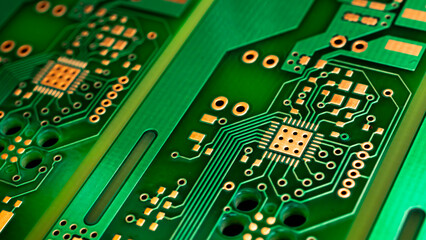
FR4 is one of the most widely used substrate materials for printed circuit boards. It is a glass-fiber-reinforced epoxy laminate that combines good electrical insulation, mechanical strength, dimensional stability, flame resistance, and cost efficiency.
For manufacturers and engineers, selecting the right PCB substrate is essential for achieving the required electrical performance, reliability, thermal characteristics, and production cost. FR4 PCB technology provides a versatile solution for a wide range of electronic products, from consumer electronics and industrial controls to communication equipment and embedded systems.
GOPCBA provides PCB fabrication and PCBA manufacturing services covering standard and advanced PCB technologies. Its capabilities include PCB fabrication, PCB assembly, component procurement, prototyping, testing, and other electronic manufacturing services.
What Is FR4?
FR4 is a glass-fiber-reinforced epoxy laminate commonly used as the base material for rigid printed circuit boards. The glass fiber provides mechanical reinforcement, while the epoxy resin system provides electrical insulation and structural stability.
The designation “FR” means “Flame Retardant.” The “4” identifies a specific material category based on glass-fiber reinforcement and epoxy resin.
It is important to understand that FR4 is a material classification rather than a single material formulation. Different FR4 laminates can have different glass transition temperatures (Tg), dielectric properties, thermal performance, copper compatibility, and other characteristics.
For this reason, engineers should select the FR4 grade according to the electrical, mechanical, thermal, and environmental requirements of the final application.
FR4 Material Classification
FR4 belongs to the glass-cloth substrate family and is generally associated with flame-retardant epoxy-glass laminates.
Common PCB substrate categories include:
| Substrate Category | Typical Material | Flame Retardancy |
|---|---|---|
| Paper-based | XPC | UL94 HB |
| Paper-based | XXPC | UL94 HB |
| Paper-based | FR-1 | UL94 V-1 |
| Paper-based | FR-2 | UL94 V-1 |
| Glass-cloth based | FR-4 | UL94 V-0 |
| Glass-cloth based | FR-5 | UL94 V-0 |
| Composite | CEM-1 | UL94 V-0 |
| Composite | CEM-3 | UL94 V-0 |
FR4 has become the industry standard for many rigid PCB applications because it offers a strong balance between performance, manufacturability, reliability, and cost.
Main Advantages of FR4 PCB
Flame Retardant Performance
One of the most important characteristics of FR4 PCB material is its flame-retardant performance.
The epoxy resin system used in FR4 laminates is designed to reduce the risk of continued combustion when exposed to a flame or excessive heat. This characteristic makes FR4 suitable for many electronic products where electrical safety and material reliability are important.
The exact flame-retardant classification should always be verified against the laminate manufacturer’s datasheet and the applicable safety standard.
Excellent Electrical Insulation
FR4 provides strong electrical insulation between conductive layers. This makes it suitable for single-layer, double-layer, and multilayer circuit board construction.
Its dielectric characteristics also allow designers to develop reliable signal paths for many conventional electronic applications. However, for demanding high-frequency or high-speed designs, engineers may need to consider specialized low-loss laminates rather than standard FR4.
GOPCBA’s PCB manufacturing capabilities support a broad range of board technologies and material configurations, including multilayer and impedance-controlled PCB requirements.
Strong Mechanical Performance
The glass-fiber reinforcement gives FR4 excellent mechanical strength and rigidity.
A properly selected FR4 circuit board can withstand mechanical stresses encountered during PCB assembly, transportation, installation, and normal operation. The material also provides good dimensional stability compared with many lower-cost paper-based substrates.
This mechanical stability is particularly important for multilayer boards, fine-pitch components, connectors, and applications where PCB dimensions must remain consistent throughout manufacturing and service.
Good Manufacturability
FR4 is compatible with common PCB manufacturing processes, including drilling, routing, copper plating, imaging, solder mask application, surface finishing, and assembly.
Its established manufacturing characteristics make it practical for both prototype development and volume production.
For projects requiring rapid development, GOPCBA also provides Rapid PCB Prototyping, supporting common PCB documentation such as Gerber files and providing guidance on material, thickness, copper weight, surface finish, and other PCB parameters.
Cost-Effective for Many Applications
One of the biggest reasons FR4 remains popular is its balance of performance and cost.
Compared with many specialized high-frequency, high-temperature, or advanced composite laminates, standard FR4 is relatively economical and widely available. This makes it particularly suitable for general-purpose electronics and high-volume PCB production.
Dimensional Stability and Durability
FR4 offers good dimensional stability under normal operating conditions. The glass-fiber reinforcement helps maintain board rigidity and reduces dimensional changes caused by mechanical stress.
Depending on the selected laminate grade, FR4 can also provide suitable resistance to moisture, chemicals, and thermal cycling for a wide variety of electronic applications.
Limitations of FR4
Although FR4 is highly versatile, it is not the ideal material for every PCB application.
Limited Thermal Performance Compared with Specialized Materials
Standard FR4 is not designed to replace high-temperature PCB materials in every application. Excessive thermal exposure can affect the resin system, dimensional stability, soldering reliability, and long-term PCB performance.
For applications involving elevated operating temperatures or demanding thermal cycling, engineers should evaluate the laminate’s Tg, decomposition temperature, thermal expansion characteristics, and other thermal specifications before selecting the material.
Higher Loss at Demanding High Frequencies
Standard FR4 can be suitable for many digital and electronic circuits, but its dielectric loss can become a significant consideration as signal frequency and transmission distance increase.
For RF, microwave, and advanced high-speed designs, low-loss or specialized high-frequency laminates may provide better signal integrity.
The choice between standard FR4 and specialized materials should therefore be based on the actual frequency, impedance, loss budget, stack-up, and operating environment of the application.
FR4 Classification by Tg
One common method for differentiating FR4 laminates is glass transition temperature, or Tg.
Tg represents the temperature at which the epoxy resin transitions from a relatively rigid glassy state toward a softer state. A higher Tg generally provides better thermal capability for applications exposed to elevated temperatures.
FR4 materials are commonly grouped into approximate ranges such as:
- Standard Tg FR4: approximately 130–140°C
- Mid-Tg FR4: approximately 145–155°C
- High-Tg FR4: approximately 165–180°C or higher
The actual Tg depends on the laminate construction and resin system. Engineers should always refer to the manufacturer’s technical datasheet instead of selecting a material based solely on a nominal Tg category.
FR4 Classification by Dielectric Loss
Dielectric loss is another important factor when evaluating PCB laminate performance.
The dissipation factor (Df) indicates how much electromagnetic energy is lost within the dielectric material. A lower Df is generally desirable for high-frequency and high-speed signal transmission because it can reduce dielectric losses.
FR4 and related PCB laminates may therefore be broadly considered according to their loss characteristics:
- Standard-loss materials: Df ≥ 0.02
- Medium-loss materials: approximately 0.01–0.02
- Low-loss materials: approximately 0.005–0.01
- Ultra-low-loss materials: Df < 0.005
These ranges are useful for general comparison, but there is no universal classification that applies to every laminate supplier. Material selection should always be based on the manufacturer’s published electrical specifications.
Why FR4 Is Widely Used in PCB Manufacturing
Evolution of PCB Substrate Materials
Early printed circuit boards often used paper-based phenolic laminates because they were inexpensive and relatively easy to manufacture.
As electronic equipment became more sophisticated, manufacturers required better mechanical strength, thermal stability, moisture resistance, and flame-retardant performance. Glass-fiber-reinforced epoxy laminates such as FR4 gradually became more widely adopted.
FR4 Compared with Paper-Based Materials
Paper-based substrates can offer lower material costs, but they generally have limitations in mechanical strength, moisture resistance, thermal performance, and multilayer compatibility.
By comparison, FR4 provides a more robust foundation for modern rigid PCB construction.
As electronic products became smaller and more densely populated, the mechanical and dimensional requirements of PCB substrates became increasingly demanding. This contributed to the broader adoption of FR4 in consumer, industrial, communication, and control electronics.
FR4 for Multilayer PCB Construction
The growth of multilayer PCB technology was another important factor behind the popularity of FR4.
Modern electronic products frequently require multiple conductive layers to accommodate complex routing, power distribution, grounding, signal integrity, and compact component placement.
GOPCBA supports PCB manufacturing technologies ranging from standard boards to complex multilayer structures, with manufacturing capabilities extending to advanced layer counts and fine-line requirements.
For customers who require the complete manufacturing process, GOPCBA also offers PCB Manufacturing together with PCB assembly and other electronic manufacturing services.
FR4 Supports Efficient PCB Processing
FR4 is well established in conventional PCB fabrication processes. It can be processed using mechanical drilling, routing, lamination, plating, solder mask application, and surface finishing technologies.
Its mature supply chain and widespread availability also make it easier for PCB manufacturers to maintain consistent production and control material costs.
FR4 PCB Manufacturing Considerations
Selecting FR4 should involve more than simply specifying “FR4” on a PCB drawing.
Engineers should consider several parameters, including:
- Board thickness
- Copper thickness
- Number of layers
- Tg
- Dielectric constant (Dk)
- Dissipation factor (Df)
- Thermal expansion
- Operating temperature
- Surface finish
- Impedance requirements
- Mechanical dimensions
- Application environment
For complex boards, the material selection should also be coordinated with the PCB stack-up and signal-integrity requirements.
GOPCBA publishes detailed PCB manufacturing capabilities covering layer count, board thickness, trace and spacing, mechanical and laser drilling, copper weight, solder mask registration, and HDI-related parameters.
FR4 PCB Assembly Considerations
Material selection is only one part of the manufacturing process. The finished product also depends on PCB assembly quality, component sourcing, soldering processes, inspection, and testing.
For complete production, PCB Assembly services can integrate rigid, flexible, rigid-flex, multilayer, HDI, heavy-copper, metal-core, high-Tg, and controlled-impedance PCB requirements.
For prototype and small-batch projects, Prototype PCB Assembly can combine PCB manufacturing, component procurement, assembly, inspection, and testing into a streamlined production process.
This approach can reduce communication between multiple suppliers and help engineers move from PCB design to assembled prototypes more efficiently.
FR4 PCB Applications
FR4 is used across a broad range of electronic products and systems, including:
- Consumer electronics
- Industrial control systems
- Communication equipment
- Computers and embedded systems
- Power electronics
- Measurement and instrumentation
- Automotive electronics
- IoT devices
- Security and monitoring equipment
- General-purpose electronic controllers
For industrial applications, PCB reliability becomes especially important because electronic assemblies may be exposed to vibration, temperature changes, moisture, dust, and other environmental stresses.
How to Choose the Right FR4 PCB
When choosing an FR4 PCB supplier, consider more than material price.
A capable manufacturing partner should be able to evaluate your Gerber files, stack-up, material requirements, production volume, assembly requirements, and testing specifications.
For low-volume production, GOPCBA provides Low Volume PCB Assembly with support for rigid, flexible, rigid-flex, aluminum, HDI, multilayer, SMT, and DIP assembly requirements.
The right manufacturing process can help reduce production risks, improve consistency, and control the total cost of the finished electronic product.
Conclusion
FR4 PCB material remains one of the most widely used choices for rigid printed circuit boards because it provides a practical combination of electrical insulation, mechanical strength, flame resistance, dimensional stability, manufacturability, and cost efficiency.
However, FR4 is not a single universal material specification. Different FR4 laminates can have significantly different Tg, Dk, Df, thermal characteristics, and reliability performance.
For standard electronic products, FR4 can provide an excellent balance of performance and cost. For demanding high-frequency, high-speed, or high-temperature applications, engineers should evaluate specialized PCB materials according to the actual electrical and environmental requirements.
By selecting the appropriate laminate grade and working with an experienced PCB manufacturing and assembly partner, designers can achieve reliable performance from prototype development through volume production.