Box Build Assembly is an advanced form of Electronics Manufacturing Services (EMS) that goes beyond conventional PCB assembly. Instead of delivering only an assembled PCB, box build manufacturing integrates the PCB, cables, wire harnesses, connectors, mechanical components, enclosure, power systems, accessories, and other components into a complete functional product.
As electronic products become more integrated, customers increasingly prefer a one-stop box build assembly service that can manage PCB fabrication, component sourcing, PCBA, cable assembly, mechanical integration, testing, packaging, and final delivery.
This article explains what Box Build Assembly is, its main manufacturing processes, key components, quality-control requirements, advantages, applications, and how Kingda provides integrated box build manufacturing solutions.
What Is Box Build Assembly?
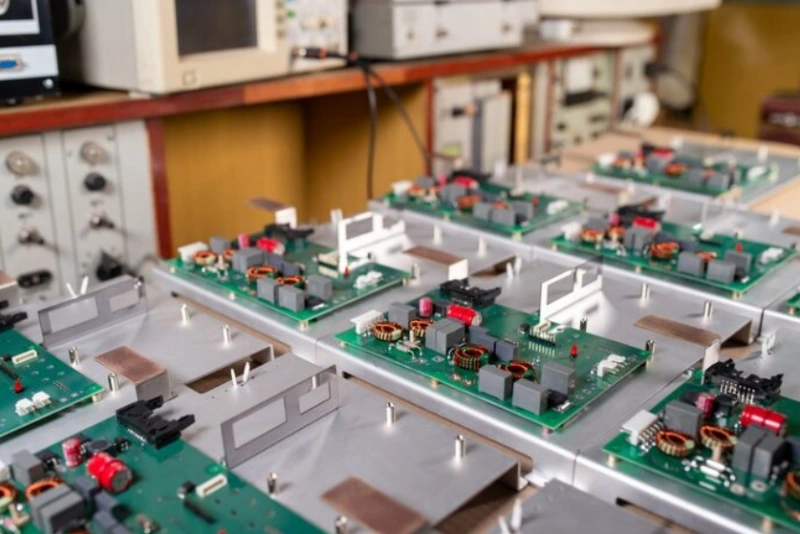
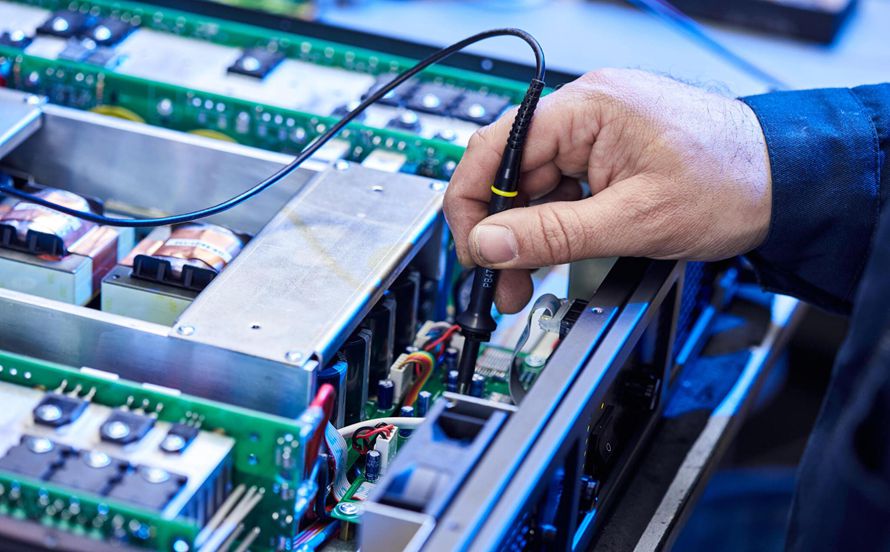
Box Build Assembly, also called System Integration Assembly or Full System Assembly, is the process of combining an assembled PCB with mechanical and electrical components to create a complete finished electronic product.
A typical Box Build Assembly may include:
- PCB Assembly
- Wire harnesses
- Cable assemblies
- Connectors
- Power supplies
- Switches
- Displays
- Keypads
- Fans
- Heat sinks
- Brackets
- Screws and fasteners
- Enclosures
- Labels
- Protective materials
Unlike traditional PCB Assembly, where the primary objective is to build a functional PCBA, Box Build Assembly focuses on integrating the entire electronic and mechanical system.
The general workflow is:
Engineering Review → Component Sourcing → PCB Assembly → Cable & Harness Assembly → Mechanical Assembly → System Integration → Testing → Packaging → Delivery
Box Build Assembly vs. PCB Assembly
Although PCB assembly and box build assembly are closely related, they are not the same manufacturing service.
| Feature | PCB Assembly | Box Build Assembly |
|---|---|---|
| PCB fabrication | Usually included or coordinated | Usually included or coordinated |
| Component assembly | Yes | Yes |
| SMT/THT | Yes | Yes |
| Cable assembly | Optional | Commonly included |
| Wire harness | Optional | Commonly included |
| Mechanical assembly | Limited | Extensive |
| Enclosure | Usually not included | Included |
| System integration | Limited | Core service |
| Functional testing | PCB-level | System-level |
| Packaging | PCB-level packaging | Finished-product packaging |
PCB Assembly creates the electronic board, while Box Build Assembly converts the PCBA and supporting components into a complete product or subsystem.
Main Stages of Box Build Assembly
1. Engineering Review and Pre-Planning
Pre-planning is one of the most important stages in Box Build Assembly because the final product combines electrical, mechanical, and software-related requirements.
Before production begins, the manufacturing team reviews:
- Product drawings
- BOM
- Gerber files
- Assembly drawings
- Enclosure specifications
- Cable and harness drawings
- Connector requirements
- Mechanical tolerances
- Labeling requirements
- Testing procedures
- Packaging specifications
The engineering team also determines which components should be sourced, which parts will be customer-supplied, and which assembly operations require special tooling.
A comprehensive DFM/DFA review at this stage can identify potential problems before production.
2. Component Sourcing and Material Preparation
A complete Box Build Assembly requires considerably more materials than a conventional PCBA.
The BOM may include:
- Bare PCBs
- Electronic components
- Enclosures
- Cables
- Wire harnesses
- Connectors
- Fasteners
- Brackets
- Displays
- Fans
- Switches
- Labels
- Packaging materials
Material availability must be coordinated before production begins.
Kingda provides component procurement and supply-chain management, allowing customers to provide a complete BOM or procurement requirements while Kingda coordinates sourcing and PCBA manufacturing through an integrated system. Its ERP-based component-management process is designed to improve inventory visibility and reduce procurement errors. (GoPCBA)
3. PCB Assembly
The PCBA is normally manufactured before the final box build process.
Depending on the product, the PCB may use:
- SMT Assembly
- THT Assembly
- Mixed-technology assembly
- BGA assembly
- Fine-pitch assembly
- Selective soldering
- Wave soldering
The assembled board is inspected and tested before being transferred to final system integration.
Kingda supports SMT, THT, and mixed-technology PCB Assembly, including automated solder-paste printing, precision component placement, reflow soldering, wave soldering, selective soldering, and manual assembly. (GoPCBA)
4. Wire and Cable Harness Assembly
Cable Assembly and Wire Harness Assembly are important parts of many box build products.
Harnesses can connect:
- PCB to display
- PCB to sensors
- PCB to motors
- PCB to power supply
- PCB to external connectors
- Multiple internal modules
A well-designed harness assembly should provide:
- Correct wire length
- Correct connector orientation
- Proper crimping
- Appropriate insulation
- Secure cable routing
- Reliable electrical continuity
- Mechanical strain relief
Cable routing is also important because excessive bending, sharp edges, loose wires, or insufficient strain relief can cause long-term reliability problems.
Kingda’s mixed-technology assembly capabilities include wire harnesses and cable assemblies, supporting integrated box-build projects. (GoPCBA)
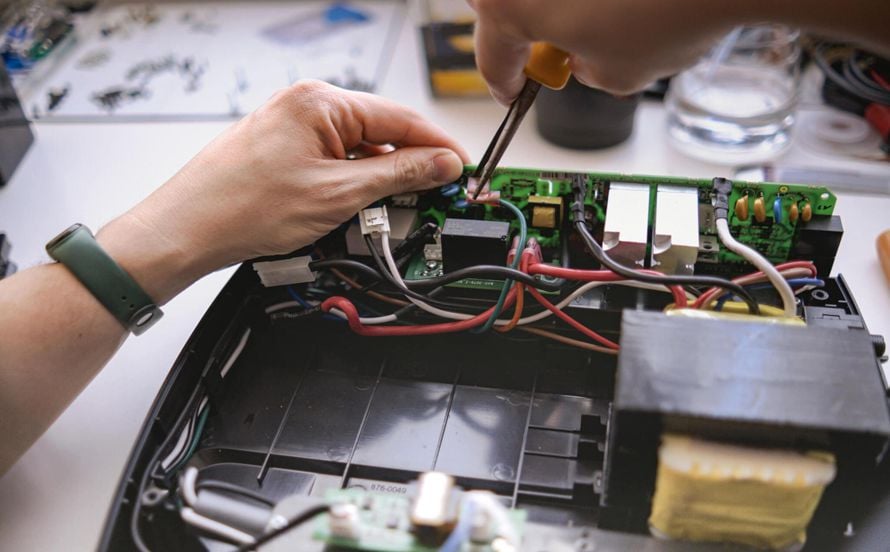
5. Mechanical Assembly
Once the PCBA and cables are prepared, the electronic system is installed into its mechanical enclosure.
Mechanical assembly may include:
- Mounting the PCB
- Installing brackets
- Installing heat sinks
- Installing fans
- Installing switches
- Installing displays
- Installing connectors
- Installing covers
- Securing screws and fasteners
The assembly must maintain the required mechanical tolerances while protecting electrical components from excessive stress.
Mechanical Design Considerations
Manufacturers should pay attention to:
- PCB-to-enclosure clearance
- Connector alignment
- Screw torque
- Cable routing
- Heat dissipation
- Ventilation
- EMI shielding
- Grounding
- Mechanical vibration
For products operating in demanding environments, the mechanical design can be just as important as the PCB design.
6. Accessories and User Interface Integration
The next stage involves installing additional product accessories.
These may include:
- Buttons
- Switches
- Keypads
- Displays
- Indicators
- Handles
- Mounting brackets
- Fans
- Filters
- Decorative panels
- Product labels
For products with cooling requirements, manufacturers should verify fan operation, airflow direction, ventilation openings, and filter installation.
For customer-facing products, final appearance inspection can include logo positioning, labeling, enclosure finish, and cosmetic requirements.
7. System Integration
After all electrical and mechanical components are installed, the assemblies are integrated into a complete system.
This stage verifies that:
- PCBs communicate correctly
- Cables are connected correctly
- Connectors are properly seated
- Mechanical components are secure
- Power connections are correct
- User-interface components operate correctly
- The enclosure is assembled correctly
The result is a complete functional electronic system rather than a standalone circuit board.
8. Testing and Quality Control
Quality Control and Functional Testing are essential in Box Build Assembly.
Testing should be designed around the final product rather than only the PCB.
Visual Inspection
Operators verify:
- Component installation
- Cable routing
- Screw installation
- Enclosure condition
- Labeling
- Product appearance
- Connector installation
Electrical Testing
Electrical testing can verify:
- Continuity
- Insulation
- Power consumption
- Voltage
- Current
- Grounding
- Short circuits
- Leakage where applicable
Functional Testing
Functional Testing (FCT) simulates actual product operation.
Depending on the system, testing may include:
- Display operation
- Button operation
- Motor operation
- Sensor response
- Communication
- Wireless connectivity
- Power-management functions
- USB/Ethernet/CAN interfaces
- Alarm systems
Kingda’s published PCB assembly capabilities include ICT, FCT, X-ray, AOI, SPI, and customized testing solutions. (GoPCBA)
Thermal Testing
For products containing processors, power electronics, LED systems, motors, or other heat-generating components, thermal testing may evaluate:
- Surface temperature
- Internal temperature
- Heat-sink performance
- Fan operation
- Airflow
- Temperature rise under load
Calibration
Products containing measurement or sensing circuits may require calibration.
Examples include:
- Measurement equipment
- Industrial sensors
- Power-monitoring equipment
- Medical instruments
- Test equipment
Calibration should follow the product’s specifications and applicable procedures.
9. Final Inspection and Packaging
After all testing has been completed, the finished Box Build Assembly undergoes final inspection.
The final inspection may verify:
- Product configuration
- Cosmetic condition
- Labeling
- Accessories
- Functional status
- Packaging requirements
Packaging should protect the finished product from:
- ESD
- Shock
- Vibration
- Moisture
- Scratching
- Transportation damage
Depending on customer requirements, packaging may include:
- Anti-static bags
- Foam inserts
- Custom trays
- Protective films
- Cartons
- Product manuals
- Warranty documentation
- Accessories
Advantages of Box Build Assembly
1. One-Stop Manufacturing
A major advantage of Box Build Assembly is that the manufacturer can manage multiple production processes through one supply chain.
Instead of separately managing:
PCB Supplier + Component Supplier + Cable Supplier + Mechanical Supplier + Assembly Supplier + Testing Supplier
the customer can work with one integrated manufacturing partner.
Kingda provides a one-stop manufacturing workflow covering PCB fabrication, component procurement, SMT/THT assembly, testing, system integration, box build, and final delivery. (GoPCBA)
2. Reduced Supply-Chain Complexity
A single supplier can coordinate:
- BOM
- PCB
- Components
- Cables
- Mechanical parts
- Assembly
- Testing
- Packaging
This can reduce communication overhead and simplify project management.
3. Better Quality Control
When PCB assembly, cable integration, mechanical assembly, and final testing are coordinated within one manufacturing system, quality problems can be traced more efficiently.
Kingda states that its manufacturing process maintains traceability from incoming materials through final shipment. (GoPCBA)
4. Faster Product Integration
A specialized Box Build Manufacturer can perform system integration without requiring the customer to move products between different suppliers.
This can reduce:
- Transportation
- Rework
- Supplier coordination
- Assembly delays
5. Reduced Overall Manufacturing Cost
Box build outsourcing can reduce the customer’s internal requirements for:
- Assembly labor
- Production equipment
- Inventory space
- Testing equipment
- Manufacturing management
The best cost comparison should consider the total system cost, not simply the PCB assembly price.
6. Simplified Final Installation
A complete box build product arrives as a functional subsystem or finished product.
Customers may only need to perform:
- Final installation
- System connection
- Final system-level integration
This can simplify downstream production.
Applications of Box Build Assembly
Box Build Assembly is widely used across many industries.
Medical Electronics
Applications include:
- Diagnostic instruments
- Patient monitoring systems
- Medical controllers
- Laboratory equipment
- Portable medical devices
Kingda reports ISO 13485 certification and provides medical electronics PCBA and system integration services. (GoPCBA)
Automotive Electronics
Applications include:
- Vehicle control systems
- Battery electronics
- Automotive displays
- Charging systems
- Industrial vehicle electronics
Kingda reports IATF 16949 certification for automotive-related quality management. (GoPCBA)
Industrial Automation
Box-build manufacturing is commonly used for:
- Industrial controllers
- Machine vision equipment
- Motion-control systems
- Data acquisition systems
- Robotics
- Industrial networking equipment
Kingda showcases industrial data acquisition, intelligent motion control, robotics, AI edge computing, and other industrial electronics among its PCBA applications. (GoPCBA)
Communication Equipment
Applications include:
- Network switches
- Routers
- Communication gateways
- Wireless devices
- IoT gateways
Consumer Electronics
Box build can also be used for:
- Smart-home equipment
- Consumer appliances
- Control panels
- IoT products
- Portable electronics
Kingda Box Build Assembly Advantages
Kingda provides Box Build Assembly as part of its one-stop electronics manufacturing services.
Its published box-build capabilities include:
- Mechanical assembly
- Cable assembly
- Wire harness integration
- PCB assembly
- System integration
- Labeling
- Packaging
- Final product assembly (GoPCBA)
Integrated PCB + Box Build Manufacturing
Kingda can manage the complete manufacturing chain:
PCB Design → PCB Fabrication → Component Sourcing → SMT/THT → Testing → Cable Assembly → Mechanical Assembly → Box Build → Final Testing → Packaging
This integrated approach allows customers to coordinate PCB and system-level manufacturing through one supplier. (GoPCBA)
Advanced PCB Assembly Capability
Kingda supports:
- SMT Assembly
- THT Assembly
- Mixed-technology assembly
- BGA
- QFN
- CSP
- LGA
- Fine-pitch components
- Double-sided SMT
The company reports support for 01005 components and 0.35 mm-pitch BGA. (GoPCBA)
Cable and Harness Integration
Kingda’s published mixed-technology manufacturing capabilities include wire harnesses and cable assemblies, allowing cable integration to be performed as part of the overall box-build process. (GoPCBA)
Testing and Quality Assurance
Kingda’s published quality flow is:
IQC → SPI → SMT/THT Assembly → AOI → X-Ray → ICT/FCT → OQC
For Box Build products, additional system-level verification can be incorporated according to customer requirements. (GoPCBA)
One-Stop Component Procurement
Kingda provides component sourcing and inventory management, using an ERP system to support real-time inventory visibility and procurement management. (GoPCBA)
This can be useful for box-build products containing hundreds of different electrical and mechanical parts.
Quality Certifications
Kingda reports:
- IATF 16949:2016
- ISO 13485:2016
- ISO 9001:2015
- ISO 14001:2015
- UL certification
- IPC membership (GoPCBA)
These quality systems support applications across automotive, medical, industrial, communication, power, and other electronics industries.
Production Traceability
Kingda states that manufacturing records and inspection results are maintained through a traceability system from incoming materials through final shipment. (GoPCBA)
For complex Box Build Assembly, traceability is particularly valuable because a final product can contain PCBAs, cables, mechanical components, and many individual parts.
How to Choose a Box Build Assembly Manufacturer
Before choosing a Box Build Assembly Manufacturer, evaluate the supplier’s complete capabilities rather than only its PCB assembly equipment.
PCB Manufacturing
Check whether the supplier can support:
- Rigid PCB
- Flex PCB
- Rigid-Flex PCB
- HDI PCB
- Multilayer PCB
- High-frequency PCB
- High-speed PCB
PCB Assembly
Evaluate:
- SMT
- THT
- Mixed technology
- BGA
- Fine-pitch assembly
- Reflow
- Wave soldering
- Selective soldering
Mechanical Assembly
The supplier should have experience with:
- Enclosures
- Brackets
- Fasteners
- Heat sinks
- Fans
- Displays
- Switches
Cable and Harness Assembly
Check whether the supplier provides:
- Wire cutting
- Crimping
- Connector assembly
- Harness testing
- Cable routing
- Continuity testing
System Testing
Look for:
- ICT
- FCT
- Electrical testing
- Functional testing
- Thermal testing
- Calibration
- Customized testing
Supply Chain Management
The supplier should be capable of sourcing and managing:
- Electronic components
- Mechanical parts
- Connectors
- Cables
- Enclosures
- Packaging materials
Box Build Assembly vs. Outsourcing Individual Processes
| Factor | Multiple Suppliers | Box Build Assembly Partner |
|---|---|---|
| PCB manufacturing | Separate supplier | Integrated |
| Component sourcing | Multiple channels | Centralized |
| PCB assembly | Separate supplier | Integrated |
| Cable assembly | Separate supplier | Integrated |
| Mechanical assembly | Separate supplier | Integrated |
| System testing | Customer/another supplier | Integrated |
| Packaging | Separate | Integrated |
| Supply-chain management | Complex | Simplified |
| Traceability | Fragmented | Centralized |
The main advantage of an integrated Box Build Manufacturing model is that electrical, mechanical, and system-level production can be coordinated within one manufacturing workflow.
Conclusion
Box Build Assembly goes beyond conventional PCB manufacturing and PCBA. It integrates the assembled PCB with cables, wire harnesses, mechanical components, enclosures, connectors, power systems, accessories, testing, and packaging to create a complete electronic product or subsystem.
A successful box-build project requires coordinated control across the entire manufacturing chain:
The main benefits include simplified supply-chain management, reduced internal assembly requirements, improved traceability, faster system integration, centralized quality control, and potentially lower total manufacturing costs.
Kingda provides an integrated PCB Manufacturing + PCB Assembly + Cable/ Harness Integration + Box Build Assembly + Testing solution. Its published services cover PCB fabrication, component sourcing, SMT/THT assembly, mixed technology, wire harnesses, cable assemblies, box build, customized packaging, and final testing. (GoPCBA)
For customers developing medical equipment, automotive electronics, industrial automation systems, AI hardware, communication equipment, IoT products, and consumer electronics, Kingda can provide support from prototype development through production and final system integration.