In today’s rapidly evolving electronics and manufacturing industries, the demand for Custom Cable Assemblies continues to grow. Unlike standard off-the-shelf cables, custom cable assemblies can be engineered around specific electrical, mechanical, dimensional, and environmental requirements.
From automotive electronics and medical devices to aerospace, telecommunications, industrial automation, AI systems, and renewable energy, custom cable solutions help manufacturers achieve reliable connectivity, efficient power delivery, improved signal integrity, and simplified system integration.
This guide explains the importance of Custom Cable Assemblies, their applications, design considerations, benefits, quality-control requirements, industry trends, and how to select a reliable Custom Cable Assembly Manufacturer.
What Is a Custom Cable Assembly?
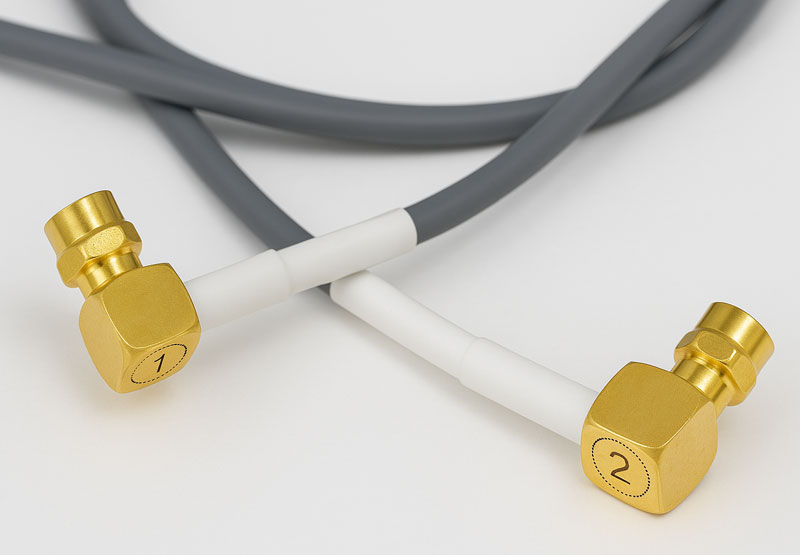
A Custom Cable Assembly is a cable or wire harness specifically designed and manufactured according to the requirements of a particular electronic or electrical system.
Compared with a standard cable, a custom solution can be tailored in terms of:
- Cable length
- Wire gauge
- Conductor material
- Insulation material
- Shielding
- Connector type
- Pin configuration
- Terminal type
- Bend radius
- Jacket material
- Overmolding
- Strain relief
- Labeling
This allows the cable assembly to fit the physical structure and electrical requirements of the final product precisely.
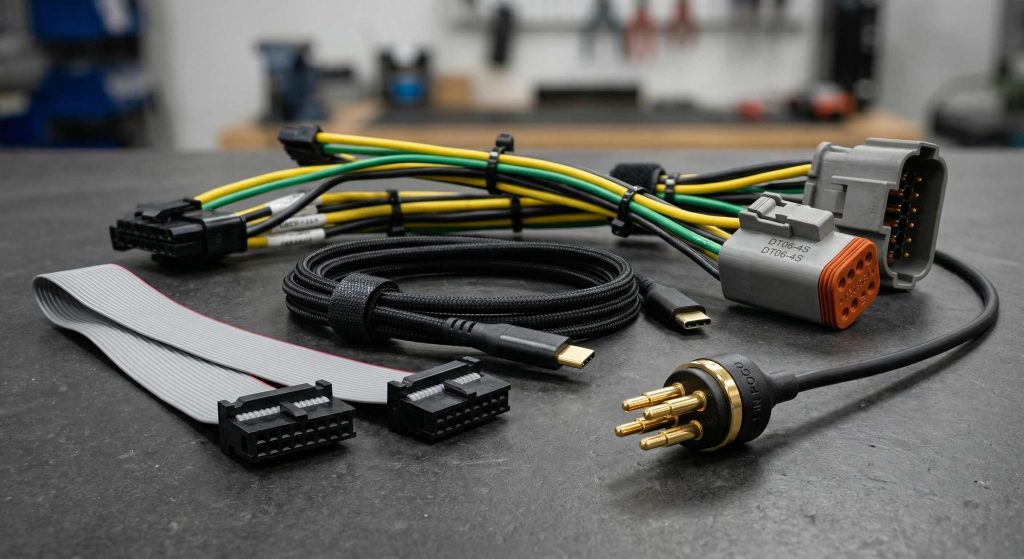
A Custom Wire Harness can also combine multiple wires, connectors, terminals, protective sleeves, and branches into an organized assembly that simplifies installation and reduces wiring complexity.
Why Custom Cable Assemblies Matter
Modern electronic products are becoming smaller, more connected, and more complex. Standard cables may not provide the right combination of electrical characteristics, mechanical flexibility, connector configuration, or environmental resistance.
A properly engineered Custom Cable Assembly can help solve these problems.
Key advantages include:
Reliable electrical connectivity: Conductors, connectors, and shielding can be selected according to the required current, voltage, signal frequency, and impedance.
Better mechanical integration: Cable length, routing, bend radius, and connector orientation can be customized to fit the product enclosure.
Improved environmental resistance: Materials can be selected according to temperature, moisture, vibration, chemicals, UV exposure, and other conditions.
Simplified installation: Pre-assembled cables and harnesses can reduce wiring work during final product assembly.
Improved reliability: Properly designed connections can reduce loose wiring, incorrect pinouts, connector stress, and other common failure points.
Applications of Custom Cable Assemblies
Automotive Electronics
The automotive industry uses Custom Cable Assemblies in:
- Electronic control units
- Battery-management systems
- Charging systems
- ADAS
- Infotainment
- Sensors
- Automotive lighting
- Communication systems
Automotive cables may need to withstand vibration, temperature cycling, moisture, chemicals, and continuous mechanical stress.
Medical Electronics
Medical Cable Assemblies can connect sensors, displays, control modules, diagnostic equipment, and other medical components.
Applications include:
- Patient monitoring
- Diagnostic equipment
- Laboratory equipment
- Imaging systems
- Portable medical devices
Medical applications may require strict material control, traceability, cleaning compatibility, and applicable regulatory compliance.
Aerospace and Defense
Aerospace applications place demanding requirements on cable assemblies.
Custom solutions may need:
- Low weight
- High mechanical reliability
- Vibration resistance
- Temperature resistance
- Shielding
- Secure connector systems
Typical applications include navigation, communications, avionics, instrumentation, and control systems.
Industrial Automation
Industrial Cable Assemblies are widely used in:
- PLC systems
- Robotics
- Motion control
- Machine vision
- Sensors
- Industrial networking
- Manufacturing equipment
These cables may be exposed to continuous motion, oil, chemicals, vibration, abrasion, and temperature fluctuations.
Telecommunications
Telecommunication and networking equipment increasingly require high-performance cable assemblies for:
- Data centers
- Network switches
- Routers
- Communication systems
- Wireless infrastructure
For high-speed systems, signal integrity, impedance, shielding, insertion loss, and connector performance become important considerations.
Renewable Energy
Custom cable assemblies are also used in:
- Solar power systems
- Wind turbines
- Battery energy storage
- Power converters
- Energy-management systems
These cables may need to resist UV radiation, moisture, temperature cycling, and mechanical stress.
Consumer Electronics
Compact Custom Cable Assemblies are used in:
- Laptops
- Smartphones
- Smart-home devices
- Wearables
- Gaming equipment
- Portable electronics
Their primary advantages are often compact size, flexible routing, and simplified installation.
Trends in the Custom Cable Assembly Industry
Miniaturization
As electronic devices become smaller, cable assemblies are also becoming more compact.
Modern designs increasingly use:
- Miniature connectors
- Fine-pitch terminals
- Smaller cable diameters
- Flexible cables
- Integrated harnesses
Miniaturization helps manufacturers save internal space and simplify product packaging.
Fiber Optic Cable Assemblies
Fiber Optic Cable Assemblies provide high bandwidth and strong resistance to electromagnetic interference.
They are particularly suitable for:
- Data centers
- Telecommunications
- High-speed networking
- Industrial communications
High-Speed Cable Assemblies
The growth of AI, cloud computing, data centers, and high-speed networking is increasing demand for High-Speed Cable Assemblies.
Design considerations can include:
- Impedance
- Differential-pair geometry
- Crosstalk
- Insertion loss
- Return loss
- Shielding
- Connector performance
Automation
Automation is increasingly used in cable assembly manufacturing to improve repeatability and production efficiency.
Automated processes can support:
- Wire cutting
- Stripping
- Crimping
- Terminal insertion
- Electrical testing
- Labeling
Automation reduces variation and improves production consistency when properly controlled.
Custom Cable Assembly Design Basics
A successful Custom Cable Assembly Design should begin with clear electrical and mechanical requirements.
Conductor Selection
Copper is widely used because of its electrical conductivity and flexibility.
The conductor size should be selected according to:
- Current
- Voltage
- Cable length
- Voltage drop
- Temperature
- Flexibility requirements
Insulation Selection
Insulation protects conductors and provides electrical isolation.
Common materials include:
- PVC
- Silicone
- TPE
- XLPE
- PTFE
Material selection depends on operating temperature, chemical exposure, flexibility, voltage rating, and application environment.
Shielding
Cable Shielding can reduce electromagnetic and radio-frequency interference.
Common shielding structures include:
- Foil shielding
- Braided shielding
- Spiral shielding
- Combination shielding
Shielding is especially important for sensitive signal and high-speed applications.
Connector Selection
Connector selection should consider:
- Voltage rating
- Current rating
- Pin count
- Mating cycles
- Environmental protection
- Mechanical locking
- Installation space
- Signal requirements
Connectors may include circular, rectangular, board-to-wire, wire-to-wire, coaxial, automotive, and industrial types.
Mechanical Design
Cable routing must consider:
- Cable length
- Bend radius
- Flex cycles
- Connector orientation
- Strain relief
- Mounting points
Proper mechanical design helps prevent conductor fatigue and connector damage.
Benefits of Custom Cable Assemblies
1. Better Performance
A custom assembly can be optimized for the actual electrical and mechanical requirements of the product.
2. Reduced Installation Time
Pre-assembled cables reduce manual wiring and simplify production.
3. Better Space Utilization
Custom cable length and connector orientation can eliminate unnecessary wire loops and improve internal packaging.
4. Improved Reliability
A professionally manufactured assembly can reduce:
- Wiring mistakes
- Loose connections
- Incorrect pinouts
- Connector stress
- Maintenance requirements
5. Lower Total Cost
Although custom assemblies can have a higher initial unit cost than standard cables, they may reduce the total cost through:
- Faster installation
- Lower rework
- Reduced downtime
- Simplified inventory
- Fewer separate components
The appropriate comparison should therefore focus on total cost of ownership, rather than cable unit price alone.
Custom Cable Assembly Manufacturing Process
A professional Custom Cable Assembly Manufacturer generally follows a controlled manufacturing process.
1. Engineering Review
The manufacturer reviews:
- Cable drawings
- Wiring diagrams
- BOM
- Connector specifications
- Electrical requirements
- Mechanical requirements
- Environmental conditions
DFM/DFA feedback may be provided before production.
2. Material Preparation
Required materials are prepared according to the approved BOM.
These can include:
- Wires
- Cables
- Terminals
- Connectors
- Heat-shrink tubing
- Sleeves
- Labels
- Shielding materials
3. Cutting and Stripping
Automated or semi-automated equipment cuts wire to the required length and removes insulation at specified locations.
4. Crimping
Terminals are attached to conductors using controlled crimping equipment.
Crimp quality can be verified using:
- Visual inspection
- Crimp-height measurement
- Pull-force testing
- Cross-sectional analysis where required
5. Connector Assembly
Terminals are inserted into connectors according to the approved pinout and orientation.
The manufacturer should verify:
- Pin position
- Terminal locking
- Polarity
- Connector engagement
6. Shielding and Protection
Where required, the cable may receive:
- Foil shielding
- Braided shielding
- Sleeving
- Heat-shrink
- Protective jackets
7. Overmolding
An Overmolded Cable Assembly adds a molded protective layer around the connector and cable interface.
This can improve:
- Strain relief
- Mechanical protection
- Environmental sealing
- Durability
8. Electrical Testing
Finished cable assemblies may undergo:
- Continuity testing
- Pinout verification
- Open/short testing
- Insulation resistance testing
- Hi-pot testing where applicable
9. Final Inspection
Final inspection may verify:
- Cable length
- Connector type
- Pin configuration
- Labeling
- Appearance
- Crimp quality
- Overmold integrity
- Packaging
How to Ensure Cable Assembly Quality
Quality control should be integrated throughout production rather than performed only at the final stage.
Material Control
Use qualified materials and verified components.
Process Control
Monitor cutting, stripping, crimping, soldering, connector insertion, and overmolding.
Electrical Testing
Test continuity, pinout, insulation, and other application-specific electrical characteristics.
Mechanical Testing
Depending on the application, conduct:
- Pull-force testing
- Bend testing
- Flex-cycle testing
- Connector retention testing
Environmental Testing
For demanding applications, testing may include:
- Temperature cycling
- Humidity
- Vibration
- Chemical exposure
- UV exposure
Traceability
A professional Cable Assembly Manufacturer should maintain records covering materials, production processes, inspections, and testing.
Standards for Custom Cable Assemblies
The applicable standards depend on the industry and product.
IPC/WHMA-A-620
IPC/WHMA-A-620 is an important industry standard for cable, wire, and harness assembly workmanship and acceptance requirements.
ISO 9001
ISO 9001 provides a quality-management framework for consistent manufacturing processes.
ISO 13485
For medical-device applications, ISO 13485 is the relevant quality-management standard for organizations involved in medical-device manufacturing.
IATF 16949
For automotive applications, IATF 16949 is widely used within the automotive supply chain.
Other requirements may include:
- UL
- RoHS
- REACH
- CE-related requirements
- Customer-specific specifications
The exact standards should be determined according to the application and target market.
Factors to Consider When Choosing a Custom Cable Assembly
Electrical Requirements
Define:
- Voltage
- Current
- Frequency
- Signal type
- Impedance
- Voltage drop
Environmental Requirements
Consider:
- Temperature
- Humidity
- Chemicals
- Oil
- UV
- Vibration
- Shock
Mechanical Requirements
Evaluate:
- Length
- Bend radius
- Flexibility
- Connector orientation
- Available space
- Required flex cycles
Connector Requirements
Confirm:
- Interface type
- Pin count
- Current rating
- Voltage rating
- Mating cycles
- Environmental protection
Manufacturing Requirements
Evaluate whether the manufacturer can support:
- Prototype quantities
- Low-volume production
- Pilot production
- Mass production
Cost and Lead Time
Do not select a cable assembly supplier solely according to the lowest quotation.
Consider:
Unit Cost + Engineering Cost + Tooling + Lead Time + Quality + Shipping + Long-Term Reliability
How to Choose a Custom Cable Assembly Manufacturer
Selecting the right Custom Cable Assembly Supplier is essential to long-term product performance.
Industry Experience
Choose a supplier familiar with your application and its specific technical requirements.
Engineering Capability
The supplier should be able to provide support for:
- Cable design
- Connector selection
- Shielding
- Crimp design
- DFM/DFA
- Prototype development
Manufacturing Equipment
Evaluate:
- Automated cutting machines
- Stripping equipment
- Crimping machines
- Electrical testers
- Overmolding equipment
- Harness assembly stations
Quality System
Verify relevant certifications and manufacturing controls.
Supply-Chain Capability
A strong supplier should be able to source:
- Wires
- Terminals
- Connectors
- Sleeves
- Shielding materials
- Mechanical components
Customer Support
Good communication is especially important when cable specifications change during product development.
Kingda Custom Cable Assembly Solutions
For companies seeking an integrated Custom Cable Assembly Manufacturer, Kingda provides wire and cable harness assembly as part of its one-stop PCB and electronics manufacturing services.
Kingda’s published capabilities cover:
PCB Fabrication → Component Procurement → SMT/THT Assembly → Wire Harness & Cable Assembly → Box Build → Testing → Final Product Integration. (gopcba.com)
Integrated PCB and Cable Assembly
A major advantage of Kingda’s manufacturing model is the ability to coordinate the PCB Assembly and Cable Assembly portions of a project.
This is particularly useful for products that require:
- PCBA
- Cable harnesses
- Connectors
- Mechanical integration
- Box build
- System-level testing
Kingda specifically lists wire harnesses and cable assemblies within its mixed-technology manufacturing capabilities. (gopcba.com)
Component Procurement
Kingda provides component sourcing and BOM management as part of its turnkey manufacturing services.
Its published procurement services include ERP-based inventory management and supplier coordination, helping customers manage component availability and production scheduling. (gopcba.com)
Advanced PCB Assembly
Kingda can integrate cable assemblies with advanced PCBA production, including:
- SMT
- THT/DIP
- Mixed-technology assembly
- BGA
- QFN
- CSP
- LGA
- Fine-pitch components
- 01005 components
Its published capabilities include BGA packages down to 0.35 mm pitch and fine-pitch components down to 0.38 mm pitch. (gopcba.com)
Testing and Quality Control
Kingda’s published manufacturing flow includes:
IQC → SPI → SMT/THT → AOI → X-Ray → ICT/FCT → OQC
For custom cable projects, appropriate electrical and functional tests can be integrated according to customer specifications. (gopcba.com)
Box Build Integration
When a project requires more than a cable or PCBA, Kingda can combine:
PCB Assembly + Cable Assembly + Mechanical Assembly + System Integration + Testing
This provides customers with a more complete Turnkey Electronics Manufacturing solution. (gopcba.com)
Engineering and DFM/DFA Support
Kingda provides engineering services including:
- DFM
- DFA
- PCB design review
- BOM review
- Manufacturing optimization
- Component analysis
This is particularly useful when the cable assembly must be integrated into a PCB or box-build system. (gopcba.com)
Quality Certifications
Kingda reports:
- IATF 16949:2016
- ISO 13485:2016
- ISO 9001:2015
- ISO 14001:2015
- UL
The company also states that it is an IPC member. (gopcba.com)
These quality-management capabilities support applications including automotive, medical, industrial, communication, power, and other electronics.
Prototype to Mass Production
Kingda supports the complete product-development lifecycle:
Prototype → Low Volume → Pilot Production → High Volume Production
This allows customers to validate custom cable and PCB designs before scaling to production. (gopcba.com)
Conclusion
Custom Cable Assemblies provide manufacturers with a flexible way to solve electrical, mechanical, environmental, and space-related connectivity challenges.
Unlike standard cables, custom assemblies can be optimized for:
Conductor Size + Cable Length + Connector + Shielding + Insulation + Bend Radius + Environmental Conditions + System Integration
The result can be improved electrical performance, easier installation, better space utilization, reduced wiring complexity, and greater long-term reliability.
A qualified Custom Cable Assembly Manufacturer should therefore provide more than cable production. Engineering support, material sourcing, controlled crimping, electrical testing, traceability, quality management, and production scalability are all important.
Kingda combines PCB manufacturing, PCB assembly, component procurement, custom cable and wire harness assembly, box build, testing, and final product integration through a one-stop electronics manufacturing model. (gopcba.com)
For OEMs developing automotive, medical, industrial automation, telecommunications, AI, IoT, power, and other electronic products, this integrated approach can simplify supply-chain management and provide a smoother path from prototype to mass production.