Turnkey PCB Assembly Services
Finding the right components for a PCB design can be a time-consuming and complex process. Managing component sourcing, bare PCB fabrication, assembly, inspection, testing, and logistics through multiple suppliers can also increase project management costs and lead times.
A turnkey manufacturing model simplifies this process by placing the major stages of production under one manufacturing partner. GOPCBA provides integrated solutions covering PCB Manufacturing, component sourcing, PCB Assembly, inspection, testing, and delivery, helping customers streamline the transition from design files to finished electronic products.
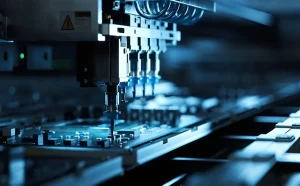
For projects requiring a complete manufacturing solution, our Turnkey PCB Assembly service can integrate PCB fabrication, component procurement, assembly, testing, and related manufacturing support through a coordinated production process.
What Is Turnkey PCB Assembly?
Turnkey PCB assembly is an end-to-end manufacturing service in which the manufacturer manages most or all of the processes required to produce a completed printed circuit board assembly.
Depending on the project requirements, turnkey production can include:
- Bare PCB fabrication
- Electronic component sourcing
- PCB assembly
- SMT and through-hole assembly
- Inspection and quality control
- Electrical and functional testing
- Final assembly and packaging
- Shipping and delivery coordination
Instead of managing multiple suppliers for different manufacturing stages, customers can work with one manufacturing partner responsible for coordinating the overall production process.
This approach is particularly useful for startups, engineering teams, product developers, OEMs, and businesses that do not want to establish their own component procurement and PCB production infrastructure.
PCB Fabrication
The bare PCB is the foundation of every PCBA project. Depending on the design, the board may be manufactured as a single-sided, double-sided, multilayer, rigid, flexible, or rigid-flex PCB.
GOPCBA provides integrated PCB Manufacturing capabilities to support different board structures and application requirements. The manufacturing process can be coordinated with the subsequent assembly process to reduce communication gaps between PCB fabrication and component assembly.
Component Procurement
Component sourcing is another important part of turnkey PCB production. A complete BOM allows the manufacturer to identify required components, quantities, specifications, manufacturers, and approved alternatives.
A reliable sourcing process helps reduce procurement delays and improves material availability. Depending on the customer’s requirements, components can be sourced through established supplier networks, while customer-supplied or designated components can also be incorporated into the production process.
PCB Assembly
After PCB fabrication and component procurement, components are installed onto the bare boards according to the approved design files and assembly requirements.
The assembly process may include surface-mount technology, through-hole technology, or mixed technology, depending on the PCB design.
GOPCBA offers complete PCB Assembly solutions covering different production requirements, from prototypes and low-volume production to larger production runs.
Inspection and Testing
Quality control is an essential part of turnkey PCB assembly. Depending on the product and technical requirements, inspection and testing can include:
- Automated Optical Inspection (AOI)
- X-ray inspection
- Visual inspection
- In-Circuit Testing (ICT)
- Functional testing
- First Article Inspection (FAI)
- Reliability testing
These processes help identify assembly defects, soldering problems, component placement issues, open circuits, short circuits, polarity errors, and other potential manufacturing problems before shipment.
Types of Turnkey PCB Assembly
Turnkey PCB assembly can generally be divided into two major sourcing models: full turnkey and partial turnkey assembly.
Full Turnkey PCB Assembly
With full turnkey production, the manufacturer manages the major stages of the project, including bare PCB fabrication, component procurement, PCB assembly, inspection, testing, and delivery.
This model provides the highest level of convenience because the customer does not need to coordinate multiple manufacturing suppliers.
Full turnkey production can be particularly effective when customers need a single point of contact, streamlined procurement, and coordinated manufacturing.
Partial Turnkey PCB Assembly
Partial turnkey assembly allows customers to supply some components while the manufacturer sources the remaining parts.
For example, a customer may provide proprietary ICs, custom components, or components already available in inventory while the manufacturer manages PCB fabrication and purchases the remaining components.
This model provides greater flexibility for projects involving customer-owned inventory or specialized components.
Files Required for Turnkey PCB Assembly
Providing complete and accurate manufacturing data is essential for an efficient turnkey PCB assembly project.
Bill of Materials (BOM)
The BOM is one of the most important documents for component procurement. It should include information such as:
- Manufacturer part number
- Component description
- Quantity
- Reference designator
- Manufacturer name
- Approved alternatives
- Component specifications
- Procurement requirements
A well-structured BOM helps engineers and procurement teams verify component availability and identify potential sourcing issues before production.
Pick and Place File
The pick-and-place file provides component placement information required by automated assembly equipment.
It typically contains reference designators, component coordinates, rotation angles, and placement information.
Accurate pick-and-place data helps minimize placement errors and supports efficient SMT production.
Gerber Files
Gerber files are commonly used for PCB fabrication and can also support engineering verification during assembly preparation.
Providing the latest Gerber data allows the manufacturing team to cross-check the PCB design against the BOM, pick-and-place data, and assembly requirements.
Assembly Drawings
Assembly drawings can provide additional information regarding component orientation, polarity, special assembly requirements, mechanical restrictions, and other manufacturing details.
For complex PCB assemblies, detailed assembly documentation can significantly reduce communication errors during production.
SMT and Through-Hole Assembly
Different electronic products require different assembly technologies.
SMT PCB Assembly
Surface Mount Technology is widely used in modern electronic products because it allows components to be mounted directly onto the surface of the PCB.
GOPCBA provides SMT PCB Assembly for prototype and production applications, supporting automated and manual assembly processes according to project requirements.
SMT is suitable for compact electronic products, high-density circuit designs, communication equipment, industrial electronics, consumer electronics, and many other applications.
Through-Hole Assembly
Through-hole components use leads that pass through holes in the PCB before soldering. This technology is still widely used for components that require stronger mechanical connections or are unsuitable for conventional SMT assembly.
Mixed Technology Assembly
Many modern PCBs combine SMT and through-hole components. Mixed technology assembly allows manufacturers to select the most appropriate assembly method for different components on the same PCB.
Documents and Data Needed for a Smooth Production Process
Before production begins, customers should provide complete and up-to-date manufacturing information.
The typical project package may include:
- BOM
- Gerber files
- Pick-and-place files
- Assembly drawings
- Schematic diagrams
- PCB design files when available
- Testing requirements
- Special component requirements
- Packaging requirements
- Shipping information
Accurate documentation reduces engineering clarification time and helps ensure that procurement and assembly teams are working from the same revision.
Benefits of Turnkey PCB Assembly
Simplified Supply Chain Management
A turnkey manufacturing model reduces the number of suppliers that customers need to manage. PCB fabrication, component sourcing, assembly, testing, and delivery can be coordinated through one manufacturing partner.
Reduced Procurement Workload
Electronic component sourcing can involve thousands of part numbers, availability checks, price comparisons, lead-time management, and supplier verification.
Outsourcing procurement allows engineering and purchasing teams to focus more on product development and other strategic activities.
Faster Production Coordination
When PCB fabrication, component sourcing, and assembly are coordinated within one production workflow, potential communication delays between suppliers can be reduced.
This can be particularly valuable for prototype and time-sensitive production projects.
Better Manufacturing Control
A centralized manufacturing process makes it easier to maintain consistent documentation, production revisions, inspection requirements, and quality-control procedures.
GOPCBA’s PCBA Capabilities include turnkey, partial turnkey, and kitted/consigned assembly, supporting different customer supply-chain models and PCB assembly requirements.
Flexible Production Options
Turnkey PCB assembly can support different production stages, including prototype development, low-volume production, and larger manufacturing programs.
For early-stage products, a flexible production model allows the design to be verified before moving into larger production quantities.
Turnkey PCB Assembly for Prototype and Low-Volume Production
Prototype manufacturing requires flexibility because PCB designs can change frequently during product development.
A prototype assembly process allows engineers to validate component selection, PCB layout, assembly quality, electrical performance, and product functionality before committing to larger production quantities.
GOPCBA also provides PCB Prototype Assembly for product development and prototype manufacturing, helping customers move from PCB design to assembled prototypes and subsequent production.
For low-volume projects, turnkey assembly can also simplify purchasing and manufacturing coordination while maintaining flexibility for engineering changes.
How the Turnkey PCB Assembly Process Works
A typical turnkey PCB assembly workflow includes the following stages:
1. Project Requirements Review
The manufacturing team reviews the PCB design, BOM, quantities, technical specifications, testing requirements, and delivery expectations.
2. Engineering Review and Quotation
Engineers evaluate the manufacturing data and identify potential production issues. The supplier then prepares a quotation based on PCB fabrication, components, assembly, testing, tooling, and other requirements.
3. Component Procurement
Approved components are sourced according to the BOM and procurement requirements. Component availability, lead times, specifications, and approved alternatives are reviewed.
4. PCB Fabrication
Bare PCBs are manufactured according to the approved Gerber files and technical specifications.
5. SMT and Through-Hole Assembly
Components are mounted and soldered using the required assembly technology.
6. Inspection
The assembled boards undergo appropriate inspection procedures, such as AOI, X-ray, visual inspection, or other quality-control processes.
7. Electrical and Functional Testing
Testing is performed according to the product requirements to verify electrical performance and functional operation.
8. Final Inspection and Packaging
Completed PCB assemblies are inspected, packaged, and prepared for shipment.
9. Delivery
Finished products are shipped according to the customer’s logistics requirements and destination.
How to Make Turnkey PCB Assembly More Efficient
Prepare an Accurate BOM
A detailed BOM reduces procurement questions and helps prevent component substitutions or sourcing delays.
Maintain Revision Control
BOMs, Gerber files, assembly drawings, and pick-and-place files should always be synchronized with the latest approved design revision.
Clearly Define Approved Alternatives
If equivalent components are acceptable, define the acceptable alternatives in advance. This gives the procurement team greater flexibility when original components have long lead times or limited availability.
Review Engineering Recommendations
Manufacturing engineers may identify opportunities to improve PCB manufacturability, component availability, assembly efficiency, or testing.
A technical review before production can help identify potential issues before they become costly manufacturing problems.
Define Testing Requirements Early
Customers should specify whether the project requires AOI, X-ray, ICT, functional testing, reliability testing, or other inspection methods before production begins.
Clear testing requirements allow the manufacturing process to be planned around the product’s quality objectives.
Why Choose GOPCBA for Turnkey PCB Assembly?
GOPCBA provides an integrated PCB manufacturing and assembly solution designed to simplify electronic product manufacturing.
Our manufacturing services cover PCB fabrication, component procurement, SMT assembly, through-hole assembly, testing, and finished-product integration. The company supports prototypes, low-volume manufacturing, and production projects with flexible manufacturing solutions.
The main advantages of working with a one-stop PCB manufacturing partner include:
- Integrated PCB fabrication and assembly
- Component sourcing support
- SMT and through-hole assembly
- Prototype and production capabilities
- Engineering and DFM support
- Inspection and testing
- Flexible turnkey and partial turnkey solutions
- Centralized project communication
- Supply-chain coordination
For customers looking to simplify PCB sourcing and production, a turnkey solution can provide a more efficient path from design files to finished PCB assemblies.
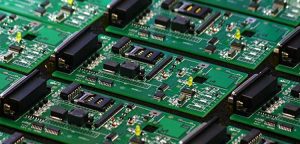
Get a Turnkey PCB Assembly Quote
Whether you are developing a new electronic product, building prototypes, or preparing for production, a complete turnkey PCB assembly solution can help reduce procurement complexity and improve manufacturing coordination.
Provide your BOM, Gerber files, pick-and-place files, assembly drawings, quantity, and testing requirements to begin the quotation process.
GOPCBA can help coordinate PCB fabrication, component sourcing, assembly, inspection, and testing through one integrated manufacturing workflow.
Request a turnkey PCB assembly quotation today and move your electronic product from design to production with a reliable one-stop manufacturing solution.