Aluminum PCB Manufacturer
High-Quality Aluminum PCB Solutions for Thermal Management
Aluminum-based circuit boards are designed for electronic applications where efficient heat dissipation, mechanical strength, and reliable electrical performance are important. Compared with conventional FR-4 boards, an aluminum PCB uses a metal substrate beneath a thermally conductive dielectric layer and copper circuit layer to transfer heat away from high-power components.
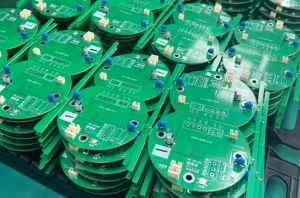
These boards are widely used in LED lighting, power supplies, automotive electronics, industrial controls, renewable energy systems, telecommunications, and other applications where thermal management directly affects product reliability and service life.
As an experienced aluminum PCB manufacturer, GOPCBA provides PCB manufacturing and assembly solutions designed around different thermal, electrical, mechanical, and production requirements. Customers can combine PCB fabrication, component sourcing, assembly, inspection, and testing through a one-stop manufacturing workflow.
What Is an Aluminum PCB?
An aluminum PCB is a type of metal-substrate printed circuit board that uses aluminum as its core material. A typical structure consists of three primary layers:
- Copper circuit layer – provides electrical conductivity and forms the required circuit pattern.
- Thermally conductive dielectric layer – provides electrical insulation while allowing heat to move from the copper circuit toward the metal core.
- Aluminum substrate – provides mechanical support and serves as an efficient heat-spreading path.
This construction allows heat generated by LEDs, power semiconductors, converters, and other components to move away from the active circuit more efficiently.
An MCPCB, or metal core printed circuit board, is the broader category that includes aluminum-core and copper-core circuit boards. Aluminum is particularly attractive because it combines useful thermal performance, relatively low weight, mechanical strength, and cost efficiency.
For projects requiring both fabrication and assembly, GOPCBA also provides integrated PCB assembly capabilities, including SMT, through-hole, mixed-technology assembly, inspection, and testing.
Common Types of Aluminum PCB
The appropriate board structure depends on circuit complexity, component density, thermal requirements, and electrical design.
1. Single-Layer Aluminum PCB
A single-layer aluminum PCB generally consists of one copper circuit layer, a dielectric insulation layer, and an aluminum substrate.
Its relatively simple construction makes it suitable for applications where the circuit is straightforward but thermal performance is important. Typical applications include LED lighting, power modules, motor controls, and other heat-generating electronic products.
2. Double-Layer Aluminum PCB
A double-layer aluminum circuit board provides greater routing flexibility than a basic single-layer structure. Copper circuit layers can be arranged on both sides according to the required design and manufacturing structure.
Double-sided designs can be useful when more components, connections, or circuit functions must be accommodated within a limited board area.
3. Metal Core PCB
A metal core PCB uses a metal substrate as the thermal and mechanical foundation of the circuit board. Aluminum is the most commonly selected metal because of its balance between thermal performance, weight, machinability, and cost.
Depending on the application, metal-core constructions can use aluminum or copper cores and can be engineered around different dielectric and copper-layer requirements.
Key Factors in Aluminum PCB Fabrication
Successful aluminum PCB fabrication requires careful control of material selection, dielectric performance, copper thickness, circuit geometry, and thermal requirements.
Aluminum Substrate Selection
The aluminum core must provide sufficient mechanical strength and effective heat spreading for the intended application. The substrate specification should be selected according to board dimensions, operating temperature, thermal load, mechanical requirements, and cost targets.
Thermally Conductive Dielectric Layer
The dielectric layer is one of the most important elements of an aluminum PCB.
It must provide reliable electrical insulation between the copper circuit and aluminum core while maintaining low enough thermal resistance to transfer heat efficiently. The dielectric material therefore affects both electrical safety and thermal performance.
Copper Thickness
Copper thickness should be selected according to current requirements, circuit geometry, temperature rise, and manufacturing constraints.
Higher copper thickness can be beneficial for high-current applications, but it can also influence etching, impedance, manufacturing cost, and overall board design.
Circuit Trace Design
Circuit traces should be designed with both electrical and thermal performance in mind. High-current paths may require wider traces, while thermal paths should provide an efficient route from heat-generating components toward the aluminum substrate.
Proper design review before production can reduce manufacturing risks and improve overall product reliability. GOPCBA also provides engineering support and DFM review as part of its PCB manufacturing and assembly services.
Advantages of Aluminum PCB
Improved Heat Dissipation
The primary advantage of an aluminum-based circuit board is its ability to provide an efficient thermal path.
Heat generated by LEDs, power transistors, MOSFETs, converters, and other components can be transferred through the dielectric layer toward the aluminum substrate. Better thermal management can help reduce excessive temperature and support more stable product operation.
Excellent Mechanical Strength
Aluminum provides a rigid and mechanically stable foundation for the circuit board. This can be advantageous in industrial equipment, lighting systems, automotive electronics, and other products exposed to vibration or mechanical stress.
Lightweight Construction
Compared with copper-core alternatives, aluminum can provide a useful balance between thermal management and weight. This makes aluminum-based boards suitable for applications where both thermal performance and overall product weight need to be considered.
Cost-Effective Thermal Management
For many applications, aluminum provides an attractive alternative to more complicated cooling solutions. By integrating electrical circuitry and heat spreading into one board structure, an MCPCB can help simplify thermal management and reduce the need for additional mechanical cooling components.
Suitable for High-Power Electronics
High-power LEDs, power converters, motor controllers, and other heat-generating circuits can benefit from the thermal characteristics of aluminum-based circuit boards.
GOPCBA’s manufacturing capabilities cover a broad range of PCB structures and production requirements, from prototypes and low-volume manufacturing to larger-scale production.
Limitations of Aluminum PCB
Although aluminum PCBs provide significant thermal benefits, they are not suitable for every circuit design.
Limited Flexibility
An aluminum substrate is rigid and does not provide the flexibility of polyimide-based flexible PCBs. Applications requiring repeated bending, folding, or dynamic movement may require a different PCB construction.
Thermal Expansion Considerations
Different materials within a circuit board have different coefficients of thermal expansion. Repeated temperature cycling can therefore create mechanical stress between the aluminum substrate, dielectric material, copper layers, components, and solder joints.
The PCB structure and material system should be selected according to the application’s operating temperature and reliability requirements.
More Specialized Manufacturing
Compared with a conventional FR-4 board, aluminum-based PCB production requires additional consideration of dielectric thermal performance, substrate handling, drilling, routing, soldering, and thermal expansion.
For this reason, choosing an experienced aluminum PCB manufacturer can help reduce design and manufacturing risks.
Higher Initial Cost Than Some FR-4 Boards
An aluminum PCB can cost more than a conventional FR-4 PCB because of its specialized dielectric material, metal substrate, and manufacturing requirements. However, the additional cost can be justified when thermal management is critical to the product.
Aluminum PCB Applications
LED Lighting
LEDs generate heat during operation, and excessive temperature can negatively affect efficiency, reliability, and service life. Aluminum-based boards provide an efficient thermal path for LED lighting products.
Typical applications include:
- LED bulbs
- LED panels
- Street lighting
- High-power LED modules
- Automotive lighting
- Commercial lighting
- Industrial lighting
Power Electronics
Power supplies, converters, regulators, motor drivers, and power management circuits can generate substantial heat.
An aluminum substrate can help move heat away from high-power components and improve the thermal design of the overall system.
Automotive Electronics
Automotive applications often require reliable operation under vibration, temperature variation, and limited installation space.
Potential applications include:
- LED headlights
- Motor controllers
- Power electronics
- Battery management systems
- Automotive lighting modules
- Vehicle control electronics
Industrial Electronics
Industrial control systems frequently operate for long periods and may generate significant heat. Aluminum-based circuit boards can be used in motor control, industrial power supplies, automation equipment, and other heat-sensitive electronic systems.
Renewable Energy Systems
Solar power equipment, battery systems, power converters, and other renewable energy electronics can benefit from efficient thermal management.
Consumer Electronics
High-performance consumer products may also use metal-substrate circuit boards when thermal performance is an important design requirement.
Aluminum PCB vs. FR-4 PCB
The main difference between an aluminum PCB and a conventional FR-4 PCB is the substrate structure and thermal management capability.
| Feature | Aluminum PCB | FR-4 PCB |
|---|---|---|
| Substrate | Aluminum metal core | Glass-reinforced epoxy |
| Thermal management | Excellent for heat-spreading applications | Generally lower |
| Mechanical strength | High | High |
| Flexibility | Low | Low |
| Typical applications | LED, power, automotive, industrial | General electronics |
| Thermal design | Major design consideration | Usually secondary |
| Cost | Generally higher | Generally lower |
| High-power applications | Highly suitable | Depends on thermal design |
The right choice depends on the actual thermal load, circuit complexity, operating environment, cost target, and mechanical requirements.
For complex electronic products, PCB fabrication can also be combined with assembly, testing, and component sourcing through a unified manufacturing process.
Aluminum PCB Manufacturing and Assembly
Choosing an aluminum PCB manufacturer that can support both board fabrication and assembly can simplify project management.
A complete manufacturing workflow may include:
1. Engineering Review
Gerber files, PCB specifications, BOMs, drawings, stackup requirements, and manufacturing notes are reviewed before production.
2. Material Preparation
The aluminum substrate, dielectric material, copper foil, solder mask, surface finish, and other production materials are prepared according to the approved specifications.
3. PCB Fabrication
The copper circuit pattern is created through standard PCB manufacturing processes adapted to the selected metal-core structure.
4. Inspection and Testing
Manufactured boards can undergo visual inspection, electrical testing, and other quality-control procedures according to project requirements.
5. PCB Assembly
For complete products, the bare board can proceed to SMT, THT, or mixed-technology assembly. GOPCBA supports SMT, through-hole, mixed-technology, testing, and box-build assembly services.
6. Final Testing and Delivery
Completed assemblies can undergo final inspection and functional testing before packaging and shipment.
This integrated approach helps reduce communication between multiple suppliers and provides better control over manufacturing consistency and delivery.
Why Choose GOPCBA for Aluminum PCB Manufacturing?
GOPCBA provides one-stop PCB manufacturing and PCBA solutions covering PCB fabrication, component sourcing, SMT assembly, THT assembly, testing, and final product integration.
One-Stop Manufacturing
Customers can combine PCB manufacturing, component procurement, PCB assembly, testing, and final integration within one manufacturing supply chain.
Engineering Support
Engineering teams can assist with DFM review, BOM verification, Gerber review, component availability analysis, and manufacturing optimization before production.
Flexible Production
Manufacturing support is available for prototype, low-volume, and larger-volume production requirements, allowing projects to transition from product development to production with fewer supplier changes.
Quality Control
Quality management can include incoming material verification, in-process inspection, AOI, X-ray inspection, first article inspection, ICT, functional testing, and other customer-specific testing requirements.
Component Sourcing
GOPCBA also provides component procurement and supply-chain management services, helping customers coordinate electronic components with PCB manufacturing and assembly.
Responsive Project Support
From quotation and engineering review through production and delivery, a dedicated manufacturing team can coordinate technical requirements and production progress.
Get a Quote for Your Aluminum PCB Project
Whether you need a simple LED board, a high-power thermal management board, an automotive electronics PCB, or a complete assembled electronic product, selecting the correct substrate and manufacturing process is essential.
GOPCBA provides integrated PCB fabrication, component sourcing, PCB assembly, inspection, testing, and manufacturing support for customers developing and producing electronic products.
For project-specific requirements, including board dimensions, layer count, copper thickness, dielectric thermal performance, surface finish, quantity, and assembly requirements, contact the GOPCBA engineering and sales team for a customized quotation.
Start your project with a professional PCB manufacturing partner today.
Frequently Asked Questions
What is an aluminum PCB?
An aluminum PCB is a metal-substrate printed circuit board that uses an aluminum core beneath a thermally conductive dielectric layer and copper circuit layer. It is mainly used when effective heat dissipation is required.
What is the difference between aluminum PCB and MCPCB?
An MCPCB is a general term for a metal core printed circuit board. Aluminum PCB is one type of MCPCB that specifically uses aluminum as the metal substrate.
What are aluminum PCBs mainly used for?
Typical applications include LED lighting, power electronics, automotive electronics, industrial equipment, renewable energy systems, and other products where thermal management is important.
Are aluminum PCBs better than FR-4 PCBs?
Neither is universally better. Aluminum PCBs are generally more suitable for applications with significant thermal requirements, while FR-4 remains a versatile and economical option for many conventional electronic circuits.
Can aluminum PCBs be assembled with SMT components?
Yes. Aluminum-based circuit boards can be used with SMT assembly processes when the board construction, component requirements, soldering profile, and assembly process are properly controlled.
How should I choose an aluminum PCB manufacturer?
Consider the supplier’s material capabilities, thermal-management expertise, PCB fabrication capacity, assembly capabilities, engineering support, inspection systems, certifications, production flexibility, and ability to provide consistent quality.
Can GOPCBA provide both PCB manufacturing and PCB assembly?
Yes. GOPCBA provides integrated PCB manufacturing and assembly services, including SMT, THT, mixed-technology assembly, component sourcing, inspection, testing, and box-build services.
How can I request an aluminum PCB quotation?
You can prepare your Gerber files, PCB specifications, BOM, quantity, and special technical requirements and submit them to GOPCBA for engineering review and quotation. The company provides project consultation through its contact channel.
Related PCB Manufacturing Services
For projects that require a complete manufacturing solution, you can also explore PCB Manufacturing, PCB Assembly, Components Procurement, and other related services provided by GOPCBA.
Recommended internal links:
- PCB Manufacturing — PCB fabrication and manufacturing solutions
- PCB Assembly — SMT, THT, mixed technology, testing, and assembly
- Mixed Technology PCB Assembly — SMT and through-hole assembly for complex boards
- Components Procurement — Electronic component sourcing and supply-chain management
- Why Choose Us — Manufacturing capabilities, certifications, and quality assurance
- Contact Us — Request a quotation and discuss your PCB project
GOPCBA provides one-stop PCB manufacturing and PCBA solutions for prototype, low-volume, and production requirements, helping customers move from PCB design and fabrication to component sourcing, assembly, testing, and final integration through one manufacturing partner.