Top 15 Alumina PCB Manufacturers in 2026
Alumina PCBs, also known as alumina ceramic PCBs, use aluminum oxide (Al₂O₃) as the ceramic substrate material. Compared with conventional FR-4 printed circuit boards, alumina substrates provide superior thermal conductivity, electrical insulation, dimensional stability, and resistance to harsh operating environments. These characteristics make them particularly suitable for high-temperature, high-power, RF, LED, automotive, industrial, and other high-reliability applications.
As demand for Alumina PCB manufacturing continues to grow in LED lighting, electric vehicles, 5G communications, power electronics, medical equipment, and industrial systems, selecting the right manufacturing partner has become increasingly important. A capable supplier should have the appropriate ceramic materials, manufacturing processes, quality certifications, engineering expertise, and production capacity for your application.
This guide introduces 15 notable Alumina PCB manufacturers in 2026 and explains their primary capabilities. It also provides practical criteria for evaluating an alumina ceramic PCB supplier before moving from prototype development to mass production.
What Is an Alumina PCB?
An Alumina PCB is a ceramic printed circuit board manufactured using aluminum oxide (Al₂O₃) as its insulating substrate. Unlike conventional FR-4 laminate, alumina ceramic provides a combination of thermal performance, electrical insulation, mechanical stability, and chemical resistance that is well suited to demanding electronic applications.
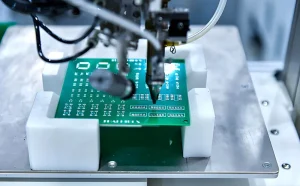
Alumina ceramic is available in different purity levels, with approximately 96% alumina being widely used for general-purpose ceramic substrates and higher-purity grades such as 99.6% alumina being selected when improved electrical, mechanical, or thermal characteristics are required.
The thermal conductivity of alumina is typically in the range of approximately 20–35 W/m·K, depending on material grade and manufacturing conditions. This is substantially higher than standard FR-4, making alumina particularly useful for dissipating heat from high-power components.
Alumina ceramic PCBs can be manufactured using technologies such as Direct Bonded Copper (DBC) and Direct Plated Copper (DPC). DBC is generally well suited to applications requiring relatively thick copper and high current-carrying capability, while DPC can support finer circuit geometries and more complex interconnection structures.
Typical characteristics of alumina substrates include:
- Thermal conductivity of approximately 20–35 W/m·K, depending on grade
- Relative dielectric constant typically around 9–10
- Excellent electrical insulation
- High volume resistivity, often exceeding 10¹⁴ Ω·cm
- Low moisture absorption
- Excellent dimensional stability
- Strong resistance to many chemicals and solvents
- High-temperature operating capability, depending on the complete PCB construction
These properties make alumina ceramic an effective substrate for applications where conventional organic PCB materials may face thermal or reliability limitations.
Why Are Alumina PCBs Widely Used?
Alumina ceramic PCBs are widely used in high-power and high-reliability electronics because they combine thermal management, electrical insulation, mechanical stability, and environmental resistance in a single substrate.
They are commonly found in power electronics, LED lighting, RF systems, automotive electronics, industrial controls, medical equipment, telecommunications, and other demanding applications.
Thermal Management
One of the most important advantages of an Alumina PCB is its higher thermal conductivity compared with conventional FR-4.
Efficient heat dissipation can help reduce the operating temperature of high-power LEDs, RF amplifiers, semiconductor devices, power modules, and other heat-generating components. Lower operating temperatures can improve component reliability and help extend product service life.
Electrical Insulation
Alumina provides excellent electrical insulation even under elevated-temperature conditions.
This characteristic is particularly valuable in power electronics, industrial control systems, medical equipment, automotive electronics, and high-voltage applications where electrical isolation and stable dielectric performance are critical.
Chemical and Moisture Resistance
Ceramic substrates generally provide excellent resistance to moisture, solvents, oxidation, and many corrosive environments.
This makes alumina PCBs suitable for outdoor electronics, automotive systems, industrial equipment, and applications exposed to challenging environmental conditions.
Dimensional Stability
Alumina has excellent dimensional stability and a relatively low coefficient of thermal expansion compared with many organic PCB materials.
Stable dimensions help reduce mechanical stress caused by temperature cycling and can improve the reliability of precision electronic assemblies.
High-Temperature Reliability
Unlike many organic laminates, alumina ceramic can withstand substantially higher temperatures without the same degradation mechanisms associated with polymer-based PCB materials.
For applications involving repeated thermal cycling or elevated operating temperatures, this can provide a significant reliability advantage.
Top 15 Alumina PCB Manufacturers in 2026
Note: The following companies are presented in alphabetical order and are not intended to represent a definitive ranking of quality, market share, or overall manufacturing capability. The most suitable supplier depends on material requirements, circuit structure, certification needs, application environment, production volume, and engineering requirements.
| No. | Manufacturer | Country/Region | Key Specialty |
|---|---|---|---|
| 1 | BDstar Navigation | China | Ceramic PCB solutions for navigation and communications |
| 2 | Catech Technology | China | Custom alumina ceramic PCBs for automotive and industrial applications |
| 3 | CoorsTek | USA | Advanced ceramics and precision ceramic substrates |
| 4 | Dongguan Hilbo | China | Alumina PCBs for LED and power electronics |
| 5 | Heraeus Electronics | Germany | DBC substrates and power module packaging |
| 6 | KYOCERA | Japan | High-purity alumina and multilayer ceramic solutions |
| 7 | MARUWA | Japan | DBC/DPC ceramic substrates and thermal management |
| 8 | Micro Systems, Inc. | USA | Custom ceramic substrates and hybrid circuits |
| 9 | NGK Electronics Devices | Japan | High-power ceramic and DBC substrates |
| 10 | Phononic | USA | Advanced thermal management and solid-state cooling |
| 11 | Remtec | USA | Thick-film ceramic circuits and microelectronics |
| 12 | Rogers Corporation | USA | High-frequency ceramic circuit materials |
| 13 | Shenzhen Toread | China | Multilayer ceramic PCBs and rapid prototyping |
| 14 | Tong Hsing Electronic Industries | Taiwan | Ceramic semiconductor packaging and alumina substrates |
| 15 | Kingda | China | Custom alumina PCBs, ceramic PCB assembly, DBC/DPC solutions |
1. BDstar Navigation — China
BDstar Navigation develops electronic technologies and solutions for navigation, positioning, communications, and intelligent transportation applications. Its ceramic-based electronic solutions are designed for applications requiring stability, thermal durability, and long-term reliability.
Its potential application areas include telecommunications, satellite navigation, automotive electronics, and intelligent infrastructure.
Key capabilities:
- Navigation electronics
- Telecommunications applications
- Ceramic PCB technology
- High-reliability electronic solutions
- Communication systems
2. Catech Technology — China
Catech Technology provides ceramic PCB solutions for automotive electronics, industrial equipment, LED lighting, telecommunications, and power electronics.
Its focus on customized ceramic circuit boards allows customers to develop solutions around specific thermal, electrical, mechanical, and dimensional requirements. Depending on the project, manufacturing services can support both prototype development and volume production.
Key capabilities:
- Alumina PCB manufacturing
- Automotive electronics
- Industrial electronics
- Custom ceramic PCB solutions
- Prototype-to-production support
3. CoorsTek — USA
CoorsTek is a major advanced ceramics manufacturer serving industries including semiconductor manufacturing, medical technology, aerospace and defense, automotive, and industrial equipment.
Its expertise in precision ceramics and engineered materials makes it relevant to applications requiring high mechanical strength, dimensional stability, thermal performance, and long-term reliability.
Key capabilities:
- Advanced ceramic manufacturing
- Custom alumina substrates
- Semiconductor applications
- Medical technology
- Precision engineering
4. Dongguan Hilbo — China
Dongguan Hilbo manufactures alumina ceramic circuit boards for applications including LED lighting, industrial automation, power electronics, and consumer electronics.
Its production capabilities are positioned toward customized ceramic PCB requirements, with solutions that can support development from prototypes through larger production volumes.
Key capabilities:
- Alumina PCB manufacturing
- LED lighting applications
- Power electronics
- Industrial electronics
- Custom manufacturing
5. Heraeus Electronics — Germany
Heraeus Electronics is well known for materials and substrate technologies used in power electronics and advanced semiconductor packaging.
Its Direct Bonded Copper (DBC) ceramic substrates are designed for demanding power applications such as electric vehicles, renewable energy systems, industrial automation, and power conversion.
DBC technology combines a ceramic insulating layer with copper conductors, enabling effective electrical insulation and heat dissipation while supporting relatively high current loads.
Key capabilities:
- DBC substrate technology
- Power electronics
- Electric vehicle applications
- Renewable energy
- Thermal management
- Semiconductor packaging
6. KYOCERA — Japan
KYOCERA has extensive expertise in advanced ceramics and high-purity alumina materials. Its ceramic technology portfolio serves applications across telecommunications, semiconductor equipment, automotive electronics, aerospace, industrial equipment, and other high-performance markets.
The company’s ceramic solutions can support applications requiring high electrical insulation, thermal stability, precision, and long-term reliability.
Its capabilities also extend into multilayer ceramic technologies and Low Temperature Co-Fired Ceramic (LTCC) solutions.
Key capabilities:
- High-purity alumina substrates
- LTCC technology
- Multilayer ceramic solutions
- Advanced ceramic materials
- Aerospace and industrial applications
- Global manufacturing capabilities
7. MARUWA — Japan
MARUWA has extensive experience in ceramic materials and ceramic substrates. Its product portfolio includes DBC, DPC, alumina, aluminum nitride (AlN), and other thermal management solutions.
These technologies are applicable to automotive electronics, industrial equipment, telecommunications, LED lighting, power electronics, and energy systems.
The combination of ceramic insulation and conductive copper layers makes these substrates suitable for applications requiring efficient heat dissipation and electrical isolation.
Key capabilities:
- DBC and DPC substrates
- Alumina and AlN ceramics
- Automotive electronics
- High thermal conductivity solutions
- Industrial power electronics
8. Micro Systems, Inc. — USA
Micro Systems, Inc. provides custom ceramic substrates, hybrid circuits, and advanced electronic packaging solutions for high-reliability applications.
Its technologies can support demanding industries such as aerospace, defense, medical electronics, telecommunications, and industrial systems.
The company’s capabilities cover ceramic circuit design, substrate manufacturing, hybrid circuit assembly, and related engineering services.
Key capabilities:
- Custom ceramic substrates
- Hybrid circuits
- Advanced electronic packaging
- Precision manufacturing
- Engineering support
- High-reliability applications
9. NGK Electronics Devices — Japan
NGK Electronics Devices develops ceramic technologies and substrates for high-power and high-reliability electronic applications.
Ceramic substrates and DBC technologies can be used in automotive electronics, industrial equipment, renewable energy systems, and power modules where electrical insulation and efficient thermal transfer are essential.
Key capabilities:
- High-power DBC substrates
- Power module packaging
- Automotive applications
- Advanced ceramic technology
- Thermal management
10. Phononic — USA
Phononic focuses primarily on solid-state thermal management and cooling technologies for electronics, medical equipment, telecommunications, and industrial applications.
While its core expertise extends beyond conventional ceramic PCB manufacturing, its thermal management technologies are relevant to electronic systems where precise temperature control, compact form factors, and energy efficiency are important.
Key capabilities:
- Thermal management
- Solid-state cooling
- Temperature control
- Electronics cooling
- Advanced engineering
11. Remtec — USA
Remtec specializes in advanced ceramic electronics, thick-film ceramic circuits, microelectronics, and custom electronic packaging.
Its technologies are suitable for applications requiring high reliability under demanding operating conditions, including aerospace, defense, industrial, and other mission-critical electronics.
Key capabilities:
- Thick-film ceramic circuits
- Ceramic substrate processing
- Microelectronics
- Electronic packaging
- Aerospace and defense applications
- High-reliability electronics
12. Rogers Corporation — USA
Rogers Corporation develops advanced circuit materials and laminates for high-frequency, RF, microwave, automotive, telecommunications, aerospace, and defense applications.
Its ceramic-filled and high-performance circuit materials are particularly relevant to applications where signal integrity, dielectric stability, thermal performance, and low-loss electrical characteristics are important.
For 5G infrastructure, radar, satellite communications, and high-frequency automotive electronics, selecting the appropriate ceramic-based circuit material can be critical to overall system performance.
Key capabilities:
- High-frequency PCB materials
- Ceramic-filled laminates
- RF and microwave applications
- 5G infrastructure
- Radar and aerospace electronics
- Signal integrity solutions
13. Shenzhen Toread — China
Shenzhen Toread provides ceramic PCB manufacturing and rapid prototyping services for industrial electronics, automotive systems, communications, and power electronics.
Its capabilities can include multilayer ceramic circuit boards, customized machining, cutting, milling, and prototype production.
For projects requiring quick design verification before volume manufacturing, rapid prototyping capability can help reduce development cycles and identify manufacturing issues at an earlier stage.
Key capabilities:
- Multilayer alumina PCBs
- Ceramic PCB prototyping
- Custom manufacturing
- Precision machining
- Industrial electronics
- Rapid production support
14. Tong Hsing Electronic Industries — Taiwan
Tong Hsing Electronic Industries provides semiconductor packaging and ceramic substrate technologies for semiconductor, automotive, industrial, and consumer electronics applications.
Its ceramic packaging solutions and alumina-based materials are designed to support electrical reliability, thermal management, dimensional stability, and long-term performance.
Key capabilities:
- Ceramic semiconductor packaging
- Alumina substrate solutions
- Semiconductor applications
- Advanced packaging
- Industrial and automotive electronics
15. Kingda — China
Kingda provides customized Alumina PCB manufacturing and ceramic PCB assembly solutions for automotive electronics, industrial electronics, LED lighting, power electronics, and other demanding applications.
Kingda can support ceramic PCB development using technologies such as DBC and DPC, depending on the electrical, thermal, dimensional, and circuit-density requirements of the project.
From prototype development to volume production and assembly, an integrated manufacturing approach can help simplify the supply chain while improving production consistency and engineering communication.
Key capabilities:
- Custom Alumina PCB manufacturing
- DBC and DPC technologies
- Ceramic PCB assembly
- Automotive and industrial applications
- LED and power electronics
- Prototype-to-volume production
- Engineering and DFM support
Key Capabilities to Look for in an Alumina PCB Manufacturer
Choosing a qualified Alumina PCB manufacturer requires more than comparing unit prices. The supplier’s material selection, process capability, quality control, engineering support, and production scalability can all directly affect final product reliability.
DBC and DPC Process Capability
Direct Bonded Copper (DBC) is particularly suitable for applications requiring relatively thick copper conductors and high current-carrying capability.
Direct Plated Copper (DPC) can support finer circuit geometries and is often considered when higher circuit density and smaller features are required.
Before selecting a supplier, verify that its actual production capability matches your required copper thickness, minimum line width, spacing, via structure, and dimensional tolerances.
Ceramic Material Options
A capable ceramic PCB supplier should understand the differences among materials such as:
- 96% alumina
- 99.6% alumina
- Aluminum nitride (AlN)
- Silicon nitride (Si₃N₄)
- Other application-specific ceramic materials
Material selection should be based on thermal conductivity, dielectric characteristics, mechanical strength, coefficient of thermal expansion, operating temperature, cost, and application requirements.
More material options give engineers greater flexibility during PCB design and thermal optimization.
Layer Count and Circuit Complexity
Multilayer ceramic PCBs are considerably more challenging to manufacture than simple single-layer ceramic substrates.
When a project requires multilayer structures, microvias, tight tolerances, fine-line patterns, or complex interconnections, confirm the manufacturer’s actual multilayer production experience.
Do not rely solely on a supplier’s general statement that it can manufacture multilayer ceramic boards. Ask for specific process capability data and representative production experience.
Surface Finish Options
Surface finish affects solderability, wire bonding, electrical performance, corrosion resistance, and long-term reliability.
Depending on the application, available options may include:
- ENIG
- Electroless nickel
- Gold plating
- Thick-film precious-metal finishes
- Silver-based metallization
- Nickel-gold systems
The appropriate finish depends on whether the ceramic PCB will be soldered, wire bonded, sintered, or integrated into a power module.
Alumina PCB Assembly Services
Some projects benefit from selecting a supplier capable of handling both ceramic PCB manufacturing and PCB assembly.
An integrated manufacturing model can reduce logistics, simplify quality responsibility, shorten lead times, and improve communication between substrate manufacturing and component assembly.
For complex projects, ask whether the supplier provides turnkey manufacturing, SMT assembly, component sourcing, inspection, testing, and final functional verification.
Quality Systems and Certifications
Certifications should match the requirements of the target industry.
Common examples include:
- ISO 9001 for quality management
- IATF 16949 for automotive manufacturing environments
- ISO 13485 for medical-device-related quality systems
- Relevant IPC standards for PCB and assembly quality
However, certification alone does not guarantee product quality. Buyers should also evaluate process controls, inspection equipment, traceability, failure analysis, incoming material inspection, and production records.
How to Choose the Best Alumina PCB Manufacturer
Selecting the right custom Alumina PCB manufacturer requires a systematic evaluation of technical capability, quality systems, engineering support, production capacity, communication, and supply-chain reliability.
Step 1 — Define Your Technical Requirements
Before contacting suppliers, prepare a clear technical specification covering:
- Ceramic material and purity
- Board dimensions
- Layer count
- Copper thickness
- Minimum line width and spacing
- Via requirements
- Surface finish
- Operating temperature
- Thermal conductivity requirements
- Electrical requirements
- Expected annual volume
A complete specification makes it easier to compare manufacturers on an equivalent basis.
Step 2 — Verify Manufacturing Capability
Request a detailed capability statement.
Confirm whether the manufacturer can consistently produce your required board structure under its standard production process rather than treating your requirements as an exceptional one-off project.
Important parameters include ceramic thickness, copper thickness, minimum feature size, tolerances, metallization technology, multilayer capability, and testing capability.
Step 3 — Review Certifications
Choose certifications according to your target industry.
Automotive applications may require IATF 16949, while medical-device applications may require ISO 13485.
Also verify that the certification applies to the actual manufacturing facility producing your PCBs rather than only to a parent company or unrelated facility.
Step 4 — Request DFM Feedback
A qualified ceramic PCB manufacturer should be able to review your Gerber files and provide practical Design for Manufacturability (DFM) feedback before production begins.
The supplier should identify issues involving:
- Line width and spacing
- Copper thickness
- Pad dimensions
- Hole and via structures
- Board tolerances
- Thermal requirements
- Surface finish
- Assembly compatibility
Early DFM review can prevent expensive redesigns and production delays.
Step 5 — Evaluate Prototype Lead Time
Prototype production is an important part of ceramic PCB development.
A typical prototype project may require approximately 7–15 working days, depending on board complexity, materials, metallization technology, tooling, testing, and supplier capacity.
Do not evaluate lead time solely by the supplier’s advertised number. Ask what is included in the quoted lead time and whether engineering review, tooling, inspection, and shipping are included.
Step 6 — Evaluate Communication and Engineering Support
Technical communication becomes particularly important when manufacturing complex ceramic PCBs.
Your supplier should be able to communicate clearly about material selection, DFM issues, tooling, manufacturing limitations, testing, quality problems, and corrective actions.
A responsive engineering team can significantly reduce development delays.
Step 7 — Review Relevant Customer Experience
Ask whether the manufacturer has experience with applications similar to yours.
For example, a supplier experienced in LED alumina PCBs may not necessarily be the best choice for a high-frequency RF ceramic circuit.
Relevant application experience can reduce technical risk and shorten the learning curve.
Step 8 — Evaluate Production Scalability
The ideal supplier should support your project from prototype through small-batch production and mass manufacturing.
Confirm:
- Monthly production capacity
- Equipment availability
- Backup production resources
- Quality-control capacity
- Component sourcing capability
- Assembly capacity
- Ability to support demand increases
A supplier that can scale with your product can help avoid another supplier qualification process later.
Step 9 — Assess Supply-Chain Stability
Finally, evaluate the stability of the manufacturer’s supply chain.
Important factors include ceramic material availability, copper supply, metallization materials, component sourcing, production lead time, inventory strategy, logistics, and historical delivery performance.
A stable supply chain reduces the risk of material shortages and unexpected production delays.
Final Thoughts
Alumina PCBs are an excellent solution for high-power, high-temperature, and high-reliability electronic applications because they combine strong thermal performance, excellent electrical insulation, chemical resistance, and dimensional stability.
However, the performance of a ceramic circuit board depends not only on the substrate material but also on the manufacturing process, copper metallization, circuit design, surface finish, assembly process, and quality control system.
When choosing an Alumina PCB manufacturer, evaluate its material expertise, DBC/DPC capabilities, multilayer manufacturing experience, certifications, DFM support, prototype lead time, assembly capability, engineering communication, and production scalability.
For demanding applications, the best supplier is not necessarily the one offering the lowest initial quotation. A technically capable manufacturing partner can help reduce redesigns, improve yield, stabilize quality, and shorten the path from prototype to reliable mass production.