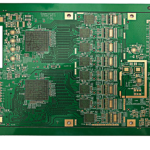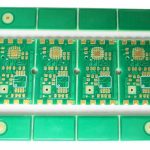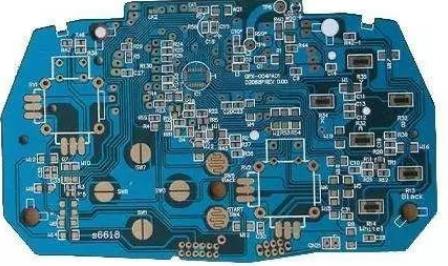
Today, almost all electronic products, including communication equipment, computers, medical devices, automotive electronics, industrial control systems, smartphones, and wearable devices, rely on Printed Circuit Board (PCB) technology. As one of the most important foundations of modern electronics, PCB provides electrical connections and mechanical support for electronic components, enabling complex circuits to operate efficiently and reliably.
The continuous development of PCB Technology has created the foundation for advanced electronic systems and has played a key role in the evolution of integrated circuits, semiconductor devices, and intelligent products. With increasing demands for miniaturization, higher performance, and greater reliability, PCB Manufacturing has developed from simple single-layer structures into advanced multilayer, HDI, and high-density interconnection technologies.
From consumer electronics to aerospace applications, Printed Circuit Board (PCB) technology has become an essential part of modern industrial development.
The Invention and Early Development of Printed Circuit Boards
The concept of the Printed Circuit Board (PCB) was developed by Austrian electrical engineer Paul Eisler in the 1930s. Eisler studied electrical engineering at the Vienna University of Technology and later focused on printing technology.
During his research on electronic circuit construction, Eisler considered whether electronic circuits could be produced using a printing method similar to newspapers or books. Instead of manually connecting wires and assembling components one by one, circuits could be printed directly onto insulating materials, significantly improving production efficiency and reliability.
Based on this idea, Eisler developed a manufacturing method that used copper foil laminated onto an insulating substrate. The unnecessary copper areas were removed through an etching process, leaving only the required conductive patterns.
This process created the basic structure of modern PCB Manufacturing:
- Insulating substrate material
- Copper conductive layers
- Printed circuit patterns
- Electronic component connections
Compared with traditional manual wiring methods, printed circuits provided better consistency, higher reliability, and easier mass production.
The Impact of PCB Technology on Electronics Development
The application of PCB Technology greatly simplified the mass production of electronic devices and established the foundation for automated manufacturing.
Since the 1950s, the rapid development of communication equipment, computers, and electronic products has been closely connected with advances in PCB Manufacturing technology.
As manufacturing precision improved, Printed Circuit Board (PCB) production entered a new stage. Similar to the printing industry, large circuit layouts could be reduced and transferred into compact circuit structures with higher integration and reliability.
This capability allowed engineers to design smaller and more powerful electronic systems. Complex circuits could now be integrated into compact boards, making PCB technology especially valuable for:
- Communication equipment
- Computer systems
- Industrial electronics
- Medical devices
- Automotive electronics
- Aerospace applications
The development of PCB Technology also provided the necessary foundation for the later invention of integrated circuits and semiconductor-based electronic systems.
The Importance of Printed Circuit Boards in Modern Electronics
Since its invention, PCB technology has developed for more than 60 years and has become a fundamental technology supporting modern society.
Without reliable Printed Circuit Board (PCB) manufacturing, many advanced technologies would not be possible, including:
- Computers
- Smartphones
- Communication networks
- Aerospace systems
- Automotive electronics
- Industrial automation equipment
- Medical electronic devices
Integrated circuits and semiconductor chips provide computing and processing capabilities, while PCB Manufacturing enables electrical connections, signal transmission, and mechanical integration between these components.
Therefore, PCB technology is considered one of the core foundations of the electronic information industry.
Types of Printed Circuit Boards
According to different structures and manufacturing methods, Printed Circuit Board (PCB) products can be divided into several main categories, including Single-Sided PCB, Double-Sided PCB, and Multilayer PCB.
Single-Sided PCB
A Single-Sided PCB is the simplest type of printed circuit board. It consists of an insulating substrate with copper foil applied on only one side.
During manufacturing, the circuit pattern is created through printing and etching processes, leaving the required copper traces for electrical connections.
Advantages of Single-Sided PCB include:
- Simple manufacturing process
- Low production cost
- Easy assembly
- High production efficiency
Single-sided boards are commonly used in basic electronic products such as:
- Radios
- Simple household appliances
- Low-complexity control circuits
However, because all circuit traces are located on one side, single-sided boards have limited wiring density and are not suitable for complex electronic systems.
Double-Sided PCB
A Double-Sided PCB contains copper layers on both sides of the insulating substrate. Through-hole technology is commonly used to connect circuits between the two copper layers.
Compared with single-sided boards, Double-Sided PCB provides:
- Higher wiring density
- Better circuit design flexibility
- More compact product structures
These boards are widely used in:
- Computer equipment
- Electronic instruments
- Industrial control systems
- General electronic products
The improved routing capability makes double-sided PCBs suitable for applications requiring moderate circuit complexity and reliability.
Multilayer PCB
A Multilayer PCB consists of three or more conductive layers separated by insulating materials. Multiple single-sided or double-sided circuit layers are laminated together to form a compact and highly integrated structure.
During Multilayer PCB manufacturing, internal circuit layers are connected through plated through holes. The hole walls are coated with copper to create electrical connections between different layers.
Advantages of Multilayer PCB include:
- Higher circuit density
- Better electrical performance
- Improved signal integrity
- Reduced product size
- Enhanced reliability
Modern high-performance electronic devices, including smartphones, servers, communication systems, and advanced industrial equipment, commonly use multilayer PCB structures.
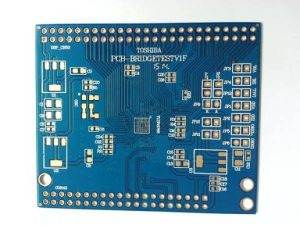
PCB Manufacturing Development Trends
With the continuous growth of electronic technology, PCB Manufacturing is moving toward higher precision, smaller dimensions, and greater reliability.
Future PCB development focuses on:
- Higher-density interconnection technology
- Advanced multilayer structures
- HDI PCB technology
- Better signal integrity control
- Improved thermal management
- Environmentally friendly manufacturing processes
As electronic products continue becoming smaller and more powerful, PCB Technology will remain a critical driving force behind innovation.
Kingda continues to focus on advanced Printed Circuit Board (PCB) manufacturing solutions, providing reliable PCB products that meet the requirements of modern electronic applications.
Conclusion
The invention and evolution of the Printed Circuit Board (PCB) completely transformed electronic manufacturing. From early simple circuit boards to today’s advanced Multilayer PCB structures, PCB technology has continuously supported the development of modern electronics.
Through continuous innovation in materials, manufacturing processes, and circuit design, PCB Manufacturing has become a highly precise and reliable industry.
As future electronic systems demand higher integration and performance, advanced PCB Technology will continue to play a vital role in communication, automotive, medical, industrial, and consumer electronics applications.