Medical PCB Prototyping HDI PCB : When Is It Needed?
Medical equipment plays a critical role in diagnosis, monitoring, treatment, and patient care. Its reliability, accuracy, and safety directly affect clinical performance and, in many applications, patient safety. As the hardware platform supporting signal transmission, component integration, power distribution, and system functionality, a Medical Device PCB must meet significantly higher requirements than a conventional consumer electronics board.
In advanced medical equipment such as diagnostic instruments, patient monitoring systems, imaging equipment, laboratory analyzers, and portable medical devices, Multilayer HDI PCB technology can provide the high routing density and compact interconnection required by increasingly sophisticated electronic systems.
Compared with conventional PCBs, medical multilayer HDI boards may require fine-line routing, microvias, controlled impedance, low signal loss, strong electromagnetic compatibility, reliable thermal performance, and consistent manufacturing quality. GOPCBA provides advanced PCB manufacturing capabilities covering multilayer, HDI, high-frequency, controlled-impedance, blind and buried-via technologies.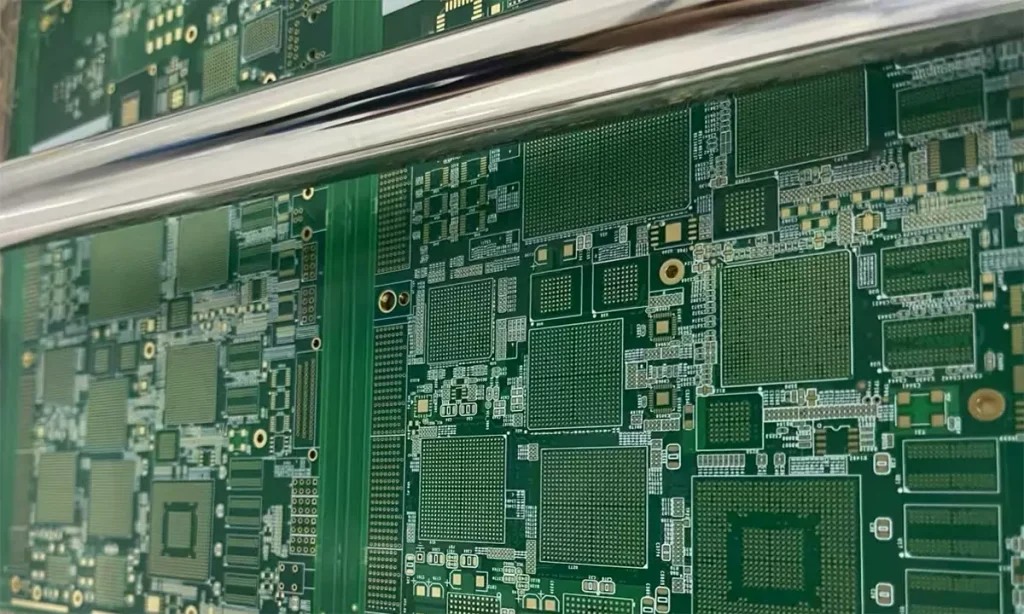
For these applications, prototyping is not simply an optional development step. A properly managed Medical PCB Prototyping process allows engineers to validate electrical performance, mechanical compatibility, manufacturability, and reliability before committing to larger production volumes.
So, when should medical equipment manufacturers consider PCB prototyping?
The initial development stage is one of the most important situations for PCB Prototype manufacturing.
Medical devices often require stable signal transmission, excellent noise immunity, compact mechanical integration, and reliable connections between sensors, processors, communication modules, and power circuits. Because the PCB serves as the electrical foundation of the entire system, design problems discovered after mass production can be expensive and time-consuming to correct.
A prototype allows engineers to physically evaluate the proposed board before large-scale manufacturing.
For example, a portable diagnostic device may require a compact PCB capable of supporting high-speed signal transmission while fitting into a limited enclosure. Prototype production can help engineers identify potential problems involving:
- High-density routing
- Signal crosstalk
- Layer-to-layer connectivity
- Thermal concentration
- Component clearance
- Connector positioning
- Mechanical fit
- Power distribution
For complex designs, HDI PCB Manufacturing can use microvias, blind vias, buried vias, fine-line structures, and sequential lamination to increase routing density without continuously increasing board dimensions.
Prototype testing also provides an opportunity to evaluate the PCB under simulated operating conditions. This may include temperature variation, humidity, electromagnetic interference, vibration, or other environmental conditions relevant to the final medical device.
Identifying these problems during engineering validation is considerably safer than discovering them after production has already begun.
Medical equipment is frequently upgraded throughout its product lifecycle. Engineers may increase processing speed, improve power efficiency, add communication functions, replace sensors, or introduce new electronic components.
Even a relatively small component or parameter change can affect PCB performance.
For example, replacing a sensor with a higher-frequency device may change the impedance, routing, noise, or power requirements of the circuit. The original PCB design may therefore require modifications to the stack-up, trace geometry, grounding structure, or component placement.
In this situation, a new prototype should be manufactured and tested before the modified design enters production.
A prototype can be used to verify:
- Signal integrity
- Controlled impedance
- Power stability
- Component compatibility
- Thermal performance
- Electromagnetic interference
- Mechanical compatibility
- Overall system functionality
For high-speed or high-frequency medical electronics, PCB geometry becomes increasingly important because trace width, dielectric thickness, copper thickness, material properties, and reference-plane configuration can directly influence transmission performance. GOPCBA supports controlled-impedance, high-frequency, multilayer, and HDI PCB technologies for demanding electronic applications.
Prototype production is especially important before a medical device transitions from engineering development to mass manufacturing.
A PCB that works correctly as a design concept may still encounter manufacturing challenges. Multilayer and HDI structures involve complex processes such as inner-layer fabrication, lamination, drilling, copper plating, laser drilling, via formation, and registration control.
A prototype run can provide valuable manufacturing data before production quantities increase.
Engineers can evaluate whether:

- The proposed stack-up can be manufactured consistently
- Layer registration meets design requirements
- Microvias and other via structures can be produced reliably
- Lamination quality is stable
- Fine-line circuits meet dimensional requirements
- Drilled holes maintain the required accuracy
- Surface finishes are suitable for assembly
- Electrical testing can be performed effectively
GOPCBA’s manufacturing capabilities include multilayer PCB fabrication, HDI, microvia technology, blind and buried vias, controlled impedance, and DFM engineering review. These technologies help engineers evaluate manufacturability before moving a complex PCB into larger-scale production.
For medical electronics, this step can significantly reduce the risk of discovering systemic manufacturing problems after mass production has started.
Medical devices are increasingly designed to support multiple applications and connected functions. A monitoring device, for example, may need to support additional sensors, wireless communication, data interfaces, or external medical accessories.
When new functionality is added, the PCB may require additional circuits, interfaces, or communication modules.
In this case, prototyping helps engineers verify whether the modified hardware can operate correctly within the existing system architecture.
For example, adding a wireless communication module to a patient monitoring device may require engineers to evaluate:
- Interface compatibility
- RF interference
- Power consumption
- Signal integrity
- Antenna connectivity
- Thermal behavior
- Mechanical clearance
For compact medical devices, an HDI PCB can provide additional routing capacity and shorter interconnections while helping engineers maintain a compact board footprint. HDI technology is particularly useful when conventional through-hole structures cannot provide sufficient routing density.
Prototype production allows the engineering team to validate these changes before introducing the upgraded product into clinical or commercial applications.
Supply chain changes represent another important reason to manufacture PCB prototypes.
Medical electronics often require long-term product consistency. Changing the PCB manufacturer, laminate supplier, copper specification, surface finish, or manufacturing process can introduce subtle differences that affect electrical, mechanical, or thermal performance.
Even when the new supplier claims to manufacture the same PCB specification, differences in material characteristics, lamination parameters, dimensional control, plating, or process capability can affect the final product.
A prototype comparison can help engineers evaluate the new production source against the original PCB.
Important validation items may include:
- Board thickness
- Layer registration
- Dielectric thickness
- Copper thickness
- Impedance
- Electrical continuity
- Insulation resistance
- Surface finish
- Solderability
- Thermal behavior
- Mechanical dimensions
This approach allows potential differences to be identified before the new supplier enters full-scale production.
For medical electronics, PCB prototyping is more than simply producing a small number of boards. It is an engineering validation process that connects design, manufacturing, testing, and production.
A properly managed prototype program can help manufacturers identify problems at an early stage, when design changes are still relatively inexpensive.
The benefits include:
- Earlier identification of design problems
- Verification of electrical performance
- Validation of mechanical integration
- Manufacturing feasibility assessment
- Component compatibility testing
- Thermal and signal integrity evaluation
- Reduced mass-production risk
- Improved production consistency
For advanced medical systems, the combination of multilayer construction, HDI technology, controlled impedance, and professional manufacturing engineering can provide a more reliable path from prototype to production.
A successful medical PCB development process should not treat prototyping and mass production as two completely separate activities.
Instead, the prototype should be designed with the eventual production process in mind.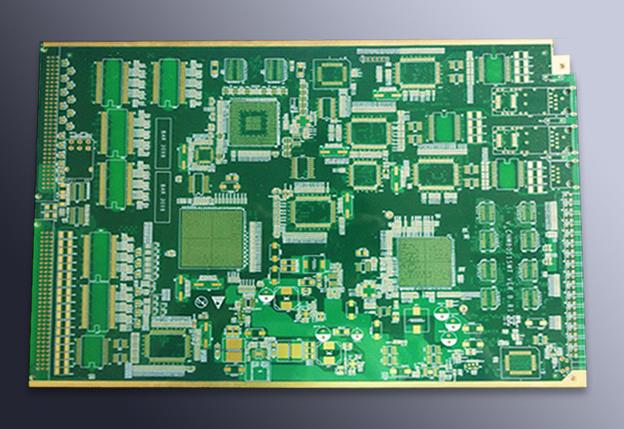
The development workflow can include:
- Design review and engineering analysis
- Stack-up and material selection
- DFM and manufacturability evaluation
- PCB prototype fabrication
- Electrical and functional testing
- Mechanical and environmental validation
- Design optimization
- Pilot production
- Mass production
This approach helps reduce the risk of major design changes when the project reaches the production stage.
For complex medical applications, GOPCBA provides PCB manufacturing solutions covering multilayer, HDI, high-frequency, high-TG, rigid-flex, controlled-impedance, and other advanced PCB technologies.
Medical equipment requires PCB technology that combines compact design, electrical stability, manufacturing consistency, and long-term reliability. As medical electronics become smaller and more sophisticated, multilayer and HDI technologies are increasingly important for supporting dense component layouts and complex signal interconnections.
Medical PCB Prototyping should be considered during the initial development stage, after major design or component changes, before mass production, during compatibility upgrades, and whenever suppliers, materials, or manufacturing processes change.
The core value of prototyping is simple: validate first, identify risks early, and manufacture at scale with greater confidence.
For medical equipment manufacturers developing high-density and high-reliability electronics, selecting an experienced PCB manufacturing partner can make the transition from engineering prototype to stable production significantly more efficient.