Rigid-Flex PCB Solutions for Medical Devices
Medical electronics place demanding requirements on electrical reliability, mechanical flexibility, compact integration, and manufacturing consistency. As medical technology continues to move toward miniaturization, precision diagnostics, minimally invasive procedures, and portable healthcare devices, conventional rigid circuit boards may no longer provide sufficient design flexibility.
Rigid-Flex PCB technology combines the mechanical stability of rigid circuit boards with the flexibility of flexible circuits. This hybrid construction allows engineers to create compact three-dimensional electronic assemblies while reducing the need for connectors, cables, and additional interconnections.
For medical equipment manufacturers, this makes rigid-flex technology an effective solution for applications where space, signal integrity, reliability, and mechanical integration are critical. GOPCBA provides advanced PCB manufacturing and assembly solutions for demanding medical electronics, supporting complex multilayer, HDI, flexible, and rigid-flex PCB requirements.
1. Core Requirements for Rigid-Flex PCBs in Medical Equipment
Medical equipment operates under more dhttps://www.gopcba.com/。emanding conditions than many conventional consumer electronic products. Diagnostic systems may need to maintain stable signal transmission for extended periods, while therapeutic equipment can be exposed to repeated movement, vibration, temperature changes, and frequent operating cycles.
At the same time, modern medical devices are becoming smaller and more integrated. Portable monitors, surgical instruments, diagnostic equipment, and wearable healthcare devices often have extremely limited internal space.
A conventional rigid PCB has limited ability to conform to irregular mechanical structures. A flexible PCB can solve routing and space problems but may not provide sufficient mechanical support for heavier components.
A Rigid-Flex PCB combines both advantages. The rigid sections provide stable mounting areas for processors, sensors, connectors, and other critical components, while the flexible sections can bend, fold, or conform to the internal mechanical structure.
This combination can help engineers:
- Reduce cable and connector requirements
- Improve internal space utilization
- Simplify three-dimensional circuit routing
- Reduce assembly interfaces
- Improve mechanical integration
- Support compact medical product designs
- Improve overall interconnection reliability
For medical electronics that require both mechanical flexibility and stable component mounting, rigid-flex technology can provide a more integrated alternative to conventional rigid-board and cable-based architectures.
2. Rigid-Flex PCB Solutions for Diagnostic Medical Equipment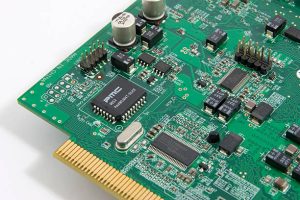
Diagnostic equipment relies heavily on accurate signal acquisition and stable data transmission. Equipment such as ultrasound systems, laboratory analyzers, patient monitoring devices, and other diagnostic platforms may contain multiple sensors, signal-processing circuits, displays, communication interfaces, and power-management modules.
These systems often require complex internal wiring. Conventional cables and connectors can occupy valuable space and introduce additional connection points that may affect assembly complexity and long-term reliability.
A properly designed Medical PCB can integrate multiple circuit functions into a compact electronic architecture.
For example, a rigid-flex structure can connect sensors or signal acquisition modules to a rigid PCB containing processing components. The flexible section can follow the mechanical shape of the device while maintaining the electrical connection between functional areas.
This approach can provide several benefits:
Improved Signal Routing
Shorter and more integrated interconnections can help reduce unnecessary connection points and simplify signal paths.
Better Space Utilization
Flexible sections can be folded around mechanical structures, allowing electronic components to be positioned more efficiently inside compact medical equipment.
Reduced Connector Dependence
Replacing some cable-and-connector assemblies with an integrated rigid-flex structure can simplify the overall electronic architecture.
Improved Mechanical Integration
The flexible portion can accommodate movement or changes in mechanical geometry while the rigid sections provide stable mounting surfaces for components.
GOPCBA supports medical PCB technologies including multilayer, HDI, flexible, and rigid-flex structures for applications requiring compact and reliable electronic integration.
3. Rigid-Flex PCB Applications in Therapeutic Equipment
Therapeutic medical equipment places particularly high demands on reliability because electronic systems may directly control mechanical movement, energy delivery, monitoring functions, or other critical operations.
Minimally invasive surgical instruments are a good example. These devices often require electronic circuits to operate inside narrow mechanical structures while accommodating movement and repeated bending.
A rigid-flex circuit can be designed with rigid sections for mounting processors, sensors, drivers, or other components, while the flexible section follows the movement or geometry of the instrument.
This architecture can reduce the number of separate wires and connectors inside the device.
Flexible Interconnection for Surgical Instruments
In minimally invasive equipment, available space is extremely limited. A flexible circuit section can be routed through narrow mechanical areas and shaped according to the instrument’s internal structure.
When properly designed and manufactured, the flexible portion can accommodate controlled mechanical movement without compromising electrical connectivity.
Stable Component Mounting
The rigid portions of the board provide stable surfaces for mounting electronic components. This is particularly useful when components require controlled placement and mechanical support.
Simplified Assembly
An integrated rigid-flex structure can replace multiple separate PCBs, wires, and connectors, potentially simplifying assembly and reducing the number of individual interconnection points.
For complex medical products, this integrated approach can also simplify manufacturing and inspection because fewer separate cable assemblies are required.
4. Flexible PCB Technology for Portable Medical Devices
Portable healthcare products continue to become smaller and lighter. Patient monitors, wearable health devices, handheld diagnostic equipment, and portable medical instruments must often accommodate batteries, displays, sensors, processors, communication modules, and other components within a compact enclosure.
A conventional rigid PCB may restrict how these components can be arranged. Flexible PCB technology provides greater freedom because the circuit can bend around mechanical structures and utilize available three-dimensional space.
For example, a portable monitoring device may use a flexible circuit to connect sensors located on different parts of the enclosure to a central processing board.
This can help engineers achieve:
- Smaller product dimensions
- Lower assembly weight
- More efficient internal space utilization
- Reduced cable requirements
- Greater freedom in mechanical design
- More compact electronic integration
For applications requiring both flexible routing and rigid component-mounting areas, rigid-flex technology can provide an even more integrated solution.
GOPCBA supports flexible and rigid-flex PCB assembly configurations, including single-sided, double-sided, multilayer, HDI, and rigid-flex structures.
5. Manufacturing Considerations for Medical Rigid-Flex PCBs
The performance of a medical rigid-flex circuit depends not only on the circuit design but also on material selection, stack-up engineering, lamination, drilling, plating, assembly, and inspection.
A reliable PCB Manufacturing process should therefore consider the complete product architecture before production begins.
Material Selection
Materials should be selected according to the electrical, mechanical, thermal, and environmental requirements of the specific application.
Depending on the design, engineers may need to evaluate:
- Flexible dielectric materials
- Rigid laminate systems
- Copper thickness
- High-TG materials
- Adhesive systems
- Coverlay materials
- Surface finishes
- Thermal requirements
- Signal-frequency requirements
For high-reliability medical electronics, material selection should be evaluated together with the intended operating environment and product specifications rather than based solely on initial material cost.
Stack-Up and Mechanical Design
Rigid-flex designs require careful control of the transition between rigid and flexible regions.
The design should consider:
- Bend radius
- Flexible-layer construction
- Copper distribution
- Layer alignment
- Rigid-flex transition geometry
- Component placement
- Mechanical stress
- Via locations
- Clearance requirements
Poorly controlled mechanical design can create unnecessary stress in the flexible region and affect long-term reliability.
Manufacturing Process Control
Rigid-flex production involves multiple manufacturing stages, including material preparation, circuit formation, drilling, lamination, plating, solder mask or coverlay processing, surface finishing, routing, and final inspection.
Process consistency is especially important for complex medical electronics where reliability and repeatability are essential.
6. PCB Assembly and Quality Control for Medical Electronics
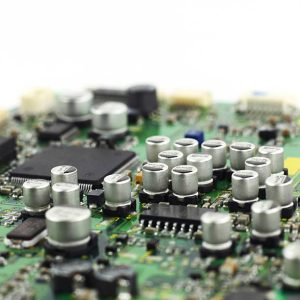
PCB fabrication is only one part of the complete manufacturing process. Medical electronic products also require accurate component placement, soldering, inspection, and testing.
A complete PCB Assembly process may include:
- Component sourcing
- SMT assembly
- Through-hole assembly
- AOI inspection
- X-ray inspection
- Electrical testing
- Functional testing
- Final inspection
- Packaging and delivery
For complex rigid-flex assemblies, assembly processes should account for the different mechanical characteristics of rigid and flexible regions.
Component placement, soldering profiles, fixture design, handling procedures, and inspection methods should all be evaluated according to the board structure and product requirements.
GOPCBA provides integrated PCB fabrication and PCBA services, helping customers coordinate PCB manufacturing, component sourcing, assembly, inspection, and testing through a unified production workflow.
7. Why Choose Rigid-Flex PCB Technology for Medical Devices?
Rigid-flex PCB technology provides several advantages for medical equipment designers.
Compact Three-Dimensional Integration
Flexible sections allow the circuit to conform to complex internal structures, enabling engineers to make better use of available space.
Reduced Cables and Connectors
Integrating flexible interconnections directly into the PCB structure can reduce the number of cables, connectors, and individual connection points.
Improved Mechanical Integration
Rigid sections provide stable mounting areas, while flexible sections accommodate controlled movement and bending.
Simplified Electronic Architecture
Replacing multiple rigid boards and cable assemblies with a single integrated rigid-flex structure can simplify the overall design.
Support for Miniaturized Medical Devices
Rigid-flex technology is particularly useful for portable, wearable, handheld, and minimally invasive medical products where size and weight are important design factors.
8. From Prototype to Production
Medical electronics often require several development stages before entering volume production. Engineering prototypes are used to verify electrical performance, mechanical integration, thermal behavior, and manufacturability.
A capable manufacturing partner should therefore support the complete transition from prototype development to low-volume production and eventual mass production.
GOPCBA provides PCB manufacturing and assembly support across different product-development stages, including prototype, low-volume, and production requirements. Early engineering review can also help identify DFM, material, stack-up, component, and assembly risks before production begins.
For medical PCB projects, customers can provide Gerber files, BOM files, assembly drawings, stack-up information, and technical specifications for engineering evaluation.
Conclusion
As medical equipment becomes smaller, more intelligent, and more mechanically integrated, conventional PCB architectures may not always provide sufficient design flexibility.
Rigid-Flex PCB technology combines the structural stability of rigid circuit boards with the flexibility of flexible circuits, making it suitable for diagnostic equipment, surgical instruments, portable monitors, wearable healthcare products, laboratory equipment, and other compact medical electronics.
By integrating flexible interconnections with stable component-mounting areas, rigid-flex technology can reduce cables and connectors, improve space utilization, simplify assembly, and support more compact product architectures.
GOPCBA provides integrated Medical PCB, Flexible PCB, PCB Manufacturing, and PCB Assembly solutions for demanding electronic applications. From engineering review and prototype development to production manufacturing and assembly, GOPCBA can support medical electronics manufacturers with advanced PCB technologies and integrated manufacturing capabilities.
For your next medical rigid-flex PCB project, contact GOPCBA with your Gerber files, BOM, drawings, and technical requirements for engineering evaluation and quotation.