Automotive PCB Power Management PCB Manufacturing | GOPCBA
Power management systems serve as a critical part of modern vehicle electrical architecture, coordinating power distribution, conversion, monitoring, and control across multiple electronic systems. As vehicles become increasingly electrified and intelligent, the performance and reliability of the circuit boards used in these systems have become more important than ever.
Unlike conventional consumer electronics, automotive power electronics must operate under demanding conditions, including temperature fluctuations, continuous vibration, electrical noise, humidity, mechanical stress, and long service cycles. Therefore, Automotive PCB Manufacturing requires careful control of materials, copper structures, thermal performance, electrical insulation, fabrication processes, and reliability testing.
For applications involving battery management, DC/DC conversion, motor control, charging systems, power distribution, and other high-load electronics, a properly engineered Power Management PCB must balance current-carrying capability, heat dissipation, signal integrity, mechanical durability, and manufacturability.
1. Material Selection for Automotive Power Management PCBs
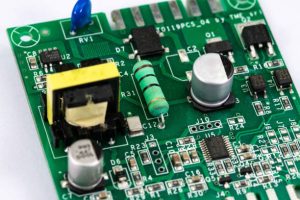
Material selection is one of the first considerations when developing an automotive power management circuit board. The selected laminate system must support the electrical, thermal, mechanical, and environmental requirements of the intended vehicle application.
Automotive electronics may experience significant temperature changes during operation. The PCB material therefore needs appropriate thermal stability and dimensional stability to minimize the risk of warpage, delamination, or other reliability problems.
Depending on the application, engineers may evaluate standard FR-4, high-TG materials, specialized high-performance laminates, heavy-copper constructions, and other materials according to the electrical and thermal requirements of the design.
For high-power applications, copper weight is also an important consideration. Increasing copper thickness can improve current-carrying capability and reduce resistive losses, although the final design must balance copper thickness with etching, plating, thermal expansion, manufacturability, and cost.
GOPCBA supports a wide range of PCB materials and constructions, including standard and high-TG FR-4, high-performance materials, aluminum-backed PCB structures, and heavy-copper solutions.
2. Core Automotive PCB Manufacturing Process
The production of an automotive power management board involves multiple controlled manufacturing stages. Each stage can affect the final electrical and mechanical performance of the PCB.
Copper Lamination and Layer Construction
For multilayer power boards, copper foil and dielectric materials are laminated together according to the specified stack-up.
The lamination process must control temperature, pressure, heating and cooling rates, and vacuum conditions to achieve reliable bonding between layers.
A properly controlled stack-up helps maintain:
- Layer-to-layer registration
- Dielectric thickness
- Electrical insulation
- Controlled impedance where required
- Mechanical stability
- Reliable copper interconnection
For complex automotive power boards, the stack-up should be evaluated together with current distribution, thermal requirements, component placement, and signal routing.
Drilling and Via Formation
Drilling creates through-holes and other interconnection structures required to connect different PCB layers.
For power management applications, via design is particularly important because current may need to move between multiple copper layers.
Depending on the design, engineers may use conventional through vias, blind vias, buried vias, thermal vias, or arrays of parallel vias.
The drilling process must maintain accurate hole diameter, position, and aspect ratio. After drilling, hole-wall preparation and copper plating create the conductive path between layers.
Circuit Imaging and Etching
Circuit imaging transfers the designed copper pattern onto the PCB.
A typical process involves applying a photosensitive dry film, exposing the circuit pattern, developing the image, and etching unwanted copper.
For automotive power boards, line width and copper thickness must be controlled carefully because the conductor geometry directly affects current capacity, resistance, thermal behavior, and manufacturability.
Automated optical inspection can then be used to identify potential defects such as opens, shorts, missing copper, excessive copper, and other pattern abnormalities.
3. High-Current PCB Design and Manufacturing
Automotive power management systems often handle substantially higher current than conventional low-power control electronics.
This makes High-Current PCB technology particularly important for applications such as battery systems, power converters, motor controllers, charging systems, and vehicle power distribution.
Several factors influence current-carrying capability.
Copper Thickness
Thicker copper can provide a larger conductive cross-section and reduce electrical resistance.
For demanding power applications, heavy-copper construction may be considered when standard copper weights cannot provide the required current capacity.
Trace Width and Copper Area
Wider traces and larger copper areas can distribute current more effectively and reduce localized heating.
Power and ground planes may also be optimized to create low-resistance current paths.
Via Arrays
When current must transition between PCB layers, multiple parallel vias can be used to distribute current and reduce localized electrical and thermal stress.
Thermal Management
High current produces heat through electrical resistance. Therefore, copper distribution, thermal vias, component placement, heat sinks, and other thermal structures should be considered together.
GOPCBA provides power PCB manufacturing solutions supporting customized copper weights and heavy-copper structures for applications requiring high current capacity and improved thermal performance.
4. Solder Mask and Surface Finish
The solder mask provides electrical insulation and protects exposed copper from environmental contamination and oxidation.
For automotive power management boards, the solder mask system must be compatible with the required assembly process and operating environment.
After solder mask processing, the PCB may receive a suitable surface finish according to component, soldering, reliability, and application requirements.
Common PCB surface finishes include:
- ENIG
- HASL
- Lead-free HASL
- OSP
- Immersion Tin
- Immersion Silver
- ENEPIG
The correct surface finish should be selected based on factors such as solderability, component requirements, storage conditions, contact performance, and production volume.
GOPCBA supports multiple surface finishes for different PCB applications, including ENIG, HASL, OSP, immersion tin, immersion silver, ENEPIG, and gold-related finishes.
5. Thermal Management in Automotive Power PCBs
Thermal management is one of the most important considerations in automotive power electronics.
Power devices such as MOSFETs, IGBTs, regulators, and other switching components can generate significant heat during operation. If heat is not effectively transferred away from these components, excessive temperature can accelerate component degradation and reduce system reliability.
A properly designed Power Management PCB can use several thermal strategies.
Large Copper Areas
Large copper areas can help spread heat across the board and reduce localized temperature concentrations.
Thermal Vias
Thermal vias can transfer heat from component pads or copper regions toward internal copper planes or the opposite side of the PCB.
Heat Sink Integration
High-power applications may require direct or indirect heat-sink integration.
The thermal path may include:
Component → PCB Copper → Thermal Interface → Heat Sink
The mechanical alignment between the PCB, power components, thermal interface materials, and heat sink should be controlled during assembly.
Component Placement
High-power components should be positioned according to the thermal architecture of the system.
Separating heat-generating components from temperature-sensitive components can help improve overall thermal stability.
GOPCBA’s power PCB solutions support thermal design considerations including copper distribution, thermal vias, heat-spreading structures, and heat-sink integration.
6. EMI and Signal Integrity Considerations
Automotive power management systems often contain high-current switching circuits alongside sensitive control and communication electronics.
Rapid switching transitions can generate electromagnetic interference that may affect nearby circuits if the PCB architecture is not properly controlled.
Therefore, automotive PCB design and manufacturing should consider:
- Power loop area
- Ground return paths
- Power and signal separation
- Layer stack-up
- Shielding structures
- Decoupling
- High-speed signal routing
- Controlled impedance where required
For complex systems, the power domain and control domain may be physically separated to reduce unwanted coupling.
This is particularly important for battery management systems, motor controllers, EV power electronics, and other systems where high-current switching circuits operate alongside low-voltage monitoring and communication circuits.
7. Automotive PCB Manufacturing Quality Control
Reliable automotive electronics require quality control throughout the complete production process rather than relying only on final inspection.
A structured Automotive PCB manufacturing process may include incoming material inspection, process monitoring, automated optical inspection, dimensional inspection, electrical testing, and final quality verification.
Automated Optical Inspection
AOI can inspect PCB patterns for defects such as:
- Open circuits
- Short circuits
- Incorrect copper geometry
- Missing pads
- Pattern abnormalities
- Registration problems
Electrical Testing
Electrical testing can verify circuit continuity and identify potential open or short circuits.
Depending on the product requirements, additional electrical or functional testing may also be performed after assembly.
Dimensional Inspection
Dimensional inspection verifies critical board dimensions, hole positions, thickness, and other mechanical specifications.
This is particularly important when the PCB must fit precisely into an automotive enclosure or mechanical assembly.
Reliability Verification
Automotive applications may require additional reliability evaluation based on the product’s operating environment and customer specifications.
Potential testing categories include:
- Thermal cycling
- High-temperature exposure
- Humidity testing
- Vibration testing
- Mechanical stress testing
- Electrical reliability testing
- Insulation and dielectric testing
The exact qualification program should be determined according to the intended application, customer specifications, and applicable automotive requirements.
8. Automotive Power Management PCB Applications
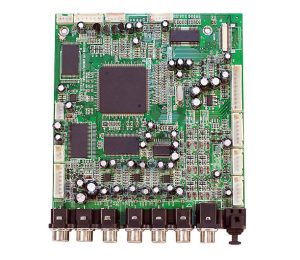
Automotive power management boards are used across both conventional and electrified vehicles.
Battery Management Systems
Battery management systems monitor and control battery voltage, current, temperature, balancing, protection, and communication.
For these applications, PCB design must balance high-current paths with low-voltage sensing and communication circuits.
GOPCBA provides custom BMS PCBA manufacturing solutions involving high-voltage and high-current PCB structures, heavy copper, thermal management, and system-level testing.
DC/DC Converters
DC/DC converters regulate electrical energy between different voltage domains.
Their PCBs must accommodate switching components, inductors, capacitors, power traces, thermal structures, and control circuits within a compact architecture.
Motor Controllers
Electric and hybrid vehicles rely on electronic motor control systems to regulate motor operation.
These applications can require high-current copper structures, robust thermal management, and reliable assembly of power semiconductor components.
On-Board Chargers
On-board chargers convert external electrical power into the appropriate battery charging power.
Their PCB assemblies must handle high voltage, high current, switching noise, thermal stress, and long operating cycles.
Automotive Power Distribution
Power management PCBs can also be used to distribute and monitor electrical power across vehicle subsystems.
As vehicle architectures become increasingly electronic, reliable power distribution is becoming an important part of overall vehicle system design.
9. PCB Assembly for Automotive Power Electronics
PCB fabrication is only one part of the manufacturing process. After the bare board is manufactured, component placement and soldering quality become equally important.
For automotive power electronics, PCB Assembly may combine SMT and through-hole technologies depending on the component types and mechanical requirements.
Assembly processes can include:
- SMT component placement
- Through-hole assembly
- Mixed-technology assembly
- Reflow soldering
- Selective soldering
- AOI inspection
- X-ray inspection
- Electrical testing
- Functional testing
Power semiconductor packages and large components may require special attention to solder-joint quality, thermal interfaces, mechanical reinforcement, and component alignment.
For complex power electronics, integrated PCB fabrication and assembly can simplify production coordination and improve consistency between the bare-board and assembly stages.
GOPCBA provides integrated PCB manufacturing and assembly services, including component sourcing, SMT, DIP, testing, and one-stop electronics manufacturing support.
10. DFM and Production Optimization
Design for Manufacturability is especially important for automotive power management boards because these products often combine thick copper, multilayer structures, high-current paths, thermal requirements, and complex component assemblies.
Before production, engineering teams should review:
- PCB stack-up
- Copper weight
- Trace width and spacing
- Via structures
- Component clearances
- Thermal paths
- Creepage and clearance
- Assembly accessibility
- Surface finish
- Testing requirements
Early DFM analysis can identify potential manufacturing problems before prototypes are produced.
For complex automotive projects, this can reduce unnecessary design iterations and improve the transition from prototype to stable production.
GOPCBA supports DFM and DFMA engineering services as part of its integrated electronics manufacturing workflow.
11. Why Choose GOPCBA for Automotive Power PCB Manufacturing?
Selecting the right manufacturing partner is important when a PCB must operate under high current, thermal stress, vibration, and demanding environmental conditions.
GOPCBA provides integrated PCB manufacturing and assembly services for automotive and other high-reliability electronic applications.
Engineering Support
GOPCBA can review PCB files, stack-ups, material specifications, copper weights, and manufacturing requirements to identify potential production risks.
High-Current Manufacturing
The company supports heavy-copper and power PCB structures for applications requiring higher current-carrying capability and improved thermal performance.
Automotive PCB Capability
GOPCBA provides automotive PCB manufacturing solutions for vehicle control electronics, power management systems, battery systems, and other automotive applications.
Integrated Assembly
Combining PCB fabrication with component sourcing and assembly can reduce supplier handoffs and simplify production management.
Quality and Reliability
GOPCBA provides PCB fabrication, assembly, inspection, testing, and production support through an integrated manufacturing workflow. Its capabilities include multilayer PCB fabrication, specialized materials, advanced interconnect structures, and multiple surface finishes.
Conclusion
Automotive power management PCB manufacturing is a comprehensive engineering process involving material selection, copper design, multilayer construction, drilling, plating, circuit formation, thermal management, surface finishing, assembly, and reliability testing.
As vehicle electrification and electronic integration continue to accelerate, the demand for reliable Automotive PCB, Power Management PCB, and High-Current PCB solutions will continue to grow.
For high-power applications, Heavy Copper PCB technology can provide increased copper cross-sectional area and improved current-carrying capability when properly integrated into the overall thermal and electrical design.
GOPCBA provides customized Automotive PCB Manufacturing and PCB assembly solutions for battery management systems, DC/DC converters, motor controllers, charging systems, power distribution modules, and other demanding automotive electronics.
From engineering review and prototype manufacturing to PCB fabrication, component assembly, inspection, and testing, GOPCBA provides an integrated manufacturing workflow designed to help customers develop reliable and production-ready automotive electronic products.