Medical PCB Monitor and ECG PCB Manufacturing
Patient monitors and electrocardiogram (ECG) machines are essential medical electronics used to continuously capture and process critical physiological information. Patient monitors may measure heart rate, blood oxygen saturation, blood pressure, temperature, and other vital parameters, while ECG equipment records the electrical activity of the heart for clinical evaluation.
Behind these systems is a carefully engineered PCB that connects sensors, analog front-end circuits, processors, communication interfaces, displays, and power-management circuits. Therefore, Medical PCB Manufacturing requires much tighter control over signal integrity, material selection, electrical performance, assembly quality, and process consistency than many general-purpose electronics applications.
For manufacturers developing patient monitoring equipment, ECG machines, portable diagnostic systems, and other healthcare electronics, the PCB must maintain stable performance throughout the product lifecycle.
Why PCB Performance Matters in Patient Monitoring Equipment
Patient monitoring and ECG systems process relatively small physiological signals. These signals can be affected by electromagnetic interference, power-supply noise, grounding problems, crosstalk, poor routing, or manufacturing variations.
A properly designed Patient Monitor PCB must therefore provide a stable electrical environment for sensitive analog and digital circuits.
Low-Noise Signal Acquisition
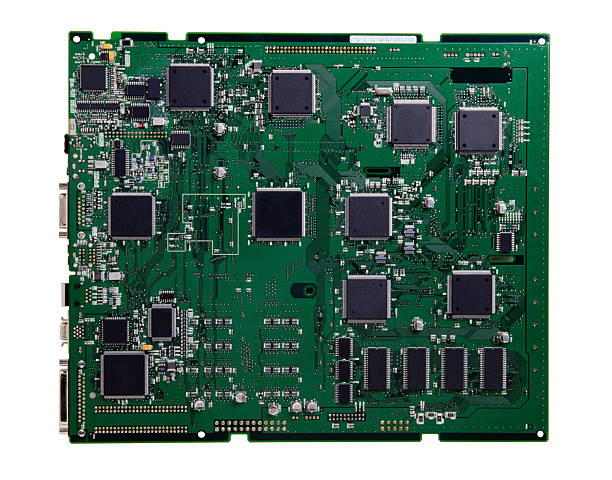
ECG signals are particularly sensitive to electrical noise because the physiological signals being measured are relatively low in amplitude. The PCB layout should separate sensitive analog circuits from noisy digital and power sections wherever possible.
Important design considerations may include:
- Short and controlled signal paths
- Proper grounding strategies
- Separation of analog and digital sections
- Controlled return-current paths
- Appropriate power filtering
- EMI/EMC considerations
- Controlled impedance where required
- Careful component placement
These measures help preserve signal quality from the sensor interface through amplification, analog-to-digital conversion, processing, and communication.
GOPCBA’s dedicated Medical PCB manufacturing capabilities support medical electronics requiring controlled impedance, multilayer structures, HDI technology, stable materials, and reliable fabrication and assembly processes.
Material Selection for Medical Monitor and ECG PCBs
Medical electronics may operate continuously for extended periods, making PCB material selection an important part of reliability engineering.
The appropriate laminate should be selected according to the electrical, mechanical, thermal, environmental, and dimensional requirements of the specific application.
Key Material Considerations
Depending on the design, engineers may evaluate:
- Dielectric performance
- Thermal stability
- Moisture resistance
- Mechanical strength
- Dimensional stability
- Operating temperature
- Signal frequency
- Layer count
- Copper structure
- Required service life
For compact monitoring equipment, multilayer PCB construction can provide additional routing space while allowing sensitive signal, power, and ground structures to be separated more effectively.
Material selection should therefore be considered together with stack-up design, impedance requirements, component density, and the intended operating environment rather than treated as an isolated manufacturing decision.
PCB Manufacturing Process for Medical Electronics
A reliable medical board begins with engineering review and continues through fabrication, inspection, assembly, and testing.
Engineering Review and DFM Analysis
Before production, the manufacturing team should review the Gerber files, PCB stack-up, drill information, component footprints, BOM, assembly drawings, and technical specifications.
DFM analysis can identify potential manufacturing problems before fabrication begins, including:
- Insufficient trace spacing
- Inappropriate drill sizes
- Difficult-to-manufacture footprints
- Soldering access problems
- Poor panel utilization
- Component clearance issues
- Manufacturing tolerances
- Assembly constraints
Early engineering review can reduce unnecessary redesigns and improve consistency between prototype and production builds.
Multilayer PCB Fabrication
Modern medical monitoring equipment often requires high circuit density within a compact enclosure. Multilayer PCB construction can provide dedicated routing space for power, ground, analog signals, digital signals, and other circuit functions.
For more complex designs, HDI, microvia, fine-pitch routing, and rigid-flex technologies can further increase integration density.
GOPCBA’s medical PCB manufacturing portfolio includes multilayer, HDI, flexible, rigid-flex, high-TG, controlled-impedance, and other advanced PCB technologies for demanding healthcare electronics.
ECG PCB Design for Accurate Biosignal Acquisition
An ECG PCB has particularly demanding signal-acquisition requirements. The circuit board must provide a clean electrical environment for electrodes, analog front-end amplifiers, filters, ADC interfaces, processors, and communication circuits.
Analog Front-End Layout
The analog front end is one of the most sensitive sections of an ECG system. PCB designers should carefully control the distance between low-level signal paths and potential noise sources.
Good design practices may include:
- Keeping sensitive analog traces short
- Separating high-speed digital signals
- Minimizing unnecessary coupling
- Using appropriate ground structures
- Providing clean power to analog circuits
- Controlling parasitic capacitance where important
- Optimizing component placement around the signal chain
Manufacturing accuracy is equally important because small variations in PCB geometry, vias, copper structures, or soldering quality can affect overall electrical consistency.
Reliability Requirements for Patient Monitor PCBs
Medical equipment may operate continuously in hospitals, clinics, laboratories, ambulances, and home-care environments. Portable equipment can also experience repeated movement, transportation, and mechanical handling.
A reliable Medical PCBA therefore requires more than a functional bare PCB.
Important reliability factors include:
Electrical Reliability
The PCB and assembly should maintain stable:
- Electrical connections
- Insulation performance
- Signal transmission
- Power distribution
- Grounding
- Solder joints
Mechanical Reliability
The board should also withstand the mechanical conditions associated with the finished equipment, including vibration, handling, thermal cycling, and enclosure integration where applicable.
Environmental Stability
Material and finish selection should consider the actual operating environment. Temperature, humidity, cleaning processes, and long-term operating conditions can all influence PCB reliability.
The exact environmental requirements should be defined according to the medical device design and applicable customer specifications.
PCB Assembly for Medical Monitoring Equipment
PCB fabrication is only one part of the manufacturing process. For patient monitors and ECG machines, component placement and soldering quality are equally important.
Medical electronics may contain fine-pitch ICs, sensors, processors, connectors, analog components, power-management devices, and communication modules. These components must be assembled consistently to maintain electrical and mechanical reliability.
GOPCBA provides integrated PCB fabrication and assembly services, including component sourcing, SMT, THT, inspection, testing, and finished-product integration.
SMT Assembly
Surface-mount technology enables compact component placement and supports high-density medical electronics.
Critical assembly controls include:
- Solder paste printing
- Component placement accuracy
- Reflow profile control
- Solder-joint inspection
- Component orientation
- Fine-pitch placement
- Process traceability
For prototype and production programs, consistent SMT processes help reduce assembly variation between batches.
Inspection and Testing of Medical PCBs
Quality control is especially important when a PCB is used in equipment responsible for monitoring patient information.
A comprehensive manufacturing process may include several inspection and testing stages.
Bare PCB Inspection
Typical checks can include:
- Visual inspection
- Dimensional inspection
- Electrical continuity testing
- Insulation verification
- Hole and via inspection
- Surface-finish inspection
PCBA Inspection
After component assembly, manufacturers may use:
- AOI
- X-ray inspection
- ICT
- Functional testing
- Visual inspection
- Electrical testing
The appropriate combination depends on the PCB structure, component package, application, and customer requirements.
For medical electronics, traceability and documented inspection records can also help support quality investigations, process control, and production consistency. GOPCBA’s published medical PCB services include PCB fabrication, assembly, testing, engineering support, and process control.
Supporting Compact and Portable Medical Devices
Medical equipment is increasingly becoming smaller and more portable. Patient monitors, handheld ECG devices, wearable healthcare products, and portable diagnostic instruments all require more functions within limited PCB space.
This trend is increasing demand for:
- Multilayer PCB
- HDI PCB
- Fine-pitch assembly
- Flexible PCB
- Rigid-flex PCB
- Miniaturized components
- High-density routing
Advanced PCB technologies allow engineers to increase functional density without simply increasing board dimensions.
For applications requiring mechanical flexibility or three-dimensional packaging, flexible and rigid-flex PCB technologies can also reduce the need for conventional cable interconnections.
Medical PCB Manufacturing for Different Applications
The same manufacturing approach does not necessarily fit every medical electronic product.
Patient Monitoring Systems
Patient monitors typically combine multiple sensor interfaces, analog front ends, digital processors, displays, communication modules, and power-management circuits.
The PCB must provide stable signal acquisition while supporting continuous operation.
ECG Equipment
ECG systems require particularly careful control of low-level analog signals. Grounding, shielding, filtering, component placement, and PCB routing all contribute to signal quality.
Portable Diagnostic Equipment
Portable equipment places additional emphasis on compact dimensions, mechanical durability, power efficiency, and reliable connectors.
Laboratory and Healthcare Electronics
Laboratory analyzers and healthcare control systems may combine analog, digital, power, sensing, communication, and thermal-control functions on the same PCB assembly.
These applications may require different combinations of multilayer construction, controlled impedance, high-TG materials, HDI, flexible circuits, and specialized assembly processes.
From Prototype to Production
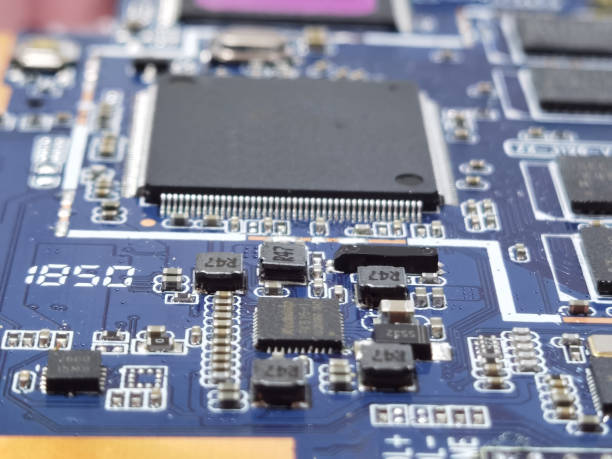
Medical electronics often move through several development stages, beginning with engineering prototypes and progressing to pilot production and volume manufacturing.
A manufacturing partner should be able to maintain consistency as the project moves between these stages.
During prototyping, engineers can verify:
- Signal performance
- PCB dimensions
- Component compatibility
- Assembly feasibility
- Thermal behavior
- Mechanical integration
- Functional performance
After design validation, production processes can be optimized for repeatability, yield, cost, and delivery requirements.
GOPCBA supports medical electronics through PCB fabrication, component sourcing, SMT/THT assembly, inspection, testing, and integrated manufacturing services.
Why Choose GOPCBA for Medical PCB Manufacturing?
Medical electronics require a manufacturing partner that understands the relationship between PCB design, fabrication, assembly, inspection, and final product performance.
GOPCBA provides an integrated manufacturing approach covering PCB manufacturing and PCBA production. Its published capabilities include medical PCB fabrication, multilayer and HDI technologies, component procurement, SMT/THT assembly, testing, and engineering support.
This integrated workflow can help reduce supplier handoffs and improve communication between engineering, procurement, PCB fabrication, and assembly teams.
For customers developing patient monitors, ECG equipment, portable diagnostic devices, laboratory electronics, and other healthcare products, manufacturing requirements can be evaluated according to the specific design, application, and production stage.
Conclusion
Reliable Medical PCB Manufacturing is essential for patient monitors, ECG machines, and other healthcare electronics that depend on accurate signal acquisition and stable operation.
From low-noise PCB layout and appropriate material selection to multilayer fabrication, precision assembly, inspection, and electrical testing, every stage can influence the reliability of the finished medical electronic system.
As medical devices continue to become smaller, smarter, and more connected, PCB technology must provide higher integration density while maintaining signal integrity, electrical stability, and manufacturing consistency.
With integrated PCB fabrication, assembly, component sourcing, testing, and engineering support, GOPCBA provides a practical manufacturing solution for medical electronics from prototype development through production.