Automotive Electronics PCB Manufacturing: Built for Demanding Vehicle Applications
Modern vehicles rely on increasingly sophisticated electronic systems for power management, driver assistance, connectivity, sensing, infotainment, body control, and safety-related functions. At the center of many of these systems is the printed circuit board.
Unlike PCBs used in less demanding consumer applications, an Automotive Electronics PCB may need to operate under temperature variation, vibration, humidity, electrical noise, thermal stress, and continuous operating conditions. Depending on the application, requirements can also include high-current capability, controlled impedance, compact layouts, strong mechanical reliability, and rigorous traceability.
For this reason, Automotive PCB Manufacturing is not simply about producing a circuit board according to a Gerber file. The manufacturing process must be aligned with the electrical, mechanical, thermal, environmental, and reliability requirements of the final automotive system.
GOPCBA approaches automotive PCB production through controlled fabrication processes, material selection, inspection, testing, and manufacturing consistency. Our Automotive PCB Manufacturing capabilities are designed to support applications where PCB reliability and manufacturing consistency are critical.
H2: Why Automotive PCBs Require Higher Reliability
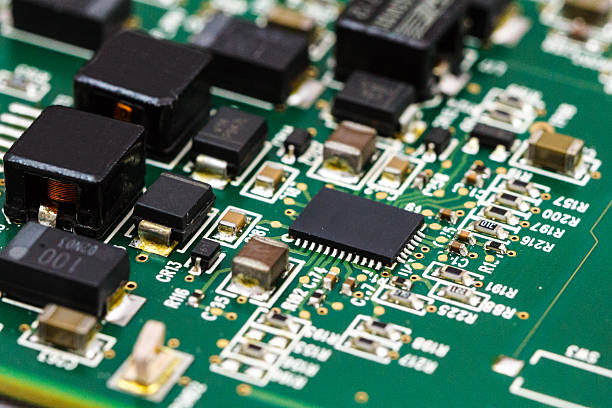
Automotive electronic systems can experience conditions that are significantly more demanding than typical indoor electronics.
A vehicle may be exposed to large temperature changes, repeated vibration, mechanical shock, moisture, dust, electromagnetic interference, and long operating cycles. Power electronics can also generate substantial heat and current, while communication and sensor systems may require stable high-speed signal transmission.
These factors create several key PCB design and manufacturing considerations:
- Thermal expansion and contraction
- Mechanical vibration and shock
- Copper thickness and current capacity
- Thermal management
- Signal integrity
- Controlled impedance where required
- Electromagnetic compatibility
- Material reliability
- Plating and interconnection reliability
- Dimensional stability
- Manufacturing traceability
- Consistent production quality
The specific requirements depend on the vehicle system and customer specification. A PCB used for a power control module may have very different requirements from one used in an infotainment, radar, camera, or communication system.
Therefore, a reliable Automotive PCB begins with matching the PCB construction to its intended operating environment rather than applying one universal design standard to every automotive application.
H2: Quality Management as the Foundation of Automotive PCB Production
A reliable automotive circuit board requires more than final inspection. Quality needs to be controlled throughout the entire manufacturing process.
H3: Process Control from Material to Finished PCB
The manufacturing workflow typically begins with incoming material verification. Depending on the application, PCB materials may need to meet specific requirements for thermal performance, dielectric properties, mechanical stability, moisture resistance, and dimensional consistency.
During fabrication, process parameters must remain controlled across critical operations such as:
- Inner-layer imaging
- Etching
- Lamination
- Mechanical or laser drilling
- Desmear
- Copper plating
- Outer-layer pattern formation
- Solder mask application
- Surface finishing
- Electrical testing
- Final inspection
Process consistency becomes particularly important when moving from prototypes to volume production. A board that performs correctly in a small prototype build must continue to meet the same dimensional, electrical, and reliability requirements when production quantities increase.
For more information about the overall fabrication workflow, see GOPCBA’s PCB Manufacturing capabilities.
H3: Traceability and Continuous Improvement
Automotive supply chains often require detailed production records and traceability. Depending on customer requirements, relevant information may include material batches, process records, inspection results, electrical test data, and production lot information.
A structured quality-management approach makes it easier to identify process deviations, investigate nonconformities, and implement corrective actions.
Continuous improvement is also important. Manufacturing data can be used to identify recurring defects, optimize process parameters, improve yield, and reduce variation between production lots.
H2: PCB Materials and Construction for Automotive Applications
Material selection is an important part of Automotive PCB Manufacturing because the PCB must remain electrically and mechanically stable throughout its expected operating conditions.
Standard FR-4 materials can be appropriate for many automotive electronic applications, while high-Tg or other specialized laminate systems may be selected when higher thermal performance, dimensional stability, or electrical performance is required.
Material selection may consider:
- Glass transition temperature (Tg)
- Decomposition temperature (Td)
- Coefficient of thermal expansion (CTE)
- Dielectric constant (Dk)
- Dissipation factor (Df)
- Moisture resistance
- Thermal conductivity
- Copper adhesion
- Dimensional stability
Tg alone should not be treated as the complete indicator of PCB reliability. The appropriate material system depends on the actual thermal profile, mechanical construction, signal requirements, and environmental conditions of the application.
For multilayer automotive designs, stack-up construction is equally important. Layer arrangement, dielectric thickness, copper distribution, reference planes, and via structures can all influence electrical performance and manufacturing reliability.
H2: High-Current and Thermal Management Considerations
Power-related automotive systems can place significant electrical and thermal demands on the PCB.
Applications such as battery management, power conversion, motor control, charging systems, and other power electronics may require larger copper cross-sections, optimized current paths, thermal vias, copper planes, or other thermal-management structures.
H3: Copper Thickness and Current-Carrying Capacity
Increasing copper thickness can improve current-carrying capability and reduce conductor resistance, but it also affects etching, plating, feature geometry, thermal behavior, and manufacturing complexity.
The correct copper weight should therefore be selected according to the required current, allowable temperature rise, conductor geometry, board construction, and manufacturing capability.
For applications involving substantial current and heat dissipation, GOPCBA also provides dedicated Power PCB manufacturing solutions.
H3: Thermal Paths and Heat Dissipation
Thermal management may involve:
- Large copper planes
- Thermal vias
- Optimized component placement
- Heat-spreading structures
- Appropriate substrate materials
- Controlled copper distribution
Good thermal design is particularly important because excessive temperature can accelerate material degradation and influence component and interconnection reliability.
The PCB should therefore be considered as part of the complete thermal system rather than as an isolated electrical component.
H2: High-Speed Signal Integrity in Automotive Electronics
Modern vehicles increasingly depend on high-speed communication between sensors, processors, control units, cameras, displays, and networking systems.
As signal speeds increase, PCB layout and fabrication become more sensitive to impedance variation, dielectric properties, trace geometry, via transitions, return paths, crosstalk, and discontinuities.
A reliable Automotive Circuit Board for high-speed applications may require controlled impedance structures based on the target interface and electrical requirements.
H3: Controlled Impedance and Stack-Up Design
Controlled impedance is achieved through coordinated design and manufacturing control.
Important parameters include:
- Trace width
- Copper thickness
- Dielectric thickness
- Dielectric constant
- Reference-plane configuration
- Trace-to-plane spacing
- Surface structure
- Via geometry
The PCB manufacturer should receive the required impedance targets and stack-up information early enough to ensure that fabrication tolerances are compatible with the design.
For advanced automotive communication and computing applications, High-Speed PCB Manufacturing can provide a useful reference for understanding how stack-up, materials, fabrication, and signal integrity are connected.
H2: Reliability Testing for Automotive PCBs
Final visual inspection alone cannot fully verify PCB reliability. Depending on the application and customer requirements, additional electrical, mechanical, thermal, and environmental testing may be necessary.
Typical reliability evaluation may include:
H3: Thermal and Environmental Testing
Temperature-related testing can evaluate how the PCB responds to thermal stress and repeated temperature changes.
Potential evaluations include:
- Temperature cycling
- Thermal shock
- High-temperature exposure
- Humidity testing
- Moisture resistance
The exact temperature ranges, dwell times, cycle counts, and acceptance criteria should be defined according to the applicable product specification and qualification plan.
H3: Mechanical Reliability
Automotive electronics can experience continuous vibration and occasional mechanical shock.
PCB reliability can therefore be influenced by:
- Board thickness
- Layer construction
- Via structure
- Plated-through-hole quality
- Component attachment
- Copper adhesion
- Lamination quality
- Mechanical mounting
Testing should reflect the expected environment of the finished system rather than relying on a generic test profile for every product.
H3: Electrical Inspection and Testing
Electrical testing helps identify manufacturing defects that may not be visible during visual inspection.
Depending on production requirements, manufacturers may use methods such as:
- Flying probe testing
- Fixture-based electrical testing
- Automated optical inspection
- X-ray inspection
- Dimensional inspection
- Cross-section analysis
- Plating thickness measurement
The combination of process inspection and final testing provides stronger quality assurance than relying on a single inspection stage.
H2: Manufacturing Consistency from Prototype to Production
Automotive product development often progresses through multiple stages, from engineering prototypes and design verification to pilot production and higher-volume manufacturing.
Maintaining consistency across these stages is essential.
A PCB supplier should be able to evaluate manufacturability during the early design stage and identify potential issues involving:
- Trace width and spacing
- Hole size
- Aspect ratio
- Via structure
- Copper distribution
- Layer registration
- Thermal design
- Impedance requirements
- Surface finish
- Panelization
- Assembly considerations
Design-for-manufacturing analysis can help reduce unexpected production problems before the design enters mass production.
After the prototype is validated, process parameters should be transferred into production with appropriate controls so that the production version maintains the electrical and mechanical characteristics of the approved design.
H2: PCB Assembly and Automotive Electronic System Integration
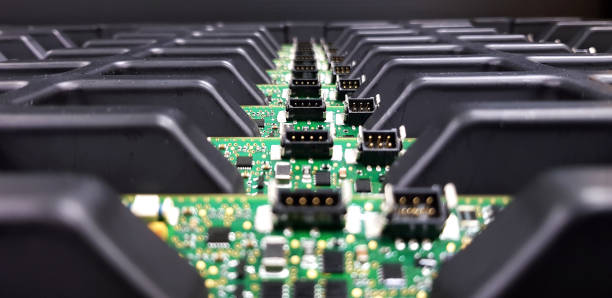
The reliability of an automotive electronic product does not depend on the bare PCB alone. Component selection, soldering, assembly quality, inspection, and testing also contribute to final system performance.
PCB assembly may involve fine-pitch components, BGA packages, power components, connectors, sensors, and other specialized devices.
Important assembly considerations can include:
- Solder joint reliability
- Component placement accuracy
- Thermal profiles
- Moisture-sensitive components
- BGA inspection
- X-ray inspection
- Automated optical inspection
- Electrical testing
- Process traceability
For projects requiring fabrication and assembly coordination, GOPCBA’s PCB Assembly service can help integrate bare-board production with downstream electronic assembly requirements.
H2: Supply Chain Control and Production Reliability
Automotive electronics depend on stable supply chains. Material changes, process substitutions, or uncontrolled supplier changes can potentially influence PCB performance.
A robust manufacturing program should therefore control key inputs such as:
- Laminate materials
- Copper foil
- Prepreg
- Chemicals
- Surface-finish materials
- Solder mask
- Other production consumables
When a material or process change is necessary, its impact should be evaluated according to the applicable customer and quality requirements.
Supplier management is particularly important for long-term programs where production may continue for several years. Consistency in material specifications and manufacturing processes helps reduce unnecessary variation.
H2: Choosing the Right Automotive PCB Manufacturer
Selecting an Automotive PCB supplier should involve more than comparing unit prices.
Engineering and procurement teams should evaluate whether the manufacturer can consistently support the required board construction, quality level, production volume, testing, and documentation.
Key evaluation criteria include:
H3: Manufacturing Capability
Review whether the supplier has experience with the required:
- Layer counts
- Board thicknesses
- Copper weights
- Minimum feature sizes
- Via structures
- Surface finishes
- Material systems
- Impedance requirements
- Thermal constructions
H3: Quality and Inspection Capability
The supplier should have appropriate inspection and testing capabilities for the project, along with documented process controls and traceability mechanisms.
H3: Engineering Support
A capable PCB manufacturer should be able to identify manufacturing risks early and provide practical DFM feedback rather than simply manufacturing an uploaded design without technical review.
GOPCBA provides a broader overview of available fabrication technologies and production capabilities through its PCB Capabilities page.
H2: Building Reliable Automotive Electronics Through Manufacturing Discipline
Automotive PCB reliability is the result of many interconnected factors. Material selection, stack-up design, copper thickness, thermal management, drilling, plating, lamination, surface treatment, inspection, testing, assembly, and traceability all contribute to final performance.
There is no single PCB construction that is suitable for every vehicle application. Instead, the manufacturing approach should be developed around the actual electrical, thermal, mechanical, environmental, and reliability requirements of the system.
For automotive electronics manufacturers, the goal is not simply to produce a board that works during initial testing. The objective is to establish a repeatable manufacturing process capable of delivering consistent electrical and mechanical performance throughout the intended product lifecycle.
By combining engineering review, controlled fabrication, appropriate materials, comprehensive inspection, reliability testing, and disciplined production management, Automotive PCB Manufacturing can provide a stronger foundation for modern vehicle electronics.
For applications where safety, reliability, signal integrity, thermal performance, and long-term production consistency are important, selecting an experienced PCB manufacturing partner is an essential part of the product development strategy.