Automotive Multilayer PCB Manufacturing
Automotive electronics operate under demanding conditions, including wide temperature fluctuations, vibration, electrical noise, high current loads, and long service cycles. As vehicle electronic systems become more integrated, automotive multilayer PCB technology has become an important foundation for vehicle control units, ADAS, radar, battery management systems, power electronics, body electronics, and in-vehicle communication.
The same discipline applies to Automotive Multilayer PCB, where a small process drift turns into a large yield loss.
Reliable automotive PCB manufacturing requires more than simply increasing the number of PCB layers. Material selection, stack-up design, thermal management, layer registration, high-density interconnection, impedance control, inspection, and process traceability must work together to achieve stable electrical and mechanical performance.
GOPCBA provides advanced PCB fabrication and manufacturing services for multilayer, HDI, high-frequency, high-TG, heavy-copper, rigid-flex, and controlled-impedance PCB requirements.
Core Manufacturing Requirements for Automotive Multilayer PCB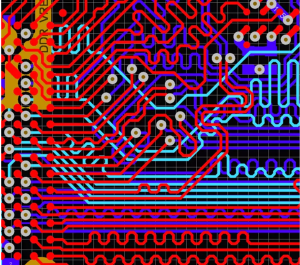
Automotive applications place several demanding requirements on multilayer circuit boards.
High-temperature resistance and dimensional stability: Automotive PCBs may experience significant temperature variation during operation. High-performance materials and controlled lamination processes help maintain dielectric and mechanical stability while reducing the risk of delamination, warpage, and layer separation.
Reviewing Automotive Multilayer PCB before the first article is built saves rework later in the run.
High-current capability and thermal management: Battery management systems, motor controllers, power converters, and other power electronics require efficient current transmission and heat dissipation. A heavy copper PCB structure can increase copper cross-section and support higher current capacity while helping manage temperature rise.
High-density interconnection: Modern ADAS, radar, communication, and control systems require more circuits within limited board space. HDI technology, microvias, blind vias, buried vias, and fine-line routing can increase wiring density while reducing unnecessary via structures.
For complex high-density designs, engineers can also review GOPCBA’s HDI PCB design and manufacturing guidance for microvia structures, sequential lamination, stack-up development, and manufacturability considerations. HDI PCB Design and Manufacturing Guide
Documenting Automotive Multilayer PCB keeps assembly, inspection and test teams working from the same numbers.
Electrical and signal integrity: Automotive communication, radar, sensor, and control systems can include high-speed or high-frequency signals. Controlled impedance, stable dielectric structures, appropriate reference planes, and accurate layer registration are essential for maintaining signal quality.
Consistent production quality: Automotive applications require stable manufacturing performance across production batches. Process monitoring, automated inspection, electrical testing, and traceability help reduce variation and identify defects before shipment.
Automotive PCB Materials: The Foundation of Reliability
Material selection directly influences the thermal, electrical, mechanical, and long-term reliability of an automotive multilayer PCB.
High-Tg Materials
A high-Tg PCB uses laminate materials with higher glass-transition temperatures than standard FR-4. These materials are useful for automotive applications exposed to elevated temperatures because they can provide better dimensional and thermal stability.
Material selection should consider:
- Glass transition temperature
- Decomposition temperature
- Coefficient of thermal expansion
- Dielectric constant
- Dissipation factor
- Moisture absorption
- Copper compatibility
- Required operating temperature
The appropriate material should be selected according to the actual thermal and electrical requirements of the vehicle subsystem rather than simply choosing the highest-rated laminate.
High-Frequency and Low-Loss Materials
Radar, wireless communication, and high-speed automotive electronics can require specialized low-loss materials. Stable dielectric properties help control impedance and reduce signal attenuation.
For Automotive Multilayer PCB, the figures that matter are measured rather than assumed.
For RF and radar applications, the PCB structure may combine specialized laminates with multilayer construction, controlled impedance, fine-line routing, and HDI technology.
Copper and Conductive Materials
Copper thickness should be selected according to current capacity, thermal requirements, conductor geometry, and manufacturing capability. Power electronics may require thicker copper structures than conventional control circuits.
Multilayer PCB Manufacturing Process for Automotive Electronics
The manufacturing process must maintain tight control over every stage of multilayer PCB production.
1. Stack-Up Design and Engineering Review
The multilayer stack-up determines the relationship between signal layers, power planes, ground planes, and dielectric layers.
A suitable stack-up should consider:
- Number of PCB layers
- Core and prepreg thickness
- Copper thickness
- Dielectric properties
- Controlled impedance requirements
- Signal reference planes
- Thermal requirements
- Blind and buried via structures
- Manufacturing tolerances
GOPCBA provides PCB design and layout support covering multilayer, HDI, high-frequency, high-speed, impedance-controlled, and blind/buried-via designs.
Every change in materials, stencils or profiles feeds back into Automotive Multilayer PCB.
2. Inner-Layer Circuit Fabrication
Inner copper layers are imaged and etched according to the PCB design. Precise pattern transfer is important because dimensional errors introduced at this stage can accumulate during subsequent lamination.
For automotive applications, manufacturing control should focus on trace geometry, copper distribution, registration, and insulation spacing.
3. Multilayer Lamination
Lamination bonds the inner-layer circuits, cores, and prepreg materials into a single multilayer structure.
Temperature, pressure, heating rate, cooling rate, resin flow, and registration must be carefully controlled. Poor lamination can result in:
- Layer misalignment
- Internal voids
- Delamination
- Resin starvation
- Excessive board warpage
- Unstable dielectric thickness
For high-layer-count automotive boards, repeatable lamination is particularly important because even small dimensional variations can affect impedance, drilling accuracy, and overall reliability.
4. Precision Drilling and HDI Processing
Mechanical drilling is commonly used for conventional through-holes, while laser drilling can be used for microvias and advanced HDI structures.
A short checklist for Automotive Multilayer PCB is usually enough to catch problems before they reach the customer.
An HDI PCB can use blind vias, buried vias, microvias, stacked microvias, and sequential buildup structures to increase routing density.
These technologies are useful for compact automotive electronics where component density and available PCB area are limited.
5. Copper Plating
After drilling, copper plating establishes conductive connections between PCB layers and builds the required copper thickness.
Buyers who understand Automotive Multilayer PCB ask better questions during supplier audits.
Uniform plating is important for both electrical conductivity and mechanical reliability. Hole-wall quality, plating thickness, current density, and process parameters must be controlled to reduce defects.
6. Fine-Line Circuit Formation and Impedance Control
High-density automotive electronics may require fine-line routing and controlled impedance.
The final electrical characteristics depend on several parameters, including:
- Trace width
- Copper thickness
- Dielectric thickness
- Dielectric constant
- Reference-plane position
- Stack-up geometry
For high-speed automotive systems, impedance should be designed and verified as part of the complete stack-up rather than treated as an isolated routing parameter.
Heavy Copper PCB for Automotive Power Electronics
Powertrain electronics, battery systems, motor controllers, charging systems, and power conversion circuits may require increased current-carrying capability.
Training and traceability both support Automotive Multilayer PCB on a busy production line.
A heavy copper PCB increases the copper cross-sectional area of selected layers or circuits. This can help reduce conductor resistance and temperature rise.
However, heavy copper manufacturing also introduces challenges involving:
- Etching
- Copper plating
- Line definition
- Thermal expansion
- Via reliability
- Resin filling
- Lamination
- Copper distribution
Therefore, heavy copper requirements should be considered from the initial PCB stack-up and DFM stage rather than added after the circuit layout is completed.
Quality Control for Automotive PCB Manufacturing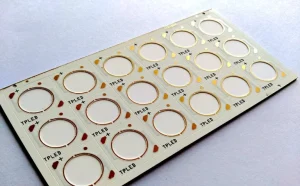
Quality management is essential for reliable automotive PCB manufacturing because PCB defects can affect the performance and service life of vehicle electronic systems.
The same discipline applies to Automotive Multilayer PCB, where a small process drift turns into a large yield loss.
A comprehensive inspection process may include:
Automated Optical Inspection
AOI can identify circuit-pattern defects such as missing copper, shorts, opens, dimensional deviations, and other visible abnormalities.
X-Ray Inspection
X-ray inspection can help evaluate hidden structures, including internal connections, vias, and other features that cannot be completely inspected from the external surface.
Electrical Testing
Electrical testing verifies circuit continuity and isolation to identify open circuits and short circuits before shipment.
Dimensional and Thickness Inspection
Board thickness, copper thickness, hole dimensions, and critical mechanical features should be checked against the approved specifications.
Process Traceability
Manufacturing records can connect materials, production processes, inspection results, and finished products. This improves process control and supports quality analysis when issues occur.
GOPCBA’s PCB manufacturing capabilities cover multilayer, HDI, high-TG, high-frequency, heavy-copper, rigid-flex, metal-core, blind/buried-via, and impedance-controlled PCB technologies. GOPCBA PCB Manufacturing Capabilities
Automotive Multilayer PCB Applications
Automotive multilayer boards are used across a wide range of electronic systems.
Reviewing Automotive Multilayer PCB before the first article is built saves rework later in the run.
Battery Management Systems: Require reliable multilayer structures, accurate sensing circuits, power distribution, thermal management, and long-term stability.
Motor Controllers and Power Electronics: Often require thicker copper, optimized thermal paths, and robust electrical connections.
ADAS and Radar Systems: Can require HDI, controlled impedance, high-frequency materials, fine-line routing, and compact multilayer construction.
Documenting Automotive Multilayer PCB keeps assembly, inspection and test teams working from the same numbers.
Vehicle Body Control: Requires high-density circuit integration for lighting, doors, windows, HVAC, and other electronic control functions.
Automotive Communication Systems: High-speed interfaces and networking systems require controlled signal paths, stable reference planes, and appropriate low-loss materials.
Infotainment and Telematics: High-density multilayer construction helps integrate processors, communication interfaces, memory, power management, and other electronic functions within limited space.
From PCB Fabrication to Automotive PCBA
Automotive projects often require both bare PCB fabrication and component assembly. Coordinating these processes through a single manufacturing workflow can simplify engineering communication and production management.
For Automotive Multilayer PCB, the figures that matter are measured rather than assumed.
GOPCBA provides PCB assembly services covering multilayer, HDI, rigid-flex, flexible, high-TG, high-frequency, heavy-copper, and metal-core PCB assemblies, with support for prototype, low-volume, and mass production. GOPCBA PCB Assembly Services
A complete manufacturing workflow can include:
- PCB fabrication
- Component sourcing
- SMT assembly
- Through-hole assembly
- AOI inspection
- X-ray inspection
- Electrical testing
- Functional testing
- Production support
For automotive electronic products, early coordination between PCB fabrication and assembly can help identify DFM and DFA issues before volume production.
Why Choose GOPCBA for Automotive Multilayer PCB Manufacturing?
Automotive electronics require a PCB manufacturing partner capable of handling complex materials, multilayer structures, high-density interconnections, thermal requirements, and production quality control.
GOPCBA supports advanced PCB manufacturing from prototype development through production, with capabilities covering multilayer, HDI, high-TG, high-frequency, high-speed, heavy-copper, rigid-flex, and controlled-impedance PCB technologies.
Every change in materials, stencils or profiles feeds back into Automotive Multilayer PCB.
By combining engineering review, material selection, stack-up development, precision fabrication, inspection, and PCB assembly, manufacturers can build a more consistent production process for demanding automotive electronics.
For projects requiring integrated fabrication and assembly, the PCB manufacturing and PCBA workflow can also be coordinated through a single supplier, helping reduce supplier handoffs and improve production continuity. GOPCBA PCB Manufacturing Services
At-a-Glance Manufacturing Notes
This summary highlights the points that most often affect yield.
- Core Manufacturing Requirements for Automotive Multilayer PCB: review the production data and close any deviation before the next build.
- Automotive PCB Materials: The Foundation of Reliability: confirm the requirements, process settings and inspection records at first-article approval.
- Multilayer PCB Manufacturing Process for Automotive Electronics: record the agreed limits and verify them again in the production lot.
- Heavy Copper PCB for Automotive Power Electronics: check the drawing, process sheet and inspection plan before release.
- Quality Control for Automotive PCB Manufacturing: treat this as a repeat-order checkpoint and keep the result with the lot record.
- Automotive Multilayer PCB Applications: review the production data and close any deviation before the next build.
- From PCB Fabrication to Automotive PCBA: confirm the requirements, process settings and inspection records at first-article approval.
- Why Choose GOPCBA for Automotive Multilayer PCB Manufacturing: record the agreed limits and verify them again in the production lot.
Conclusion
Automotive electronics are becoming increasingly complex, compact, and performance-driven. As a result, automotive multilayer PCB manufacturing must address thermal stability, high current, high-density routing, signal integrity, mechanical reliability, and consistent production quality simultaneously.
The combination of high-performance materials, high-Tg PCB technology, HDI structures, heavy copper PCB processing, controlled impedance, precision lamination, advanced inspection, and engineering support provides a foundation for reliable automotive electronics.
A short checklist for Automotive Multilayer PCB is usually enough to catch problems before they reach the customer.
For vehicle control systems, battery management, ADAS, radar, power electronics, body electronics, and automotive communication systems, selecting the appropriate PCB structure and manufacturing process at the design stage can significantly improve reliability and production efficiency.
GOPCBA provides advanced PCB fabrication and assembly solutions for automotive and other demanding electronic applications, supporting projects from prototype validation to production manufacturing.