PCB Prototype to Mass Production: How to Ensure a Smooth Transition and Consistent Quality
The prototype stage is essential for validating product feasibility, identifying manufacturing issues, and refining production processes. Mass production, meanwhile, focuses on efficient manufacturing, stable quality, and reliable delivery at scale.
The transition between these two stages is more than simply increasing production volume. If critical process parameters, materials, equipment, or quality standards are not properly transferred from prototype production to mass production, manufacturers may encounter process compatibility problems, quality fluctuations, higher costs, and delivery risks.
A successful PCB Prototype to Mass Production strategy therefore requires close coordination between engineering validation, manufacturing processes, equipment, materials, personnel, inspection, and quality management.
1. Prototype Stage: Establishing a Strong Foundation for Mass Production
PCB prototypes should not be treated as isolated trial products. Instead, they provide valuable manufacturing data and help validate the processes that will later be used for production.
During the prototype stage, manufacturers should focus on three key areas:
- Process validation and standardization
- Early identification of potential problems
- Data collection and quality standard development
A well-managed prototype provides a reliable technical foundation for subsequent production.
1.1 Process Validation: Establishing Critical Manufacturing Parameters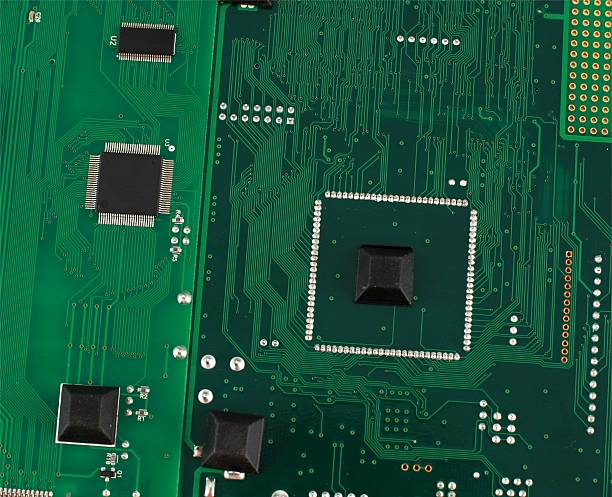
High-speed and high-frequency PCBs often require precise manufacturing control. During prototype production, critical process parameters should be tested, optimized, and documented.
For example, lamination parameters such as temperature, pressure, and processing time need to be matched to the selected PCB materials. Proper parameter control helps prevent interlayer bonding problems when production volumes increase.
Similarly, during the etching process, manufacturers should establish appropriate etching conditions and process controls to minimize trace-edge roughness, dimensional deviations, and other circuit pattern problems.
Special manufacturing requirements should also be clearly documented. These may include material cutting methods, solder mask curing conditions, surface treatment requirements, and other product-specific parameters.
The objective is to create a standardized manufacturing procedure that production teams can consistently follow after the product enters regular production.
1.2 Identifying Potential Problems Early
The prototype stage is the ideal time to identify and eliminate potential manufacturing risks.
Potential issues should be evaluated from several perspectives:
- Material compatibility
- Process stability
- Electrical performance
- Mechanical reliability
- Environmental performance
For example, manufacturers may need to verify the bonding performance between copper foil and laminate materials, confirm solder mask compatibility, and evaluate whether selected materials meet the requirements of high-speed signal transmission.
Process stability should also be evaluated over multiple prototype runs. Important factors may include etching uniformity, surface finish consistency, dimensional accuracy, and interlayer bonding quality.
If a prototype reveals a problem such as interlayer bubbles, the root cause should be investigated before mass production begins. Possible causes may include inadequate material preparation or inappropriate lamination parameters. After corrective action, the process should be validated again before being released for production.
1.3 Recording Production Data and Establishing Standards
Detailed production records are valuable when moving from prototypes to larger production quantities.
Relevant information may include:
- Material batch information
- Equipment parameters
- Processing times
- Inspection results
- Dimensional measurements
- Electrical test results
- Manufacturing abnormalities and corrective actions
These records create a practical production history that can be referenced during mass production.
If a quality issue later occurs, production data from the prototype stage can help engineers determine whether the problem is related to material changes, equipment settings, or process deviations.
Clearly defined acceptance standards should also be established for appearance, dimensions, electrical performance, and other important characteristics.
For projects that involve both board production and component assembly, PCB Assembly requirements should also be considered during the prototype stage. Early validation can help identify assembly-related issues before the product enters larger production.
2. Transition Stage: Connecting Prototype Production with Mass Production
The transition stage acts as the bridge between prototype manufacturing and mass production.
The main challenge is ensuring that the validated prototype process can be reproduced consistently using production-scale equipment, materials, tooling, and personnel.
Three areas require particular attention:
- Process scale-up
- Equipment and tooling qualification
- Personnel training and process transfer
2.1 Process Scale-Up: Adapting from Small-Batch to Large-Scale Production
Prototype production and mass production may use different equipment, material quantities, and operating methods.
A prototype may be manufactured using smaller-scale equipment or manual operations, while mass production typically relies on automated production lines and continuous processing.
Therefore, process parameters should not simply be copied from prototype production without validation.
For example, if prototype etching uses a smaller system with manually controlled conditions, mass production may use an automated etching line. In that case, parameters such as chemical circulation, spray pressure, and processing speed may need to be optimized to achieve results equivalent to the prototype.
Material handling may also change as production volume increases. Cutting, feeding, stacking, and transportation methods should be reviewed to prevent dimensional variation, material deformation, or handling damage.
Before full-scale production begins, a controlled pilot run should be performed using production-scale equipment and materials. The results can then be compared with the approved prototype samples.
This approach helps confirm that the scaled-up PCB Manufacturing process can reproduce the required quality level.
2.2 Equipment and Tooling Qualification
Mass production depends on stable equipment and appropriate tooling.
Before production begins, key equipment such as lamination systems, etching lines, drilling machines, plating systems, and surface treatment equipment should be inspected, calibrated, and validated.
The equipment parameters should be aligned with the manufacturing standards established during prototype development.
Tooling should also be evaluated according to product requirements. Fixtures, molds, routing tools, and other production aids must be compatible with the PCB design and should not damage traces, pads, edges, or other critical structures.
Backup plans are also important for high-volume production. Critical spare parts and replacement tooling can help reduce downtime if equipment failures occur.
2.3 Personnel Training and Process Transfer
The operators responsible for mass production may not be the same personnel involved in prototype development.
Therefore, the transition stage should include systematic training covering:
- Standard operating procedures
- Critical process parameters
- Quality acceptance criteria
- Inspection requirements
- Abnormality handling
- Corrective action procedures
Practical training and competency verification can help ensure that operators understand the manufacturing requirements.
Engineers involved in prototype development can also support the initial production runs. Their experience with the validated process can help production teams resolve unexpected issues during the transition.
3. Mass Production Stage: Maintaining Consistent Quality
Once the production process has been transferred successfully, the focus shifts to maintaining stable quality throughout the entire production cycle.
A reliable PCB Quality Control system should cover materials, production processes, inspection, testing, traceability, and corrective actions.
3.1 Incoming Material Control
Material consistency is particularly important for high-speed and high-frequency PCB applications.
During mass production, incoming materials should be verified against the materials used during prototype validation.
Depending on the product requirements, incoming inspection may include:
- Laminate appearance
- Electrical and dielectric characteristics
- Copper foil surface condition
- Copper foil quality
- Solder mask performance
- Material batch information
If a material supplier or material batch changes, additional validation may be necessary before the material is released for production.
Material traceability should also be maintained. Recording when materials were received, where they were used, and which production batches they were associated with makes it easier to investigate quality issues later.
3.2 Real-Time Production Process Monitoring
Mass production requires continuous monitoring of critical manufacturing parameters.
A combination of scheduled inspection and random sampling can help verify that the production process remains stable.
For example, during lamination, manufacturers can monitor finished PCB thickness and interlayer bonding characteristics. During etching, sample boards can be checked for trace dimensions and edge quality.
Surface treatment processes should also be monitored to identify conditions such as uneven coating, oxidation marks, or contamination.
An effective monitoring system should establish warning limits for process deviations.
If a parameter begins approaching its acceptable limit, engineers can investigate and adjust the process before the deviation develops into a large-scale quality problem.
3.3 Final Testing and Product Traceability
Finished PCBs should undergo appropriate inspection and testing before shipment.
Depending on the application, testing may include:
- Electrical testing
- Signal transmission testing
- Dimensional inspection
- Visual inspection
- Environmental testing
- Reliability verification
Qualified products should be traceable through production batch information, production dates, inspection records, and other relevant manufacturing data.
If defective products are identified, the root cause should be investigated.
A process-related problem may require adjustment of manufacturing parameters, while a material-related problem may require the affected material batch to be isolated and evaluated.
Regular comparison between mass-produced boards and approved prototype samples can also help verify that the production quality remains consistent over time.
4. The Role of PCB Assembly in the Prototype-to-Production Transition
The transition from prototype to production does not end with bare PCB fabrication. For complete electronic products, component sourcing and assembly processes must also be considered.
During prototype development, assembly can reveal issues related to component placement, solderability, component availability, thermal performance, and manufacturing feasibility.
For customers who require a complete production solution, PCB Assembly can be integrated with PCB fabrication, component procurement, assembly, inspection, and testing.
A coordinated manufacturing process can reduce communication gaps between different suppliers and make it easier to maintain consistency as production volumes increase.
For prototype development, PCB Prototype to Mass Production planning should therefore consider both the bare PCB and assembled PCB requirements from the beginning.
5. Scaling Production According to Demand
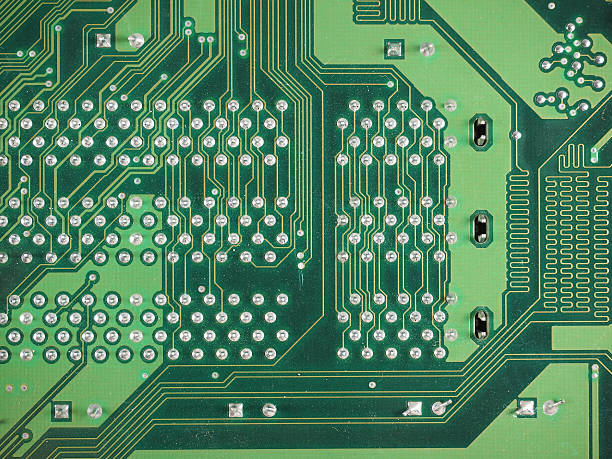
Not every project should move directly from a prototype into large-scale production.
Different stages of product development may require different production volumes and manufacturing strategies.
Prototype Production
Prototype production is primarily focused on design validation, functional verification, manufacturing feasibility, and engineering optimization.
At this stage, flexibility and rapid iteration are often more important than production efficiency.
Low-Volume Production
Low-volume manufacturing can be useful after prototype validation when customers need initial market quantities, field testing units, or early production runs.
This stage provides an opportunity to further verify production stability before significantly increasing output.
High-Volume Production
As product demand increases, manufacturers need to place greater emphasis on automation, production efficiency, material planning, process consistency, and supply-chain management.
For larger production requirements, High Volume PCB Assembly can support the transition toward stable and repeatable production while maintaining consistent assembly quality.
6. How to Maintain Quality Consistency from Prototype to Mass Production
Achieving consistent quality requires more than transferring a set of process documents from engineering to production.
A successful transition should include the following steps:
Step 1: Validate the Prototype
Confirm that the prototype meets the required electrical, mechanical, and manufacturing requirements.
Step 2: Freeze Critical Process Parameters
Document the manufacturing parameters that have been validated and establish appropriate process control limits.
Step 3: Establish Material Standards
Define approved materials and maintain traceability for material batches used in production.
Step 4: Validate Production Equipment
Confirm that production-scale equipment can reproduce the performance achieved during prototype manufacturing.
Step 5: Conduct a Pilot Production Run
Use production equipment and materials to manufacture a controlled quantity before releasing the process for full-scale production.
Step 6: Compare Pilot Results with Prototype Samples
Evaluate dimensional accuracy, electrical performance, appearance, reliability, and other critical characteristics.
Step 7: Establish Continuous Quality Monitoring
Monitor critical process parameters throughout mass production and implement corrective action when deviations occur.
Step 8: Maintain Full Traceability
Keep records of materials, equipment, operators, inspection results, production batches, and corrective actions.
Conclusion
Moving from PCB prototypes to mass production is a comprehensive manufacturing transition rather than a simple increase in production volume.
The prototype stage should establish reliable process parameters, identify potential problems, and create a complete set of manufacturing data. The transition stage should validate process scale-up, production equipment, tooling, materials, and operator training. Once mass production begins, continuous process monitoring, incoming material control, final inspection, testing, and traceability become essential to maintaining consistent quality.
A structured PCB Manufacturing strategy allows manufacturers to minimize production risks while improving repeatability and efficiency.
For electronic product developers, selecting a manufacturing partner capable of supporting the complete path from prototype validation to production can also simplify supply-chain management. With integrated PCB fabrication, component sourcing, and assembly capabilities, GOPCBA can support projects as they progress from early prototypes to low-volume and higher-volume production.