PCB Prototype to Mass Production: A Smooth Transition
The prototype stage proves a design can be built. Mass production proves it can be built again, at volume, with the same result. The gap between those two statements is where most yield problems begin. A parameter that worked on a small pilot line may drift once production equipment and larger material batches take over. This transition is a manufacturing project in its own right, not a simple increase in order quantity.
Engineers and buyers should treat the handover as a controlled process. Process settings, materials, tooling, inspection criteria and operator training all need to move together. If any one of them is left behind, the factory inherits a mismatch it may not detect until scrap appears. The sections below follow the work from first article to steady volume, and they note what to verify at each step.
Prototype Stage Foundation
Prototypes should not be treated as isolated trial units. They generate the manufacturing data that later production depends on. During this stage, the factory should validate processes, standardize critical parameters and record what it learns. A prototype built without documentation gives the team a working board but no repeatable method. The difference shows up months later, when nobody can explain why the volume build behaves differently.
Process validation sits at the center of this work. Lamination temperature, pressure and dwell time must match the chosen laminate, because interlayer bonding problems often trace back to parameters copied from another material. Etching conditions deserve the same care, since trace-edge roughness and dimensional deviation both affect impedance and yield. Surface treatment and solder mask curing should be documented too. The goal is a written procedure that production teams can follow without guesswork.
The prototype run is the cheapest place to find manufacturing risks. Material compatibility, process stability, electrical performance and mechanical reliability should all be checked while volumes are small. For high-speed designs, confirm that copper foil and laminate bonding holds up and that the solder mask suits the stackup. Run several prototype lots rather than one, and compare etching uniformity, surface finish and dimensional accuracy across them. If bubbles or voids appear, find the root cause before release, then revalidate the corrected process.
Records from this phase carry real value later. Material batch information, equipment settings, processing times, inspection results and corrective actions form a production history. When a quality issue appears in volume, engineers can compare against that history and judge whether a material change, an equipment shift or a process deviation is responsible. Acceptance standards for appearance, dimensions and electrical performance should be defined at the same time. Good quality management starts here, not at the first shipment.
Transition Stage Planning
The transition stage bridges prototype and volume. Its central challenge is reproducing a validated process on production-scale equipment with different operators and larger material lots. Three areas need attention: process scale-up, equipment and tooling qualification, and personnel training. Skipping any of them leaves a gap that only appears under load. A controlled pilot run, compared against approved prototype samples, is the practical way to close that gap before full release.
Prototype and volume builds often use different equipment. A small manual etching system may become an automated line, which changes chemical circulation, spray pressure and conveyor speed. Parameters should not be copied across without validation. Material handling changes as well, so review cutting, feeding, stacking and transport to prevent dimensional variation or handling damage. Early PCB design and layout decisions also matter here, because pad geometry and spacing constrain what the production line can hold.
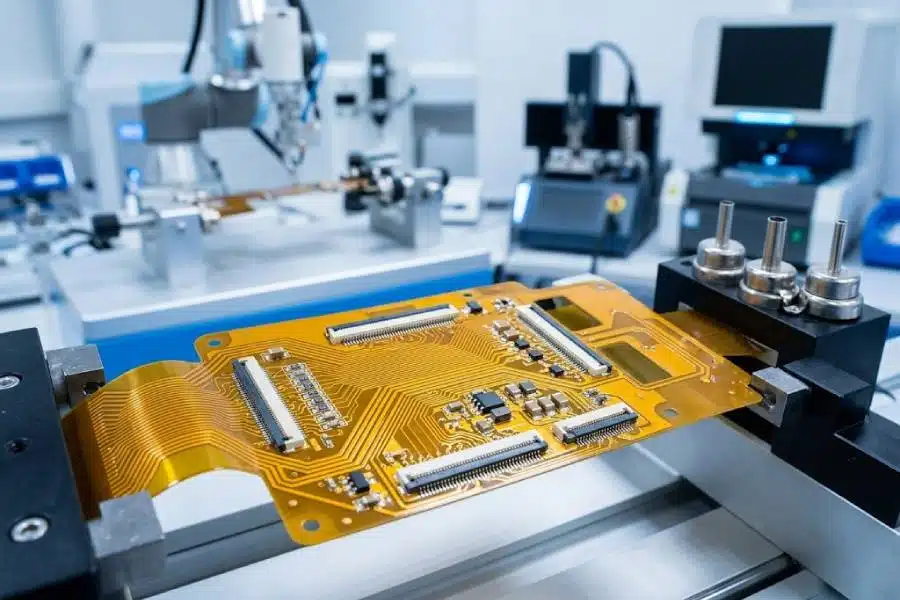
Equipment qualification comes next. Lamination presses, drilling machines, plating lines and surface treatment units should be inspected, calibrated and validated against the standards set during prototyping. Tooling such as fixtures, routing tools and molds must suit the design and must not damage traces, pads or board edges. For high-volume work, keep critical spare parts and replacement tooling on hand. A short stop for a worn tool is far cheaper than a stalled line waiting on a delivery.
Volume production usually runs with different operators than prototype development. Training should cover standard procedures, critical parameters, acceptance criteria, inspection requirements and abnormality handling. Competency checks confirm that operators understand why a parameter window exists before they adjust it. Engineers from the prototype phase should support the first production runs, because their familiarity with the validated process helps the line resolve unexpected issues quickly.
Mass Production Stability
Once the process is transferred, the focus shifts to holding quality steady across the whole cycle. Incoming material control matters most for high-speed and high-frequency boards, where small shifts in dielectric properties change results. Verify laminates, copper foil and solder mask against the materials used in validation. If a supplier or batch changes, run additional validation before release. Keep traceability records so any later issue can be traced to a specific lot.
Real-time monitoring keeps the process inside its window. During lamination, check finished thickness and interlayer bonding on samples. During etching, measure trace dimensions and edge quality. During surface treatment, watch for uneven coating, oxidation marks or contamination. Set warning limits so engineers can adjust before a drift becomes a large-scale defect. A small process drift turns into a large yield loss once thousands of panels pass through the same unnoticed offset.
Finished boards need inspection and testing before shipment. Depending on the application, this may include electrical test, signal transmission checks, dimensional inspection, visual inspection and reliability verification. Each passing board should link to batch data, production dates and inspection records. When a defect appears, that link shortens the investigation. Comparing volume boards against approved prototype samples at intervals also confirms that quality has not quietly slipped over time.
Assembly in the Transition
The handover does not end with bare board fabrication. For complete products, component sourcing and assembly must be planned alongside fabrication. Prototype assembly reveals issues with placement, solderability, component availability and thermal performance while changes are still inexpensive. Buyers who plan component procurement early avoid the common trap of a validated board that cannot be built because a part is unavailable or has changed.
A coordinated build reduces communication gaps between suppliers. When fabrication, procurement, assembly, inspection and test sit under one process plan, consistency is easier to hold as volumes rise. Teams moving quickly from samples to market often use rapid PCBA prototyping to shorten the first loop, then shift the same documentation into volume work. The documentation, not the speed, is what carries quality forward.
Scaling With Demand
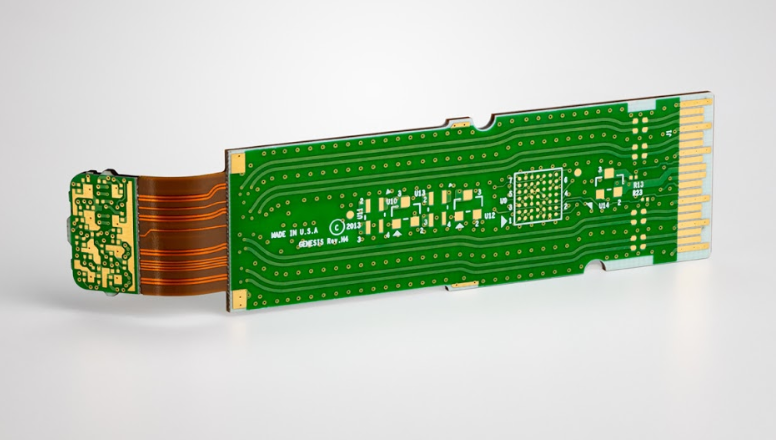
Not every project should jump straight to large-scale output. Prototype production focuses on design validation, functional verification and engineering optimization, where flexibility matters more than efficiency. Low-volume production follows validation and covers initial market quantities, field test units or early runs. It offers a further chance to confirm stability before output rises sharply. Each step should reuse the same process documents and acceptance standards.
As demand grows, automation, material planning, process consistency and supply-chain management carry more weight. For larger builds, high-volume PCB assembly supports the move toward repeatable output while holding assembly quality steady. The technical content of the job does not change at that point. What changes is the consequence of a missed check, which grows with every panel on the line.
Quality Consistency Steps
Consistent quality needs more than a folder of process documents handed from engineering to production. Validate the prototype against electrical, mechanical and manufacturing requirements. Freeze the critical parameters and set control limits around them. Define approved materials and keep batch traceability. Confirm that production equipment can reproduce the prototype result. Then run a controlled pilot quantity before releasing the process for full output.
Compare pilot results with prototype samples across dimensions, electrical performance, appearance and reliability. Establish continuous monitoring so deviations trigger corrective action rather than surprise. Maintain traceability covering materials, equipment, operators, inspection results and production batches. These steps are simple to list and easy to skip under schedule pressure. The projects that follow them usually reach volume faster, because they spend their time improving yield rather than chasing defects.
What Buyers Should Verify
Buyers comparing suppliers should ask for evidence, not assurances. Request the process parameters recorded during prototyping and the control limits set for volume. Ask how the pilot run was compared against approved samples and who signed off the result. Ask which inspection steps run on every lot and which run by sample. Ask how material batches are traced and what happens when a supplier changes a laminate or a solder mask. Clear answers to these questions separate a managed transition from an optimistic one.
The practical takeaway is to treat the transition as a defined deliverable with its own review. Freeze parameters, qualify equipment, train operators and run a pilot before volume release. Keep the records that prove each step happened, and compare volume boards against prototype samples at regular intervals. A smooth transition is not a matter of luck or scale. It is the result of decisions made before the first production panel is built.