Power Converter PCB Cost Analysis 2025: Pricing, Global Comparison & Optimization
In 2025, power electronics systems—including EV chargers, solar inverters, industrial SMPS, and power adapters—continue to push toward higher efficiency and greater reliability. At the heart of these systems, the power converter PCB directly affects:
- Current-carrying capability
- Thermal performance
- Safety isolation
- Cost structure
Today, the PCB has become one of the most controllable and impactful cost elements in the BOM (Bill of Materials). Engineers and project managers urgently need a transparent, quantifiable, and comparable cost analysis for power converter PCBs.
This article provides a complete engineering‑driven cost breakdown, including:
- Global price comparisons
- Real, actionable USD pricing
- Factory‑level cost insights from Gopcb
- Optimization strategies for high‑power PCBs
Table of Contents
- Core Design Requirements for Power Converter PCBs
- Key Factors Affecting Power Converter PCB Cost
- Typical Price Ranges for Power Converter PCBs in 2025
- Low‑Power vs. High‑Power PCB Cost Comparison
- Global Price Comparison: USA, Europe & China (2025)
- Application‑Based Price Variations
- Gopcb: Price Advantages for Power Converter PCBs
- Expanded Price Table
- Engineering Cost Optimization Strategies
- Manufacturing Challenges That Impact Price
- Frequently Asked Questions (FAQ)
- Conclusion
1. Core Design Requirements for Power Converter PCBs
Power‑class PCBs demand far more stringent manufacturing requirements than standard digital boards or IoT PCBs—and these requirements directly drive manufacturing complexity and cost.
1.1 High Current‑Carrying Capability
Power converters often need to carry 10–200 A. Typical copper weights include:
- 2 oz
- 3 oz
- 4 oz
- 6 oz
Heavier copper foils require more complex etching, additional copper plating, and extended processing, which significantly raises the price.
1.2 High‑Voltage Isolation and Safety
For AC‑DC, EV, and high‑voltage solar applications, critical requirements include:
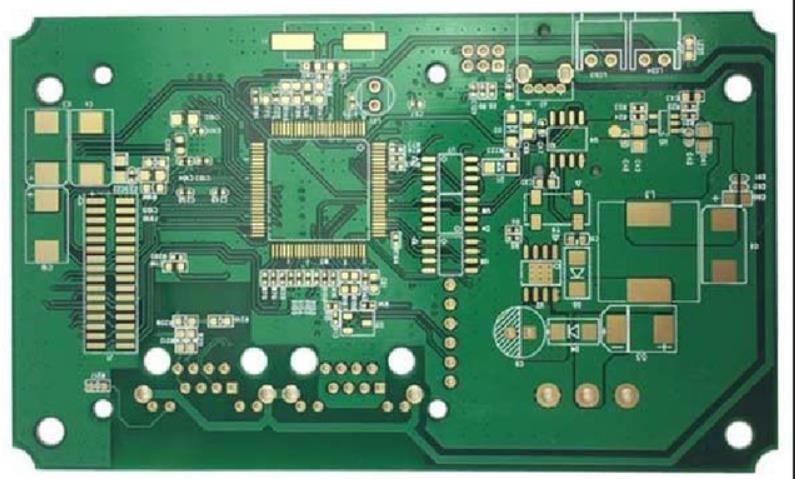
- Sufficient creepage distance and clearance
- Insulation slots and routing slots
- High‑voltage FR4 or reinforced insulation materials
- Compliance with UL, IPC‑2221, IEC 60950 / 62368
These features increase manufacturing complexity and add extra final inspection steps.
1.3 Thermal Management and Heat Dissipation
Heat is a primary failure mechanism in power converters. Effective thermal solutions include:
- Thermal via arrays
- Thick copper heat‑spreading layers
- MCPCB (aluminum‑ or copper‑based)
- Ceramic‑filled FR4
- Composite stack‑ups
These technologies directly increase manufacturing time and cost.
1.4 Critical Materials and Stack‑Up Structures
Different applications require different materials, each with distinct cost implications:
| Material Type | Application | Cost Impact | Note |
|---|---|---|---|
| Standard FR4 | Low‑power converters | Low | Lowest cost |
| High‑Tg FR4 | Industrial SMPS | Medium | Better thermal stability |
| Rogers + FR4 hybrid | High‑frequency resonant, SiC/GaN | High | Low high‑frequency loss |
| MCPCB | LED drivers, MOSFET modules | Medium | Excellent heat dissipation |
2. Key Factors Affecting Power Converter PCB Cost
2.1 Substrate Material Cost
Materials like Rogers or ceramic‑filled FR4 can cost 3–7 times more than standard FR4.
2.2 Layer Count and Lamination Cycles
Higher layer counts and more complex stack‑ups drive costs upward. For expert guidance on layer planning, explore our PCB design layout services.
2.3 Copper Weight
Above 2 oz, costs rise noticeably due to:
- More challenging etch control
- Increased plating cycles
- Higher scrap rates
Heavy‑copper PCBs typically cost 2–4 times more than standard boards.
2.4 Thermal Structures
MCPCB, hybrid laminates, and dense thermal via arrays all add to the cost.
2.5 Board Size and Panel Utilization
Larger boards reduce panelization yields, increasing unit cost.
2.6 Surface Finish
The most common finish for power PCBs is ENIG:
| Surface Finish | Cost Level | Typical Use |
|---|---|---|
| OSP | Low | Low‑cost consumer products |
| HASL | Medium | General power boards |
| ENIG | High | Industrial, EV, solar |
| Silver | Medium‑High | Industrial, EV, solar |
2.7 Compliance and Certifications
UL, IPC Class 3, or automotive AEC‑Q qualifications add:
- Visual inspection
- Electrical strength testing
- Reliability validation
3. Typical Price Ranges for Power Converter PCBs in 2025
Real, actionable 2025 market prices (USD):
| PCB Type | Layers | Copper Weight | Size | Finish | Price (USD) |
|---|---|---|---|---|---|
| Standard FR4 | 2L | 1 oz | 100×80 mm | HASL | $0.80 – $2.20 |
| Thick Copper PCB | 2L | 3 oz | 120×100 mm | HASL/ENIG | $1.80 – $4.00 |
| General Power Board | 4L | 1 oz | 120×100 mm | ENIG | $4.50 – $12.00 |
| Industrial Power Module | 6L | 2–4 oz | 150×120 mm | ENIG | $18.00 – $45.00 |
| MCPCB | 1L | Aluminum base | 100×60 mm | OSP/ENIG | $1.20 – $5.80 |
4. Low‑Power vs. High‑Power PCB Cost Comparison
Low Power (5W–100W)
FR4 + 1–2 oz
$1 – $4
Medium Power (100W–1kW)
2–4 layers, 2–3 oz
$5 – $15
High Power (>1kW, industrial)
6+ layers, 3–6 oz, isolation slots, heavy copper
$18 – $50+
5. Global Price Comparison: USA, Europe & China (2025)
| Region | Average Cost | Lead Time | Note |
|---|---|---|---|
| China | Lowest | 3–7 days | Most cost‑competitive for volume |
| USA | High | 10–20 days | Strong in aerospace |
| Europe | Highest | 12–25 days | Strict environmental regulations |
Example: 4‑layer 2 oz (140×100 mm)
- China: $8 – $12
- USA: $22 – $35
- Europe: $28 – $45
China remains the most cost‑effective source, particularly for heavy‑copper and high‑volume orders. For reliable manufacturing at competitive prices, consider Gopcb PCB manufacturing.
6. Application‑Based Price Variations
- Consumer Power Supplies: $0.80 – $3.00
- Solar Inverters / Energy Storage: $10 – $35
- EV Chargers / Automotive Power Modules: $15 – $45
- Industrial SMPS / Automation: $12 – $50
7. Gopcb: Price Advantages for Power Converter PCBs
Gopcb specializes in high‑power PCBs, including:
- 2–6 oz heavy‑copper boards
- High‑voltage isolation PCBs
- MCPCB
- Industrial multilayer boards
Gopcb’s Core Advantages
- 2–6 oz heavy‑copper capability
- Full UL/ISO/automotive‑grade process
- Dedicated power engineering team
- 3–7 day fast turnaround
- Precise high‑voltage and creepage control
With a strong track record in power electronics, Gopcb offers both performance and value. For turnkey solutions, explore Gopcb turnkey PCB assembly.
Real USD Quotes from Gopcb Factory
| Specification | Gopcb Price | Market Average | Savings |
|---|---|---|---|
| 2L FR4, 1 oz | From $0.90 | $1.50 | 30–40% |
| 2L FR4, 3 oz | From $1.90 | $2.80 | 32% |
| 4L, 2 oz | From $7.80 | $10–13 | 20–30% |
| 6L heavy copper | From $19.00 | $25–45 | 25–45% |
| MCPCB | From $1.50 | $2.50–4.00 | >35% |
8. Expanded Price Table
| Application | Layers | Copper | Size | Material | Finish | Price (USD) |
|---|---|---|---|---|---|---|
| Phone Charger | 2 | 1 oz | 80×50 mm | FR4 | HASL | $0.80 – $1.50 |
| Laptop Adapter | 2 | 2 oz | 120×70 mm | FR4 | HASL | $1.20 – $2.80 |
| Industrial SMPS | 4 | 2 oz | 140×100 mm | FR4 | ENIG | $8 – $14 |
| Solar Inverter | 6 | 3 oz | 150×120 mm | High‑Tg FR4 | ENIG | $18 – $35 |
| EV Charging Module | 6 | 4 oz | 160×130 mm | FR4 + reinforced isolation | ENIG | $22 – $45 |
| LED Driver (MCPCB) | 1 | – | 100×60 mm | Aluminum | OSP/ENIG | $1.20 – $5.80 |
9. Engineering Cost Optimization Strategies
9.1 Optimize Layer Count
If a 4‑layer design meets the requirements, do not move to 6 layers unnecessarily.
9.2 Use Copper Weight Judiciously
Avoid defaulting to 4 oz; consider parallel traces or wider copper pours as alternatives.
9.3 Choose the Right Thermal Solution
Thermal vias are more cost‑effective; MCPCB offers better performance but at a higher cost.
9.4 Panelization Optimization
Small outline changes can save 10–25% on total cost. For high‑volume production, Gopcb high‑volume PCB assembly provides additional efficiency.
9.5 Avoid Over‑Specification
Excessively tight tolerances increase scrap rates and inspection costs. Early prototyping with Gopcb prototype PCB assembly helps validate cost‑effective specifications.
10. Manufacturing Challenges That Impact Price
- Uniform copper plating for 4–6 oz
- Drill wear and processing difficulty
- Warpage control for large boards
- High‑voltage testing and withstand‑voltage verification
- Precise thermal performance control
These factors directly elevate production costs.
11. Frequently Asked Questions (FAQ)
1. Are heavy‑copper PCBs always more expensive?
Yes. Etching and plating for 3 oz and above are significantly more challenging.
2. Which surface finish is the most cost‑effective?
OSP is the cheapest, but ENIG is more durable and better suited for power applications.
3. Why are EV charger PCBs so expensive?
They require high‑voltage isolation, reinforced insulation, and automotive‑grade testing.
4. Is China still the most cost‑effective source for power PCBs in 2025?
Yes—especially for heavy‑copper, MCPCB, and large‑volume orders.
5. How can I reduce the cost of a heavy‑copper PCB?
Use thermal vias and parallel copper traces instead of specifying extremely thick copper.
12. Conclusion
In the fast‑evolving power electronics industry, understanding PCB cost structure is essential to product competitiveness. Every factor—from material, copper weight, and layer count to global supply chain dynamics—affects final performance and BOM cost.
Gopcb delivers strong manufacturing capabilities in heavy‑copper, high‑voltage, multilayer, and MCPCB technologies, offering engineers worldwide high‑performance, cost‑competitive power converter PCBs. Whether you need low‑volume PCB assembly or full‑scale production, Gopcb is a reliable partner for power electronics in 2025 and beyond.