Reducing PCB Batch Manufacturing Scrap Rate
During PCB Batch Manufacturing, reducing scrap rate is a critical factor for improving production efficiency, controlling manufacturing costs, and ensuring consistent product quality.
A low scrap rate does not depend on a single process improvement. Instead, it requires a comprehensive management system covering material selection, process control, equipment maintenance, inspection procedures, data traceability, and continuous optimization.
By controlling every stage of production with precision, PCB manufacturers can significantly reduce manufacturing risks and improve the stability of large-scale production.
Strict Raw Material Control
Raw material management is the foundation for reducing PCB production defects.
For advanced PCB products such as high-layer-count mixed-material boards, high-speed circuit boards, and HDI PCB, manufacturers need to establish strict supplier qualification systems.
Supplier evaluation should include:
- Industry certifications
- Manufacturing experience
- Production process stability
- Quality management capability
- Material consistency
- Delivery reliability
Before materials enter production, incoming inspection should be performed to verify key characteristics such as appearance, thickness, dielectric properties, copper quality, and dimensional stability.
For specialized materials used in high-frequency and high-speed applications, material consistency between different batches is especially important.
Small variations in dielectric constant, resin content, thickness, or thermal expansion characteristics can influence impedance performance, layer registration, and long-term reliability.
For applications requiring advanced signal performance, High Frequency PCB materials must be carefully selected and verified to ensure stable electrical characteristics throughout production.
Effective material control helps prevent defects before they enter the manufacturing process and reduces the possibility of large-scale production losses.
Optimizing the PCB Manufacturing Process
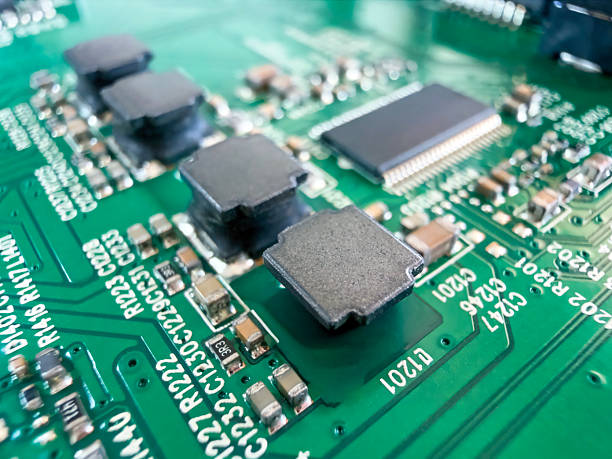
A stable PCB Manufacturing Process requires detailed control at every production stage.
Different PCB structures require different process parameters. Manufacturers should develop standardized operating procedures for each product category and clearly define critical process requirements.
Operators should receive comprehensive training covering:
- Equipment operation standards
- Process parameter control
- Quality inspection requirements
- Common defect prevention methods
- Emergency response procedures
Training should not only focus on machine operation but also help operators understand the technical reasons behind each process requirement.
For example, during multilayer PCB lamination, temperature, pressure, heating rate, vacuum conditions, and cooling curves must be precisely controlled.
Improper lamination parameters can result in:
- Layer separation
- Resin voids
- Delamination
- Registration errors
- Reduced reliability
For complex multilayer structures, manufacturers should also implement advanced Multilayer PCB Manufacturing management methods to ensure stable layer alignment and consistent production results.
Equipment Maintenance and Process Stability
Production equipment performance directly affects PCB quality and scrap rates.
A complete equipment lifecycle management system should include:
- Regular calibration
- Preventive maintenance
- Accuracy verification
- Component replacement planning
- Equipment performance monitoring
Maintaining equipment stability is especially important for high-precision PCB manufacturing.
For example, during HDI PCB micro-drilling processes, drill bit wear must be monitored carefully. Excessive tool wear can lead to:
- Hole position deviation
- Poor hole quality
- Copper plating problems
- Electrical connection failures
By establishing reasonable replacement cycles and monitoring tool conditions, manufacturers can reduce defects caused by equipment degradation.
Stable equipment performance ensures that production parameters remain consistent across large production volumes.
Strengthening PCB Quality Control Systems
A comprehensive PCB Quality Control system is one of the most effective methods for reducing scrap rates.
Quality inspections should be integrated throughout the entire production process instead of relying only on final inspection.
Important inspection stages include:
Inner Layer Inspection
After inner-layer imaging and etching, manufacturers should inspect:
- Circuit width and spacing
- Pattern accuracy
- Line defects
- Copper integrity
- Alignment accuracy
Early detection of inner-layer problems prevents defective boards from continuing into later manufacturing stages.
Drilling Process Inspection
After drilling, inspection should focus on:
- Hole position accuracy
- Hole wall quality
- Drill contamination
- Hole diameter consistency
For advanced HDI structures, microvia quality inspection is especially important because even small deviations can affect electrical reliability.
Copper Plating Inspection
After copper plating, manufacturers should verify:
- Copper thickness
- Plating uniformity
- Via filling quality
- Surface condition
When abnormal plating results are detected, engineers should analyze previous processes rather than simply rejecting the product.
For example, uneven copper plating may be related to:
- Insufficient surface preparation
- Chemical imbalance
- Equipment conditions
- Process parameter variation
Understanding root causes allows manufacturers to prevent repeated defects.
Using Traceability Systems for Fast Problem Identification
A complete traceability system provides essential support for quality management.
Modern PCB production should digitally record important manufacturing information, including:
- Raw material batch information
- Production equipment
- Operator records
- Process parameters
- Inspection results
- Manufacturing time
- Product history
When a quality issue occurs, traceability data allows engineers to quickly identify:
- Which process created the problem
- Which equipment was involved
- Which materials were used
- Whether similar risks exist in other batches
This significantly reduces investigation time and prevents widespread production problems.
For example, if products processed by a specific machine repeatedly show similar defects, maintenance can be arranged immediately before the issue affects more production batches.
Data analysis can also identify long-term trends and help manufacturers implement preventive improvements.
Continuous Improvement Through Cross-Department Collaboration
Reducing PCB scrap rates requires cooperation between multiple departments.
Production teams provide feedback about manufacturing challenges.
Engineering teams analyze technical issues and optimize process solutions.
Quality teams evaluate inspection data and develop improvement plans.
A strong collaboration system allows different departments to work together on:
- Defect analysis
- Process optimization
- Equipment improvement
- Material evaluation
- Production efficiency enhancement
For example, if air bubbles appear during multilayer lamination, production, engineering, and quality teams should jointly analyze possible causes, including:
- Material preparation
- Lamination parameters
- Vacuum conditions
- Equipment sealing performance
- Resin flow characteristics
Through systematic analysis, manufacturers can develop corrective actions and prevent similar issues from recurring.
Applying Advanced Manufacturing Technologies
As PCB designs become more complex, manufacturers need advanced technologies to maintain low scrap rates.
Modern production may involve:
- Fine-line circuit fabrication
- HDI technology
- High-speed PCB manufacturing
- Controlled impedance technology
- Advanced multilayer structures
- Automated inspection systems
For high-density electronic products, HDI PCB manufacturing requires precise control of microvias, sequential lamination, laser drilling, copper filling, and layer registration.
A reliable manufacturing partner should provide comprehensive engineering support from design review to production.
GOPCBA provides professional PCB Prototype Manufacturing services to help customers validate designs before moving into full production, reducing potential manufacturing risks.
Prototype validation allows engineers to evaluate:
- Electrical performance
- Mechanical compatibility
- Layer structure
- Signal integrity
- Manufacturing feasibility
Early problem detection can significantly reduce production scrap during mass manufacturing.
Implementing Data-Driven Manufacturing Management
Digital manufacturing management can further improve PCB production stability.
Manufacturers can use production data to analyze:
- Defect trends
- Process variation
- Equipment performance
- Material performance
- Operator efficiency
Data-driven analysis helps identify hidden risks before they become major production problems.
For example, repeated defects in a specific production stage may indicate:
- Process parameter drift
- Equipment aging
- Material inconsistency
- Insufficient operator training
By continuously analyzing manufacturing data, companies can move from reactive problem solving to preventive quality management.
Conclusion
Reducing PCB batch manufacturing scrap rates requires a complete quality management system covering materials, processes, equipment, inspection, traceability, and continuous improvement.
Effective PCB production depends on controlling every stage, from raw material selection to final product delivery.
Strict material verification prevents defects at the beginning of production.
Optimized manufacturing processes improve consistency.
Advanced inspection systems identify problems early.
Traceability systems accelerate root-cause analysis.
Cross-functional collaboration drives continuous improvement.
For complex PCB products such as HDI PCB, multilayer boards, and High Frequency PCB, manufacturing stability becomes even more important because small process variations can significantly affect final performance.
By combining advanced manufacturing technology, professional engineering support, and comprehensive quality control systems, PCB manufacturers can reduce scrap rates, improve production efficiency, and deliver more reliable circuit board solutions for demanding electronic applications.
GOPCBA supports customers with advanced PCB Manufacturing Services, helping companies achieve stable production from prototype development to large-scale manufacturing.