Smart Grid IoT PCB Cost Guide 2025: Full Engineering & Price Breakdown
Published: December 5, 2025 · By gopcb Tech
With the acceleration of global energy digitisation, Smart Grid equipment relies increasingly on IoT intelligent hardware. Smart meters, distribution automation nodes, edge computing modules, and transformer monitors all need IoT-specific PCBs with wireless communication, real-time data acquisition, and high-reliability structures.
But whether you are a utility company, energy equipment maker, or IoT product team, the same questions arise:
- 👉 What factors make up the cost of an IoT PCB?
- 👉 Why can prices for the same Smart Grid application differ by several times?
This article provides a systematic engineering perspective on IoT PCB cost components, global price comparisons, application variations, yearly trends, and actionable USD price references for Smart Grid product planning.
1. Role of IoT PCB in Smart Grid
1.1 Definition of IoT PCB
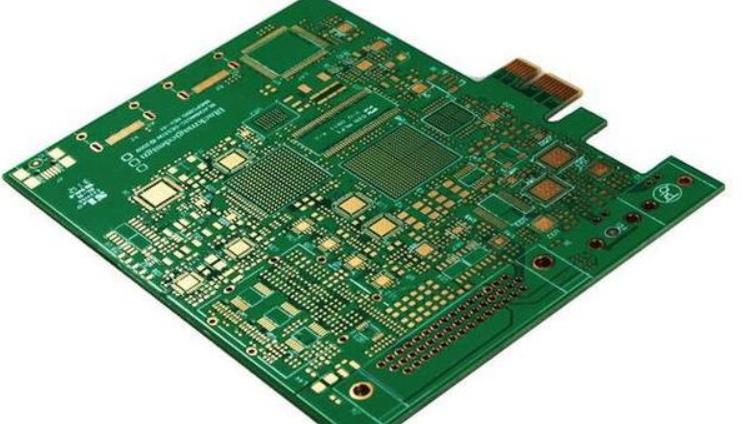
An IoT PCB integrates sensors, wireless communication modules, microcontrollers (MCUs), and power management circuits—forming the core hardware platform for data acquisition and connectivity in Smart Grid devices.
1.2 Why Smart Grid Depends on IoT PCB
- Remote power consumption monitoring
- Distribution cabinet / substation automation
- Fault prediction and early warning
- Equipment health status monitoring
- Smart meter communication
1.3 Typical Smart Grid Scenarios
- Smart meters
- LoRaWAN/NB-IoT wireless sensor nodes
- Grid communication gateways
- Edge computing modules
- Load management & demand response controllers
2. Main Cost Factors of IoT PCB
2.1 PCB Material Cost
| Material Type | Cost Impact |
|---|---|
| FR4 standard | $0.8–$1.2 / layer |
| High-Tg FR4 | +20–30% cost increase |
| Rogers / PTFE high-frequency | $50–$120 / sheet |
| Mixed (FR4+HF) | moderate cost |
2.2 Layer count impact
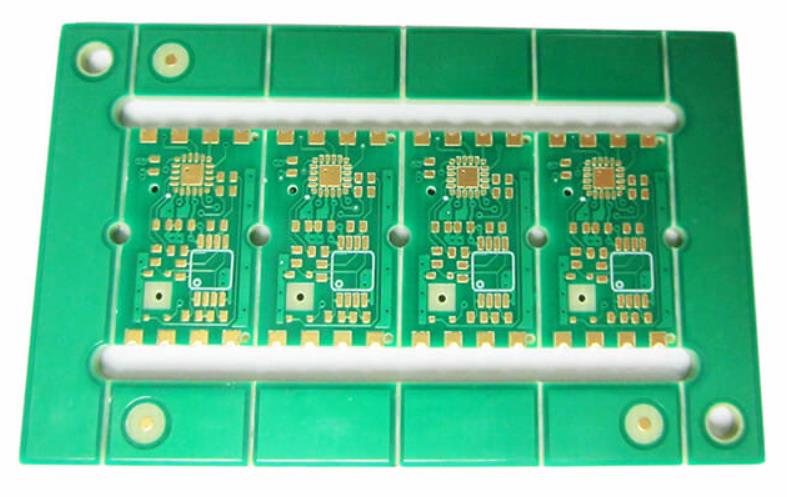
Smart Grid IoT hardware typically uses 6–12 layers for isolating power, signal, and RF channels.
2.3 Copper thickness
1 oz standard; 2–3 oz adds 10–50% cost.
2.4 Surface finish
HASL (lowest), ENIG (+$0.10–0.30), OSP (low cost but less durable).
2.5 IoT sensor cost
$2–$18 per sensor.
2.6 Wireless module cost
- LoRaWAN: $6–$12
- NB-IoT: $6–$14
- Zigbee: $4–$9
- Wi-Fi/BT: $3–$8
2.7 PCBA assembly complexity
Precision BGA, 0402 components, RF tuning increase cost.
3. Design Complexity vs. Cost
3.1 High-speed routing
Smart Grid devices often include SPI, UART, Ethernet, CAN bus etc.
3.2 EMC/EMI requirements
Additional shielding and filtering add $1–$5 per PCB.
3.3 Power management
DC-DC, overcurrent protection, backup supply all affect BOM.
3.4 IoT security chip
Encryption IC adds $1–$4.
4. Prototype vs. Volume Production Cost
4.1 NRE fees
Stencil: $20–$90; fixtures: $50–$150.
4.2 Unit cost gap
Prototype unit price is typically 2–5× higher than volume.
4.3 Lead time
Prototype: 3–7 days; volume: 10–20 days.
5. IoT PCB Cost Structure Summary
- Materials: $1–$30
- PCB fabrication (2–12L): $5–$40
- PCBA assembly: $15–$60
- Wireless + sensors: $5–$40
- Functional test: $3–$12
- Packaging & logistics: $0.5–$3
Total price overview
| IoT PCB Type | Total (USD) |
|---|---|
| Basic sensor node | $12–$25 |
| Wireless metering PCB | $18–$45 |
| Smart gateway PCB | $35–$95 |
| High-reliability controller | $60–$150 |
6. Global IoT PCB Price Comparison (US vs. China vs. Europe)
| Region | Price Range | Characteristics |
|---|---|---|
| USA | $45–$120 | High labour, strong IP protection |
| Europe | $40–$110 | High certification cost, strict environmental |
| China | $12–$70 | Best cost-performance |
| Southeast Asia | $20–$80 | Rising manufacturing capability |
Conclusion: For Smart Grid products, Chinese IoT PCBs offer the most competitive balance of cost and quality.
7. Price Differences by Smart Grid Application
| Application | Price Range | Reason |
|---|---|---|
| Smart meter | $12–$28 | Wireless + basic metering |
| LoRaWAN/NB-IoT node | $18–$40 | RF + multiple sensors |
| Smart gateway | $35–$95 | Multilayer + high-speed interfaces |
| Protection relay module | $45–$120 | High reliability |
| Substation automation | $60–$150 | Industrial-grade components |
8. IoT PCB Price Trend (2022–2025)
2022–2023: Cost hike — global chip shortage pushed BOM up 8–20%; wireless module prices rose sharply.
2024–2025: Cost decline — supply chain recovery; IoT module prices down 10–18%; China’s manufacturing expansion lowers PCB costs.
Trend: By 2025, IoT PCBs entered a cost-reduction cycle, making Smart Grid deployments more affordable.
9. Hidden Costs Often Overlooked in IoT Development
- Certification (FCC/CE/UL): $300–$2000
- Reliability tests: salt spray, thermal shock, humidity
- Revision iterations: protocol updates leading to hardware redesign
- Supply chain risk: chip shortages can inflate BOM by 10–40%
10. Effective Cost-Reduction Strategies for IoT PCBs
- Optimise from 8 layers to 6 layers
- Use mixed lamination instead of full high-frequency material
- Strengthen DFM/DFT to reduce manual rework
- Choose cost-effective LoRaWAN over NB-IoT where bandwidth permits
11. gopcb – High-Value Smart Grid IoT PCB Manufacturing Partner
gopcb specialises in PCB/PCBA for Smart Grid and IoT applications:
- 2–16 layer PCB fabrication
- RF/wireless antenna tuning support
- Prototype starting at $30
- Volume pricing as low as $0.15 per square inch
- PCBA assembly from $0.009 per solder joint
With fast lead times, high reliability, and highly competitive pricing, gopcb has become a long-term supplier for Smart Grid equipment manufacturers.
👉 Explore our PCB manufacturing services and turnkey PCB assembly for your Smart Grid projects.
🔹 Related services: Prototype PCB Assembly · Low-Volume Assembly · High-Volume Assembly · SMT Assembly · Mixed Technology
12. Conclusion
By thoroughly analysing materials, layer count, wireless modules, testing, and supply chain, development teams can accurately assess the total cost structure of Smart Grid IoT PCBs. Combined with global price differences and yearly trends, proactive cost-control strategies lead to higher project success.
Choosing an experienced manufacturing partner like gopcb not only reduces overall cost but also improves reliability and long-term stability of Smart Grid equipment.
13. FAQ – Smart Grid IoT PCB Cost
- 1. How much does a Smart Grid IoT PCB typically cost?
- Range $12–$150 depending on complexity.
- 2. Which parts are most expensive?
- Wireless modules, multilayer structure, sensors, EMI shielding.
- 3. Which country offers the lowest IoT PCB cost?
- China offers the best balance of quality and price.
- 4. Does LoRaWAN/NB-IoT significantly increase cost?
- Yes, typically adding $6–$14 per unit.
- 5. Does gopcb support from prototype to mass production?
- Yes, including DFM/DFA and BOM optimisation.
Explore our full range: PCB Design & Layout · Component Procurement · Flex PCB Assembly · Through-Hole Assembly
Visit our homepage: gopcba.com