Smart Meter PCB Cost: Materials, Layers & Components Explained
Smart meter PCBs are cost-sensitive products in the energy sector. Their pricing directly impacts nationwide deployment budgets, remote monitoring feasibility, and operational efficiency. This article provides a systematic breakdown of cost drivers, price differences, and long-term optimization paths for smart meter PCBs.
1. Smart Meter PCB Overview
A smart meter PCB is the circuit carrier responsible for metering, wireless data transmission, remote meter reading, and billing accuracy analysis in modern grid infrastructure. As countries accelerate grid digitalization, annual production volumes of smart meter PCBs continue to rise. For design engineers and procurement professionals, a deep understanding of cost structure is essential for deployment budgeting and supply chain strategy.
2. Key Factors Affecting Smart Meter PCB Cost
Smart meter PCB prices are not fixed; they are determined by multiple engineering and business factors, including:
- Functional requirements – basic models offer local display and current measurement, while advanced versions support wireless transmission, tamper prevention, remote disconnect, and load profile analysis. Higher functions increase BOM cost and layout complexity.
- Metering accuracy class – revenue-grade metering requires higher-precision current sensors, lower-TCR resistors, and excellent analog routing, raising process requirements.
- Environmental reliability – outdoor meter boxes are exposed to humidity, salt spray, and high temperatures. Higher protection levels drive cost.
- Wireless communication options – NB-IoT, LoRa, ZigBee, PLC, and Wi-Fi modules have significantly different costs.
- Security design – encryption chips, tamper detection, and overvoltage protection increase component and routing costs.
- Regional regulatory differences – Europe and Japan have stricter EMI requirements, adding testing and remediation costs.
These factors make smart meter PCB cost highly scenario-dependent and precision-oriented.
3. Material Selection & Cost Impact
Materials are a key determinant of smart meter PCB price and service life. Common options include:
- Standard FR-4 (economy) – suitable for large-scale deployment with balanced dielectric properties and good mechanical strength, but limited in extreme humidity/heat.
- High-Tg FR-4 (enhanced) – stable thermal performance (≥150°C), ideal for hot climates or high-sunlight areas; adds ~$0.10–$0.25 per board.
- Low-loss dielectrics (RF scenarios) – improve antenna efficiency in sub-GHz bands but increase material cost by 10–18%.
- Anti-corrosion coating – conformal coating or silicone sealing is mandatory for coastal deployments, adding $0.15–$0.50 per board.
Material choices can cause total project cost to vary by 30%, making early design decisions critical for smart meter PCB outdoor reliability.
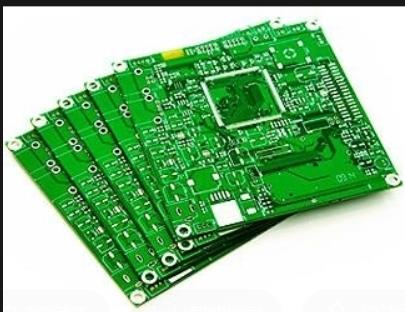
4. Layer Count & Stack-up Impact on Price
| Layer Count | Typical Price (USD/board) |
|---|---|
| 2 layers | $0.35 – $0.85 |
| 4 layers (mainstream) | $0.65 – $1.80 |
| 6 layers (RF-optimized) | $1.80 – $3.50 |
More layers provide better EMI performance and isolation for sensitive analog signals.
5. Component Selection & Integration Cost
BOM cost typically ranges from $3 to $9, with major contributors being:
- MCU brand and performance
- Wireless communication module
- Tamper detection IC
- Current sensing component accuracy
The RF front end is often the most expensive subsystem in the entire meter.
6. Surface Finish & Cost Differences
Outdoor applications dictate the surface finish level:
- OSP – low cost, limited oxidation resistance
- HASL – moderate cost, high solder joint reliability
- ENIG – superior corrosion resistance and contact stability, adds $0.10–$0.30
ENIG is particularly preferred for smart meter PCBs intended for long-term deployment.
7. Volume Production Cost Advantages
Smart meter PCB price is highly dependent on volume:
- Small batch (100 pcs): $2.50 – $6.00
- High volume (10,000+): $0.90 – $2.80
Mass production reduces equipment depreciation and NRE amortization.
8. Testing, Calibration & Quality Control Cost
Key tests include:
- In-circuit test (ICT)
- Communication functional test
- Metering calibration
- Aging test
Testing cost: $0.15–$0.80 per board. Remote billing accuracy must pass rigorous verification.
9. Certification & Compliance Cost
Certification accounts for 5–12% of unit price:
- CE / FCC (emissions compliance)
- RoHS (environmental)
- ISO (quality management)
- National electricity regulations
No certification means no commercial deployment eligibility.
10. Domestic vs. International Manufacturing Cost Comparison
| Region | Price (USD/board) | Advantages |
|---|---|---|
| China | $0.45 – $2.80 | Complete supply chain, mature automation, highly competitive |
| USA | $1.80 – $6.50 | Strong IP protection, fast engineering support; higher labor cost |
| Europe | $2.50 – $7.50 | High-quality control; longer lead times, higher depreciation |
According to supply chain data, large-scale smart meter PCB manufacturing is currently most cost-effective in Asia.
Why Choose GoPCB for Smart Meter PCBs?
GoPCB offers:
- $0.45 – $3.00 price range (depending on layers and specs)
- Optional outdoor moisture-proof conformal coating
- Proven RF impedance control capability
- Fast samples and small-batch trial production support
- High-volume cost reduction programs
Explore GoPCB’s manufacturing capabilities → · Low-volume assembly
11. Customization Add-on Costs
Common add-on options include:
- Tamper-detection grid routing
- Moisture-proof conformal coating
- IP-rated sealing
- Surge protection zone design
These add $0.20 – $1.50 per board.
12. Strategies to Reduce Cost Without Sacrificing Reliability
- BOM standardization – reduce component variety
- Minimize buried/blind vias where possible
- Optimize antenna routing to avoid costly RF modules
- Layout refinement – reduce unnecessary component types
Good design can reduce cost by 8–20% in the long term. Learn about GoPCB’s design & layout services →
13. Conclusion
Smart meter PCB price is determined by materials, layer count, testing processes, wireless integration, certification, and environmental protection. A thorough understanding of cost structure helps engineering teams achieve better budgeting and deployment efficiency without compromising reliability.
14. FAQ — Smart Meter PCB Pricing
- Q1: What is the typical price range?
A1: $0.90 – $3.50, depending on layer count and process. - Q2: Is outdoor protection necessary?
A2: Yes, it prevents measurement drift caused by moisture ingress. - Q3: Does certification increase cost?
A3: Yes. Multiple EMC tests and design iterations are required. - Q4: Does antenna design affect cost?
A4: Yes. Good RF routing can replace expensive RF modules.
⚡ Contact GoPCB for your smart meter PCB project — cost-effective, reliable, and built for the grid.
GoPCB Home · Prototype Assembly · Turnkey Assembly · SMT Assembly