PCBA Mainboard Explained: Key Components and Assembly Processes
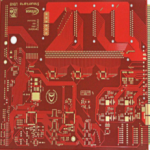
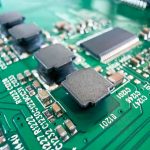
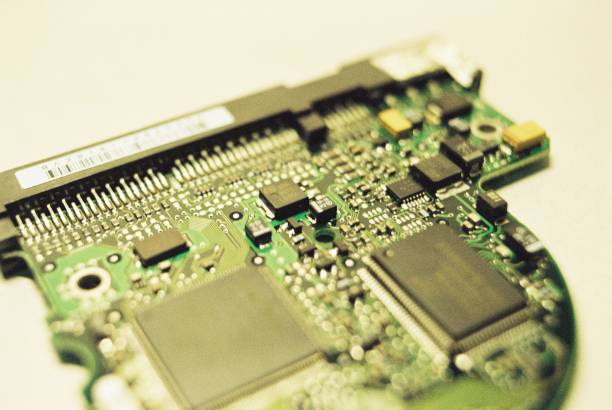
Modern electronic devices depend on increasingly complex circuit boards to process data, distribute power, control signals, and connect different functional modules. At the center of many of these products is the PCBA Mainboard, which combines a printed circuit board with electronic components to create a functional electronic system.
A high-performance PCBA is not simply a PCB populated with components. Its reliability depends on the interaction between PCB materials, circuit design, component selection, assembly processes, thermal management, inspection, and electrical testing.
Understanding the main components and manufacturing processes of a PCBA can help engineers make better design and manufacturing decisions.
1. PCB: The Foundation of the PCBA
The printed circuit board provides the mechanical foundation and electrical interconnection structure for the entire assembly.
A PCB uses conductive copper layers, dielectric materials, vias, and traces to connect electronic components and create complete electrical circuits. Depending on application requirements, PCBs can be manufactured as single-layer, double-layer, or multilayer boards.
PCB Material Selection
Material selection directly affects the electrical, thermal, and mechanical performance of a circuit board.
For example:
- FR-4: Widely used for general electronics and industrial applications.
- High-TG materials: Suitable for applications requiring improved thermal resistance.
- High-frequency materials: Used for RF, microwave, and high-speed signal applications.
- Metal-core PCBs: Suitable for applications requiring enhanced heat dissipation.
- Flexible PCB materials: Used where bending, compact packaging, or three-dimensional installation is required.
For demanding applications, PCB designers must consider dielectric properties, thermal performance, layer structure, copper thickness, impedance, and operating environment.
Professional PCB Manufacturing also requires appropriate control of drilling, plating, etching, lamination, surface finishing, and dimensional tolerances.
2. Integrated Circuits: The Processing Center
Integrated circuits are among the most important components on a PCBA. They perform computing, control, memory, power management, communication, and signal-processing functions.
Microprocessors and Microcontrollers
Microprocessors and microcontrollers execute instructions and control the operation of electronic systems.
Depending on the application, a mainboard may include:
- Microcontrollers
- Application processors
- Digital signal processors
- System-on-chip devices
- Communication controllers
The choice of processor depends on computing requirements, power consumption, memory architecture, interfaces, operating environment, and software requirements.
Memory Devices
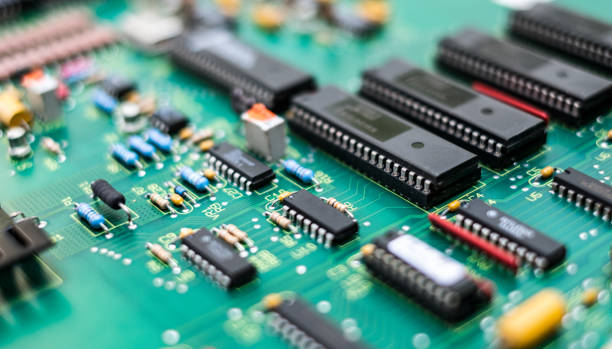
Memory components store program instructions, configuration data, temporary information, and other system data.
Common memory technologies include:
- Flash memory
- DRAM
- SRAM
- EEPROM
The appropriate memory architecture depends on the processing requirements and application.
Power Management ICs
Power management integrated circuits regulate and distribute electrical power throughout the board.
They may perform functions such as:
- Voltage regulation
- Power conversion
- Battery management
- Power sequencing
- Current monitoring
- Overvoltage and overcurrent protection
Effective power management is particularly important in battery-powered, industrial, medical, and portable electronic devices.
3. Passive Components: Supporting Circuit Stability
Passive components are essential for controlling and stabilizing electrical signals.
The most common passive components include:
- Resistors
- Capacitors
- Inductors
Resistors
Resistors control current and establish voltage relationships within circuits. They are widely used for current limiting, voltage division, signal conditioning, and circuit protection.
Capacitors
Capacitors store electrical energy and help stabilize power rails, filter noise, and improve signal quality.
Decoupling capacitors are commonly placed close to IC power pins to reduce high-frequency power supply noise.
Inductors
Inductors are frequently used in power conversion circuits, filtering networks, and electromagnetic applications.
Proper selection and placement of passive components can significantly affect signal integrity, power stability, and overall PCBA performance.
4. Connectors and Interfaces
Connectors provide electrical and mechanical connections between the PCBA and external components or systems.
Depending on the product, a mainboard may include:
- USB interfaces
- HDMI interfaces
- Ethernet connectors
- RF connectors
- Board-to-board connectors
- FPC connectors
- Power connectors
Connector selection should consider electrical performance, mechanical durability, insertion cycles, current capacity, signal frequency, and environmental conditions.
High-speed interfaces require particular attention to impedance control, differential-pair routing, grounding, and signal integrity during PCB design.
5. SMT and THT Assembly Processes
After PCB fabrication and component sourcing, electronic components must be assembled onto the board.
Modern PCB Assembly commonly combines surface mount technology and through-hole technology depending on the component types and application requirements.
SMT PCB Assembly
SMT PCB Assembly places surface-mount components directly onto PCB pads.
A typical SMT process includes:
- Solder paste printing
- Solder paste inspection
- Automated component placement
- Reflow soldering
- Automated optical inspection
- X-ray inspection when required
SMT provides high placement accuracy and supports compact component packages, making it suitable for high-density electronic assemblies.
Through-Hole Assembly
Through-hole components use leads inserted through holes in the PCB.
This technology is particularly useful for components requiring stronger mechanical connections, including certain connectors, transformers, power components, and large capacitors.
Depending on the product, through-hole assembly may involve wave soldering, selective soldering, or manual soldering.
Mixed-Technology Assembly
Many modern mainboards combine SMT and through-hole components.
A mixed-technology assembly process allows engineers to select the most appropriate assembly method for each component while balancing electrical performance, mechanical strength, manufacturing efficiency, and cost.
6. Thermal Management
As electronic devices become more powerful and compact, thermal management has become an increasingly important part of PCBA design.
High-power processors, power management devices, LEDs, motor controllers, and other components can generate significant amounts of heat.
Common thermal management methods include:
- Thermal vias
- Copper planes
- Thick copper layers
- Metal-core PCBs
- Heat sinks
- Thermal interface materials
- Forced-air cooling
Component placement is also important. High-power components should be positioned according to the thermal architecture of the system to prevent localized heat accumulation.
A well-designed PCB layout can improve heat spreading and reduce thermal stress on sensitive components.
7. EMI and Signal Integrity Considerations
Electromagnetic interference can negatively affect electronic system performance.
A reliable PCBA design should consider EMI and signal integrity from the earliest design stage.
Important design considerations include:
- Proper grounding
- Controlled impedance
- Short high-speed signal paths
- Differential-pair routing
- Power and ground plane design
- Separation of sensitive and noisy circuits
- Appropriate shielding
Shielding structures can also be used to reduce electromagnetic interference in sensitive applications.
For high-speed, RF, telecommunications, and industrial electronics, PCB layout and stack-up design can have a major impact on system performance.
8. Inspection and Testing
Manufacturing quality cannot be determined by visual inspection alone. A complete quality-control process should cover material inspection, assembly inspection, electrical testing, and functional validation.
Automated Optical Inspection
AOI systems inspect solder joints and component placement using high-resolution imaging.
They can help identify:
- Missing components
- Incorrect components
- Component misalignment
- Solder bridges
- Insufficient solder
- Excessive solder
X-Ray Inspection
X-ray inspection is useful for solder joints and component packages that cannot be fully inspected visually.
It is particularly valuable for applications involving BGA, QFN, and other hidden solder connections.
PCBA Testing
PCBA Testing verifies the electrical and functional performance of the assembled board.
Depending on the product, testing may include:
- In-Circuit Testing (ICT)
- Functional Circuit Testing (FCT)
- Firmware programming
- Electrical continuity testing
- Voltage and current verification
- Burn-in testing
- Reliability testing
A suitable testing strategy helps identify manufacturing defects before the finished product reaches the customer. Professional PCBA testing can therefore reduce field failures and improve product reliability.
9. The Relationship Between Design, Components, and Manufacturing
A reliable PCBA is the result of coordinated engineering rather than a single manufacturing operation.
Three areas are particularly important:
PCB Design + Component Selection + Manufacturing Process
Poor component placement can increase signal interference and thermal problems. Incorrect component specifications can affect electrical performance. Inadequate manufacturing controls can create soldering and assembly defects.
For this reason, engineering review should begin before production.
Design-for-Manufacturing analysis can identify potential issues with component footprints, spacing, solderability, PCB structure, assembly orientation, and production requirements.
10. From Prototype to Production
For new electronic products, building a prototype before mass production provides an opportunity to verify the design and manufacturing process.
Prototype production allows engineers to evaluate:
- Circuit functionality
- Component compatibility
- PCB layout
- Thermal performance
- Signal integrity
- Mechanical fit
- Assembly quality
- Product reliability
After prototype validation, the design can be optimized before entering low-volume or high-volume production.
A professional PCBA supplier can integrate PCB fabrication, component sourcing, assembly, inspection, and testing into a coordinated manufacturing workflow.
Conclusion
A high-performance PCBA Mainboard is the result of many interconnected engineering processes. The PCB provides the electrical and mechanical foundation, while ICs, passive components, connectors, power-management devices, and other components provide the required functionality.
At the manufacturing stage, precise PCB Assembly, controlled SMT and through-hole processes, thermal management, EMI control, inspection, and PCBA Testing all contribute to final product reliability.
From prototype development to production, choosing appropriate materials, components, design methods, assembly processes, and testing procedures can significantly reduce manufacturing risks and improve product performance.
GOPCBA provides integrated PCB manufacturing and assembly services covering PCB fabrication, PCB design, rapid PCBA prototyping, component procurement, SMT and through-hole assembly, testing, and other electronic manufacturing requirements, helping engineers move from PCB design to reliable finished products.