Key Processes in Through-Hole PCB Assembly: A Complete Guide
Through-Hole PCB Assembly is an important manufacturing process for electronic products that require strong mechanical connections, high reliability, and durable solder joints. Unlike surface mount technology, through-hole technology (THT) installs component leads through drilled holes in a printed circuit board before soldering.
THT remains widely used for connectors, transformers, electrolytic capacitors, relays, power components, and other components that require additional mechanical strength or higher power-handling capability.
For projects ranging from prototypes to volume production, a professional PCB Assembly process must maintain precise component placement, stable soldering conditions, effective inspection, and reliable process control.
Key Processes in Through-Hole PCB Assembly
1. Through-Hole Component Preparation and Insertion
The first step is preparing and inserting through-hole components according to the BOM, assembly drawings, and production requirements.
Components such as connectors, capacitors, resistors, relays, transformers, and other THT devices are inserted into their corresponding PCB holes. Depending on the product design and production volume, insertion can be performed manually, semi-automatically, or with automated equipment.
During insertion, operators and production engineers need to verify:
- Component type and specification
- Component orientation and polarity
- Pin alignment
- Insertion depth
- PCB hole and lead compatibility
- Component height and clearance
Proper insertion prevents misalignment, floating components, damaged leads, and soldering defects during subsequent processes.
2. Wave Soldering
Wave soldering is one of the most common methods used in THT PCB Assembly.
Before soldering, the PCB normally passes through a preheating stage. Preheating removes moisture, activates the flux, and reduces thermal shock to the board and components.
The PCB then moves across a molten solder wave. The solder contacts the exposed component leads and PCB pads, creating a metallurgical connection between the component and circuit board.
Key wave soldering parameters include:
- Preheat temperature
- Solder temperature
- Conveyor speed
- Flux quantity
- Wave height
- Contact time
- PCB angle
Proper process control helps minimize insufficient soldering, solder bridging, voids, and other solder joint defects.
3. Selective Wave Soldering
Selective wave soldering is particularly useful for complex PCB assemblies where only specific through-hole components require wave soldering.
Instead of exposing the entire PCB bottom side to a solder wave, selective soldering applies molten solder only to designated areas. This reduces thermal exposure to nearby components and prevents interference with sensitive SMT devices.
It is especially suitable for mixed-technology PCBs containing both SMT and through-hole components.
For manufacturers supporting both SMT and THT processes, integrating selective soldering into the production workflow can improve flexibility and process consistency. GOPCBA also provides Mixed Technology PCB Assembly for assemblies combining surface-mount and through-hole components.
Common Challenges in Through-Hole PCB Assembly
1. Insufficient or Cold Solder Joints
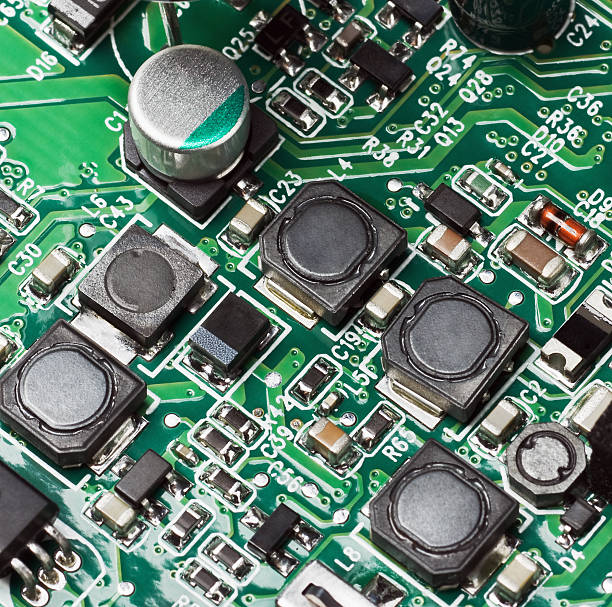
Insufficient soldering can occur when the solder does not properly wet the pad and component lead.
Common causes include:
- Oxidized pads or component leads
- Incorrect solder temperature
- Insufficient flux
- Excessive conveyor speed
- Poor component insertion
- Improper PCB preheating
To reduce these risks, manufacturers should control soldering parameters, maintain appropriate flux application, and inspect solder joints throughout production.
2. Solder Bridging
Solder bridging occurs when excessive solder connects adjacent pads or component leads, potentially creating an electrical short circuit.
Possible causes include excessive solder volume, inappropriate wave height, unsuitable PCB layout, insufficient spacing, or incorrect soldering parameters.
Design optimization is therefore an important part of the manufacturing process. Adequate pad spacing, appropriate solder mask design, and correct component footprints can significantly reduce bridging risks.
3. Thermal Damage to Sensitive Components
Some electronic components are sensitive to elevated temperatures and prolonged exposure to soldering heat.
Electrolytic capacitors, plastic connectors, sensors, and other heat-sensitive components may require special process considerations.
Manufacturers can address these risks through controlled preheating, optimized soldering profiles, selective soldering, thermal shielding, and appropriate component placement.
Quality Control in Through-Hole PCB Assembly
Reliable PCB Assembly requires inspection and testing throughout the manufacturing process rather than relying only on final inspection.
Typical quality control procedures may include:
- Incoming material inspection
- Component verification
- Visual inspection
- Solder paste and flux process control
- Automated optical inspection
- X-ray inspection where required
- Solder joint inspection
- Electrical testing
- Functional testing
- Final quality inspection
For more demanding applications, additional inspection and testing can be integrated according to the product’s reliability requirements.
GOPCBA supports a range of PCB assembly inspection and testing processes, including AOI, X-ray, ICT, FCT, and first article inspection.
Why Through-Hole Assembly Is Still Important
Although SMT has become the dominant technology for many modern electronic products, through-hole assembly remains essential for applications requiring strong mechanical connections and reliable electrical performance.
High Mechanical Strength
Through-hole components are mechanically anchored through the PCB, making them suitable for products exposed to vibration, mechanical stress, or repeated insertion and removal.
High Current and Power Applications
Large through-hole components can provide robust connections for power electronics and high-current applications.
Reliable Component Connections
The combination of component leads passing through the PCB and soldered connections provides additional mechanical stability compared with many surface-mounted components.
Suitable for Complex Electronic Products
Through-hole technology can be combined with SMT to create mixed-technology assemblies that accommodate different component types and functional requirements.
Supporting Prototype to Volume Production
Different PCB projects require different production strategies. Prototype projects usually prioritize engineering flexibility, fast turnaround, and design verification, while larger production runs focus on process consistency, cost efficiency, and scalable manufacturing.
GOPCBA supports PCB assembly from prototype development through low-volume and high-volume production, allowing manufacturers to select an appropriate production model according to project requirements.
For early-stage product development, Rapid PCBA Prototyping can help engineers verify PCB designs, component selection, assembly processes, and product functionality before moving into larger production runs.
Conclusion
Through-hole PCB assembly remains an important manufacturing technology for electronic products that require strong mechanical connections, reliable solder joints, and robust performance.
The key processes include component preparation and insertion, preheating, wave soldering, selective soldering, inspection, and electrical testing. Effective control of soldering parameters and component placement is essential for preventing defects such as insufficient soldering, solder bridging, and thermal damage.
For projects requiring integrated manufacturing support, PCB fabrication, component sourcing, assembly, inspection, and testing can be combined into a streamlined production process. GOPCBA provides one-stop electronic manufacturing services covering PCB fabrication, PCB assembly, component procurement, testing, and related manufacturing services.
Whether you are developing a prototype or preparing for volume production, selecting the appropriate assembly technology and maintaining strict process control can help improve product reliability, manufacturing consistency, and time to market.