PCBA Turnkey Service Process: Requirements to Delivery Guide
A PCBA turnkey service process begins long before components are placed on a board. The customer and manufacturer must agree on product function, performance, compliance, materials, process standards, delivery schedule, and quality expectations. This early requirements communication determines whether the project moves smoothly or becomes a series of revisions, missing parts, and delayed deliveries. In a full material-and-labor arrangement, the supplier also buys the components, so accurate BOM information is especially important.
This guide walks through the complete turnkey PCBA process and explains how precise communication at each stage reduces risk and improves project efficiency.
What Is a PCBA Turnkey Service?
A turnkey PCBA service provides the complete manufacturing package: PCB fabrication, component procurement, SMT assembly, through-hole assembly, testing, and delivery. The customer supplies the product requirements, design files, and approved BOM, while the service provider manages the material and production activities.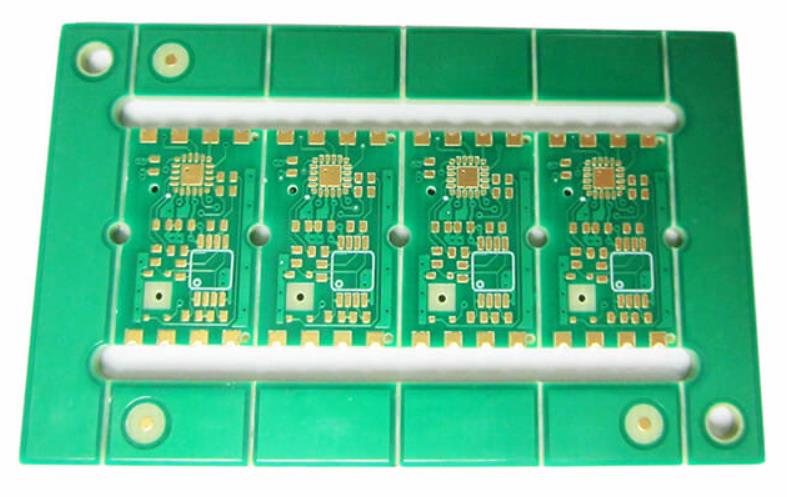
This model is convenient for companies that do not want to purchase components from many suppliers or coordinate multiple factories. It also creates a single quality responsibility because the same team controls board fabrication, component quality, assembly, and test.
Turnkey does not mean the customer can provide unclear requirements. A successful project still depends on a detailed specification, realistic schedule, and good engineering communication.
Step 1: Requirements Communication
The first step is collecting product information. The customer should describe the end application, electrical functions, operating environment, target standards, production quantity, and expected delivery dates. Photographs of the product, mechanical drawings, and interface descriptions are also useful.
The manufacturer uses this information to evaluate feasibility and ask clarifying questions. If the board will operate in a high-temperature environment, the component grade and PCB material must be selected accordingly. If the product must pass medical or automotive standards, the quality and traceability requirements will be higher.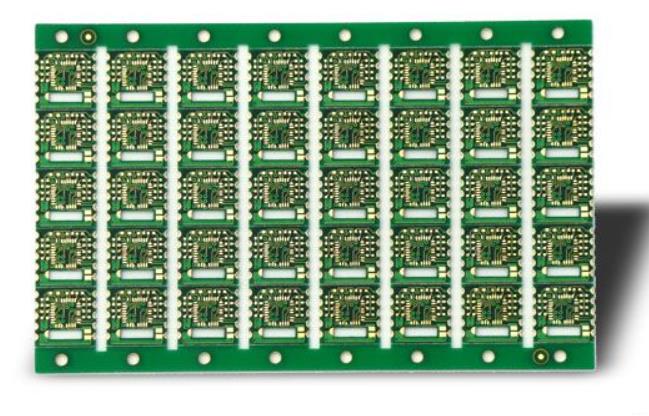
At this stage, vague information creates the greatest risk. A missing environmental requirement can lead to the wrong surface finish, an unsuitable component, or an unqualified test plan.
Step 2: DFM Review and Design Confirmation
After receiving the design files, the engineering team performs a design for manufacturing review. This checks PCB stackup, pad size, trace width, component spacing, thermal management, and test access. The review may also identify BOM issues such as obsolete parts, long lead times, or incompatible footprints.
DFM feedback should be clear and specific. For example, the supplier might recommend a different via size, wider pad, improved stencil design, or more accessible test point. Early design changes are much less expensive than changes after PCB fabrication has begun.
The customer should review the recommendations and approve the final stackup, BOM, process standards, and test requirements before production. A confirmed design baseline prevents confusion later.
Approved substitutes should also be handled carefully. If one brand is unavailable, the supplier may propose an alternative with the same footprint, electrical ratings, and quality grade. The customer should approve the alternative before production because a small parameter difference can change circuit behavior.
Step 3: BOM and Component Sourcing
Accurate BOM information is critical for material procurement. The customer should include manufacturer part numbers, preferred brands, package type, quantity, reference designators, and any approved substitutes. If a part has multiple grades, such as commercial, industrial, or automotive, the correct grade must be specified.
The supplier checks part availability and lead time before placing the PCB order. Long-lead components should be identified early so the schedule can be adjusted or an alternative approved. Component lifecycle status matters because an obsolete part may be replaced by a newer version with different electrical characteristics.
All parts should be sourced from authorized or qualified suppliers. Incoming inspection verifies markings, quantity, packaging, and quality before the material enters production. A reliable component procurement system reduces the risk of counterfeit or wrong parts.
Step 4: PCB Fabrication
The bare PCB is produced according to the approved stackup and materials. Standard FR-4 is common for general products, while high-Tg, high-frequency, metal-core, or flexible materials are used for specific applications. Surface finish should also be confirmed during this step.
PCB fabrication includes inner-layer imaging, lamination, drilling, plating, solder mask, silkscreen, surface finish, and electrical test. For controlled impedance boards, the supplier should verify that the dielectric structure and trace geometry meet the target.
If the design is complex or reliability is critical, the supplier may produce test coupons, verify impedance, or perform extra inspections such as microsection analysis before starting full assembly. A controlled PCB manufacturing process is important for a high first-pass yield.
Step 5: SMT Assembly
During SMT assembly, solder paste is printed on the board, components are placed by high-speed machines, and the assembly is passed through a reflow oven. Solder paste inspection before placement and AOI after reflow help detect defects early.
Fine-pitch parts, small passives, and mixed-technology boards require stable machine setup and careful programming. The placement program should be reviewed before production, especially for boards with double-sided assembly or heavy components.
A capable SMT PCB assembly line uses equipment and controls matched to the component density of the project.
Step 6: Through-Hole and Secondary Assembly
Many products contain connectors, transformers, relays, or other components that must be inserted through the board. Through-hole parts may be soldered by wave soldering, selective soldering, or controlled manual processes depending on volume and design.
The transition between SMT and DIP should be planned so components are not damaged by a second thermal process. Wave soldering requires suitable pad design and thermal relief, while selective soldering allows precise control for sensitive areas.
Secondary operations such as pressing, conformal coating, and final assembly should be included in the project schedule and quality plan.
If a board fails testing, the supplier should not simply repair it and move on. The failure should be recorded, the cause analyzed, and the process corrected so the same problem does not continue through the rest of the order. A quality system based on failure analysis is more effective than one that only sorts bad units.
Step 7: Inspection and Testing
After assembly, the board should be inspected with AOI and, where needed, X-ray. Electrical test may include ICT for shorts and opens or FCT to check the full function of the module. Burn-in or environmental testing may be added for high-reliability products.
Functional test requirements should be defined in the earlier communication stage. If the customer needs firmware programming, boundary scan, calibration, or special test fixtures, this must be planned before production begins.
Test data should be traceable and available for review. The manufacturer and customer should agree on the pass criteria and the actions taken when a board fails.
Step 8: Packaging and Delivery
Finished boards must be protected from electrostatic discharge, moisture, vibration, and physical damage during shipping. ESD bags, moisture barrier bags with desiccant, anti-static foam, and proper cartons should be used according to the product sensitivity.
The supplier should confirm the delivery destination, Incoterm, and required documentation. For export orders, the commercial invoice, packing list, and relevant certificates must be prepared carefully.
Clear delivery milestones help the customer plan incoming inspection and production. The turnkey provider should share schedule updates when materials arrive, production begins, and testing is completed.
Written confirmation is another safeguard. After a phone or email discussion about finish, component brand, or delivery date, the supplier should send a summary that the customer can review. This prevents the project from depending on one person’s memory or an informal chat message.
Why Requirements Communication Determines Success
Most turnkey PCBA delays are caused by missing or incorrect information. If the BOM is incomplete, the supplier must wait for clarification. If the design cannot be manufactured, production stops after the PCB is already made. If the customer did not specify a required finish or component grade, the final product may fail qualification.
Good communication is therefore a technical activity. The supplier should ask the right questions, document the agreed decisions, and confirm them in writing before placing any material order.
The customer should also name a responsible decision maker who can approve substitutes, change requests, and test requirements quickly. A small communication delay at the beginning of a project can create a much longer delay at the end.
Choosing a Turnkey PCBA Partner
Evaluate the supplier’s engineering review capability, component supply chain, factory capacity, inspection equipment, and project communication. Ask how they handle obsolete parts, test fixture development, quality issues, and schedule changes.
A partner with integrated PCB and assembly capability can resolve technical issues faster because the same team sees the entire manufacturing flow. For larger programs, turnkey PCB assembly combined with PCB design and layout support gives the customer a complete path from concept to production.
Conclusion
A PCBA turnkey service process can reduce supplier complexity and improve quality when requirements are defined clearly. The key is not only finding a factory that can build the board but establishing a working relationship where engineering, material, schedule, and quality decisions are shared openly.
With accurate files, a complete BOM, realistic standards, and good communication, a full-service PCBA provider can deliver reliable assemblies on schedule.