Reflow Soldering Safety Precautions and Emergency Guide
Reflow soldering safety precautions protect both operators and circuit boards during the most critical step of SMT production. The reflow oven operates at high temperature, moves boards along a conveyor, and can create dangerous conditions if the equipment is not monitored correctly. An unexpected board jam, alarm, or power failure must be handled with a clear procedure.
Reflow soldering is the key welding process in SMT placement. Small errors in temperature, board handling, or emergency response can cause component displacement, solder defects, damage to the oven, or even a safety accident.
This guide explains the safety and process precautions for reflow soldering, the emergency treatment steps, and the on-site management principles used to prevent recurrence.
Preheat Before Soldering
The reflow furnace must reach the set temperature before the first board is soldered. Most ovens show a ready indicator, often a green light, when every heating zone has reached its target.
Starting production before the oven is ready can create a board that is underheated or unevenly soldered. The solder paste may not reach full liquidus temperature in every joint.
The operator should wait for the ready signal and then verify the actual zone temperatures before releasing boards into the furnace.
Monitor Zone Temperature
During soldering, the operator should observe the temperature change in every zone. A normal process should hold each zone close to its setpoint, typically within plus or minus 1 degree Celsius for many reflow ovens.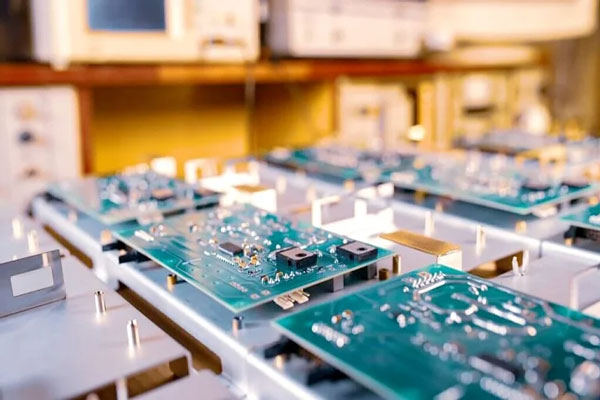
If a zone starts to drift, the solder joints may not form correctly even when the average temperature appears acceptable. The operator should identify the cause before the next board enters the oven.
Zone temperature data should be recorded so the engineer can compare the actual oven condition with the approved thermal profile.
A reflow oven profiler should also be used on the board itself because the board temperature is not always the same as the oven setpoint.
Stop Production on Equipment Abnormalities
If the SMT chip processing equipment is abnormal, production should be stopped immediately. Continuing to feed boards while a placement machine, conveyor, or oven is malfunctioning can create a large amount of defective work.
The abnormal machine should be checked before it is restarted. After repair, the first boards should be inspected before full production resumes.
Operators should know the emergency stop location and understand when to use it. A quick response can prevent damage that would be much more expensive to repair.
Check Board Size Against the Conveyor
The PCB size must not be larger than the conveyor width of the reflow furnace. A board that is too wide can catch on the rails, jam, and create a board-card accident inside the oven.
The conveyor width should be adjusted for the actual board or panel dimensions before the oven is started. The board should move through smoothly without rubbing against the edges.
Large panels may need a different oven or a different transport direction. The process engineer should confirm the board dimensions against the equipment specification before production.
Protect Temperature-Sensitive Components
Some components cannot withstand the normal reflow temperature. The process document or component packaging instruction should identify these parts before the board is assembled.
The SMT factory should apply a protective mask or keep the sensitive area away from the reflow process when required. The affected component can then be soldered after reflow with manual soldering or a soldering robot.
Protection must be planned during assembly design, not discovered when the first board is damaged. A mask should be compatible with the board, components, and later cleaning process.
The finished board should be inspected to confirm that the masked area was protected and that the secondary soldering process did not disturb neighboring joints.
Avoid Conveyor Vibration
During SMT reflow, the conveyor should run without vibration. Vibration can move components that have not yet been fixed by molten solder and create displaced parts or disturbed solder joints.
Vibration can come from a mechanical problem in the oven, from nearby equipment, or from operators striking the machine. The source should be found and corrected before the process continues.
Rework boards should also be handled carefully because they have already been soldered once and are more sensitive to thermal and mechanical stress.
Measure Exhaust Air Volume
The exhaust air volume of the reflow furnace should be measured regularly. Exhaust flow directly affects the soldering temperature inside the oven.
If the exhaust is too high, the oven loses heat and the zones may not reach the correct temperature. If the exhaust is too low, flux fumes and heat can accumulate and create a safety or quality problem.
The factory should record the exhaust reading with the oven maintenance data. A change in exhaust should be investigated even if the zone display still appears normal.
Emergency: Board Jam
If a board becomes stuck in the furnace, the operator should not feed another board into the oven. Continuing to feed will make the jam worse and may damage several assemblies.
The operator should open the furnace cover according to the equipment procedure and remove the stuck board. Heat-resistant gloves and tools should be used because the oven area is hot.
After the board is removed, the cause of the jam should be found. Common causes include incorrect rail width, a warped board, a damaged conveyor, or an obstruction in the oven.
When the temperature has returned to the required level, soldering can continue. The first board after the jam should be inspected carefully.
Emergency: Oven Alarm
If the reflow oven alarm sounds, soldering should stop. The operator should check the alarm display and identify the reason before taking any corrective action.
Common alarms include overheating, low temperature, conveyor error, exhaust failure, and safety interlock activation. The appropriate response depends on the alarm condition.
An alarm should never be ignored or reset without understanding its cause. The operator should record the alarm and notify the maintenance department if the equipment may be damaged.
Production can resume only after the cause has been corrected and the oven is ready again.
Emergency: Sudden Power Failure
If the power supply fails, no more boards should be sent into the furnace. The conveyor may continue to run for a short time because some systems are supported by a UPS.
The operator should allow the surface mount boards already inside the oven to move to the furnace mouth. Once all boards have exited or reached a safe position, the furnace cover should be opened for cooling before the machine is stopped.
If the UPS also fails and the conveyor stops, the operator should follow the emergency procedure to remove the boards as quickly as possible. Some ovens have a manual crank or spanner fitting on the motor shaft that can be used to move the conveyor by hand.
Board removal during a power failure must be done carefully to avoid burns and mechanical injury. The boards may still be very hot.
After power is restored, the oven should be checked, reheated, and verified before production resumes.
Why On-Site Management Matters
Reflow soldering problems are best understood at the production line, where the actual machine, board, material, and environment can be observed. Managers should not try to solve an oven problem from an office or meeting room.
Continuous improvement at the site is one reason many factories achieve high quality. The site contains real information about machine failures, defective products, damaged tools, and customer complaints.
The manager should go to the site, look at the actual object, and verify the real condition. This approach is often called the three-presence principle of site, object, and reality.
On the production floor, the manager can inspect the object, observe the process, and use experience to find a timely countermeasure. The evidence is clearer than a report created away from the machine.
Use Data to Support On-Site Improvement
Some factories extend the three-presence principle with cash and confirmation. The results of an on-site improvement should be converted into a measurable saving or cost reduction.
Quantifying the improvement makes the benefit visible. For example, reducing board jam time by one hour per week can be expressed as additional production output and lower repair cost.
Cost awareness helps the team choose improvements that are worth implementing. Not every process change should be made without checking its effect on yield, cycle time, and maintenance cost.
The essence of the principle is to value the scene and use real data from the scene.
Laws for Solving On-Site Problems
On-site problems should be solved in a structured way. The first step is to go to the scene as soon as the problem occurs.
The second step is to check the actual condition of the object. The operator or engineer should inspect the board, machine, and process settings instead of relying only on a written report.
The third step is to take a temporary countermeasure on site so that production can be restarted safely. The temporary fix may not be the final solution, but it contains the immediate damage.
The fourth step is to analyze the cause and develop a permanent countermeasure. The fifth step is to standardize the correction and prevent recurrence through documentation, training, and control checks.
Following these steps turns every equipment failure or quality problem into a small improvement in the production system.
A professional SMT PCB assembly service should apply the same discipline to reflow soldering. The furnace is monitored, profiled, and maintained as part of the complete process.
After soldering, boards should pass through PCBA testing and inspection to verify that no emergency or process change created hidden defects.
The factory should document all incidents in its quality management system. The incident record should include the cause, temporary action, permanent action, and prevention step.
When boards are repaired or assembled later by hand, the PCB assembly team should protect nearby components and follow the same temperature and handling rules.
Conclusion
Reflow soldering safety precautions prevent common quality and safety accidents. The operator must preheat the oven, monitor each zone, control board size, protect sensitive components, avoid vibration, and check the exhaust.
Emergency procedures for board jams, alarms, and power failures protect the boards, the equipment, and the people in the factory. A quick, correct response reduces damage and downtime.
On-site management and structured problem solving help the factory turn each incident into a permanent improvement. Together, these practices make reflow soldering reliable and safe.