With the rapid development of science and technology, electronic products are becoming increasingly intelligent, compact, and highly integrated. From consumer electronics and communication equipment to automotive, medical, industrial, and security applications, printed circuit boards play a critical role in modern electronic systems.
A high-quality PCB is more than a board with properly connected copper traces. Its material selection, circuit layout, dimensional stability, thermal performance, manufacturing precision, and long-term reliability all have a direct impact on the performance of the finished electronic product.
For this reason, understanding PCB Quality is essential for PCB designers, engineers, purchasing teams, and manufacturers.
So, what makes a high-quality PCB? The following five factors are among the most important criteria.
1. Smooth and Clean Surface Appearance
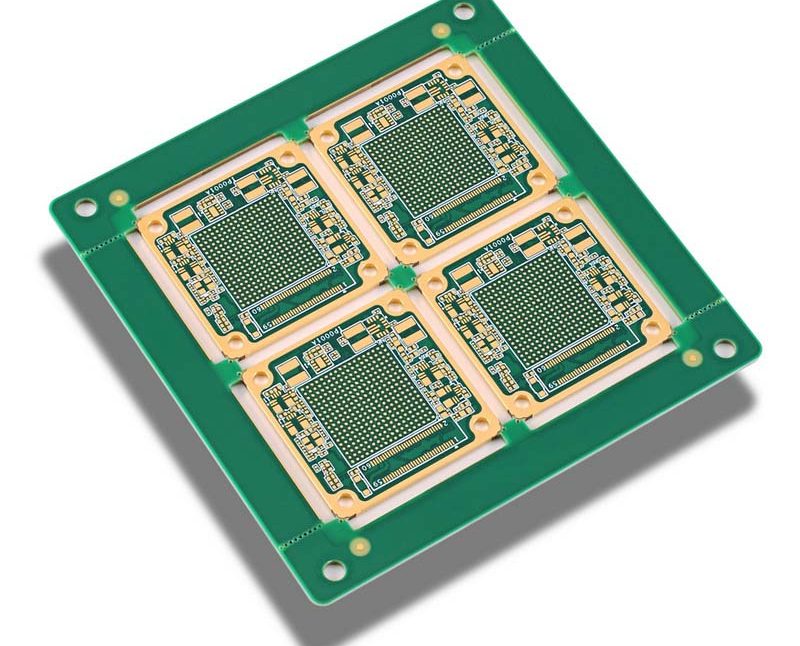
Surface appearance is one of the first factors that can be evaluated during PCB Quality Control.
Whether a PCB is a semi-finished product or a completed board, its surface should be clean, flat, and free from obvious manufacturing defects.
A high-quality PCB should generally have:
- A smooth and uniform surface
- Consistent solder mask coverage
- Clearly defined silkscreen markings
- Clean and well-formed pads
- No visible cracks or delamination
- No excessive scratches
- No exposed copper where it is not intended
- No solder mask peeling
- No significant warpage or deformation
- No obvious contamination or foreign particles
Surface defects may not always cause immediate electrical failure, but they can indicate inadequate process control and may affect solderability, assembly quality, or long-term reliability.
For multilayer and HDI boards, visual inspection should also be combined with electrical testing, dimensional inspection, and other appropriate quality-control procedures.
2. Precise and Well-Designed Circuit Layout
A good PCB Design is fundamental to producing a reliable circuit board.
The PCB layout must accurately reflect the electrical requirements of the electronic product while also considering manufacturability, signal integrity, power integrity, thermal management, and assembly requirements.
Depending on circuit complexity, the design may use:
- Single-sided PCBs
- Double-sided PCBs
- Multilayer PCBs
- HDI PCBs
- High-frequency PCBs
- Flexible or rigid-flex PCBs
Regardless of the board structure, the routing should be carefully planned.
Key PCB Layout Considerations
A professional PCB Design should pay particular attention to:
Signal routing: High-speed signals should have controlled routing paths and appropriate impedance where required.
Power distribution: Power and ground networks should provide stable current paths with sufficient copper capacity.
Return paths: High-speed signals require suitable return-current paths to reduce electromagnetic interference and signal degradation.
Trace spacing: Adequate clearance between traces helps reduce crosstalk and prevents electrical shorts.
Via placement: Vias should be positioned according to electrical, mechanical, and manufacturing requirements.
Thermal management: High-power components should have appropriate copper areas and thermal paths to dissipate heat.
Manufacturability: The layout should comply with the manufacturer’s fabrication capabilities and DFM requirements.
A board can be electrically functional in theory but still be difficult to manufacture if its trace width, spacing, hole size, annular ring, or layer registration requirements exceed the manufacturer’s process capabilities.
Therefore, PCB design and manufacturing should be considered together rather than as two completely independent processes.
3. Low and Controlled Thermal Expansion
Thermal expansion is another important factor affecting PCB Reliability.
A PCB experiences temperature changes during manufacturing, soldering, assembly, and normal operation. The substrate expands when heated and contracts when cooled.
If the thermal expansion of different materials is not properly controlled, repeated temperature cycling can create mechanical stress within the PCB.
Potential problems include:
- Plated-through-hole cracking
- Via reliability issues
- Layer separation
- Solder joint fatigue
- Component connection failure
- Board warpage
- Dimensional instability
The coefficient of thermal expansion (CTE) is therefore an important material parameter.
In multilayer PCBs, the CTE of the substrate should be considered together with the thermal expansion behavior of copper and other materials.
For applications exposed to significant temperature variations, selecting an appropriate PCB laminate and controlling the manufacturing process can help improve long-term reliability
4. Good Heat Resistance
Heat resistance is particularly important because PCBs are exposed to elevated temperatures during both manufacturing and operation.
During assembly, soldering processes can subject the board to relatively high temperatures for short periods. The PCB material must therefore withstand the thermal conditions of the selected assembly process without excessive deformation, delamination, or other damage.
During normal operation, heat generated by components such as processors, power devices, LEDs, and voltage regulators can also raise the PCB temperature.
A high-quality PCB should therefore have suitable thermal properties for its intended application.
Important Thermal Parameters
Depending on the application, engineers may evaluate parameters such as:
- Glass transition temperature (Tg)
- Decomposition temperature (Td)
- Coefficient of thermal expansion (CTE)
- Thermal conductivity
- Thermal stress resistance
- Moisture resistance
The correct material should be selected according to the operating environment rather than simply choosing the lowest-cost substrate.
For demanding applications, high-Tg materials or specialized high-performance laminates may be more appropriate than standard materials.
5. High Manufacturing Precision and Reliability
In addition to appearance, layout, and material properties, manufacturing precision is a fundamental part of PCB Quality.
Modern electronic products increasingly require finer traces, smaller vias, tighter spacing, higher layer counts, and more accurate layer-to-layer registration.
A professional PCB Manufacturing process should maintain stable control over key parameters such as:
- Line width and spacing
- Hole diameter
- Hole position
- Layer registration
- Copper thickness
- Solder mask thickness
- Surface finish
- Board thickness
- Impedance
- Board flatness
- Electrical continuity
For HDI and high-density designs, manufacturing accuracy becomes even more critical because small dimensional deviations can affect via connections, signal integrity, and assembly yield.
Electrical Testing
Electrical testing is an important part of PCB Quality Control.
Depending on the product requirements, manufacturers may use:
- Automated Optical Inspection (AOI)
- Flying probe testing
- Electrical continuity testing
- Insulation resistance testing
- Impedance testing
- X-ray inspection
- Microsection analysis
- Dimensional inspection
The specific inspection methods should be selected according to the PCB structure, application, reliability requirements, and customer specifications.

Why PCB Quality Matters
A PCB is the foundation that connects and supports electronic components. If its quality is inadequate, problems may occur throughout the life cycle of the finished product.
Poor PCB quality can contribute to:
- Intermittent electrical failures
- Soldering defects
- Signal integrity problems
- Thermal issues
- Premature component failure
- Mechanical damage
- Reduced product service life
- Increased repair and warranty costs
By contrast, a properly designed and manufactured PCB can provide stable electrical connections and better support for the overall reliability of the electronic system.
Therefore, PCB Reliability should be considered throughout the entire process—from material selection and circuit design to fabrication, assembly, inspection, and final testing.
How to Choose a Reliable PCB Manufacturer
Selecting the right PCB manufacturer is an important part of ensuring PCB Quality.
Before placing an order, customers should evaluate the manufacturer’s:
- PCB manufacturing capabilities
- Material selection
- Production equipment
- Quality management system
- Process control capabilities
- Testing equipment
- HDI and multilayer experience
- High-frequency PCB capabilities
- DFM support
- Prototype and volume-production capabilities
A capable manufacturer should also be able to review PCB design data before production and identify potential manufacturing risks.
This early communication can help prevent design-related manufacturing problems and reduce unnecessary production costs.
Kingda’s Approach to PCB Quality
As a professional PCB manufacturer, Kingda focuses on providing reliable PCB manufacturing solutions for demanding electronic applications.
Kingda supports a variety of PCB technologies, including high-precision double-sided and multilayer PCBs, HDI PCBs, blind and buried vias, thick-copper PCBs, high-frequency PCBs, special-purpose PCBs, prototypes, and volume production.
A comprehensive manufacturing approach combines material control, process management, dimensional inspection, electrical testing, and final quality inspection.
By integrating PCB Design, PCB Manufacturing, and PCB Quality Control, manufacturers can better ensure that the finished board meets the electrical, mechanical, thermal, and reliability requirements of the final product.
Conclusion
A High-Quality PCB is the result of multiple factors working together. A clean and uniform surface, accurate PCB Design, controlled thermal expansion, sufficient heat resistance, and precise PCB Manufacturing are all important indicators of board quality.
As electronic products continue to become smaller, faster, and more highly integrated, PCB manufacturing requirements will continue to increase. Advanced technologies such as HDI, high-frequency transmission, fine-line routing, microvias, and high-layer-count structures will place greater demands on material selection and manufacturing precision.
For this reason, PCB Quality should not be judged by appearance or price alone. A reliable PCB requires the right combination of design, materials, manufacturing processes, inspection, and quality control.
Working with an experienced PCB manufacturer such as Kingda can help ensure that the circuit board is designed for manufacturability and produced according to the technical and reliability requirements of the final application.